Mistral missile: France’s short-range air defense workhorse
Mistral is France’s infrared-guided short-range air defense missile, now in service on vehicles, ships, helicopters, and portable launchers.

Mistral is France’s infrared-guided short-range air defense missile used on land, at sea, and in the air.
France put the Mistral into service in 1990, and the family has stayed relevant by moving from a man-portable launcher to vehicle, ship, and helicopter mounts. The latest Mistral 3 is quoted at 8 km range, 6 km ceiling, and a 930 m/s top speed, which puts hard numbers behind its role as a short-range air defense system.
| Spec | Value | Why it matters |
|---|---|---|
| Service entry | 1990 | Shows the system has been in use for decades |
| Mistral 3 range | 8 km | Defines the missile’s engagement envelope |
| Mistral 3 ceiling | 6 km | Shows the altitude it can reach |
| Top speed | 930 m/s | Explains how quickly it closes on targets |
| Unit cost | US$545,600 | Gives a sense of the price tag per missile |
What Mistral is built to do
Get the latest AI news in your inbox
Weekly picks of model releases, tools, and deep dives — no spam, unsubscribe anytime.
No spam. Unsubscribe at any time.
Mistral is a short-range air defense missile built around infrared homing. That means it looks for heat, not radio commands, which makes it useful against aircraft, helicopters, drones, and some fast-moving sea targets.
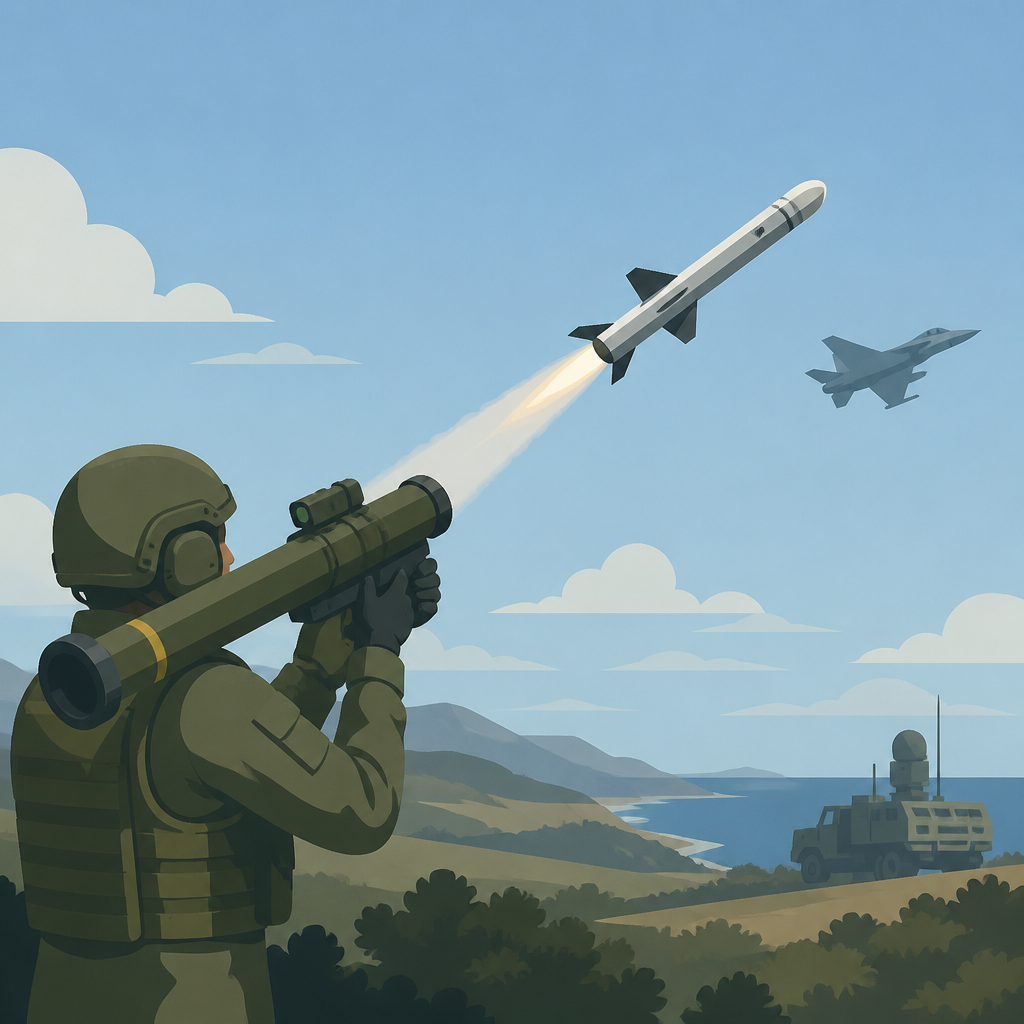
The missile is carried in a transport and launch container with an interrogator, power source, and sighting gear. In the basic portable setup, two people handle the system: one commander and one shooter. The launch package is compact enough to be carried by infantry, but it also scales up to armored vehicles and naval mounts.
Its seeker uses a two-color cooled infrared design and a narrow field of view to help reject flares and other decoys. Wikipedia notes that Mistral uses proportional navigation rather than the simpler pursuit method used in earlier IR-guided MANPADS, which is a big reason it has stayed competitive against aircraft countermeasures.
- Weight: 19.7 kg
- Length: 1.86 m, or 1.88 m with the initial booster
- Diameter: 90 mm
- Warhead: high explosive with tungsten balls
- Fuze: laser proximity or impact
How the system evolved from 1974 to Mistral 3
The program began in 1974 under Matra Défense, which later became part of MBDA France. The first production version, Mistral 1, arrived in 1990. Mistral 2 followed in 1998, and Mistral 3 entered service in 2013.
That timeline matters because it shows how a missile can stay useful without being reinvented from scratch. The core idea has remained the same: a compact infrared missile for quick reaction against low-flying threats. The changes have mostly been in seeker performance, countermeasure resistance, and platform integration.
“Mistral entered production in 1989 and is now deployed in various forms by 37 armed forces of 25 countries.” — Wikipedia article on Mistral
The broader point is that Mistral did not win by being flashy. It won by being adaptable. It can sit on a tripod, ride on a truck, mount on a ship, or hang under a helicopter, and that flexibility has kept it in service across very different militaries.
- 1990: Mistral 1
- 1998: Mistral 2
- 2013: Mistral 3
- 2024 unit cost for Mistral 3: US$545,600
Where Mistral shows up in real service
Mistral has been used in combat and has also been folded into naval air defense. Wikipedia cites its use in the Second Congo War and the Russian invasion of Ukraine, and Norway donated 100 Mistral systems to Ukraine after Russia’s full-scale invasion began.
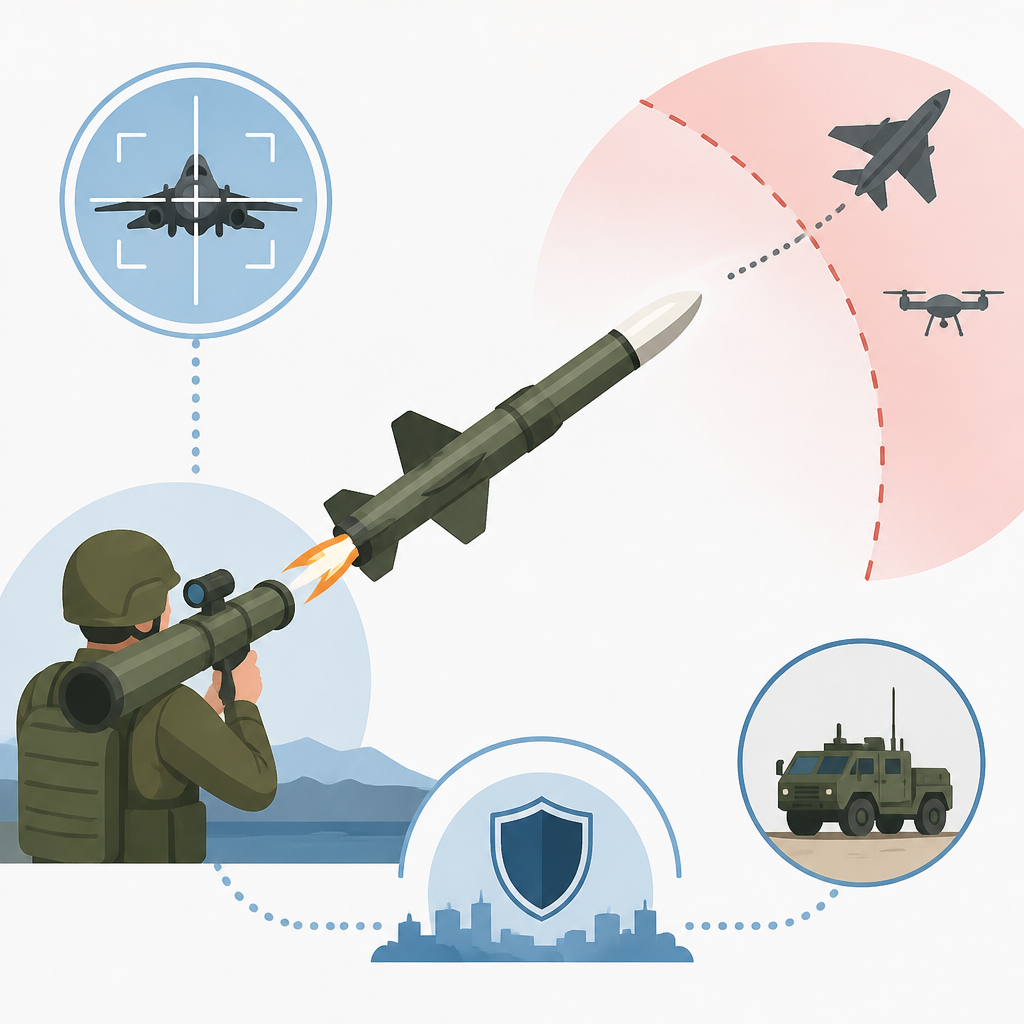
On the French side, the missile has become a recurring fit on surface ships. The French Navy replaced older Crotale systems on three La Fayette-class frigates with automated SADRAL launchers carrying Mistral 3 missiles in 2021 to 2023. The system is also used on the aircraft carrier Charles de Gaulle and on Mistral-class amphibious assault ships.
That shipboard spread matters because naval air defense has become less forgiving. Sea-skimming missiles, drones, and fast attack craft force navies to keep short-range defenses close at hand, and Mistral fills that slot with a relatively compact, crew-light setup.
- French Navy refit window: 2021 to 2023
- Norwegian donation to Ukraine: 100 systems
- MBDA production increase in early 2023: 20 to 30 missiles per month
- Late 2023 production target: 40 missiles per month
Why the numbers matter more than the brand name
Mistral’s specs explain why militaries keep buying it. An 8 km range is enough for point defense and convoy protection, but it is still short enough to keep the launcher small and mobile. A 6 km ceiling gives it room against helicopters and low aircraft, while the 930 m/s speed shortens the time a pilot has to react.
Compared with a larger air-defense missile, Mistral is cheaper, lighter, and easier to distribute across a force. That tradeoff is the whole story. You do not buy Mistral to cover a city. You buy it to protect a unit, a ship, or a base from threats that arrive fast and low.
Here is the simplest way to read the system’s place in modern defense planning:
- Portable launchers cover infantry and small units
- Vehicle mounts protect moving formations and checkpoints
- Naval mounts handle drones, helicopters, and fast craft
- Helicopter integration adds a self-defense option for aircraft already in the fight
For readers tracking air defense trends, Mistral is a useful reminder that old systems do not disappear just because newer ones exist. They stay alive when they solve a narrow problem well, and Mistral has spent more than three decades doing exactly that.
What to watch next
The key question is not whether Mistral will keep selling. It already has a long list of operators and multiple integration paths. The real question is how far MBDA can push production, and whether more navies and ground forces decide that short-range defense is worth paying for at a time when drones and cruise missiles are getting cheaper.
If Mistral 3 keeps showing up in ship refits, export orders, and emergency aid packages, it will remain one of Europe’s most practical air-defense exports. If production climbs while countermeasure resistance improves, the missile will keep doing what it has done since the 1990s: quietly protect things that cannot afford to miss the first shot.
// Related Articles
- [IND]
Mistral's robotics model cuts indoor navigation costs
- [IND]
Apple Reclaims No. 1 by Market Cap as AI Costs Spike
- [IND]
Kimi K3 could pressure the middle tier of AI models
- [IND]
AI Weekly: 2026-07-13 ~ 2026-07-20
- [IND]
$1.7B Bloom Energy deal backs Nebius AI power
- [IND]
Google should have kept NotebookLM’s name and sold the code tools