ModelOp’s 2026 MQ nod turns AI governance into ops
I break down ModelOp’s Gartner nod into a practical AI governance workflow you can copy for ML, GenAI, and agents.

I break down ModelOp’s Gartner nod into a practical AI governance workflow you can copy for ML, GenAI, and agents.
I've been around enough AI governance decks to know when something is still mostly theater. The slides are polished, the policy language is tidy, and everyone keeps saying “responsible AI” like that alone makes the whole thing operational. But when you get into the actual work, the mess shows up fast. Teams have one process for model approvals, another for security review, another for vendor AI, and a completely separate pile of exceptions for agents. Nobody can tell you which use cases are live, which ones are stuck, which ones are costing too much, or who signed off on what six weeks ago. That’s the part that keeps biting me.
I read ModelOp’s announcement on Yahoo Finance, which republishes a GlobeNewswire press release. I’m not treating the Gartner placement like gospel, because Gartner is Gartner and the company is obviously selling. But the press release does give me something useful to work with: a concrete argument that governance stops being a tax only when it’s wired into delivery, not bolted on after the fact. That’s the bit worth stealing.
Stop treating governance like a review board
Get the latest AI news in your inbox
Weekly picks of model releases, tools, and deep dives — no spam, unsubscribe anytime.
No spam. Unsubscribe at any time.
“Efficient, enforceable AI Governance is essential to Industrializing AI delivery for enterprises.”
What this actually means is simple: if governance only shows up at the end, it becomes a queue. If it shows up inside the workflow, it becomes part of how work gets done. I’ve watched teams spend weeks waiting for a risk committee to bless a model that was already technically ready, only to restart the same dance when the model changed, or when the vendor swapped behavior, or when somebody decided to turn the model into an agent. That’s not governance. That’s paperwork with a calendar invite.
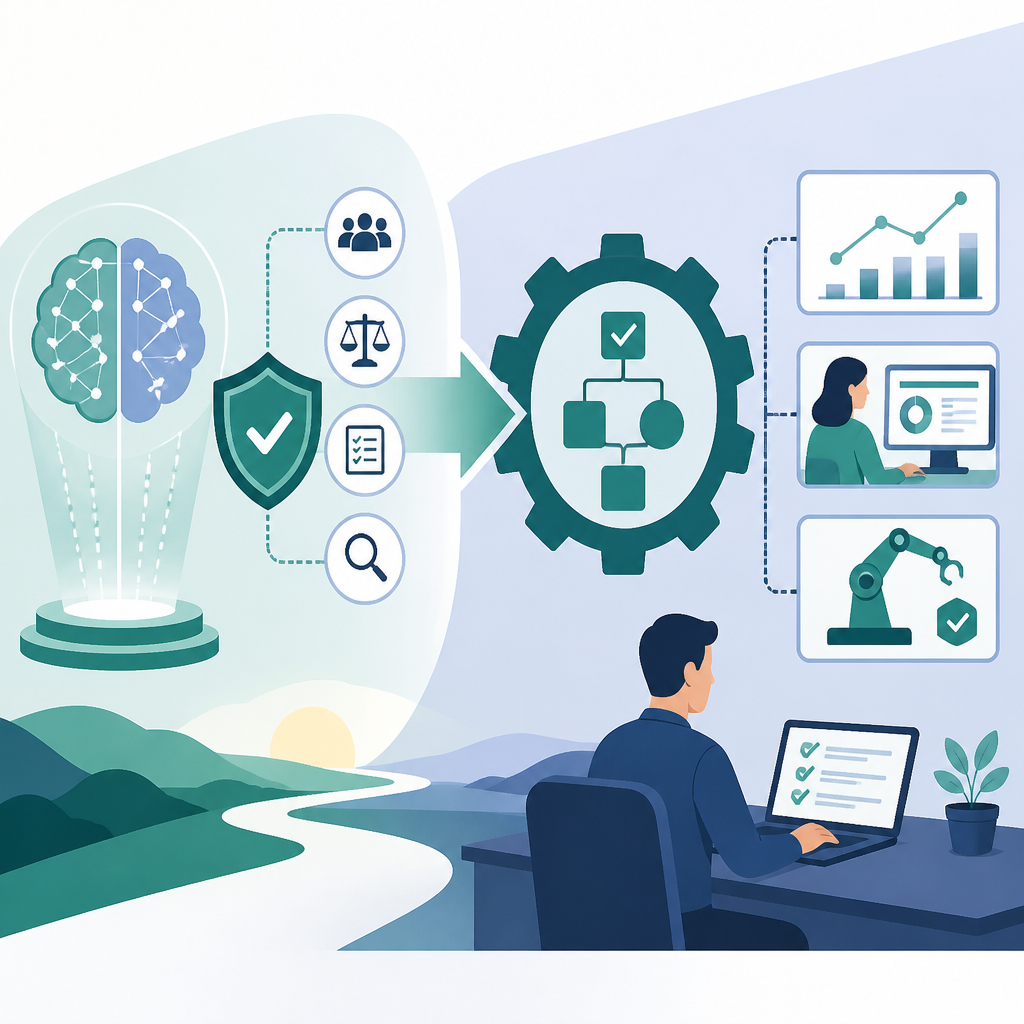
ModelOp’s angle is that governance should be embedded “by design” across the lifecycle. I don’t hate that framing. It’s the only one that survives contact with real enterprise AI. If your process can’t handle ML, GenAI, agentic AI, and vendor AI without four different approval rituals, you don’t have a governance system. You have a pile of exceptions.
I’ve seen this in regulated environments where every new use case starts with good intentions and ends with a spreadsheet that nobody trusts. The fix is not more meetings. The fix is one workflow that records the decision, the policy, the evidence, and the runtime controls in the same place.
How to apply it:
- Put governance checks inside the delivery pipeline, not outside it.
- Define one approval path for all AI types, then vary the controls by risk.
- Store evidence with the use case, not in someone’s inbox.
- Make every exception expire, or it will become permanent by accident.
The real unit of management is the use case
ModelOp says enterprises now manage “hundreds of AI use cases, yet only a small fraction ever reach production and generate business value,” citing its 2026 Enterprise AI Benchmark research. That line matters more than the Gartner badge, honestly. It tells me the bottleneck isn’t model creation anymore. It’s portfolio management.
What this actually means is that most companies are drowning in AI intent. They have pilots, proofs of concept, vendor trials, internal hacks, and half-built automations. But they don’t have a clean system for deciding what gets funded, what gets deployed, what gets monitored, and what gets killed. So the portfolio keeps growing while the value stays flat. I’ve watched this happen in organizations that can spin up models faster than they can answer a basic question like, “Which of these things are actually making money?”
ModelOp’s framing of a “system of record” is the right mental model. Not a dashboard. Not a slide deck. A system of record. That means every use case has an owner, a status, a risk tier, a control set, a runtime policy, and some kind of value signal attached to it. If you can’t trace those things, you’re not managing AI. You’re collecting it.
How to apply it:
- Track AI work at the use-case level, not just the model level.
- Assign a business owner and a technical owner to every use case.
- Separate “approved,” “in production,” “paused,” and “killed” states.
- Attach value metrics early, even if the first version is ugly.
Agent governance is where the old playbook breaks
ModelOp says it got the highest score along with IBM for the AI Agent Governance use case in Gartner’s 2026 Critical Capabilities report, at 3.97 out of 5. I’m only repeating that because it’s in the source material. The interesting part is not the score. It’s the direction. Agents break the old model because they don’t just predict. They act.
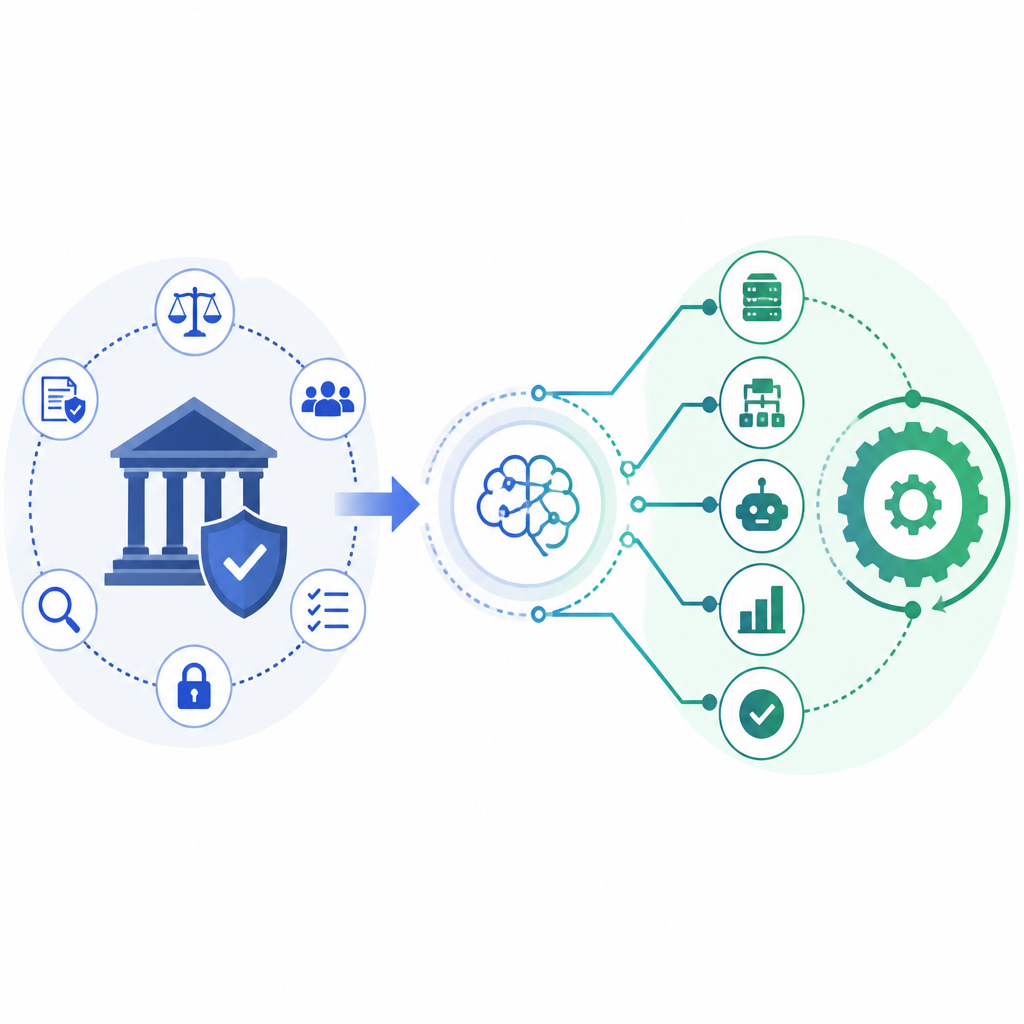
I’ve run into this exact problem when teams try to bolt agent behavior onto controls built for static models. A model returns a score. An agent can call tools, chain actions, retry, branch, and sometimes do something expensive or risky before a human notices. That means governance has to move from “is this model approved?” to “what can this agent do, under what conditions, with what evidence, and who gets paged when it goes sideways?”
ModelOp’s pitch is that the same lifecycle automation, approvals, risk management, monitoring, traceability, and evidence collection should apply to agents too, with runtime enforcement on top. That sounds obvious until you try to implement it in a real enterprise stack. Then it gets annoying fast, because your agent framework, your identity layer, your logging, and your policy engine all want to live in different universes.
How to apply it:
- Inventory every tool an agent can call.
- Set explicit action boundaries, not just prompt rules.
- Log every tool call, approval, and fallback path.
- Use runtime policy enforcement, not postmortem review.
Delivery speed is a governance problem too
“MADE is a first-of-its-kind agentic-powered framework that lets enterprises and systems integrators plug their own agents into governed AI delivery workflows—compressing delivery from months to days while maintaining policy adherence.”
What this actually means is that governance can either slow down delivery or make delivery repeatable. The press release is obviously trying to have it both ways, but the underlying idea is solid. If governance is standardized and machine-checkable, you stop re-litigating the same approvals for every project. That’s where the time savings come from, not magic.
I’ve seen this in delivery teams that keep rebuilding the same controls by hand. One project has a model review checklist. Another has a legal memo. Another has a security signoff in a wiki nobody reads. Then everybody wonders why “industrializing AI” takes forever. It’s because the organization keeps acting like every use case is a snowflake.
ModelOp’s MADE framework, as described in the release, is trying to make the workflow itself agentic. That’s a smart move. If you can plug in your own agents to help with governed delivery, you can automate the boring parts while keeping the policy guardrails in place. I like that more than the usual “AI will help with AI” nonsense because it’s tied to an actual process, not a vibe.
How to apply it:
- Standardize your approval artifacts before you automate them.
- Use agents to draft evidence, not to bypass controls.
- Automate repetitive review steps first, not the risky exceptions.
- Measure cycle time from intake to production, then cut the longest waits.
FinOps is the missing half of AI governance
ModelOp says it tracks token usage through major LLM provider integrations, computes solution-level total cost, and alerts on material spend increases. That’s the kind of detail I wish more governance vendors would talk about. Cost is not an afterthought. It’s part of whether the use case is worth keeping alive.
What this actually means is that AI governance without cost visibility is incomplete. You can approve a use case, monitor its risk, and still end up with a bill that makes the project look stupid. I’ve seen teams celebrate usage growth right up until finance asks why a chatbot is burning budget like a small factory. Nobody enjoys that meeting.
The important part here is solution-level cost, not just model-level token counts. A raw usage chart tells you almost nothing unless you can tie it back to a business workflow. If one workflow costs ten times more than another and produces less value, that should be obvious enough to act on. If it isn’t, your governance layer is missing a financial nerve.
How to apply it:
- Track spend by use case, not only by model or vendor.
- Set alerts for abnormal token growth and API spikes.
- Review cost alongside accuracy, latency, and risk.
- Kill or pause use cases that burn money without proving value.
Where I think ModelOp is actually aiming
The press release keeps coming back to the same idea: ModelOp wants to be the operating layer above the rest of the AI stack. It says the platform sits above existing AI tech stacks, MLOps, GRC, ITSM, security, and data management. That’s a sensible pitch because most enterprises don’t want another isolated tool. They want something that connects the stuff they already bought.
What this actually means is that ModelOp is trying to become the place where AI work gets coordinated. Not where models are trained. Not where prompts are written. Not where tickets are filed. The coordination layer. If that sounds boring, good. Boring is what enterprises buy when the alternatives are chaos.
I’m not saying every company needs ModelOp specifically. I am saying the pattern is right: one control plane for intake, approval, monitoring, evidence, and cost. That’s the structure I’d copy if I were building an internal AI ops program from scratch. The vendor can change. The operating logic shouldn’t.
How to apply it:
- Build one coordination layer above your existing AI tooling.
- Connect governance to ITSM, GRC, security, and data systems.
- Expose one portfolio view for executives and operators.
- Keep the stack interoperable so you can swap tools later.
The template you can copy
# AI Governance Operating Template

## 1) Use case record
- Use case name:
- Business owner:
- Technical owner:
- AI type: ML / GenAI / Agent / Vendor AI
- Status: Intake / Review / Approved / In Production / Paused / Retired
- Risk tier: Low / Medium / High
- Expected business value:
- Production date target:

## 2) Required controls
- Policy checks:
- Security review:
- Legal or compliance review:
- Data review:
- Human approval required:
- Runtime enforcement rules:
- Logging and audit evidence:

## 3) Agent-specific controls
- Allowed tools:
- Disallowed tools:
- Action limits:
- Escalation conditions:
- Human-in-the-loop checkpoints:
- Fallback behavior:

## 4) FinOps tracking
- Primary cost driver:
- Token or usage source:
- Cost owner:
- Alert threshold:
- Monthly budget:
- Value metric:

## 5) Operational evidence
- Approval date:
- Review notes:
- Exception list:
- Expiration date for exceptions:
- Monitoring dashboard link:
- Incident log link:

## 6) Go-live checklist
- Controls tested:
- Logging verified:
- Budget validated:
- Monitoring active:
- Owner signed off:
- Rollback plan ready:

## 7) Review cadence
- Weekly operational review:
- Monthly risk review:
- Quarterly value review:
- Retire if value is not proven:

## 8) Decision rule
If the use case cannot show value, control adherence, and cost visibility,
do not promote it to production.
I like this template because it forces the conversation out of vague “AI readiness” talk and into actual operating questions. Who owns it? What can it do? What does it cost? What evidence do we have? If you can answer those four things, you’re already ahead of most teams I’ve seen.
Use the template as a shared record, not as a ceremonial form. If it lives in a spreadsheet, fine. If it lives in a ticketing system, fine. If it lives in a governance platform, also fine. The point is consistency. The point is to stop rebuilding the same judgment call for every new use case.
Source attribution: I’m breaking down ModelOp’s press release as republished by Yahoo Finance, based on the GlobeNewswire item at https://finance.yahoo.com/technology/ai/articles/modelop-named-visionary-2026-gartner-130000827.html. The template above is my own synthesis, not copied from ModelOp.
// Related Articles
- [TOOLS]
Kitesurf turns Workers into an agent browser
- [TOOLS]
CUDA warps turn GPU threads into one machine
- [TOOLS]
Harness turns agent coding into a steadier loop
- [TOOLS]
Source 2 swaps BSP for meshes and octrees
- [TOOLS]
Golang basics for beginners in 2026
- [TOOLS]
Run Linux containers on WSL with wslc