NAVER and NVIDIA Build 55MW AI Factories
NAVER will expand AI infrastructure from 55 megawatts toward gigawatt scale using NVIDIA DSX for sovereign AI factories.

NAVER is expanding sovereign AI infrastructure from 55 megawatts toward gigawatt scale with NVIDIA DSX.
NAVER and NVIDIA announced a plan to build AI factories that start at 55 megawatts and scale toward gigawatt capacity. The pitch is simple: move AI from experiments into production infrastructure that can serve Korean industries, government customers, and global cloud buyers.
| Item | Detail |
|---|---|
| Initial capacity | 55 megawatts |
| Target scale | Gigawatt scale |
| Announcement date | June 7, 2026 |
| Data center | GAK Sejong, Sejong, South Korea |
| Model work | HyperCLOVA X with Nemotron 3 Ultra |
What NAVER is actually building
Get the latest AI news in your inbox
Weekly picks of model releases, tools, and deep dives — no spam, unsubscribe anytime.
No spam. Unsubscribe at any time.
The headline sounds abstract until you strip it down to the hardware. NAVER plans to expand its sovereign AI stack with NVIDIA using the DSX platform, which is NVIDIA’s full-stack blueprint for AI factories. The first phase starts at 55 megawatts, then moves toward gigawatt scale as demand grows.
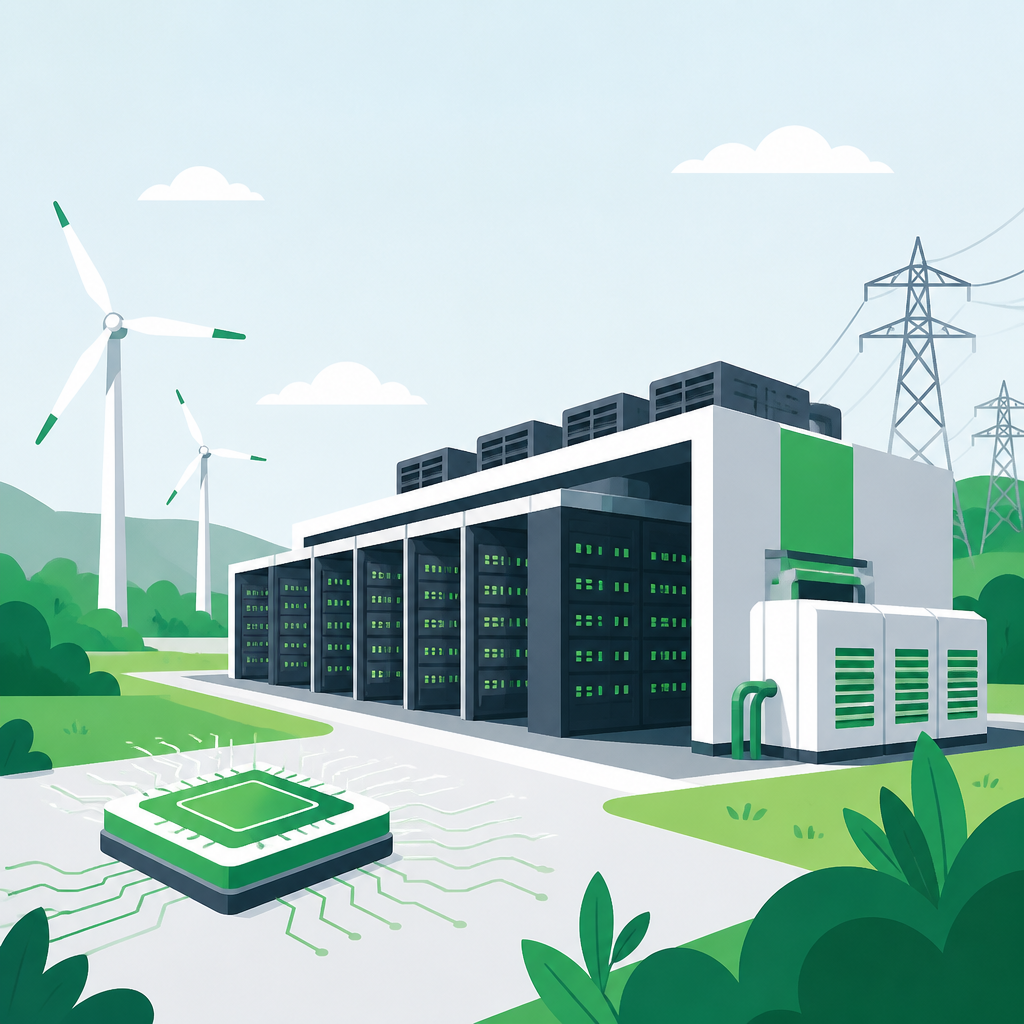
That matters because AI infrastructure is no longer just about training a model once and calling it done. It has to handle training, post-training, inference, agents, and the kind of traffic spikes that come with enterprise deployment. NAVER is betting that owning more of that stack will matter as much as the models themselves.
- 55 MW initial buildout at GAK Sejong
- Gigawatt-scale expansion plan
- Full-stack design with chips, systems, software, and facilities
- Focus on sovereign AI for Korea and overseas customers
There is also a business angle here that is easy to miss. NAVER is not building this only for internal workloads. It wants to sell AI cloud capacity to enterprises and governments that need local control over data and compliance. That puts the company in the same conversation as regional cloud providers that are trying to keep AI spend inside national borders.
Why DSX matters to the economics
NVIDIA says DSX is built to reduce token cost and speed time to first production. In plain English, that means the company wants customers to get more useful output per megawatt and launch services faster. For AI clouds, those two numbers are where the money is won or lost.
NVIDIA Newsroom said the DSX stack includes accelerated computing, software, facilities, and partner technologies. The company also highlighted DSX MaxLPS and DSX OS as tools for maximizing throughput per megawatt and managing multi-tenant AI factories.
“Useful AI has arrived, and demand for AI factories is extraordinary,” said Jensen Huang, founder and CEO of NVIDIA.
That quote is doing a lot of work, but it matches the direction of the market. The real bottleneck is shifting from model ideas to deployment capacity, power availability, and operational efficiency. If you cannot afford the inference bill, the model never becomes a product.
How this fits NAVER’s model strategy
NAVER is pairing the infrastructure announcement with model work it has already been pushing. The company is fine-tuning NVIDIA Nemotron 3 Ultra with its own data and training expertise to improve HyperCLOVA X. That gives NAVER a path to better Korean-language performance and more enterprise-ready behavior without starting from scratch.
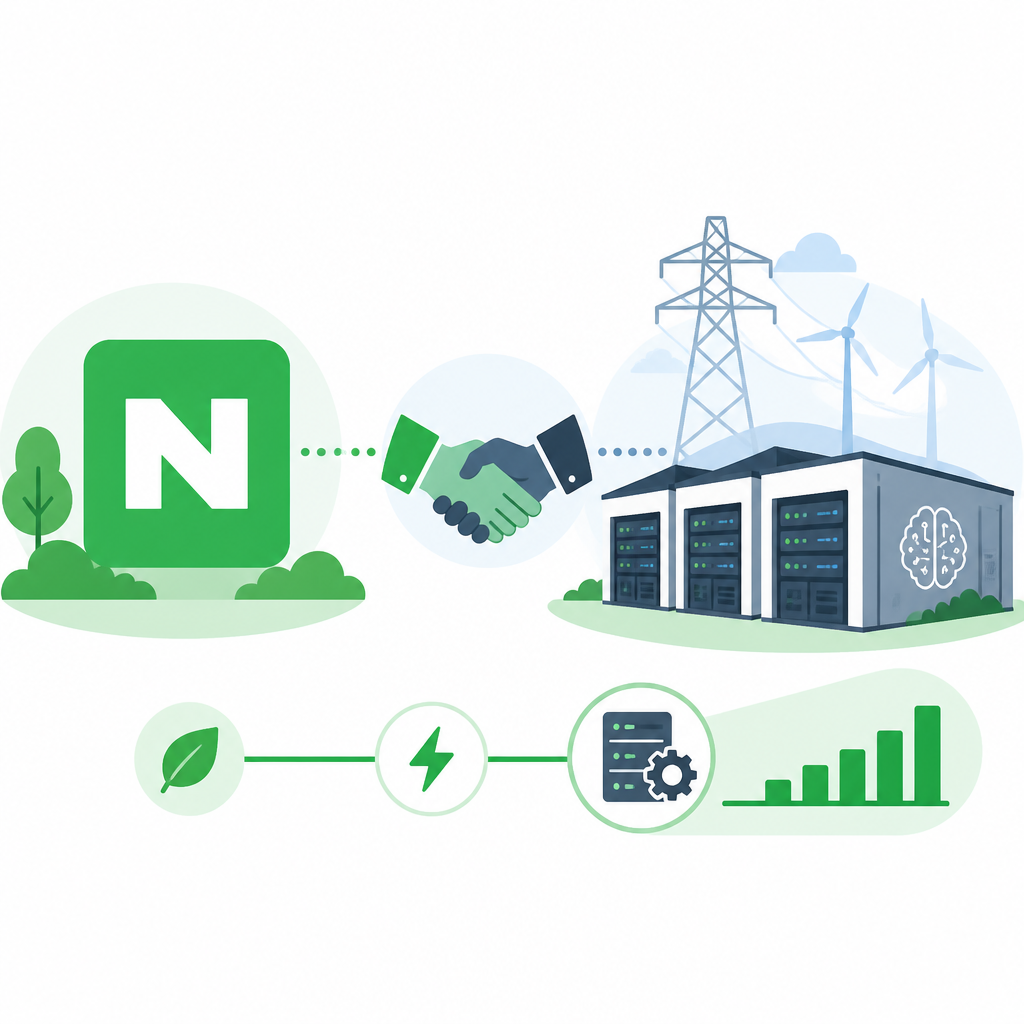
The company also said it is working on an AI Agent Platform in Korea for the second half of the year, using NVIDIA NeMo blueprints, and a Seoul World Model built on NVIDIA Cosmos. Those are different bets, but they all point in the same direction: models that understand language, agents that can act on it, and spatial systems that understand physical environments.
- HyperCLOVA X is being tuned with Nemotron 3 Ultra
- AI Agent Platform planned for the second half of the year
- Seoul World Model uses urban street-view and spatial data
- NAVER joined the Nemotron Coalition as the first Korean company
That coalition detail matters more than the marketing copy. By joining an open-model effort, NAVER gets access to a wider development loop while also contributing its own work. For a company trying to serve both local and global customers, that is a practical way to keep pace with model development without locking itself into a single internal stack.
What the numbers say about the competition
The clearest comparison is scale. A 55-megawatt starting point is already large, but the move toward gigawatt capacity shows where the real ambition sits. At that level, AI infrastructure stops looking like a side business and starts looking like national industrial capacity.
The GAK Sejong data center is NAVER’s anchor for that buildout. It is described as a hyperscale facility with high-density NVIDIA accelerated computing, energy-efficient operations, automation, sustainability features, and disaster-response capabilities. That combination is exactly what sovereign AI buyers want: control, reliability, and enough compute to keep models local.
- 55 MW initial phase versus gigawatt-scale target
- GAK Sejong is positioned as a hyperscale AI cloud site
- June 7, 2026 announcement date places this in a broader Korea AI push
- NAVER says it already serves sovereign AI demand in Europe and the Middle East
There is a wider industry pattern here. NVIDIA has been lining up infrastructure deals that make AI feel less like software and more like utility-grade capacity. NAVER is one of the more interesting partners because it already owns cloud, data center, and model development pieces inside one company.
That combination gives NAVER a shot at selling something many rivals cannot: local AI capacity with a model layer on top. If the company can keep power costs, utilization, and token economics under control, it could become a stronger regional option for governments and enterprises that want their data to stay put.
What to watch next
The next checkpoint is whether NAVER turns this announcement into deployed capacity, not just a partnership slide. Watch for the first expansion milestones at GAK Sejong, the launch of the AI Agent Platform, and any signs that HyperCLOVA X gets pulled into enterprise products faster than before.
If NAVER can move from 55 megawatts to real customer workloads without losing efficiency, this will be remembered less as a press release and more as a template for how sovereign AI clouds get built. The bigger question is whether other cloud providers in Asia and Europe will copy the same model or try to build their own version from scratch.
// Related Articles
- [IND]
Anthropic policy page backs $50B AI buildout
- [IND]
MLOps vs ML Engineer Self-Taught Career Guide
- [IND]
LiveRamp turns ChatGPT ads into sales proof
- [IND]
Midjourney should stay software-first, not chase hardware theater
- [IND]
Anthropic and TCS expand Claude enterprise deployments
- [IND]
10 open source LLMs that run locally in 2026