NVIDIA’s SSI deal turns compute into a toll booth
I break down why NVIDIA’s investment in SSI matters, and give you a copy-ready template for reading frontier AI capex.

Why does NVIDIA’s investment in SSI matter for builders and investors?
It shows frontier AI is turning compute into a toll booth, and I’ve got a template for reading it.
I’ve been watching AI infrastructure stories for a while now, and honestly, a lot of them read like the same recycled hype with a different logo slapped on top. But this one felt different for one annoying reason: it’s not just another lab bragging about a model. It’s a secretive lab, a name-brand investor, and a very blunt statement about compute. That usually means the real story is not the research demo. It’s the bill.
What keeps bugging me is how often people talk about “superintelligence” like it’s a software milestone. It isn’t, at least not in the way companies are funding it today. It’s a capital allocation problem, a supply chain problem, and a power problem. When NVIDIA puts money into a lab like SSI, I don’t hear “belief in the mission.” I hear “we expect the spend to keep rising, and we want a seat near the spigot.”
That’s why I dug into the 24/7 Wall St. piece and the underlying announcement. The interesting part isn’t the headline. It’s the structure underneath it: compute goes up, chip demand follows, fabrication gets busy, and everyone in the chain tries to look like they’re the one creating the future. I’ve seen enough of these cycles to know the boring part is the part that pays.
Source anchor: the trigger here is Gerelyn Terzo’s 24/7 Wall St. article, “Secretive AI Lab Chasing ‘Superintelligence’ Announces Massive Investment From NVIDIA. Here’s Why it Matters.” I’m using that report plus the quoted announcement language in the article, not pretending I got a private briefing from NVIDIA or SSI.
Compute is the product, not the background noise
Get the latest AI news in your inbox
Weekly picks of model releases, tools, and deep dives — no spam, unsubscribe anytime.
No spam. Unsubscribe at any time.
“NVIDIA is making a ‘substantial investment’ that will let the lab ‘10x our compute in the next 12 months.’”
What this actually means is simple: SSI is not buying a little extra headroom. It is planning a dramatic increase in training and experimentation capacity, and NVIDIA is helping make that possible. The lab’s output may be models, but the input is compute. Once you accept that, the whole story gets less mystical and a lot more expensive.

I ran into this exact mental trap a few years ago when people were still talking about “AI strategy” as if it were mostly about hiring a few researchers and turning on a cluster. That was cute for about five minutes. Then the bills started showing up. If you want frontier work, you need GPUs, networking, storage, cooling, power, and enough capex discipline to keep the whole thing from becoming a bonfire.
The 10x claim matters because it tells you where the bottleneck lives. If a lab can multiply compute that fast, then every other part of the stack gets dragged along with it. That includes the chipmaker, the foundry, the cloud layer, and the energy infrastructure. The model may be the headline. The compute budget is the real plot.
How to apply it: when you read any frontier AI announcement, ask three questions before you care about the model name. First, what is the compute commitment? Second, who is funding it? Third, what part of the stack gets paid when the lab scales? If those answers all point in the same direction, you’re not looking at a research story. You’re looking at a supply chain story.
- Compute growth is a demand signal, not a vanity metric.
- “10x” usually means a real procurement cycle, not a press-release flourish.
- The chip vendor benefits even if the lab never ships a consumer product.
“Superintelligence” is a narrative, but capex is the invoice
“Superintelligence, in this context, means AI systems that exceed human capability across essentially all cognitive tasks.”
That definition is doing a lot of work. It sounds grand, and maybe that’s the point. But in practice, the phrase is mostly useful because it justifies huge spending. Nobody writes a check for “slightly better autocomplete.” They write checks when the pitch says the system could eventually do everything humans do, only faster and at scale.
The 24/7 Wall St. article ties this directly to the scaling-law logic: more frontier labs chasing the target means more demand for compute. That’s the part I care about. Whether SSI gets to superintelligence is unknowable from the outside. Whether it burns through more compute trying is not.
I’ve watched this movie in other forms. Cloud migrations, data warehousing, mobile app growth, crypto mining, you name it. The language changes, but the mechanism doesn’t. A big ambition creates a budget. The budget creates procurement. Procurement creates recurring demand. Then someone on the outside calls it a thesis.
How to apply it: stop treating the label as the investment case. If a company says it is building toward superintelligence, map that claim to a spending pattern. Ask what has to be bought quarterly, what has to be renewed annually, and what cannot be delayed without slowing the whole effort down. That’s where the durable revenue usually hides.
- Big AI language is often a capex justification.
- Recurring training runs are better signals than one-off demos.
- Demand that can’t be paused easily is the kind suppliers love.
NVIDIA is selling picks and shovels, but the mine is getting bigger
The article says the investment reinforces NVIDIA’s “toll-booth position” across frontier AI infrastructure. That line is blunt, and I think it’s accurate. When every major lab needs the same class of accelerators, networking gear, and software ecosystem, the supplier sits in the middle of the traffic whether it wants to or not.
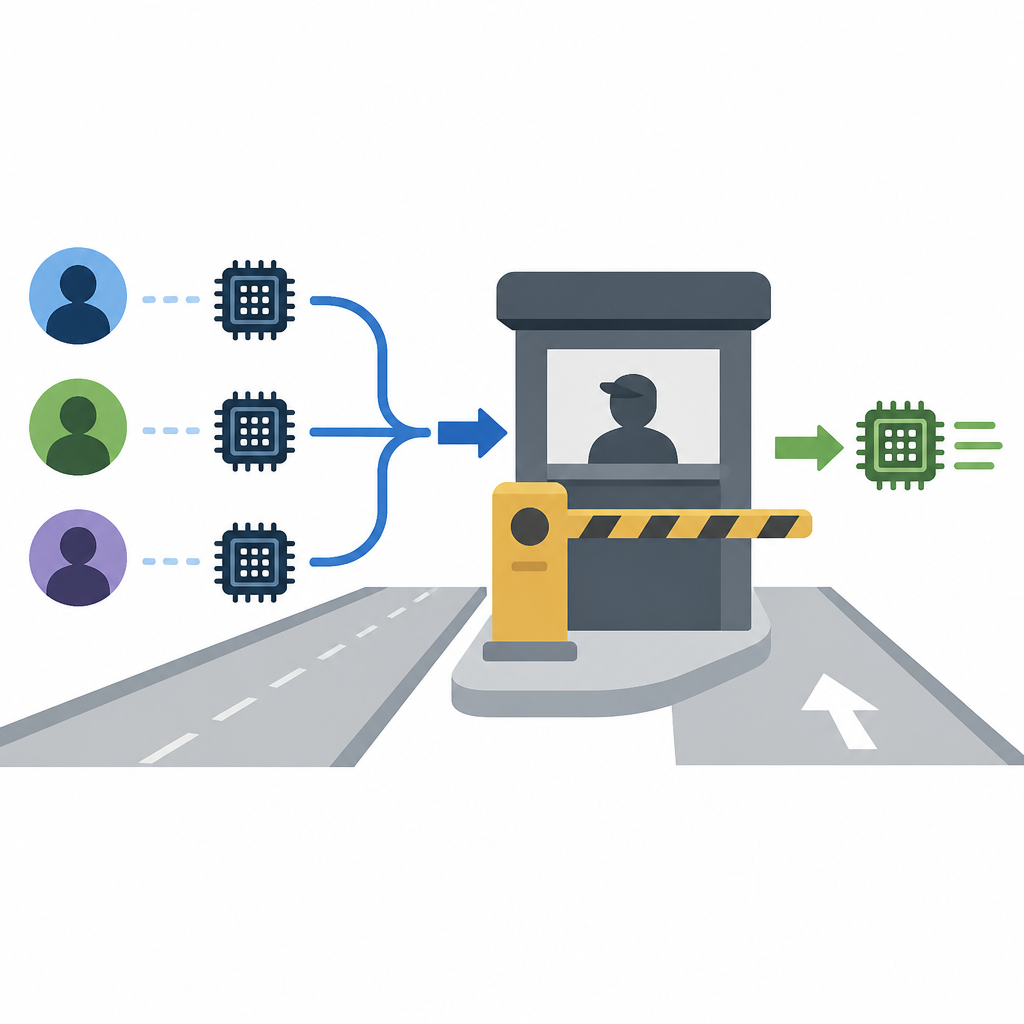
What this actually means is that NVIDIA doesn’t need to win every model race. It needs the model races to keep happening. Every new lab, every larger cluster, every more ambitious training run pushes more spend toward its stack. That’s why the company can look expensive on a normal screen and still look rational on an AI capex screen.
I’ve had to remind myself of this more than once. It’s tempting to think a chip company is just a chip company. It isn’t, at least not anymore. It’s a platform for a whole class of industrial behavior. Once developers, researchers, and cloud buyers standardize around one vendor, switching gets painful fast. The software ecosystem, the tooling, the deployment patterns, the trained teams — all of it compounds.
The article also points out that NVIDIA’s supply commitments have swelled to $119 billion, which is the kind of number that tells you the business is no longer about a single quarter. It’s about visibility. When the book of commitments gets that large, the market starts pricing the next few years instead of the next few months.
How to apply it: if you are evaluating a supplier in an AI boom, don’t just look at revenue growth. Look at backlog, supply commitments, ecosystem lock-in, and whether customers are expanding cluster sizes rather than experimenting with tiny pilots. That is the difference between a fad and a procurement cycle.
The foundry layer is the part people forget until it breaks
24/7 Wall St. brings Taiwan Semiconductor Manufacturing into the picture, and that’s not filler. If NVIDIA sells the demand, TSMC helps turn it into physical chips. The article notes that TSMC’s Q2 revenue grew 36% year over year, which is exactly what I’d expect when frontier compute keeps scaling.
This is where the story gets less glamorous and more useful. People love to argue about model quality. I care about fabrication capacity, because that’s where the whole thing can slow down. You can have all the ambition in the world, but if the foundry can’t keep up, the roadmap gets ugly. The lab doesn’t care about your thesis deck when the cluster is delayed.
What this actually means is that NVIDIA’s upside is partly a derivative of TSMC’s ability to keep shipping, and TSMC’s demand is partly a derivative of frontier labs refusing to stop scaling. That loop is why AI infrastructure keeps feeling self-reinforcing. The more serious the labs get, the more the supply chain matters. Then the supply chain gets larger, and the labs get even more serious.
I’d pay attention to this layer any time a headline mentions “massive investment.” It’s not enough to know who wrote the check. You need to know who actually builds the hardware, who packages it, who ships it, and where the bottlenecks sit. Otherwise you’re reading the story at the wrong altitude.
Valuation only looks boring if you ignore the growth math
The article points to NVIDIA trading at a trailing P/E of 30.7 and a forward P/E of 22.8, with a PEG of 0.553. On its own, that’s not cheap. But the same piece also cites Q1 FY2027 revenue of $81.615 billion, up 85.23% year over year, plus $48.554 billion in free cash flow in one quarter. That changes the math a lot.
What this actually means is that the market is not pricing NVIDIA like a sleepy hardware vendor. It is pricing it like the toll collector on a very fast-growing industrial buildout. If revenue is compounding that quickly and margins stay high, a mid-20s forward multiple doesn’t automatically look crazy. It looks like the market is paying for visibility and dominance.
I’m still not interested in pretending valuation doesn’t matter. It does. But I’ve learned that “expensive” is often just shorthand for “I don’t believe the growth will last.” If the growth does last, the multiple compresses into something much more reasonable. If it doesn’t, the stock gets punished fast. That’s the actual bet.
How to apply it: when you see a high-multiple AI stock, don’t stop at the headline ratio. Compare it against revenue growth, gross margin, free cash flow, and the durability of customer demand. If the business is printing cash while demand visibility keeps expanding, you are not looking at a speculative story in the usual sense. You are looking at an infrastructure cycle with a premium attached.
- Revenue growth can justify a lot of multiple compression fear.
- Free cash flow is harder to fake than a good demo.
- Forward guidance matters more than last quarter’s victory lap.
The risks are real, and they’re not subtle
The article is right to flag the downside. It notes that NVIDIA’s forward guidance excludes Data Center compute revenue from China, and it mentions execution risk if hyperscaler capex softens. That’s not noise. Those are the kinds of risks that can hit a stock even when the long-term story is intact.
There’s also the insider-selling angle the article mentions. I don’t overread insider transactions, but I don’t ignore them either. When a stock has run this hard, some selling is normal. Still, if the market is already leaning hard into the AI infrastructure narrative, any sign of slowing demand or geopolitics making life messier can hit sentiment quickly.
What this actually means is that the thesis is not “NVIDIA only goes up.” It’s that the company sits in a very favorable position if frontier AI spending keeps accelerating. That is a conditional statement, not a guarantee. The better you understand the condition, the less likely you are to confuse momentum with certainty.
I’ve made the mistake of treating infrastructure winners as invincible because the story felt too strong to fail. That’s dumb. The better way is to ask what has to stay true. In this case, it’s a lot: capex growth, supply continuity, customer concentration not getting ugly, and geopolitical friction not blowing up the demand picture. That’s a real list.
How I’d read this kind of announcement next time
If I strip away the stock-promo language, the article gives me a clean framework. A frontier lab wants more compute. NVIDIA helps fund that growth. The more the lab scales, the more the supplier benefits. Then the foundry benefits. Then the whole AI infrastructure chain gets another proof point.
That’s the part worth keeping. The specific lab could change. The exact model family could change. The headlines will definitely change. But the pattern stays the same: frontier AI turns compute into a recurring industrial input, and the companies that control the input get paid first.
How to apply it: build a small checklist for every AI capex headline. I use this to keep myself honest when the hype gets loud:
- Who is spending?
- What exactly is being scaled?
- Which supplier gets paid if the scale-up happens?
- Is the spend recurring or one-time?
- What supply-chain layer could bottleneck the plan?
If you answer those five questions, you’ll usually know whether the story is about research, procurement, or a real infrastructure shift. In this case, it looks a lot more like procurement with a research costume on.
The template you can copy
# Frontier AI capex reading template

## Headline translation
- Company/lab: [name]
- What they say they are building: [model / lab / system]
- What they are actually buying: [compute, chips, networking, power, storage]
- Who benefits if spending rises: [supplier, foundry, cloud, energy]

## Quick thesis check
1. Is the announcement about capability or capacity?
2. Does it imply recurring spend over the next 12 months?
3. Is there a named supplier or platform in the stack?
4. Does the story mention supply commitments, backlog, or guided revenue?
5. What could break the chain: regulation, geopolitics, capex slowdown, fabrication limits?

## My plain-English read
This is not just a product story. It is a compute procurement story.
If the lab scales, the supplier gets paid.
If the supplier has lock-in, the margin profile improves.
If the foundry can keep up, the whole stack compounds.

## What I would watch next
- Next-quarter capex guidance
- Cluster expansion announcements
- Foundry capacity updates
- Export restrictions or regional demand shifts
- Insider selling or customer concentration changes

## Decision rule
If the story depends on one demo, I ignore it.
If the story depends on repeated compute spend, I pay attention.
If the story depends on multiple layers of the stack scaling together, I treat it as an infrastructure cycle.
That’s the version I’d keep in my notes. It’s boring on purpose, and that’s why it works. Boring is usually where the money is when everyone else is busy talking about intelligence that sounds superhuman.
Original source: 24/7 Wall St. provided the reporting and the quoted announcement language. My breakdown is original analysis built from that article, not a reprint of it.
// Related Articles
- [IND]
Anthropic’s latest SCMP coverage in 5 clear themes
- [IND]
OWASP’s 2026 LLM Top 10 shifts risk priorities
- [IND]
Silicon Valley’s AI “Breakdowns” Are a PR Play, Not a Signal of Doom
- [IND]
WebAssembly’s JVM shift is making Java more portable
- [IND]
Anthropic is hiring a custom chip design team
- [IND]
Model Y L US launch packs 6 buyer details