Obscura: Rust headless browser for AI agents
Obscura is a Rust headless browser for AI agents and scraping, with CDP support, stealth mode, and a 30 MB memory footprint.

Obscura is a Rust headless browser built for AI agents and web scraping.
Open-source browser project Obscura is pitching itself as a headless browser engine for AI agents and scraping, with release builds for Linux, macOS, Windows, Docker, and source builds on Rust 1.75+. The repo says the first build takes about 5 minutes because V8 compiles from source, then caches for later builds.
| 項目 | 數值 |
|---|---|
| Memory | 30 MB |
| Binary size | 70 MB |
| Page load | 85 ms |
| Startup | Instant |
| GitHub stars | 15.9k |
| Forks | 1.1k |
What changed
Get the latest AI news in your inbox
Weekly picks of model releases, tools, and deep dives — no spam, unsubscribe anytime.
No spam. Unsubscribe at any time.
Obscura is a Rust-based browser engine that runs real JavaScript through V8, speaks the Chrome DevTools Protocol, and can act as a drop-in target for Puppeteer and Playwright. The project also ships a CDP server, parallel scraping mode, proxy support, and a stealth build flag for anti-detection and tracker blocking.

Its README frames the tool around automation rather than normal browsing. The comparison table claims 30 MB memory use versus 200+ MB for headless Chrome, a 70 MB binary versus 300+ MB, and much faster startup and page loads for common scraping tasks.
- Release binaries are published for Linux x86_64, Linux ARM64, macOS Intel, and macOS Apple Silicon.
- Docker images are available, with a distroless multi-stage build and no shell or package manager.
- Stealth mode randomizes browser fingerprints and blocks 3,520 tracker domains.
- Users can fetch pages, dump HTML or text, stream original responses, and run parallel scrape jobs.
Why it matters
For developers building agents or scrapers, Obscura lowers the setup cost of browser automation by bundling the engine, CDP access, and common scraping flows into one Rust binary. That means fewer moving parts than a Chrome plus Node.js stack, especially for server-side jobs that need to run at scale.
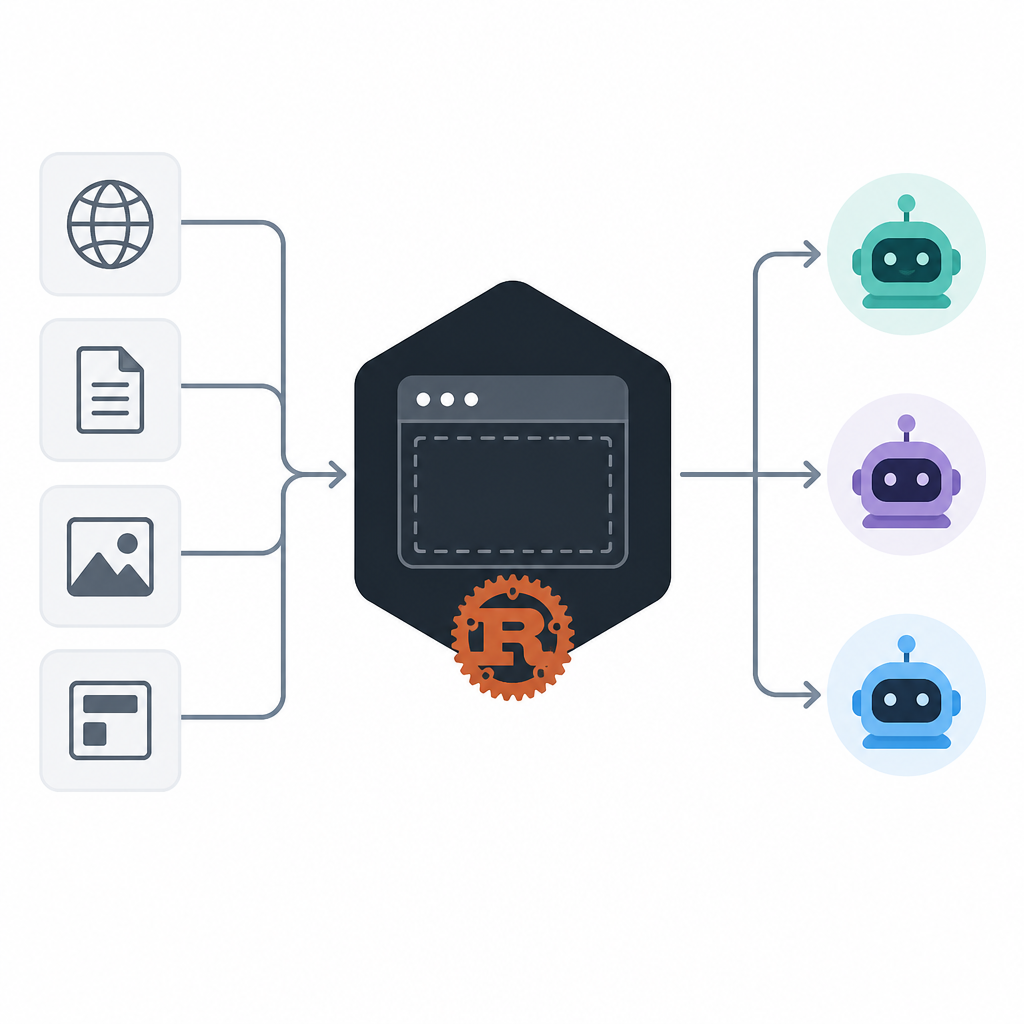
The project also targets anti-bot resistance. Built-in stealth features, proxy support, and tracker blocking are aimed at workflows that get flagged by sites using fingerprinting or request filtering. That makes it more than a browser wrapper; it is a purpose-built runtime for automation workloads.
The bigger signal is adoption momentum. The repo shows 15.9k stars and a plan for Obscura Cloud, a hosted version with managed infrastructure and residential proxies, which suggests the open-source browser could become the base layer for a paid automation service.
Obscura’s bet is simple: if AI agents need to browse like users but operate like software, the browser itself should be optimized for that job.
// Related Articles
- [TOOLS]
DeepSeek V4 Flash turns Agent work cheap
- [TOOLS]
GPT-5.6 Sol cuts GPU costs 20%
- [TOOLS]
Astra Turns a Math Post Into a Model Launch
- [TOOLS]
OpenAI’s API changelog adds spend caps, transcribe, and Fast mode
- [TOOLS]
Windsurf’s IntelliJ plugin is a shortcut, not a strategy
- [TOOLS]
SWE-1.7 free preview lands in Devin Desktop