OPD lets you distill skills without brute-force RL
I break down On-Policy Distillation and turn the idea into a copy-ready post-training template.

OPD is a practical way to move skills from strong models into your own post-training loop.
I've been watching post-training recipes get more and more expensive, and honestly, it started to annoy me. Every time a model team wanted better reasoning, better tool use, or better domain behavior, the default answer was: throw more RL at it, pay the sampling bill, and hope the reward signal doesn't wobble. That works until it doesn't. You get unstable training, weird regressions, and a lot of compute burned just to relearn what another model already knows.
What finally made me pay attention was seeing the same idea show up across several public model reports: instead of treating reinforcement learning as the only serious option, teams are increasingly asking how to transfer capability from a stronger policy into a target model in a more controlled way. That's the space On-Policy Distillation lives in. I think of it as the missing middle between pure imitation and full-blown exploration. It is not magic, and it is definitely not free, but it is a lot more practical than pretending every improvement has to be earned from scratch.
The piece that triggered this breakdown is On-Policy Distillation (OPD):起源、发展路线与当今现状 on 知乎, which frames OPD as a post-training capability transfer method. The article points to public technical reports from Qwen3, MiMo-V2, and DeepSeek-V4 as evidence that the field is moving toward more deliberate skill transfer after pretraining. I don't have bookmark or view numbers from the source, so I'm not going to invent them.
OPD is what I wanted RL to be before RL got expensive
Get the latest AI news in your inbox
Weekly picks of model releases, tools, and deep dives — no spam, unsubscribe anytime.
No spam. Unsubscribe at any time.
On-Policy Distillation 正在成为后训练中的重要能力迁移工具。
What this actually means is simple: instead of asking a smaller or target model to discover the right behavior through trial and error, you let it learn from a stronger policy while it is still operating in the same kind of distribution it will face at inference time. That is the “on-policy” part. The student is not just copying static labels from a dataset; it is learning from outputs generated in the current policy context.
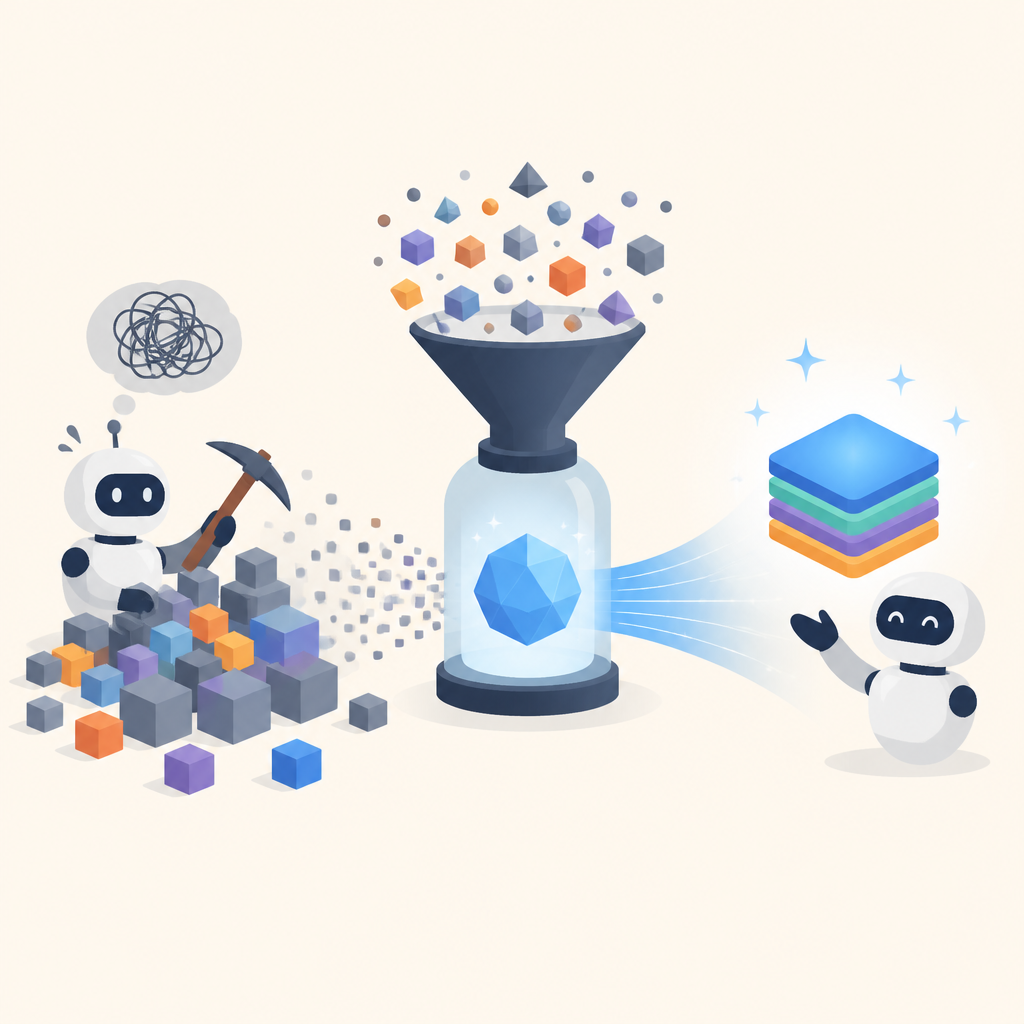
I ran into this distinction while trying to tune a model for structured reasoning. Pure supervised fine-tuning made the model polite, but not better. RL made it smarter in some runs and messier in others. The problem was always the same: the target model drifted away from the teacher’s useful behavior the moment the training setup changed. OPD is attractive because it narrows that gap. You are not only teaching outputs, you are teaching behavior under the same kind of conditions the model will later live in.
How to apply it: if you already have a strong teacher model, stop treating its outputs like static gold labels. Generate them in the same prompt format, same tool context, and same task mix you expect in deployment. Then train the student on those policy-conditioned traces. If your setup includes preference data, you can still use it, but the core idea is to keep the distillation tied to the live policy distribution instead of frozen offline samples.
- Use OPD when the teacher already has the skill you want.
- Use it when RL is too noisy, too slow, or too expensive for the whole job.
- Use it when you care about preserving behavior under realistic prompts, not just benchmark answers.
The real shift is from “discover” to “transfer”
For a long time, post-training felt like a contest to see how much behavior a model could discover on its own. That mindset is expensive. It assumes the model has to stumble into every useful strategy through reward optimization. OPD says: if a better policy already exists, why pretend the student should rediscover it from scratch?
The source article connects this trend to Qwen3, MiMo-V2, and DeepSeek-V4. I’m not going to overclaim specifics that aren't in front of me, but the pattern is obvious once you look at modern technical reports: teams are getting more serious about moving capability through distillation-like paths after pretraining, not only through reinforcement learning. That matters because post-training is becoming a systems problem, not just an algorithm problem.
What this actually means for a developer is that the unit of work changes. You are no longer just tuning a reward function and praying. You are designing a transfer pipeline: which teacher, which prompts, which rollouts, which filtering rules, which student objective. The teacher is no longer just a reference model. It is part of the training infrastructure.
I like this framing because it is more honest. Most teams do not need a model to “discover” how to answer a coding prompt or a domain question. They need it to reliably reproduce a known good behavior under their own constraints. That is a transfer problem. OPD fits that reality much better than the heroic story people tell about RL.
How to apply it: write down the exact capability you want to move. Not “better reasoning,” but “multi-step math with fewer invalid intermediate steps” or “tool selection that avoids redundant calls.” Then decide whether the teacher can generate those behaviors in the same prompt regime your student will use. If not, fix the teacher prompting before you touch the student.
On-policy matters because off-policy distillation gets stale fast
The phrase “on-policy” is doing a lot of work here. In plain English, it means the student learns from data generated by the current policy distribution, not from some old pile of outputs that may no longer match what the model is actually doing. This is one of those details that sounds academic until you debug a training run and realize your data is lying to you.
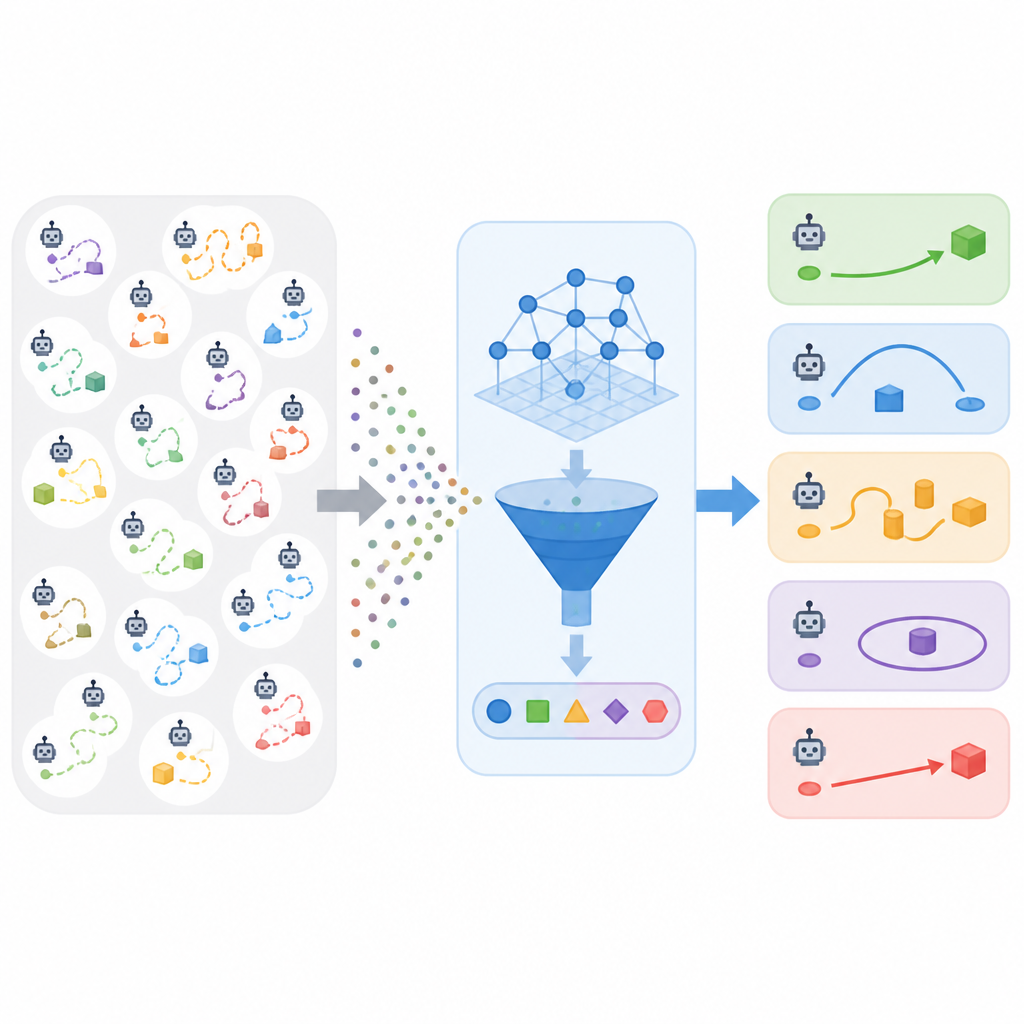
I’ve seen this in smaller form with instruction tuning. You build a beautiful dataset, train on it, and then the model fails in production because the prompt shape drifted just enough to make the old data less useful. Now imagine that problem with a policy that changes every few thousand steps. Stale data becomes a real liability. On-policy distillation tries to keep the teacher-student loop aligned with the current behavior frontier.
There is a catch, of course. On-policy collection can be more expensive and more operationally annoying than offline distillation. You need generation infrastructure, filtering, and usually some way to keep bad samples from poisoning the student. But that cost buys you relevance. The student sees examples that are closer to the policy it will actually deploy with, which is exactly why the method is showing up in post-training discussions now.
How to apply it: build a rolling data generator instead of a one-shot dataset dump. Sample prompts from the current task distribution, run the teacher or expert policy, filter for quality, then train the student on the fresh traces. If you are mixing in older examples, keep them as anchors, not the whole meal. And if the student policy shifts a lot during training, refresh the rollouts regularly.
- Fresh rollouts reduce mismatch between training and deployment behavior.
- Stale teacher traces can silently cap improvement.
- Rolling generation makes the pipeline more expensive, but usually less misleading.
OPD sits between supervised fine-tuning and RL, and that middle is useful
One reason people keep rediscovering OPD is that it lives in a very practical middle ground. Supervised fine-tuning is stable but often shallow. RL can push performance further but tends to be noisy and operationally annoying. OPD borrows the parts of each that actually help: the guidance of imitation and the policy-awareness of online training.
That middle ground is especially useful when you already trust the teacher. If the teacher is a domain expert model, a stronger general model, or a carefully tuned internal policy, then the problem is not exploration. The problem is compression. You are trying to pack behavior into a cheaper or faster model without losing too much signal. Distillation is a natural fit there, and the on-policy version helps keep the compression aligned with real usage.
I think this is why OPD keeps showing up in later-stage model work. Once a team has a decent base model, the bottleneck is rarely raw capability discovery. It is getting the model to behave the way you want under constraints. The more your product depends on consistent outputs, tool calls, or structured reasoning, the more attractive this path becomes.
How to apply it: if you are choosing between SFT, RL, and OPD, ask what kind of failure you are seeing. If the model is ignorant, start with SFT. If it knows the task but behaves inconsistently or needs policy shaping, OPD is worth testing. If you need the model to discover new strategies and you have a reward signal worth trusting, then RL still has a job. I just would not make RL carry every post-training burden by default.
The practical pipeline is teacher, rollout, filter, student, repeat
Here is the part I wish more model writeups said plainly: OPD is a pipeline, not a slogan. If you want it to work, you need a boring, disciplined loop. Teacher generates responses. You collect them under the current policy distribution. You filter out junk. The student trains on the remaining traces. Then you do it again.
The source article’s broader point is that this kind of capability transfer is becoming a central post-training tool. I agree, and I think the reason is operational. This loop is easier to reason about than a pure reward-maximization setup, especially when your target task is already well understood. You can inspect the teacher outputs. You can audit failures. You can change the prompt template and immediately see the effect on the data.
That inspection angle matters more than people admit. I’ve lost count of how many training runs looked good in aggregate metrics but hid a bunch of garbage in the samples. With OPD, the samples are the product. If the teacher is bad, the student learns bad habits. If the filter is sloppy, the student inherits noise. If the rollout distribution is wrong, the whole thing drifts.
How to apply it: set up a simple production-like loop before you get fancy. First, define a prompt schema. Second, generate teacher rollouts at the same schema. Third, score or filter them with explicit rules. Fourth, train the student. Fifth, re-evaluate on held-out prompts that match your deployment shape. If the student improves but the sample quality is ugly, fix the data pipeline before adding more training tricks.
Why the current wave of model reports keeps pointing here
The article mentions Qwen3, MiMo-V2, and DeepSeek-V4 as examples of the trend. I’m not treating those names as magic tokens; I’m treating them as evidence that large model teams are converging on a similar conclusion. Post-training is not only about squeezing more performance out of RL. It is also about systematically transferring capability from an already-strong policy into something cheaper, narrower, or easier to deploy.
That shift makes sense if you have ever owned a model pipeline in production. You do not want every improvement to depend on a giant exploration budget. You want a repeatable way to move behavior across models and across stages of training. OPD gives you that, at least in principle. It is not a single algorithm so much as a design pattern for post-training.
The nice part is that this pattern scales with maturity. Early on, you can use it to copy a strong teacher into a smaller student. Later, you can use it to refresh behavior after domain shifts, tool changes, or prompt changes. In other words, it is not only a one-time compression trick. It can become part of your maintenance workflow.
How to apply it: treat OPD as a reusable post-training primitive. Document the teacher version, prompt format, rollout policy, filter rules, and student checkpoint. When you revisit the pipeline in a month, you should be able to tell what changed without reverse-engineering your own experiment logs. If you cannot, the process is too fragile to trust.
The template you can copy
# On-Policy Distillation playbook

## Goal
Transfer one concrete capability from a stronger teacher policy into a target student model without relying on pure RL exploration.

## When I use this
- The teacher already performs the task well
- I need better behavior under realistic prompts, not just benchmark answers
- RL is too noisy, too slow, or too expensive as the main training path
- I care about keeping training aligned with the current policy distribution

## Inputs
- Teacher model: {{teacher_model_name}}
- Student model: {{student_model_name}}
- Task family: {{task_family}}
- Prompt schema: {{prompt_schema}}
- Rollout budget: {{rollout_budget}}
- Filter rules: {{filter_rules}}
- Evaluation set: {{eval_set}}

## OPD loop
1. Sample prompts from the current task distribution.
2. Run the teacher on the exact prompt schema the student will see.
3. Collect teacher rollouts from the live policy distribution.
4. Filter out low-quality, malformed, or off-task samples.
5. Train the student on the remaining traces.
6. Re-evaluate on held-out prompts.
7. Refresh rollouts and repeat if the prompt distribution or student policy has shifted.

## Practical rules
- Keep the teacher and student prompt format identical.
- Do not train on stale traces if the policy has drifted.
- Prefer explicit filters over vague “quality” judgments.
- If the student gets worse on deployment-shaped prompts, fix the rollout distribution before changing the loss.
- Use OPD for transfer and consistency; use RL only when you truly need discovery.

## Minimal training note
- Teacher-generated traces are the supervision signal.
- On-policy generation keeps the data closer to the behavior you want in production.
- The whole point is to move known-good behavior, not to rediscover it from scratch.

## Review checklist
- [ ] Teacher is stronger on the target capability
- [ ] Prompt schema matches deployment
- [ ] Rollouts are fresh enough to avoid drift
- [ ] Filters are explicit and reproducible
- [ ] Student improves on held-out, production-shaped prompts
- [ ] Failure cases are logged and inspected

## One-line summary
OPD is a repeatable way to move capability from a stronger policy into a student model while keeping the training data close to real usage.
That template is intentionally plain. I want the boring version because boring is what survives contact with production. If you want to make it fancier, go ahead, but keep the core loop intact: current prompts, fresh teacher rollouts, explicit filtering, student training, repeat. That is the whole point.
Source attribution: the original discussion comes from On-Policy Distillation (OPD):起源、发展路线与当今现状 on 知乎. My breakdown is my own interpretation of that post and the broader post-training pattern it describes; any implementation details should be verified against the linked source and the underlying model reports it references.
// Related Articles
- [RSCH]
Test-Time Harnesses Transfer Skills Without Retraining
- [RSCH]
DreamFly improves aerial VLN with memory and planning
- [RSCH]
AVA-Encoder turns films into editable knowledge graphs
- [RSCH]
Sparse Autoencoders Don’t Behave Like Feature Bags
- [RSCH]
ConVAWG generates controlled VAWG dialogues
- [RSCH]
Surgical WAM uses video to train robot control