OpenAI and Oracle Universal Credits Enter Enterprise Buying
OpenAI and Oracle now let OCI customers spend eligible Universal Credits on frontier models and Codex.

OCI customers can apply eligible Oracle Universal Credits to OpenAI frontier models and Codex.
OpenAI and Oracle announced the deal on June 10, 2026, and said availability will begin in the coming weeks. The real story is not model quality, because this is about how enterprise buyers pay for AI inside contracts they already have.
| Fact | Value | Why it matters |
|---|---|---|
| Announcement date | June 10, 2026 | The deal was announced, but it is not live yet. |
| Availability | Coming weeks | Oracle customers must wait for rollout timing. |
| Oracle RPO backlog | $638 billion | That is the committed spend pool OpenAI can tap into. |
| OCI revenue growth | 93% year over year | Oracle is using AI to push its cloud growth story. |
| Microsoft exclusivity ended | April 27, 2026 | OpenAI can now sell across more clouds. |
What OpenAI and Oracle actually announced
Get the latest AI news in your inbox
Weekly picks of model releases, tools, and deep dives — no spam, unsubscribe anytime.
No spam. Unsubscribe at any time.
OpenAI said OCI customers will be able to apply eligible Oracle Universal Credits toward OpenAI frontier models and Codex. That wording matters. The announcement does not name exact model SKUs, and it does not promise instant access. It says the service will roll out in the coming weeks, which means buyers should treat it as a committed plan rather than a live product they can provision today.

The announcement also points customers back to their Oracle sales representative for timing and eligibility. That is a very enterprise way to launch an AI product: the buyer experience starts with account teams, contract terms, and procurement checks, then moves to actual usage. For a lot of large companies, that is exactly the point.
OpenAI’s public post is short, but the message is clear. The company wants to meet enterprise demand inside an existing Oracle relationship instead of asking finance teams to approve a new vendor from scratch. Oracle gets a stronger AI story for its cloud business, while OpenAI gets a path into budgets that were already signed off.
“Enterprises often want to deploy AI through the procurement processes and governance frameworks they already trust.” — OpenAI, June 10, 2026
How Oracle Universal Credits work in practice
Oracle Universal Credits are not a coupon or a one-time promo. They are an annual prepaid spending commitment. A customer commits to a level of spend, then burns down that pool across eligible OCI services during the term. Oracle says the minimum term is 12 months, and unused credits can be forfeited at the end of the contract period.
That structure makes the OpenAI deal interesting for finance teams. If a company already knows it will consume most or all of its committed Oracle spend, routing AI usage through Universal Credits is attractive because it keeps the buying motion inside one approved contract. If the company is unsure about usage, the same setup can become expensive because the money is already committed.
Oracle also says Universal Credits preserve the discount negotiated at commitment time across eligible services, including new services added later. So if OpenAI usage lands inside that pool, the buyer is not starting from a blank pricing sheet. It is drawing from a commercial framework that procurement, legal, and security teams already accepted.
- Minimum term: 12 months
- Billing model: prepaid annual commitment
- Risk: unused credits can expire at term end
- Coverage: eligible OCI services across Oracle regions
Why this is really a distribution deal
Most headlines make this sound like “OpenAI is now on Oracle Cloud.” That is technically true, but it misses the sharper point. OpenAI is reaching into enterprise budgets that already exist. Oracle reported $638 billion in remaining performance obligations for Q4 FY2026, up 363% year over year, and OCI revenue hit $5.8 billion, up 93% year over year. That is a massive pool of committed spend, and Universal Credits let OpenAI attach to it.
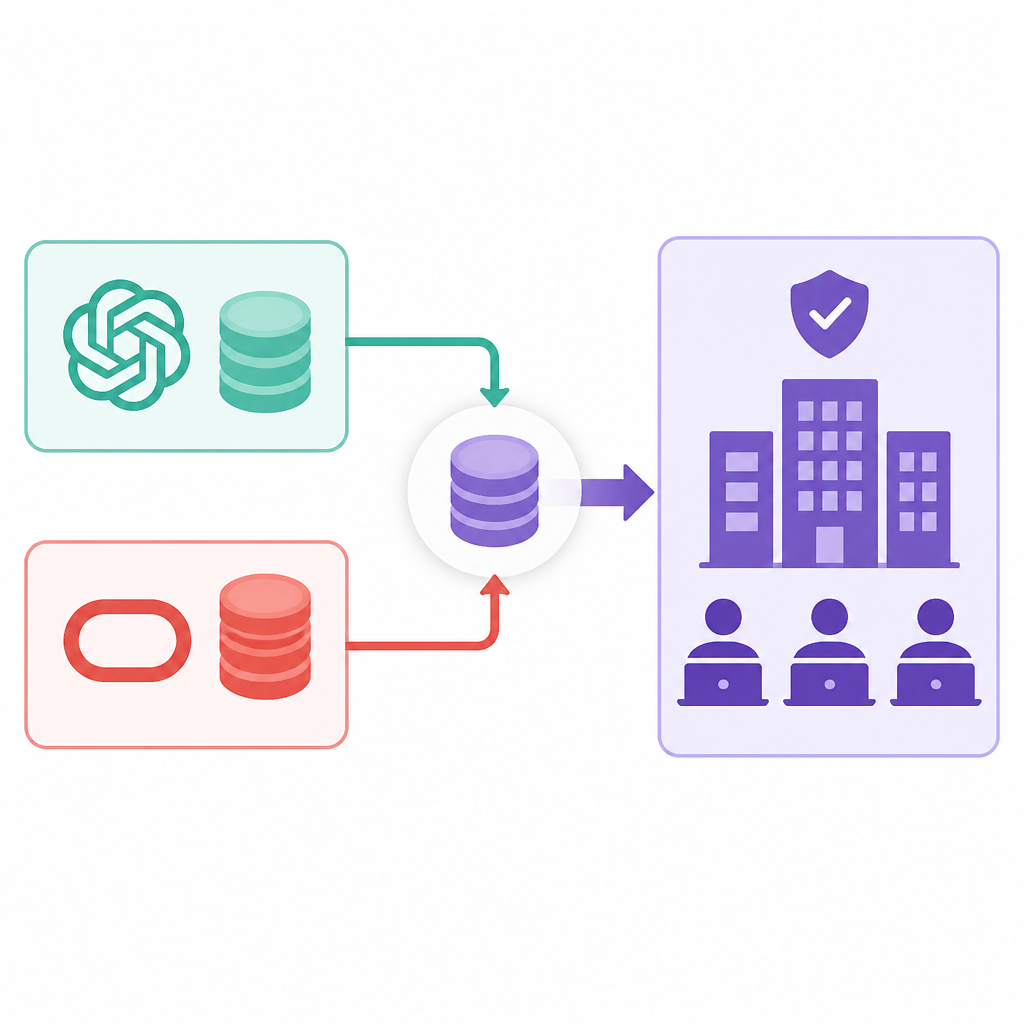
In other words, OpenAI is not trying to win every AI buyer through a fresh procurement cycle. It is trying to sit inside the cloud contract many of those buyers already signed. That matters more than a fresh benchmark chart because enterprise adoption often comes down to where the money is allowed to move, not which model wins a demo.
Oracle’s customer mix also helps explain the logic. The company sells heavily into banking, insurance, healthcare, and government, which are the same sectors where AI adoption gets slowed by compliance reviews and procurement rules. If OpenAI can get into those accounts through Oracle’s billing rail, it gets a cleaner path into regulated buyers.
- Oracle Cloud Infrastructure already has the enterprise relationships
- OpenAI brings the model demand
- Universal Credits provide the payment path
- Oracle’s backlog gives the deal immediate commercial weight
Why the timing changed in 2026
This deal was not possible under the old OpenAI-Microsoft arrangement. On April 27, 2026, Microsoft and OpenAI restructured their partnership and ended exclusivity. Microsoft still has rights to OpenAI IP, but on a non-exclusive basis. That opened the door for OpenAI to distribute models across more clouds, including Oracle, AWS, and Google Cloud.
That timing explains why the Oracle announcement landed when it did. OpenAI is broadening its distribution channels while Oracle is pushing OCI as a place where enterprise AI buying can happen inside existing contracts. The two strategies fit together because each company gets something the other already has: OpenAI gets access to committed enterprise spend, while Oracle gets a stronger AI pitch for customers who already buy cloud from it.
There is also a practical reason this matters now. OpenAI has spent the last year widening its commercial footprint beyond a single cloud relationship, and Oracle has spent the same period building its multicloud credit model. When those two moves meet, the result is less about technical novelty and more about how enterprise software gets purchased.
What buyers should do before this goes live
If your company already has Oracle commitments, the first question is simple: will OpenAI usage come out of credits you were going to spend anyway? If yes, this could be an easy way to add frontier models and Codex without adding a separate vendor bill. If no, you need to understand whether the convenience is worth the risk of unused credits.
Buyers should also ask Oracle for the exact model list, region availability, and any residency restrictions before they plan a rollout. OpenAI’s announcement is broad on purpose, which means the details will matter when procurement, security, and legal teams start reviewing the paper trail.
For regulated companies, the strongest signal here is not the model family. It is the billing path. AI adoption inside large enterprises often stalls because the purchase order is harder than the pilot. Oracle Universal Credits reduce that friction for customers already inside the Oracle ecosystem, and that may be the biggest reason this announcement matters.
The next question is whether other cloud vendors copy the same playbook and start bundling frontier model access into existing commitment structures. If they do, AI buying will look less like a standalone software purchase and more like a line item inside cloud spend, which is exactly where enterprise finance teams prefer it to be.
// Related Articles
- [IND]
X posts let execs shape the AI story
- [IND]
Jensen Huang’s AGI definition lowers the bar
- [IND]
Claude’s 2026 limit changes are a capacity story, not a product story
- [IND]
SSI's $5 Billion Backing Proves AI Safety Is a Product Strategy
- [IND]
A rogue AI agent slipped into a real cyberattack
- [IND]
The Pentagon should stop marketing AI with battlefield language