OpenAI’s Partner Network targets enterprise AI scale
OpenAI launched a Partner Network to train 300,000 certified AI consultants for enterprise adoption.

OpenAI launched a Partner Network to train 300,000 certified AI consultants for enterprise adoption.
This guide is for developers, startup operators, and AI consultants who want to understand what OpenAI’s new Partner Network means in practice. By following the steps below, you’ll know how to evaluate the program, prepare your team for certification, and decide whether to join as a partner or use it as a signal for enterprise AI demand.
You’ll also get a simple framework for tracking the legal and commercial risks around OpenAI’s push into enterprise services, so you can make a cleaner go or no-go decision.
Before you start
Get the latest AI news in your inbox
Weekly picks of model releases, tools, and deep dives — no spam, unsubscribe anytime.
No spam. Unsubscribe at any time.
- OpenAI account with access to the latest partner and enterprise pages
- Business email and company details for partner inquiries
- Developer access to the OpenAI API or ChatGPT Enterprise, if you plan to test workflows
- Node 20+ or Python 3.11+ for running quick integration checks
- Basic familiarity with enterprise sales, implementation, and AI governance
- Optional: a CRM, ticketing system, or internal wiki for tracking certification progress
Step 1: Review the Partner Network scope
Goal: confirm what the program is trying to do and where it fits in your enterprise AI strategy. The news peg is that OpenAI wants to train 300,000 certified AI consultants by year-end, which suggests a push to expand implementation capacity fast.

Start by reading OpenAI’s partner and enterprise documentation on the [OpenAI website](https://openai.com/) and checking the [OpenAI GitHub organization](https://github.com/openai) for product examples, SDKs, and reference projects. Note whether the program is aimed at consultancies, systems integrators, or in-house teams.
Verification: you should see a clear statement of partner eligibility, intended customer segment, and any certification or enablement requirements.
Step 2: Map your delivery model
Goal: decide whether your organization should join as a reseller, implementation partner, internal center of excellence, or evaluation-only observer. That choice determines how much time you should invest in certification and enablement.
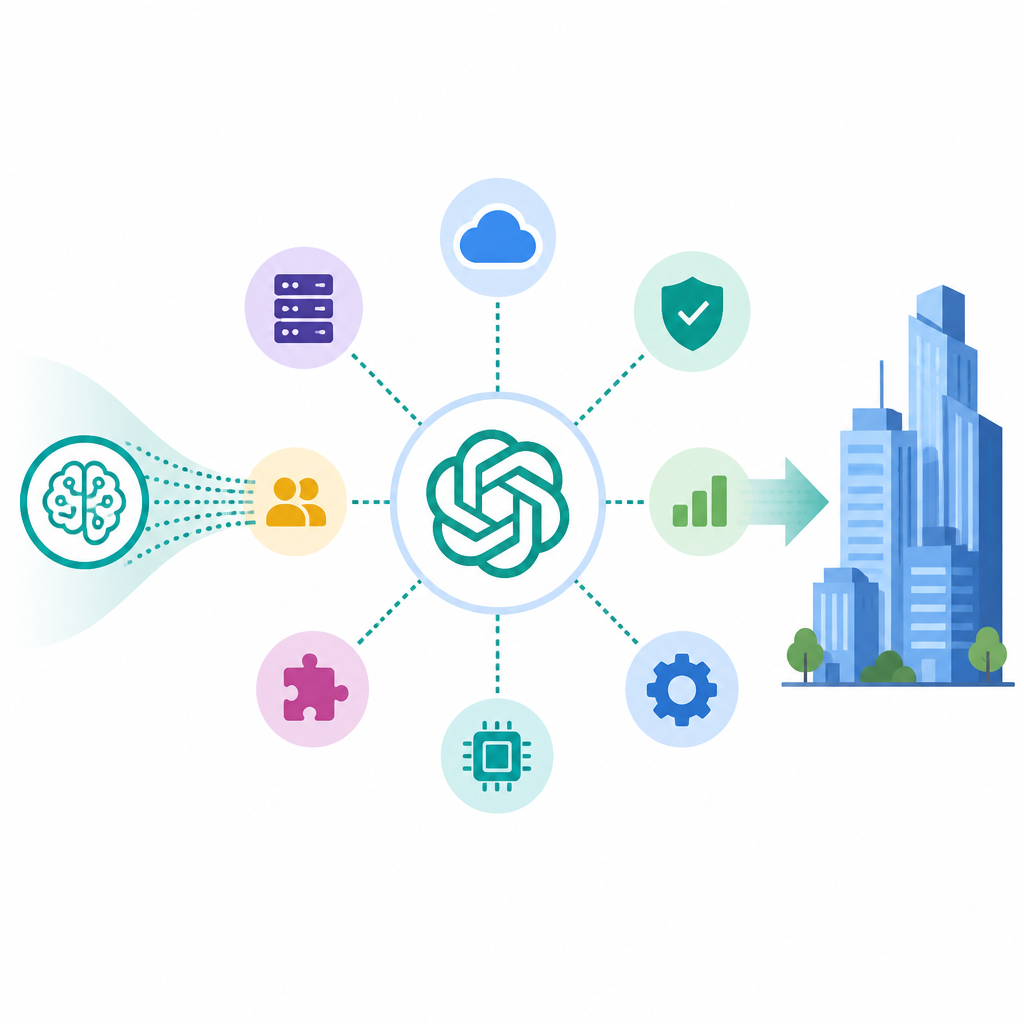
Write down three things: the services you can sell, the AI workflows you can support, and the industries you already serve. If your team already ships copilots, chat workflows, or retrieval systems, the partner program may help you package those services faster.
Verification: you should end with one named delivery model and a short list of target use cases, such as support automation, document search, or workflow agents.
Step 3: Build a certification checklist
Goal: prepare your team to qualify for partner training without wasting cycles on unclear requirements. Since the program is framed around scale, your internal process should be easy to repeat across consultants and customers.
Certification checklist example:
- Account created and verified
- Team lead assigned
- Core OpenAI product docs reviewed
- Sample app built with the API
- Security and data-handling review completed
- Customer-facing demo prepared
- Internal quiz or mock assessment passed
Verification: you should be able to point to a completed checklist for each consultant or technical lead, and you should have at least one demo that shows a real business workflow.
Step 4: Test one enterprise workflow
Goal: prove that the partner motion is useful to your own stack before you recommend it to clients. Pick one low-risk workflow, such as internal knowledge search, meeting summarization, or support ticket triage.
Build a small prototype using the OpenAI API or ChatGPT Enterprise, then measure setup time, prompt quality, and handoff points. Keep the scope narrow so you can learn whether the program helps with delivery speed, not just branding.
Verification: you should see a working prototype, a documented implementation path, and at least one metric you can compare later, such as setup time or resolution rate.
Step 5: Track legal and procurement signals
Goal: avoid treating the partner launch as a pure growth story. The program arrived while OpenAI faces a subpoena from 42 state attorneys general, so enterprise buyers may ask harder questions about privacy, advertising, minors, and model behavior.
Set up a short review for legal, security, and procurement stakeholders. Capture the questions they are likely to ask: data retention, model training policies, admin controls, audit logs, and contract terms. If you sell services, add a standard response pack for these questions.
Verification: you should have a risk register, an approved FAQ, and a named owner for legal follow-up before you move a deal forward.
Common mistakes
- Assuming certification alone creates demand. Fix: pair training with a specific customer use case and a demo.
- Skipping security review because the partner program looks official. Fix: run the same data and access checks you would for any enterprise AI tool.
- Pitching broad AI transformation instead of one workflow. Fix: lead with a single measurable outcome, such as faster support resolution or better document search.
| Metric | Before/Baseline | After/Result |
|---|---|---|
| Partner scale target | Not stated before the launch | 300,000 certified AI consultants by year-end |
| Legal risk context | No subpoena mentioned in the story | 42 state attorneys general subpoenaed OpenAI |
What’s next
If you want to go deeper, compare OpenAI’s partner motion with other enterprise AI ecosystems, then build a one-page partner evaluation template for your team. That will help you decide whether to join, pilot, or wait until the program matures.
// Related Articles
- [IND]
CUDA’s moat is being tested by AI coding agents
- [IND]
Rust’s 2026 updates reshape combat and base play
- [IND]
80% of Q1 2026 VC Went to AI, But Blockchain Is Next
- [IND]
Seed’s anti-distillation rule turns open models into policy
- [IND]
Windows Codex and Claude Code fixes that work
- [IND]
Rust 1.97.1 fixes a compiler bug stable users felt