Seed’s anti-distillation rule turns open models into policy
A practical breakdown of Seed’s anti-distillation stance and what it means for teams shipping open-weight models.
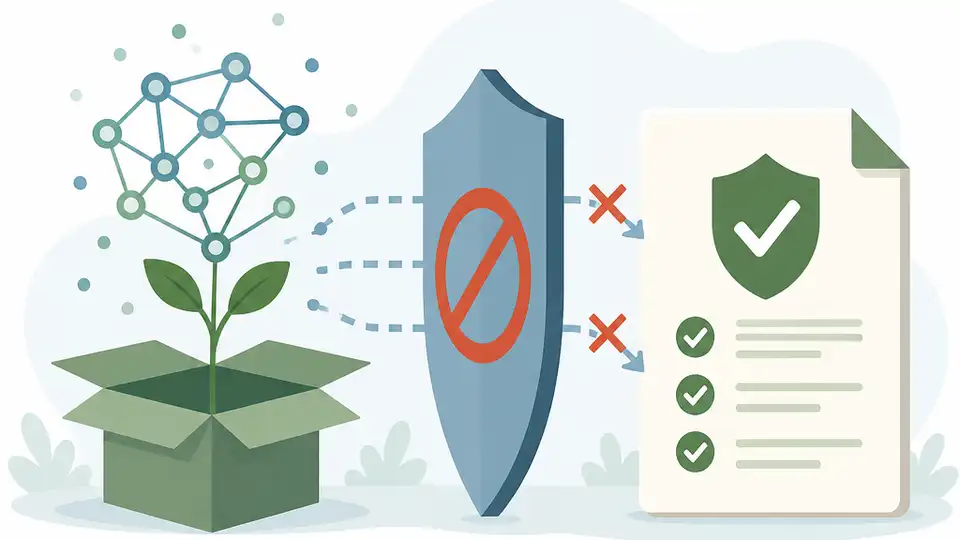
Seed’s anti-distillation stance turns open-weight model work into a policy problem, not just a training one.
I’ve been around enough model releases to know when something feels technically clean but operationally messy. This one had that smell. Everyone loves talking about open models, distillation, and how fast teams can copy a good system into their own stack. But once you start shipping models at scale, the real headache is not whether the weights are open. It’s what people do with them after they download them.
That’s why this piece caught my attention. The claim is not “open source is bad” or “distillation is evil.” It’s more annoying than that: if you publish a model, you may still want to tell people what they are not allowed to do with it. And if your model family is valuable enough, that restriction becomes part of the product. I’ve seen teams treat licensing like a footer. That usually ends badly.
Here’s the source that triggered this breakdown: a Zhihu post at zhuanlan.zhihu.com/p/2068766280816014549, framed around ByteDance founder Zhang Yiming and Seed, with the claim that Seed forbids distillation even for open models. The post also references Anthropic’s public accusations against several Chinese AI companies over large-scale distillation of Claude, while noting that Anthropic did not make the same accusation against ByteDance.
Open weights are not the same thing as open behavior
Get the latest AI news in your inbox
Weekly picks of model releases, tools, and deep dives — no spam, unsubscribe anytime.
No spam. Unsubscribe at any time.
“张一鸣禁止Seed 蒸馏,开源模型也不放过”
What this actually means is simple: you can hand out weights and still try to control how they’re used. People hear “open model” and assume the conversation is over. It isn’t. In practice, model release is a bundle of technical access, legal terms, and social expectations. If you only look at the weights, you miss the part that matters most once the model gets popular: downstream reuse.

I’ve seen teams get weirdly sentimental about openness. They want the marketing win of saying “open,” but they also hate the idea of someone else training a competitor on top of their work. So they add restrictions, or they quietly discourage certain uses, and then everyone acts surprised when the license discussion turns into the main event. It’s not hypocrisy. It’s reality.
How to apply it: when you release a model, write down what kind of openness you actually mean. Is it open weights, open code, open data, or just public access? If you care about distillation, say so in plain English. If you do not want your model used as a teacher, put that in the license and the model card. And if you do want that reuse, be honest about the tradeoff you’re accepting.
- Define the allowed use cases before launch, not after the first clone appears.
- Separate “can download” from “can retrain on outputs.” They are not the same.
- Make the restriction visible in the repo, not buried in a blog footnote.
Distillation is the shortcut everyone wants, which is exactly why people hate it
“通过大规模蒸馏,违规提取Claude的能力”
What this actually means is that distillation is basically model imitation at scale. You query a strong model, collect its outputs, and train another model to behave similarly. It’s not magic. It’s just expensive mimicry with better tooling. And because it works, everyone tries it. That’s why it shows up in accusations, license disputes, and policy arguments.
I ran into this pattern years ago with smaller ML systems. One team would build a good internal classifier, another team would scrape its predictions, and suddenly the second team had a “new” model that looked suspiciously competent. Nobody wanted to admit what happened because the technical line and the ethical line were both blurry. With LLMs, that blur gets much wider and much more profitable.
The reason companies get protective is not just intellectual property. Distillation can erase the original team’s product moat. If a model is good enough to teach cheaply, then the teacher becomes an unpaid data source. That’s why some companies treat output harvesting like theft, even when the mechanics look like ordinary model use.
How to apply it: if you operate a model API, decide whether you are selling answers, access, or training signal. Those are different products. If you are the model owner, rate-limit abusive patterns, log suspicious sampling behavior, and make your terms explicit. If you are the downstream builder, assume that heavy output collection may trigger contract, policy, or platform enforcement. Plan for that before you build your whole pipeline around it.
- Watch for repeated prompt templates and high-volume sampling from the same client.
- Track output similarity across large query batches.
- Use terms that address both direct copying and teacher-model extraction.
Anthropic’s accusation changes the temperature, not the facts
“Anthropic 并未对字节跳动提出类似指控”
What this actually means is that the public record matters. Anthropic has publicly accused several Chinese AI companies of distilling Claude at scale, but this post says that ByteDance was not named in that set of accusations. That distinction matters because people online love to collapse every company into the same bucket. The evidence here is narrower than the gossip.
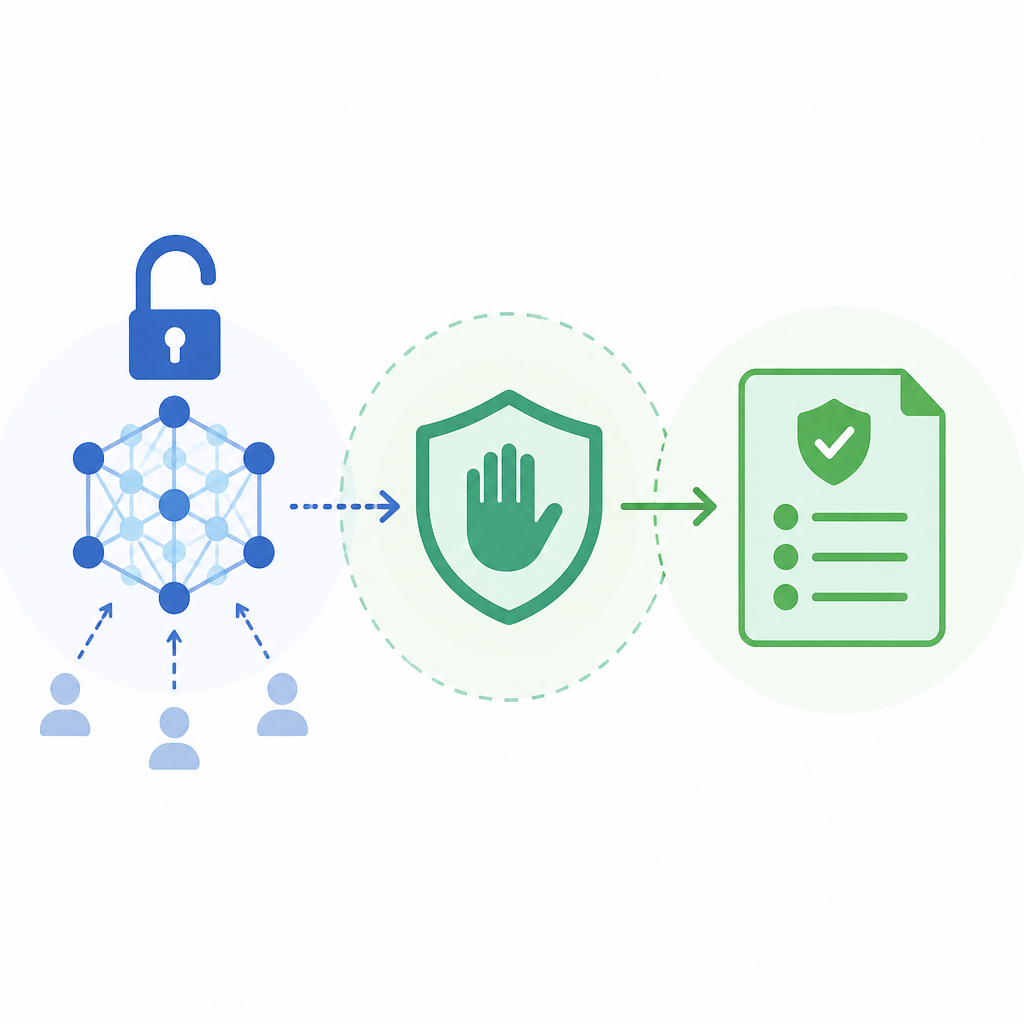
That’s also where I get annoyed with how these stories travel. A claim about one company becomes a vague accusation about an entire country’s AI scene, and then everyone starts talking like the facts are settled. They usually are not. If you are going to build an argument about model theft, you need to keep the names straight and the evidence attached to the right actor.
How to apply it: when you read or write about distillation disputes, separate three things. First, the accusation itself. Second, the source that made it. Third, what is actually proven. If you’re on a product or policy team, don’t build your response around rumor density. Build it around the exact claim, the exact model, and the exact behavior being alleged.
For the original context, I’d keep the source trail clean: the Zhihu post above, Anthropic’s public site at anthropic.com, and any direct statements from the companies being discussed. If you can’t point to the original text, you’re already drifting into secondhand nonsense.
Why open-model teams still write restrictions into the release
“开源模型也不放过”
What this actually means is that open release does not remove the incentive to control downstream behavior. In fact, it can make it more important. Once a model is public, you lose the clean boundary around who uses it and how. So teams try to recreate that boundary with licenses, acceptable-use policies, and community norms. It is a messy substitute, but it is the only one they have.
I’ve watched this happen in open tooling too. A repo goes public, people assume permission is unlimited, and then the maintainer has to explain that “open” was never meant to mean “do whatever you want.” The same fight happens with models, except the stakes are higher because the downstream use can become a competing model business in a matter of weeks.
The practical truth is that open models are often open for distribution, not open for extraction. That distinction is uncomfortable, but it is real. If your organization wants adoption, you may tolerate broad use. If it wants control, you will add clauses that limit training on outputs, fine-tuning for certain purposes, or commercial reuse without permission.
How to apply it: decide which of these you are optimizing for before release:
- Adoption: let people experiment freely and accept that some will build competing systems.
- Control: restrict distillation and downstream training, even if it slows community uptake.
- Hybrid: publish weights, but keep API access, premium data, or licensing terms for commercial use.
Once you choose, document it like you mean it. Half-hearted policy text just creates arguments later.
The real product is not the model, it is the boundary around the model
“禁止Seed 蒸馏”
What this actually means is that the boundary has become part of the product design. In older software, the moat was mostly in code, data, or distribution. With foundation models, the moat can be in access rules, output rights, and enforcement. That’s a shift a lot of teams still haven’t internalized. They think they are shipping a model. They are also shipping a policy surface.
I’ve had to explain this to founders who were convinced that a permissive release would magically create community goodwill without any downside. Maybe, sometimes. But if your model is good, someone will try to turn it into training data. If it is very good, they will do it at scale. At that point, your legal text, telemetry, and API controls matter as much as your benchmark scores.
How to apply it: treat model governance like product infrastructure. Put license checks in your release process. Add abuse detection to your serving stack. Keep a clear escalation path for suspected distillation. And if your company is serious about enforcement, say who owns that decision internally. If nobody owns it, the policy is fake.
Useful references for this part of the work include the Hugging Face model card pattern, the Apache 2.0 license for permissive software framing, and the OpenAI usage policies as an example of how access terms can shape downstream use. None of those solve the problem alone, which is exactly the point.
What this means for anyone shipping models this year
“不过,Anthropic 并未对字节跳动提出类似指控。”
What this actually means is that you should stop treating model releases like a one-way announcement. Every release now has two audiences: the people who will use it honestly, and the people who will try to turn it into their own training set. If you ignore the second group, you are not being principled. You are being naive.
I think the cleanest way to read the Seed story is not as a drama about one company. It is a reminder that model publishing now sits inside a legal and economic game, not just a technical one. That game has rules, and the rules are still being written by whoever is willing to enforce them.
How to apply it: before you ship your next model, answer these questions in writing:
- Do we allow distillation from outputs, yes or no?
- Do we allow commercial fine-tuning on top of our weights?
- Do we allow API output collection at scale?
- What evidence would make us act?
If you cannot answer those questions, your release strategy is incomplete. That is the part people keep skipping, and it is the part that comes back to bite them.
The template you can copy
## Model release policy for open-weight releases

### What we allow
- Public download of model weights for research, evaluation, and internal experimentation.
- Fine-tuning on the released weights, unless stated otherwise in the model card.
- Redistribution of the original weights only under the same license and attribution terms.

### What we do not allow
- Training a separate model on large volumes of our model outputs for the purpose of imitation or substitution.
- Automated scraping of API responses at scale to create a competing teacher-student dataset.
- Misrepresenting a derivative model as the original release.

### Distillation rule
Distillation from outputs is prohibited unless we give written permission.
This includes:
- collecting prompts and responses in bulk,
- using our model as a teacher for another general-purpose model,
- using output logs to recreate similar capabilities at scale.

### Enforcement
If we detect suspected distillation behavior, we may:
- rate-limit or suspend access,
- revoke API keys,
- request deletion of collected outputs,
- update the license or access terms for future releases.

### What users must include
Any derivative work must include:
- the original model name,
- the original license text,
- a clear note that the derivative model is not affiliated with us.

### Release checklist
Before publishing, confirm:
- the model card states the allowed and disallowed uses,
- the license matches the policy text,
- the API terms match the public release terms,
- logging and abuse detection are enabled,
- an internal owner is assigned to enforcement.

### Plain-English summary
You can use this model, but you cannot mass-copy its behavior into a competing model without permission.
The template above is mine, not the original post’s wording. The source that prompted this breakdown is the Zhihu article at https://zhuanlan.zhihu.com/p/2068766280816014549. The interpretation, structure, and copy-ready policy text are my own synthesis based on that source and the surrounding public discussion.
// Related Articles
- [IND]
80% of Q1 2026 VC Went to AI, But Blockchain Is Next
- [IND]
Windows Codex and Claude Code fixes that work
- [IND]
Rust 1.97.1 fixes a compiler bug stable users felt
- [IND]
OpenAI Astra turns math proofs into a workflow
- [IND]
OpenCode Go makes open coding models affordable
- [IND]
7 system design resources that actually help you prep