Rust 1.97.1 fixes a compiler bug stable users felt
1 patch release, 1 LLVM fix, and 1 urgent update path: Rust 1.97.1 is the stable branch correction users should install now.

What changed in Rust 1.97.1, and should stable users update now?
Rust 1.97.1 is a patch release that fixes an LLVM miscompilation and a related rustc bug.
1. A patch release built for correctness
Get the latest AI news in your inbox
Weekly picks of model releases, tools, and deep dives — no spam, unsubscribe anytime.
No spam. Unsubscribe at any time.
Rust 1.97.1 landed on July 16 as a small release with a narrow goal: fix a compiler bug before it caused more damage in stable builds. It is not a feature drop or a language update, but a maintenance release meant to restore trust in the toolchain.

The release fits Rust’s normal cadence. Stable generally ships every six weeks, while point releases are held for urgent bugs or security issues, which is why this version matters more than its number suggests.
- Release date: July 16
- Release type: patch update
- Main goal: correctness fix
2. The LLVM miscompilation fix
The core change was a backported LLVM submodule bump carrying the upstream fix for a miscompilation in an optimization pass. In plain terms, code could be compiled into something different from what the source intended, which is the kind of bug that can hide in production until it becomes a crash or worse.
The Rust team did not wait for the problem to age out. It pulled in the LLVM-side remedy directly, which is the fastest way to stop a compiler regression from spreading across stable toolchains.
- Upstream source of the fix: LLVM
- Risk type: miscompilation
- Impact: altered generated code without source changes
3. The rustc revert that kept the fix conservative
Rust 1.97.1 also reverted a rustc change that was known to trigger the bug path. The team described that revert as precautionary rather than strictly required, which shows a cautious release strategy: remove anything that might still interact badly with the repaired optimization.
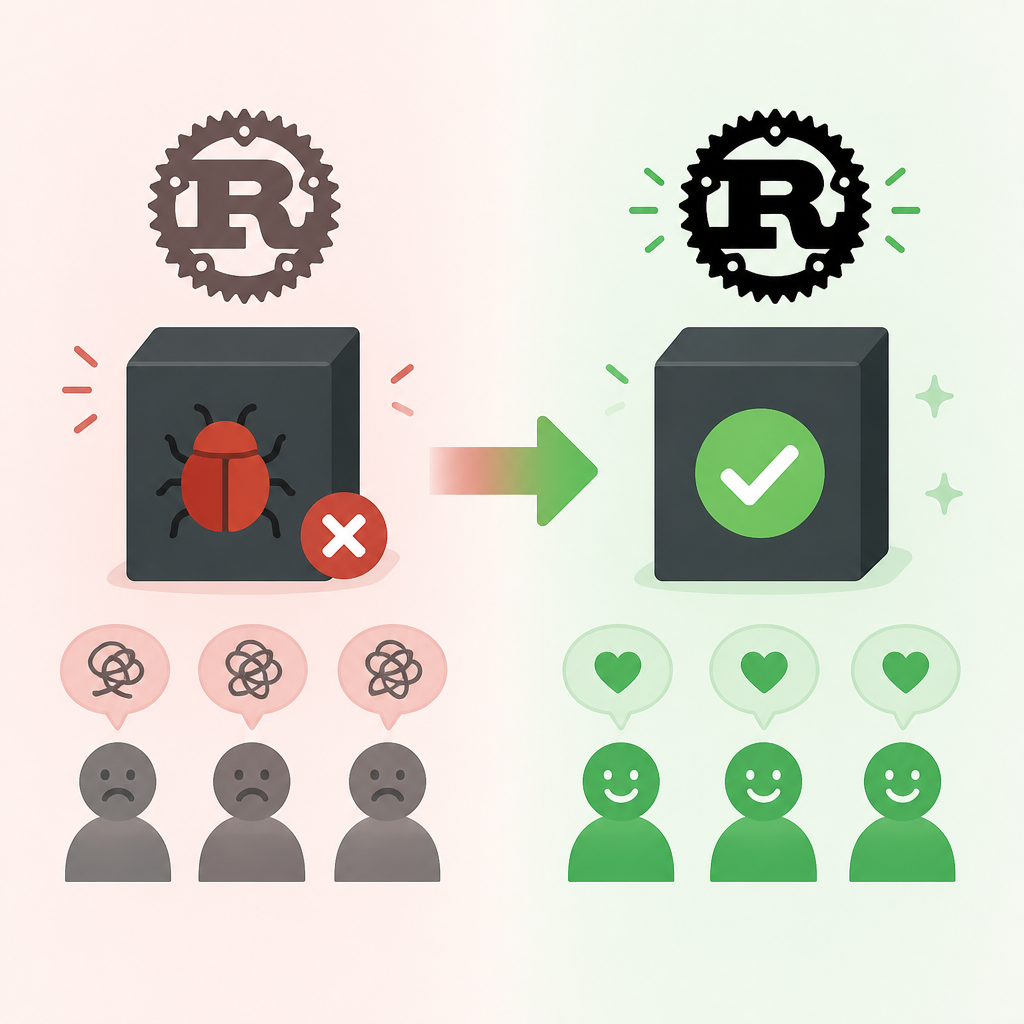
That matters because compiler bugs rarely respect neat boundaries. Even when the upstream fix exists, a related compiler change can still expose the same failure mode, so a revert can be the safer choice for stable users.
rustup update stable4. Why the segfault report made this urgent
The issue was tracked as rust-lang/rust issue #159035, and the title alone, segfault on Rust 1.97.0, signals why this was treated as urgent. A segfault is not a cosmetic regression. It is a hard failure that can stop builds, crash tests, or break deployed binaries.
For teams that pin toolchains in CI, ship distro packages, or compile production code from stable Rust, the risk is bigger than a failed test run. A miscompilation can silently change behavior while everything still appears to build normally.
- Tracked issue: rust-lang/rust #159035
- Reported symptom: segfault
- Who should care: CI teams, packagers, production builders
5. What the release means for stable users
If you are on stable Rust, the practical advice is simple: update now. The release does not add new language features, but it does remove a compiler-level fault that could affect correctness in ways application code cannot detect on its own.
That is the whole point of a point release like this. It keeps the stable channel dependable, especially after a bug tied to LLVM 19 to LLVM 20 changes showed how quickly a bad optimization can ripple outward.
- Direct action:
rustup update stable - Primary benefit: restored compiler trust
- Best fit: anyone building on stable
How to decide
If you build with stable Rust, install 1.97.1 now. If you maintain CI, package binaries, or ship Rust applications to users, this is a safety update, not an optional cleanup.
If you are tracking compiler internals, the useful detail is that Rust fixed the problem by combining an upstream LLVM remedy with a rustc revert. If you only care about shipping code that behaves the same after compilation, the decision is even simpler: update the toolchain and move on.
// Related Articles
- [IND]
80% of Q1 2026 VC Went to AI, But Blockchain Is Next
- [IND]
Seed’s anti-distillation rule turns open models into policy
- [IND]
Windows Codex and Claude Code fixes that work
- [IND]
OpenAI Astra turns math proofs into a workflow
- [IND]
OpenCode Go makes open coding models affordable
- [IND]
7 system design resources that actually help you prep