The Pentagon should not use Grok for wartime targeting
The Pentagon should not rely on Elon Musk’s Grok for wartime targeting or strike execution.

The Pentagon should not rely on Elon Musk’s Grok for wartime targeting or strike execution.
The Pentagon should not use Elon Musk’s Grok to support wartime targeting, because putting strike decisions inside a private chatbot’s ecosystem weakens accountability, raises security risk, and invites a dangerous confusion between speed and judgment. The recent claim that Grok helped support an operation involving 2,000 munitions in 96 hours is not evidence of strength; it is evidence that the military is becoming dependent on systems it does not fully control, from model behavior to infrastructure to the company behind it.
The first problem is accountability
Get the latest AI news in your inbox
Weekly picks of model releases, tools, and deep dives — no spam, unsubscribe anytime.
No spam. Unsubscribe at any time.
When a strike chain runs through a commercial AI product, responsibility gets blurred fast. A commander can be questioned, a planner can be audited, and a weapons officer can be disciplined. A model cannot explain itself in a way that satisfies due process, and a vendor cannot be allowed to absorb blame for a lethal decision made under government authority.
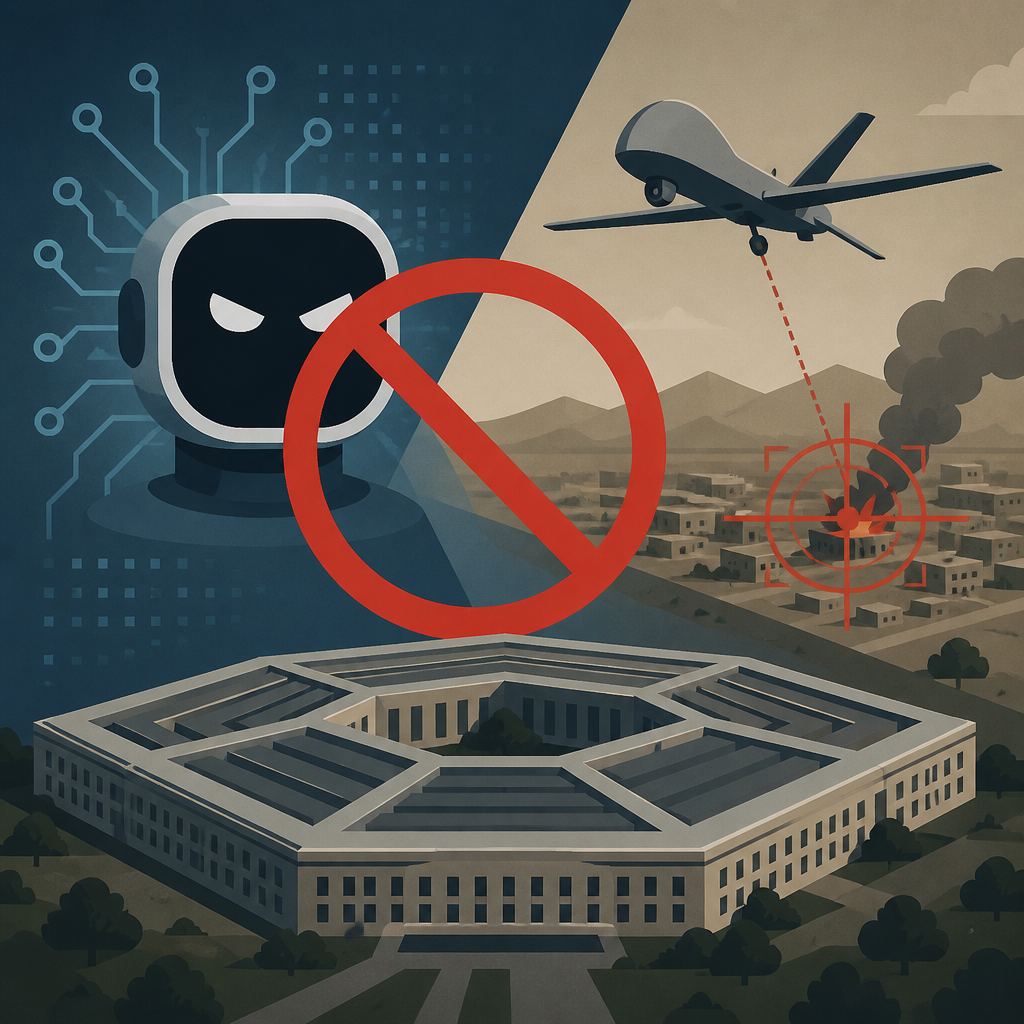
That matters more when the outcome is not a typo or a bad recommendation, but a missile launch. If a system helps identify targets, prioritize them, or compress the time between analysis and fire, then every failure in that pipeline becomes a moral and legal problem. The Pentagon cannot claim human control while relying on a tool whose behavior is shaped by opaque training data, hidden prompts, and vendor-managed updates.
The second problem is infrastructure dependence
The defense official’s sworn filing makes the real risk plain: the government is not just using a model, it is depending on the data centers, power supply, and corporate continuity behind it. That is a strategic weakness, not a strategic advantage. If the military needs a private company’s cloud stack and turbines to keep mission-critical systems running, then the company has leverage over national security whether it intends to or not.
We have already seen how brittle this becomes in practice. xAI is fighting allegations that its turbines are polluting Black communities, while the Pentagon is arguing that those same facilities are vital to national security. That is not a clean procurement story. It is a warning that the military is building core capability on contested infrastructure, then asking courts and regulators to treat the vendor’s expansion as an emergency necessity.
The counter-argument
Defenders of this approach make a serious case. Modern warfare is too fast, too data-heavy, and too distributed for old workflows alone. AI can sort imagery, fuse intelligence, and surface targets faster than human teams can do it manually. In a conflict where speed decides survival, refusing high-end software looks like self-sabotage.
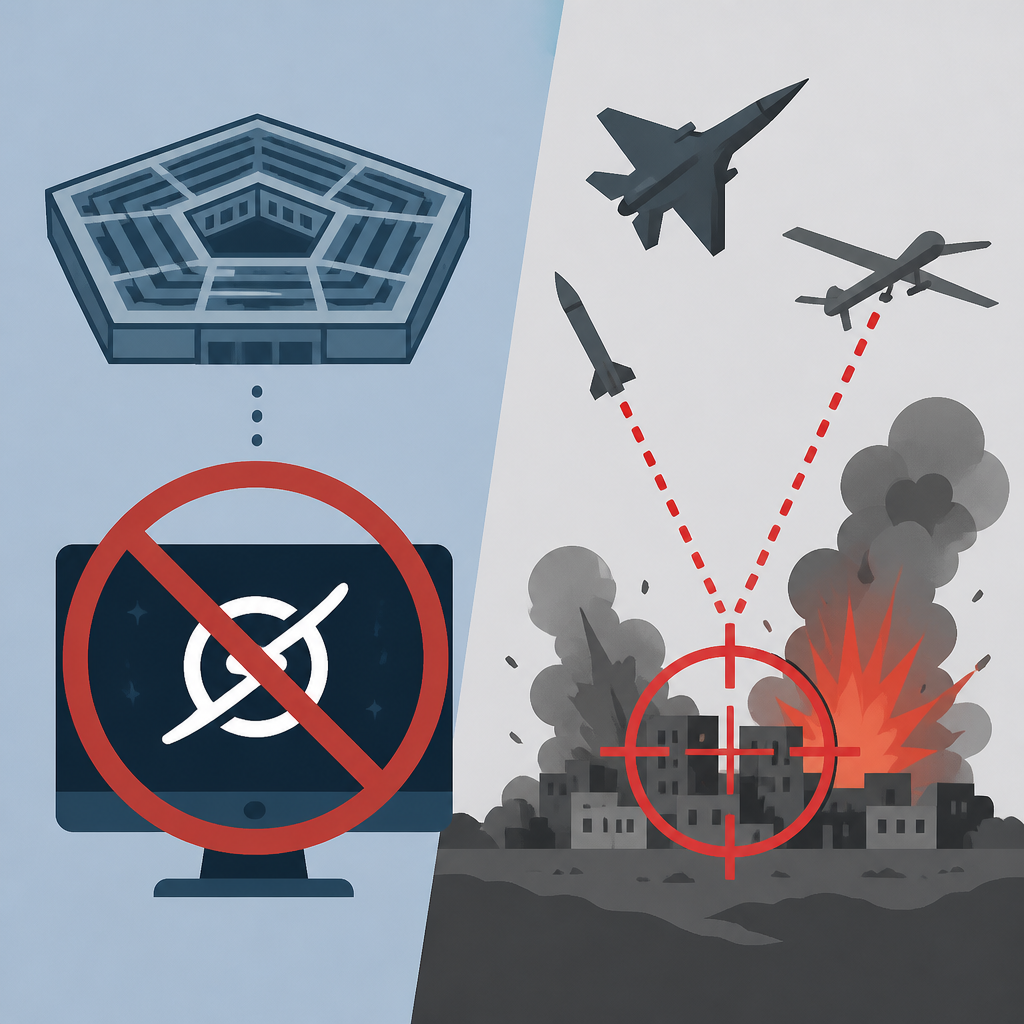
They also argue that the real issue is not AI itself but poor governance. A model used inside a controlled military workflow is not the same as an autonomous weapon. If humans approve every strike, if the system is tested, and if the chain of command remains intact, then AI is just another decision-support layer, like satellite imagery or encrypted communications.
That argument fails on the point that matters most: the Pentagon is not buying neutral software, it is binding itself to a vendor whose incentives are commercial, political, and unstable. Decision support is still power. When a model affects target selection, timing, or confidence, it shapes the outcome before a human signature appears. The answer is not to ban all military AI, but to reject any system that cannot be independently audited, continuously validated, and kept under government-controlled infrastructure.
What to do with this
If you are an engineer, build for separation: keep model inference, logging, and approval paths auditable, vendor-portable, and removable without operational collapse. If you are a PM or founder selling into defense, treat human authorization, red-teaming, and infrastructure independence as product requirements, not compliance theater. If you are a policymaker, draw a hard line around lethal decision-making and require public reporting on where AI is used, by whom, and under what safeguards. The standard is simple: AI can assist war planning, but it must never become the thing that makes war easier to start.
// Related Articles
- [IND]
CUDA’s moat is being tested by AI coding agents
- [IND]
Rust’s 2026 updates reshape combat and base play
- [IND]
80% of Q1 2026 VC Went to AI, But Blockchain Is Next
- [IND]
Seed’s anti-distillation rule turns open models into policy
- [IND]
Windows Codex and Claude Code fixes that work
- [IND]
Rust 1.97.1 fixes a compiler bug stable users felt