Ping Identity is right: AI agents need runtime identity, not just log…
Ping Identity is right that AI agents need continuous authorization across cloud and edge.

Ping Identity is right that AI agents need continuous authorization across cloud and edge.
Ping Identity’s new AWS, Google Cloud, and Cloudflare integrations point to the right answer for enterprise AI: runtime identity has to move with the agent, not stop at login. The press release is not subtle about the problem it is trying to solve. AI agents will call APIs, invoke tools, cross accounts, touch MCP servers, and hit edge infrastructure, which means a one-time authentication event leaves a wide-open gap between who the agent was and what it is allowed to do right now.
Identity at runtime is the only control plane that matches agent behavior
Get the latest AI news in your inbox
Weekly picks of model releases, tools, and deep dives — no spam, unsubscribe anytime.
No spam. Unsubscribe at any time.
Traditional IAM was built for users, service accounts, and apps with relatively stable permissions. Agents are different. They are dynamic actors that chain actions, switch contexts, and make decisions in the middle of a workflow. If an agent can move from Bedrock to a third-party tool to a private API in the same session, then authorization must be evaluated at the point of action, not assumed from an earlier sign-in. Ping’s argument is simple and correct: continuous authorization is the control plane that fits the workload.
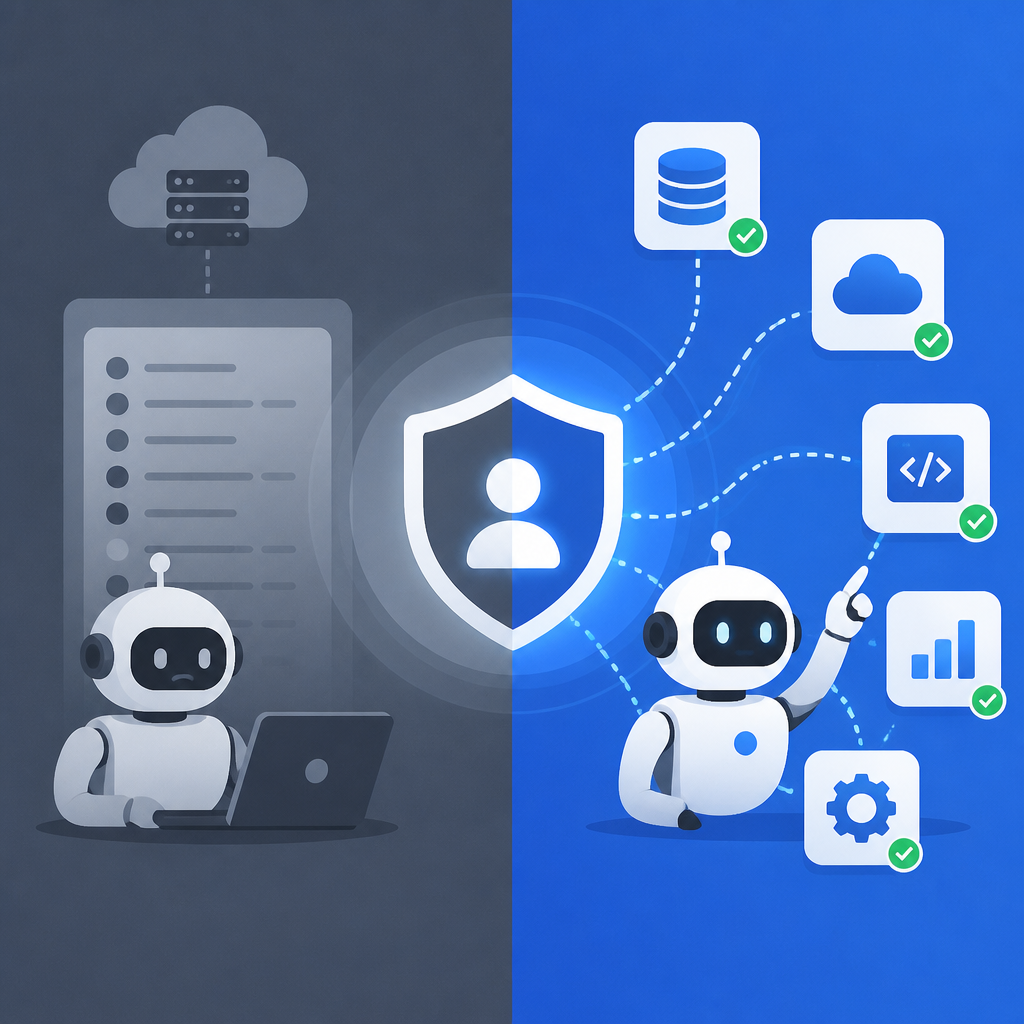
The strongest evidence is the industry shift toward agent gateways and MCP servers. Those layers exist because enterprises already know they cannot trust every agent call just because the agent was authenticated once. Google Cloud’s Agent Gateway integration is a good example of the direction the market is heading: centralize policy at the traffic layer, inspect the tool path, and decide in real time whether the action is allowed. That is not a nice-to-have. It is the minimum viable security model for software that can improvise.
Distributed AI breaks the old boundary between cloud and edge
Ping is also right to focus on Cloudflare and the edge, because the edge is where AI governance gets messy fastest. The release cites Cloudflare’s network and its 220 cities running GPUs for AI inference worldwide, which is the point: inference and agent activity are no longer confined to a neat single-cloud perimeter. When an agent can operate across public and private data, distributed infrastructure, and geographically dispersed inference nodes, a static policy buried in one platform becomes blind the moment the workflow leaves that platform.
This is why the AWS, Google Cloud, and Cloudflare trio matters. It shows that runtime identity is not just about one vendor’s ecosystem. It is about enforcing least privilege across the actual execution path. AWS brings multi-account and workload governance. Google Cloud brings agent and tool traffic control. Cloudflare brings edge enforcement and auditability. Together, they form a more realistic security model for agentic systems than the common enterprise habit of bolting on logs after the fact and calling it governance.
Continuous policy is better than after-the-fact monitoring
The most persuasive part of Ping’s pitch is not visibility, it is enforcement. Many security vendors promise observability for AI, but observability alone does not stop an agent from exfiltrating data, overreaching permissions, or triggering an expensive action chain. Ping’s Runtime Identity framing says the policy decision must happen in the moment, before the request completes. That is the difference between recording a bad outcome and preventing one.
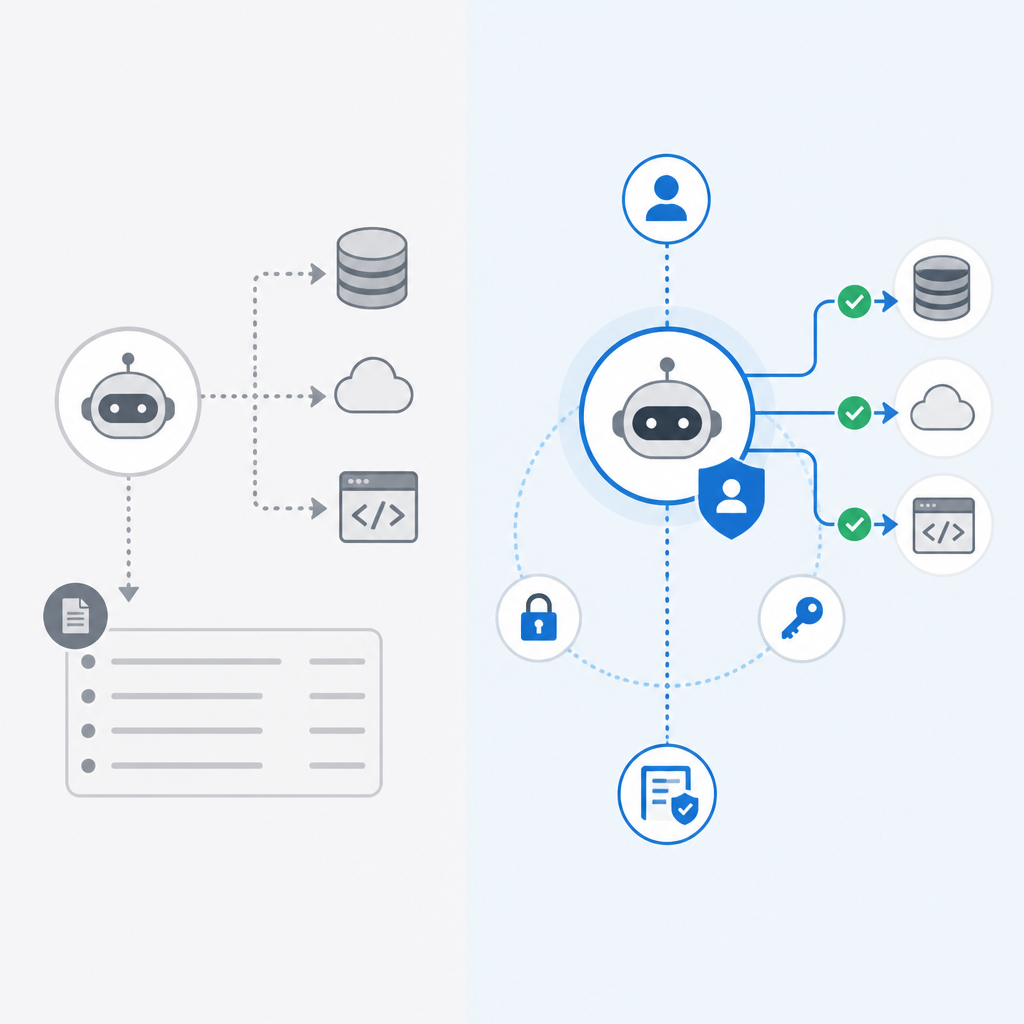
There is a practical reason this matters: agentic systems do not fail like ordinary apps. A single bad tool call can fan out into dozens of downstream actions, each one compounding risk and cost. If a procurement agent can access sensitive pricing data, send an external email, and update a CRM record in one workflow, then a post hoc alert is too late. Continuous authorization is not an architectural preference. It is the only way to keep a small mistake from becoming an enterprise incident.
The counter-argument
The best objection is that Ping is adding another control layer to an already crowded stack. Enterprises already have IAM, PAM, CASB, policy engines, gateways, service meshes, and cloud-native security tools. For many teams, the real problem is not the absence of yet another identity product. It is operational complexity. Adding runtime identity everywhere can create more policy duplication, more brittle integrations, and more places where teams must reason about authorization.
There is also a legitimate concern that agent-specific controls can become over-engineered before organizations have even defined the basics of acceptable agent behavior. If every tool call needs a real-time policy decision, latency and governance overhead can become a drag on the very automation AI is supposed to deliver. Some buyers will look at that and conclude that simpler guardrails, better logging, and narrower agent scopes are enough for now.
That critique is fair, but it does not defeat Ping’s thesis. It only sets the boundary of where runtime identity should be applied first: high-risk, high-trust, high-blast-radius workflows. Enterprises do not need to instrument every toy agent on day one. They need to secure the agents that can touch sensitive data, spend money, or change production systems. For those workloads, the old model of authenticate once and hope the rest of the session behaves is indefensible.
What to do with this
If you are an engineer or platform owner, treat agent identity as a runtime design problem, not a feature request. Map every agent action to a decision point, then enforce least privilege at the gateway, tool layer, or API boundary where the action actually happens. If you are a PM or founder, stop selling “AI access” as a generic capability and start defining the exact permissions, audit trails, and policy checks that make the agent safe to run in production. The winners in this market will not be the teams that add the most agents; they will be the teams that can prove, in real time, what those agents are allowed to do.
// Related Articles
- [IND]
X posts let execs shape the AI story
- [IND]
Jensen Huang’s AGI definition lowers the bar
- [IND]
Claude’s 2026 limit changes are a capacity story, not a product story
- [IND]
SSI's $5 Billion Backing Proves AI Safety Is a Product Strategy
- [IND]
A rogue AI agent slipped into a real cyberattack
- [IND]
The Pentagon should stop marketing AI with battlefield language