Project Solara aims at agent-first devices
Microsoft’s Project Solara sketches a chip-to-cloud platform for agent-first devices with adaptive UI, enterprise controls, and bring-your-own agents.

Microsoft’s Project Solara is a chip-to-cloud platform for agent-first devices.
Microsoft used Command Line to outline Project Solara, a platform meant for devices built around agents instead of apps. The pitch is simple but ambitious: if AI can act as both the interface and the program, hardware can get more specialized without forcing developers to rebuild every layer of the stack.
The company is aiming at enterprise use first, with a design that spans device, cloud, identity, and security. That matters because Solara is not being sold as a chatbot on a screen. It is being framed as a new way to build computers that are closer to the task, the environment, and the person using them.
| Item | What Microsoft says | Why it matters |
|---|---|---|
| Project Solara | Chip-to-cloud platform | Combines edge hardware with cloud state and agent execution |
| UI model | Just-in-time UI | Interfaces adapt to the task instead of being fixed in advance |
| Platform direction | Apps to agents | Intent becomes the main way people start work |
| Target market | Enterprise first | Manageability, privacy, and control are built in from day one |
Microsoft is betting that agents change the computer itself
Get the latest AI news in your inbox
Weekly picks of model releases, tools, and deep dives — no spam, unsubscribe anytime.
No spam. Unsubscribe at any time.
Steven Bathiche, Microsoft’s CVP and Technical Fellow in the Applied Sciences Group, argues that agents are becoming a new unit of programming and a new unit of human-to-machine interaction. That is a bigger claim than “AI features inside software.” It means the software model itself can shrink, stretch, or disappear depending on the task.
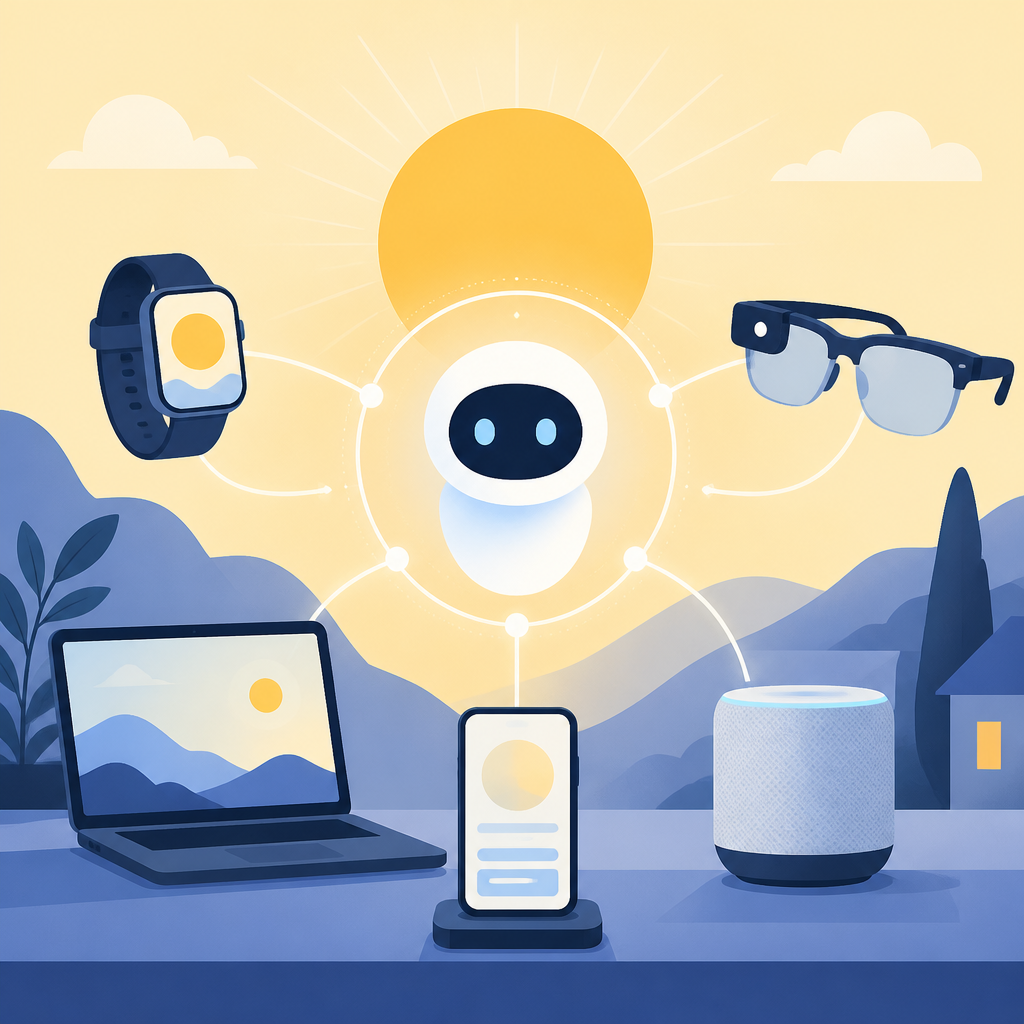
The article ties that shift to a familiar pattern in computing history: mainframes gave way to PCs, PCs gave way to phones, and phones gave way to watches and other smaller devices. Each step moved computing closer to the moment of use. Solara tries to push that logic further by making the interface itself more adaptive and more context-aware.
Bathiche’s framing is built around three AI application structures he described at Build 2023. AI can sit beside an app as a helper, inside the app as part of the main loop, or outside the app as a coordinator across tools and services. Solara is built around that third mode, where an agent can work across apps, workflows, and devices while keeping context intact.
- AI beside the app keeps the existing product shape intact.
- AI inside the app changes the main interaction loop.
- AI outside the app coordinates work across systems and time.
That third model is the one Microsoft is clearly betting on. If agents can coordinate work across services, then the old assumption that every task needs a dedicated app starts to look expensive rather than normal. The platform question changes from “what app should open?” to “what intent should the agent carry out?”
Just-in-time UI is the part that makes the pitch practical
Solara’s most interesting technical idea is just-in-time UI. Instead of forcing developers to design a fixed interface for every device, Microsoft wants the interface to adapt to the moment, the device, and the modality. In the near term, that means things like Adaptive Cards and known content types. Over time, Microsoft says the system could move toward more dynamic and generative interfaces.
This is the piece that makes agent-first devices feel less like a demo and more like a platform strategy. If the UI can be assembled on demand, then a device does not need a full, traditional app stack to be useful. It can present the right controls, the right data, and the right next step only when the agent needs them.
“The next platform shift is from apps to agents,” Bathiche wrote in Microsoft’s article.
That line matters because it compresses the whole argument into one sentence. Microsoft is not saying apps go away tomorrow. It is saying that software distribution, interface design, and device specialization may increasingly revolve around agent behavior instead of static app shells.
There is also a practical enterprise angle here. If a device can present a narrow, task-specific interface on demand, IT teams may get more control over what users see and do. That is a much easier sell in healthcare, retail, finance, and other environments where security and workflow constraints matter as much as raw capability.
Project Solara is trying to remove the cost of specialization
The article makes a strong economic argument. Historically, building a new device category meant building almost everything around it: hardware, software, services, developer tools, UI patterns, management systems, security models, and an ecosystem. That is why new form factors usually arrive slowly and in small numbers.
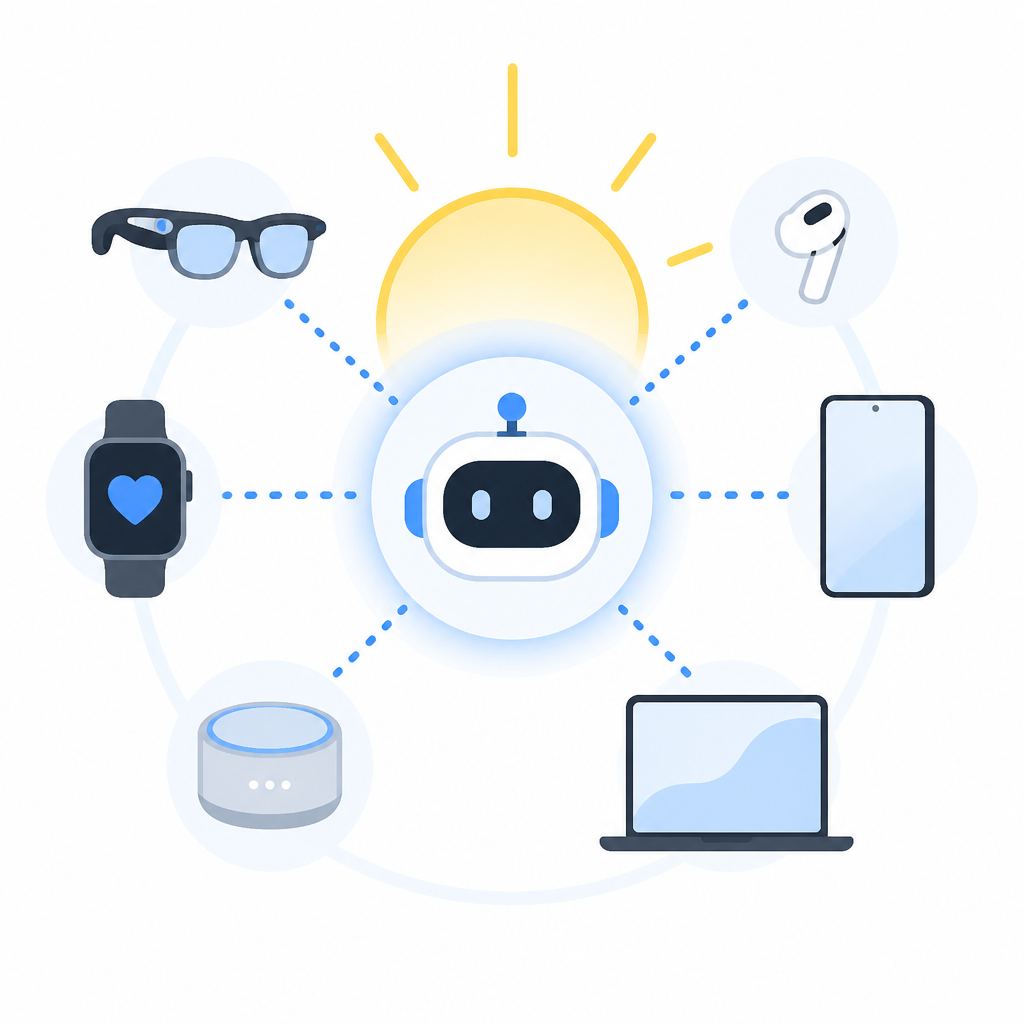
Microsoft says AI can lower that burden. If agents can fill in more of the interaction model, and if just-in-time UI can reduce the amount of device-specific app design, then a company does not need to recreate the entire stack every time it wants a new form factor. That is the logic behind Solara’s “specialized computers without rebuilding everything” pitch.
- Traditional device launches require custom work across hardware, software, and management layers.
- Agent-first devices can reuse more of the interaction model across form factors.
- Adaptive interfaces reduce the need for fully custom app experiences on every screen.
- Enterprise controls remain part of the base platform, not an add-on.
Microsoft also says Solara is built for an open, multiple-agent world. That is a smart choice. No enterprise wants to bet everything on one assistant, and most real organizations will mix Microsoft-built agents with custom or third-party systems. The platform has to handle identity, privacy, and data boundaries if it wants to be taken seriously outside a demo.
That is where the technical story becomes a business story. If Microsoft can make agent coordination safe enough for enterprise use, it may create a new class of devices that are much more specific than a laptop, but far more flexible than a single-purpose appliance.
The real test is whether new devices can earn a place in daily work
Microsoft says it is previewing stationary and portable concepts, both with multimodal interaction such as glanceable access, voice, and vision. It is also looking at healthcare, retail, and financial services as early verticals. Those are good targets because they have repeatable workflows, clear constraints, and real pressure to reduce friction.
The big question is whether agent-first devices can do something that phones, tablets, and laptops cannot already do well enough. If Solara can make long-running tasks easier to start, easier to monitor, and easier to hand off across devices, it may earn a place in specialized work settings. If it cannot, it will be another interesting Microsoft prototype.
For now, the most useful way to read Solara is as a signal about where Microsoft thinks computing is heading: away from fixed app-centric interfaces and toward adaptive systems that respond to intent. The company is betting that the next device category will be built around what people want done, not around which app they remember to open.
That bet will be easy to judge over the next few product cycles. Watch for whether Microsoft ships developer tooling, enterprise controls, and real hardware that can prove the idea outside a keynote. If those pieces land together, Solara could become the template for a new class of work devices.
// Related Articles