RWA tokenization is becoming the new default for ownership
RWA tokenization is moving ownership of real estate, credit, and Treasuries on-chain, and institutions should treat it as the new default.

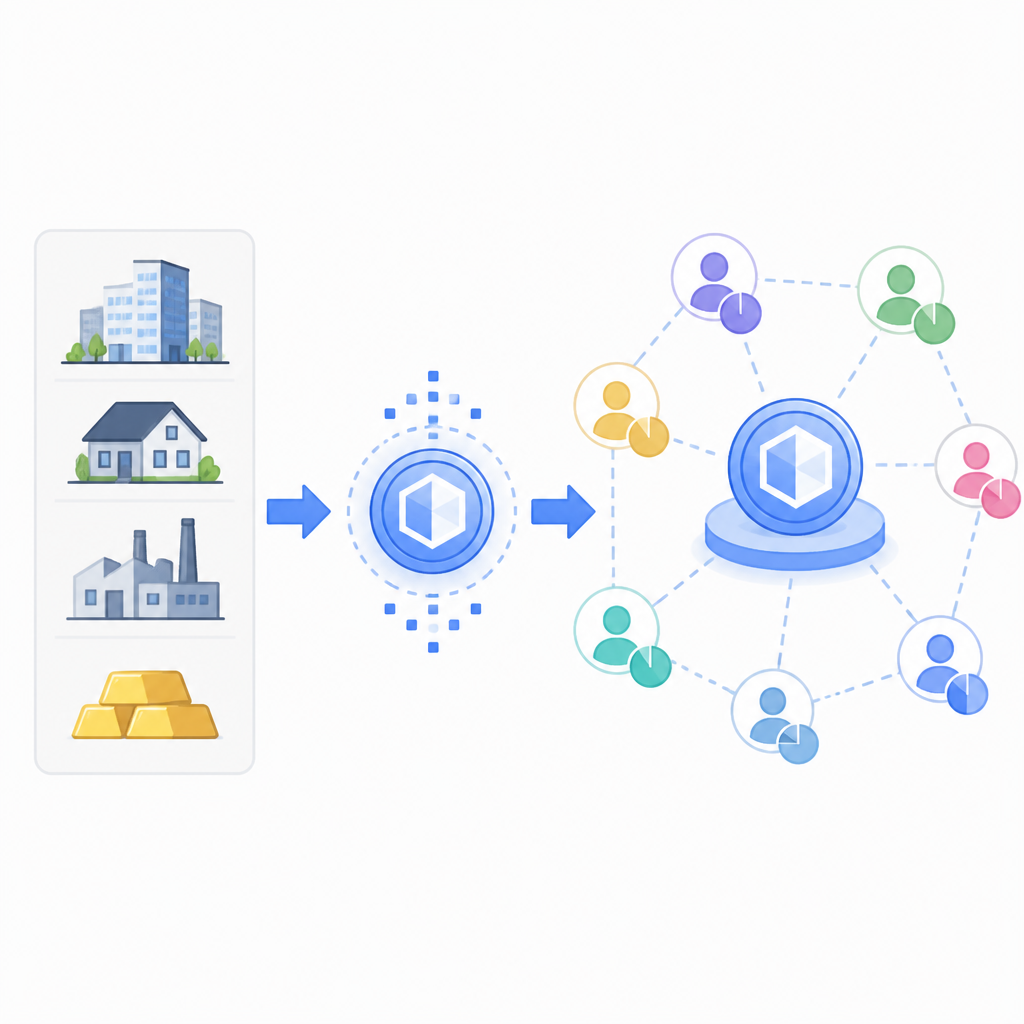
RWA tokenization is moving real estate, credit, and Treasuries onto regulated blockchain rails.
RWA tokenization is not a side experiment anymore; it is becoming the default way institutions will package, move, and sell ownership in real-world assets. The evidence is already visible in the market: tokenized U.S. Treasuries climbed from under $100 million in early 2023 to more than $7.5 billion by mid-2025, private credit now makes up 61% of tokenized assets, and the total value of tokenized assets on public blockchains reached about $18 billion by mid-2025. When BlackRock, Franklin Templeton, JPMorgan, and Apollo are building around the same infrastructure, the argument is no longer about whether tokenization matters. It is about how fast the rest of finance has to adapt.
Tokenization solves the oldest problem in ownership: friction
Get the latest AI news in your inbox
Weekly picks of model releases, tools, and deep dives — no spam, unsubscribe anytime.
No spam. Unsubscribe at any time.
The core appeal is not novelty. It is compression. A commercial real estate transaction usually means attorneys, title companies, brokers, escrow, and days or weeks of coordination. Tokenization strips out layers of manual reconciliation by turning ownership into programmable units that can settle in seconds. A property can be split into thousands of tokens, with smart contracts handling onboarding, compliance checks, and income distribution without forcing every transfer through a paper-heavy workflow.

That matters because the market is not short on assets, it is short on liquidity. Real estate has always been desirable and notoriously hard to trade. Deloitte projected that tokenized private real estate funds alone could reach $1 trillion by 2035, and by 2025 tokenized real estate assets had already passed $10 billion in value. Those numbers do not prove inevitability, but they do prove demand. Investors want access to assets that were previously locked behind high minimums and slow settlement, and tokenization gives them a path in.
Credit is the real center of gravity
Real estate gets the headlines, but credit is where the largest tokenization activity is happening by dollar volume. That is not an accident. Private credit is a roughly $1.9 trillion global market, and it is structurally suited to tokenization because the product is already defined by cash flows, terms, and recurring payment schedules. When those elements live on-chain, fractional ownership and automated interest distribution become straightforward rather than aspirational.
The proof is in the platforms. Figure Technologies has tokenized more than $10 billion in loans, including home equity lines of credit and mortgage-backed assets. Apollo’s ACRED, Maple Finance, and Centrifuge are broadening the range of credit products available on-chain, while BlackRock’s BUIDL fund pulled billions into on-chain Treasury exposure in its first year. These are not crypto-native curiosities. They are institutional products built to solve a real market problem: how to make large, yield-bearing assets easier to distribute, monitor, and trade.
Regulation is no longer the excuse
For years, the strongest case against tokenization was simple: the law was not ready. That argument is weakening fast. The GENIUS Act created the first federal framework for stablecoins in the United States in 2025, requiring full reserve backing and monthly disclosures. The Clarity Act, expected in 2026, is aimed at drawing cleaner lines around which digital assets count as securities and which do not. In Europe, MiCA has already gone fully live, giving firms a standardized rulebook across the EU.
That shift changes investor behavior. EY found that 67% of institutional investors had exposure to or planned to allocate to digital assets by early 2025. In 2026, high-net-worth individuals are expected to allocate 8.6% of their portfolios to tokenized assets, while institutions are expected to target 5.6%. Those are not fringe allocations. They signal a market that has moved from curiosity to policy, procurement, and portfolio construction. The remaining tax questions are real, but they no longer justify waiting on the sidelines.
The counter-argument
The strongest objection is that tokenization can overpromise and underdeliver. Secondary liquidity is still thin in many markets, smart contract risk is real, and tax treatment remains incomplete in the United States. A token is not magic. If the underlying asset is illiquid, poorly governed, or hard to value, putting it on a blockchain does not fix the economics. It can even make the operational surface area larger if custody, compliance, and cross-jurisdiction rules are not handled carefully.
That critique is valid, but it misses the direction of change. Tokenization is not claiming to abolish risk. It is reducing the cost of moving ownership and widening the investor base for assets that already exist. The fact that institutions are building through regulated platforms, not around them, is the key signal. BlackRock, JPMorgan, and Franklin Templeton are not chasing a speculative trend; they are standardizing a new distribution layer for finance. The limits are real, but they are implementation limits, not thesis killers.
What to do with this
If you are an engineer, build for compliance, auditability, and clean settlement before you build for speed. If you are a PM, treat tokenization as a distribution and liquidity strategy, not a branding exercise. If you are a founder, focus on one asset class with clear cash flows and a real operational pain point, then design the product around regulated rails from day one. The winners will not be the teams that talk about blockchain the most. They will be the teams that make ownership cheaper, faster, and easier to trust.
// Related Articles
- [IND]
Anthropic’s data center push now has big capital backing
- [IND]
DailyArxiv turns arXiv keywords into a daily paper feed
- [IND]
Claude vs ChatGPT (2026): Is Claude Better?
- [IND]
CBDC Governance: Standards and Stakeholder Roles
- [IND]
Invisible AI watermarks are the right move for Claude
- [IND]
pgvector is enough for small datasets, not your default