Sia’s OpenAI partnership is a sign enterprise AI is becoming a servic…
Sia’s OpenAI partnership shows enterprise AI is now won by implementation partners, not tool demos.

Sia’s OpenAI partnership shows enterprise AI is now won by implementation partners, not tool demos.
Sia joining the first wave of OpenAI’s Partner Network is not just a press release about momentum; it is evidence that enterprise AI has crossed from product novelty into services-led execution. The companies that will win with frontier AI are no longer the ones that buy the most licenses or pilot the flashiest chatbot. They are the ones that can redesign workflows, enforce governance, and turn adoption into measurable business outcomes.
The real bottleneck is implementation, not access
Get the latest AI news in your inbox
Weekly picks of model releases, tools, and deep dives — no spam, unsubscribe anytime.
No spam. Unsubscribe at any time.
OpenAI’s decision to back a partner network with a reported $150 million investment is a blunt admission that enterprise demand is no longer constrained by model availability alone. The gap is in deployment. Firms can buy access to ChatGPT Enterprise or Codex, but that does not make a sales team more productive, a finance function faster, or a software org more disciplined. Sia’s positioning around adoption strategy, use-case identification, and change management is the right answer to the actual bottleneck.
The article gives the clearest proof in its own examples: Sia says it has already helped global organizations with more than 10,000 employees roll out ChatGPT Enterprise across multiple business functions and geographies. That kind of scale is where AI initiatives usually fail, because success depends less on model quality than on rollout design, policy, training, and workflow integration. A partner ecosystem exists because the hard part is not getting AI into the company. The hard part is making the company use AI well.
Enterprise AI is becoming a consulting and integration category
Sia’s pitch is not that it has a special model. It is that it can translate OpenAI technology into business process change. That matters because enterprise buyers do not purchase “AI” in the abstract. They buy risk reduction, productivity gains, and faster cycle times. A firm that can combine strategy with execution has an advantage over vendors that stop at enablement decks and sandbox demos.
The distinction shows up in the article’s focus on two concrete tracks: enterprise adoption of ChatGPT and Codex in business workflows, and Codex for software engineering transformation. Those are not science projects. They are operational categories with clear owners, budgets, and metrics. When an AI partner can speak the language of engineering standards, governance, and workflow redesign, it becomes part of the enterprise delivery stack. That is why this announcement matters more than a typical alliance post.
Governance is now a feature, not a footnote
One of the strongest lines in the release is also the most revealing: the organizations leading in AI are not defined by the volume of tools they deploy, but by their ability to focus on high-value use cases and embed governance, risk, and accountability from the outset. That is the right frame. Enterprises do not fear AI because it is useless. They fear AI because unmanaged AI creates security exposure, compliance problems, and operational chaos.
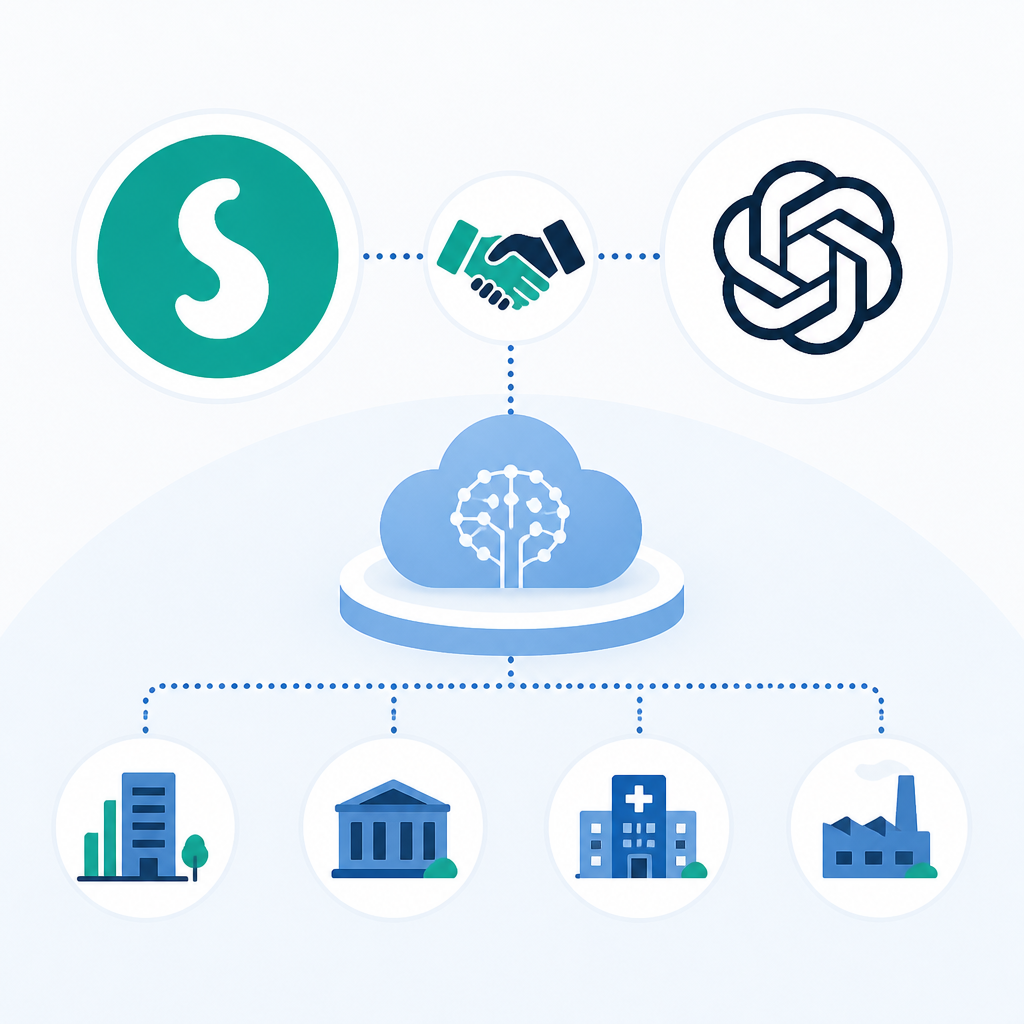
Sia’s emphasis on governance and accountability is not decorative language. It is the price of admission for enterprise-scale AI. A rollout that ignores permissions, data handling, auditability, and change control will not survive contact with legal, IT, or frontline managers. The market is moving toward partners that can make AI safe enough to use at scale. That shift favors consultancies and systems integrators with real operating muscle, not just software vendors with a strong product narrative.
The counter-argument
The best objection is that this kind of partnership may simply be a way to package old consulting work in new AI branding. Many enterprises already have internal transformation teams, cloud partners, and data leaders. If AI is just another layer on top of process improvement, why should a founding partnership with OpenAI matter at all? There is also a real risk that partner networks become status symbols, not proof of differentiated capability.
That criticism lands if the partnership produces only marketing visibility. But the article points to something more concrete: enterprise-wide rollouts, mid-market deployments, workflow integration, and engineering transformation. Those are delivery motions, not slogans. I accept the limit that a partnership alone does not guarantee client outcomes. Still, in a market where most organizations are stuck between experimentation and scale, the firms that can operationalize AI are the ones that matter. The network is valuable because it concentrates execution capacity around the hardest part of adoption.
What to do with this
If you are an engineer, PM, or founder, treat this announcement as a signal to stop framing AI work as a tool selection exercise. Build around one high-value workflow, define the governance rules before rollout, and measure adoption by business output, not usage counts. If you are selling into enterprises, your edge is no longer model access alone. It is your ability to make AI survive procurement, security review, and day-to-day operations. That is the market Sia is betting on, and it is the market everyone else should prepare for.
// Related Articles