Sora AI in 2026: realistic video generation guide
Follow the Sora 2026 timeline, compare rivals, and plan a migration path.

Sora AI in 2026 is a retired benchmark for realistic text-to-video generation.
This guide is for developers, product teams, and AI builders who need a clear view of what Sora AI became in 2026, why it was shut down, and what to use instead. After following the steps, you will have a practical timeline, a competitor comparison, and a migration plan for video workflows built around modern generative models.
Before you start
Get the latest AI news in your inbox
Weekly picks of model releases, tools, and deep dives — no spam, unsubscribe anytime.
No spam. Unsubscribe at any time.
- An OpenAI account with access to the Sora API history or your own archived outputs
- A current account with Google DeepMind Veo 3, ByteDance Seedance 2.0, or Luma Dream Machine for comparison testing
- Node 20+ or Python 3.11+ for scripting prompt tests and media checks
- Access to the official OpenAI docs at platform.openai.com/docs and the OpenAI GitHub org at github.com/openai
- A media player or frame inspection tool for reviewing output consistency
- Optional C2PA tooling if you need provenance checks for generated video
Step 1: Map the Sora shutdown timeline
Your first outcome is a clean timeline that explains what happened to Sora AI in 2024, 2025, and 2026. This helps you separate the initial launch, the Sora 2 update, the app shutdown, and the final API discontinuation.
December 2024: Public launch for ChatGPT Plus and Pro users
September 2025: Sora 2 release with social features
April 26, 2026: Sora app shutdown
September 24, 2026: Final API discontinuation
You should see a four-point lifecycle that matches the public record and gives your team a shared reference for planning.
Step 2: Identify the technical legacy
Your next outcome is a short technical summary of why Sora mattered. The source describes a transformer-based system that treated video as spacetime patches, which is the key idea behind its world-simulation style generation.
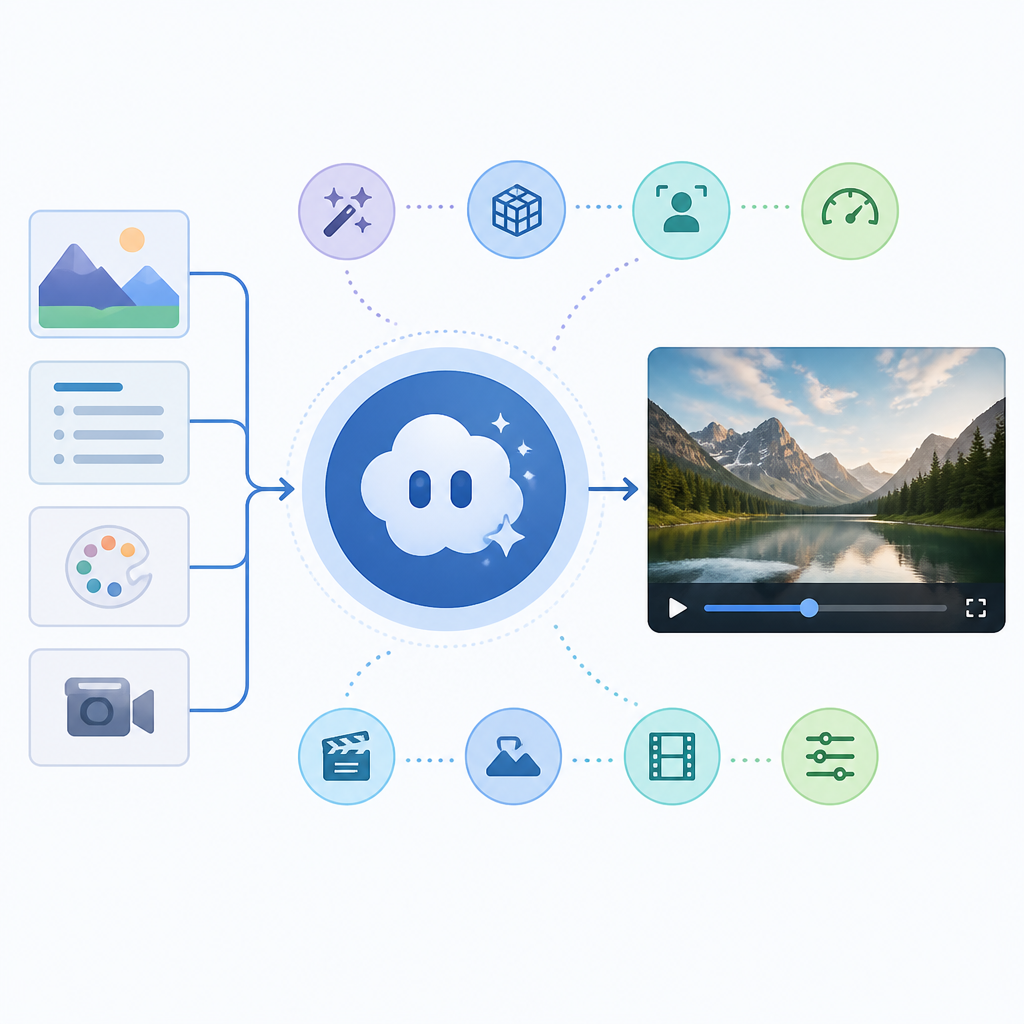
Write down the three capabilities that made Sora influential: realistic motion over time, character consistency across shots, and clip extension before or after the visible action. Those features explain why the model set an industry benchmark.
You should see a note that connects Sora to 1080p and 4K-era expectations, plus the idea that later models copied its temporal consistency model.
Step 3: Compare modern video models
Your outcome here is a decision table for choosing a replacement. The 2026 market has shifted toward tools that add either native audio, faster rendering, or more controllable workflows.
Use Veo 3 when audio matters.
Use Seedance 2.0 when short-form speed matters.
Use Dream Machine when you need flexible text and image generation.
Use Sora only as a historical baseline for comparison.
You should see a clear split: Veo 3 leads on synchronized audio and 4K output, Seedance 2.0 focuses on speed and social workflows, and Dream Machine stays useful for creative iteration. Sora remains the reference point, not the active platform.
Step 4: Plan a migration path
Your outcome is a practical transition plan for teams that previously depended on Sora. The source makes it clear that OpenAI moved video capabilities into broader multimodal systems, so standalone Sora workflows should be replaced with platform-neutral pipelines.
Start by auditing every place Sora was used: prompt testing, b-roll generation, concept previews, or social clip production. Then map each use case to a current tool and define acceptance criteria for quality, speed, and licensing.
You should see a migration sheet that assigns each old Sora workflow to a current vendor, with one owner and one fallback option for each use case.
Step 5: Add provenance and safety checks
Your final outcome is a safer publishing process for synthetic video. The source highlights C2PA metadata as the emerging standard for labeling AI-generated clips, especially in response to deepfake and misinformation risks.
Build a review step that checks for provenance metadata, content rights, and disclosure rules before anything is published. If your team ships video at scale, keep this step in the same release process as QA and legal review.
You should see a publish checklist that includes provenance validation, rights review, and a human sign-off before distribution.
| Metric | Before/Baseline | After/Result |
|---|---|---|
| App status | Sora social app active | Shut down April 26, 2026 |
| API status | Available for developers | Ends September 24, 2026 |
| Max resolution | 1080p | Competitors offer up to 4K |
| Audio generation | Limited or external | Native audio in Veo 3 |
| Market role | Benchmark model | Historical reference point |
Common mistakes
- Assuming Sora is still a live product. Fix: verify the app shutdown date and API sunset before building any dependency on it.
- Comparing tools only on video realism. Fix: include audio, speed, licensing, and provenance in the evaluation.
- Skipping rights review for generated clips. Fix: add C2PA and legal checks before publishing synthetic media.
What's next
Use this baseline to evaluate current multimodal video stacks, then test one workflow in Veo 3 or Seedance 2.0 and document the gap between Sora-era expectations and today’s production requirements.
// Related Articles
- [TOOLS]
Anthropic's Fable leak turns CTF chaos into a warning
- [TOOLS]
VDBBench adds cost to vector DB comparisons
- [TOOLS]
Zilliz Adds Cost Metrics to VDBBench
- [TOOLS]
Pixel 11 launch highlights and new Gemini features
- [TOOLS]
AWS Continuum turns AI coding into safer fixes
- [TOOLS]
Open-Generative-AI turns GitHub into a studio