South Korea and Anthropic deepen AI safety ties
South Korea signed an MOU with Anthropic to expand AI safety and cybersecurity work, even as U.S. access limits cloud the deal.

South Korea signed an MOU with Anthropic to expand AI safety and cybersecurity cooperation.
South Korea’s Ministry of Science and ICT signed the agreement with Anthropic on June 18, and the timing matters. The deal comes as Seoul tries to build a stronger domestic AI safety stack while Anthropic is also pushing deeper into the Korean market through local partnerships and a new subsidiary.
| Item | Detail |
|---|---|
| MOU signing date | June 18, 2026 |
| Public announcement | June 19, 2026 |
| Anthropic Asia offices | 4, including Japan, India, Australia, and Korea |
| Named Korean organizations in Mythos access plan | KISA, Samsung Electronics, SK hynix, SK Telecom |
What the agreement actually covers
Get the latest AI news in your inbox
Weekly picks of model releases, tools, and deep dives — no spam, unsubscribe anytime.
No spam. Unsubscribe at any time.
The ministry said the MOU deepens cooperation in advanced AI safety, with a focus on how AI changes cyber offense and defense. That includes evaluating model safety, checking misuse risks in Korean-language settings, and running red-team tests on autonomous AI agents. Those are all practical areas, not abstract policy talk.
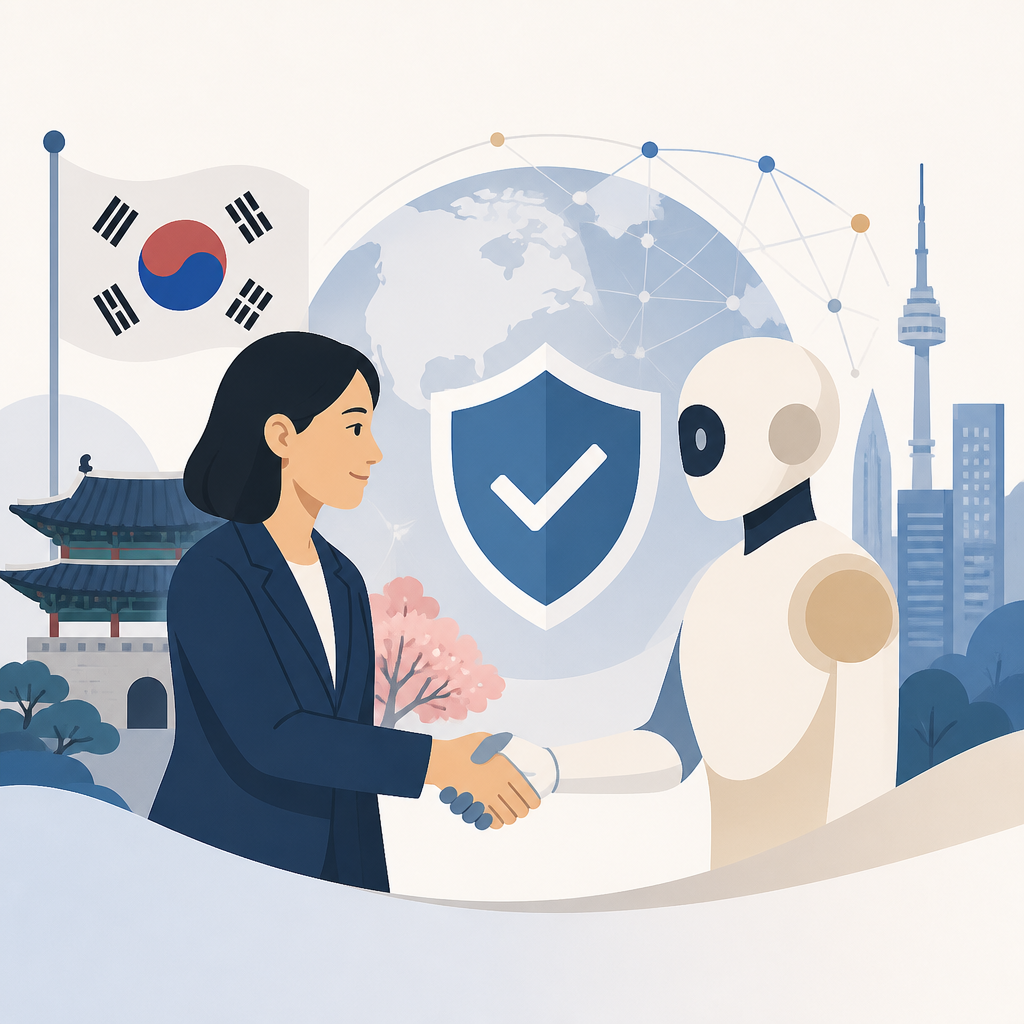
The Korean government is also tying the new agreement to its own safety work. The ministry said South Korea’s Korea Internet & Security Agency and Anthropic will pursue closer collaboration through the Ministry of Science and ICT-backed Korea AI Safety Institute. That matters because safety testing in Korean is a different problem from English-language benchmarking. Prompt injection, phishing, social engineering, and harmful instruction-following all behave differently when the model has to reason in another language and cultural context.
- Cyber offense and defense analysis
- Korean-language safety and misuse evaluation
- Red-team assessments for autonomous AI agents
- Institutional cooperation through Korea AI Safety Institute
Why Seoul wants Anthropic in the room
This agreement did not appear out of nowhere. The ministry said it follows February discussions between Deputy Prime Minister Bae Kyung-hoon and Anthropic CEO Dario Amodei during the 2026 AI Action Summit in India. That gives the MOU a political backstory: South Korea wants a seat in the conversation while frontier model companies are still defining the rules.
Anthropic’s Korean subsidiary, opened earlier this year, is part of that push. It is the company’s fourth office in Asia, after Japan, India, and Australia. Chris Ciauri, Anthropic’s managing director of international, said Korea is expected to become one of the company’s top 10 markets by Claude usage volume in the near future. That is a strong signal that Anthropic sees demand here as more than a side bet.
“The next two to three years will represent a critical battleground and a golden window that will determine leadership in the global AI market,” Lee said.
Lee Do-gyu, director general for Information and Communication Policy at MSIT, framed the partnership as a way to strengthen Korea’s AI innovation base while keeping safety and security in the picture. His point is straightforward: if Korean firms and agencies are going to use advanced models widely, they also need local expertise on how those models fail.
The catch: U.S. access limits still hang over the deal
The cooperation is expanding, but the policy environment is getting messier. Earlier this month, Anthropic said it would broaden security cooperation in South Korea through access to its Mythos models for organizations such as KISA, Samsung Electronics, SK hynix, and SK Telecom. It also said Korean participants would join its Glasswing security initiative.
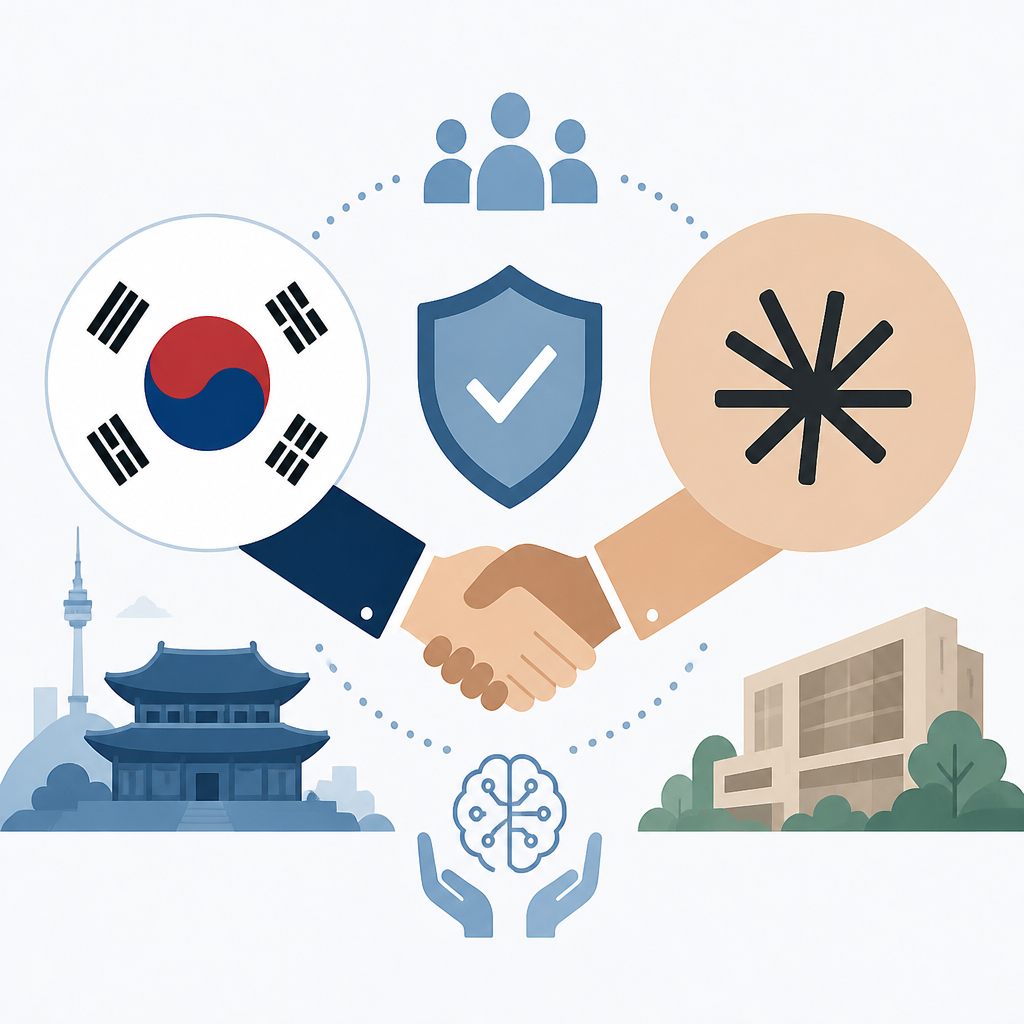
Then the U.S. government blocked access to Mythos models for foreign nationals, including users in South Korea. That creates a real contradiction: Anthropic is building a deeper institutional relationship with Korea at the same time that a U.S. restriction could limit who can actually use some of the tools involved. For now, the MOU looks like a policy and research commitment. The model-access question is the part that could decide how much of that commitment turns into day-to-day work.
- Korea gets formalized safety cooperation with a top U.S. model lab
- Anthropic gains a stronger foothold in a major Asian market
- U.S. access restrictions could slow practical use of Mythos-based programs
- Glasswing and other security efforts depend on how those restrictions are handled
What this means for Korea’s AI strategy
South Korea has been trying to pair AI adoption with industrial policy, and this deal fits that pattern. The country wants more than model access; it wants testing, risk analysis, and local capability. That is especially important for sectors like semiconductors, telecom, and public infrastructure, where AI systems can affect both productivity and attack surface.
Anthropic, for its part, gets a chance to shape safety norms in a market that already matters to its business. If Korea ends up in Anthropic’s top 10 markets by Claude usage, the company will have a strong incentive to keep investing in local support, policy work, and language-specific safety testing. If the U.S. restrictions stay tight, though, the partnership may lean more on research and coordination than on direct model deployment.
The next test is simple: can Seoul and Anthropic turn the MOU into concrete evaluations, shared tooling, and usable access for Korean institutions? If they can, this could become one of the more practical AI safety partnerships in Asia. If they cannot, the agreement will still matter, but mostly as a sign of where the policy debate is heading.
// Related Articles
- [IND]
OWASP’s 2026 LLM Top 10 shifts risk priorities
- [IND]
Silicon Valley’s AI “Breakdowns” Are a PR Play, Not a Signal of Doom
- [IND]
WebAssembly’s JVM shift is making Java more portable
- [IND]
Anthropic is hiring a custom chip design team
- [IND]
Model Y L US launch packs 6 buyer details
- [IND]
2027 Tesla Model Y L Exterior Photos and Specs