Tokenization’s real limits in private credit
Tokenization is growing in private credit, but regulation and fragmentation still limit its impact.

Tokenization is growing in private credit, but regulation and fragmentation still limit its impact.
This guide is for developers, fintech teams, and crypto builders who want a practical read on why real-world asset tokenization is gaining traction and where the friction still lives. After following the steps, you will have a clear framework for evaluating tokenized private credit, spotting the main technical and legal constraints, and deciding where tokenization is actually useful today.
The source article highlights a fast-growing market, with private credit as the largest tokenized RWA segment, plus examples such as Centrifuge, Maple, Goldfinch, XDC, Securitize, and Tokeny. It also points to the core issues that matter for implementation: settlement speed, off-chain credit risk, interoperability, compliance, and legal enforceability.
Before you start
Get the latest AI news in your inbox
Weekly picks of model releases, tools, and deep dives — no spam, unsubscribe anytime.
No spam. Unsubscribe at any time.
- Access to the source article and the referenced ecosystem docs: Crypto Economy, plus protocol docs and repos such as Centrifuge docs and Centrifuge GitHub.
- An Ethereum-compatible wallet and testnet account if you plan to inspect token standards or regulated-asset flows.
- Node.js 20+ and npm 10+ for scripting, indexing, or contract interaction.
- Basic familiarity with ERC-20, ERC-3643, stablecoins, and KYC/AML workflows.
- Access to at least one blockchain explorer and one RWA analytics source.
- Optional but useful: legal or compliance support for jurisdiction-specific token issuance.
Step 1: Map the tokenized asset class
Your first outcome is a clean view of what is actually being tokenized, so you do not mix private credit, trade finance, treasury products, and royalty streams into one bucket. The article makes private credit the main example, with invoices, inventory-backed loans, and tokenized treasury exposure as different operational models.
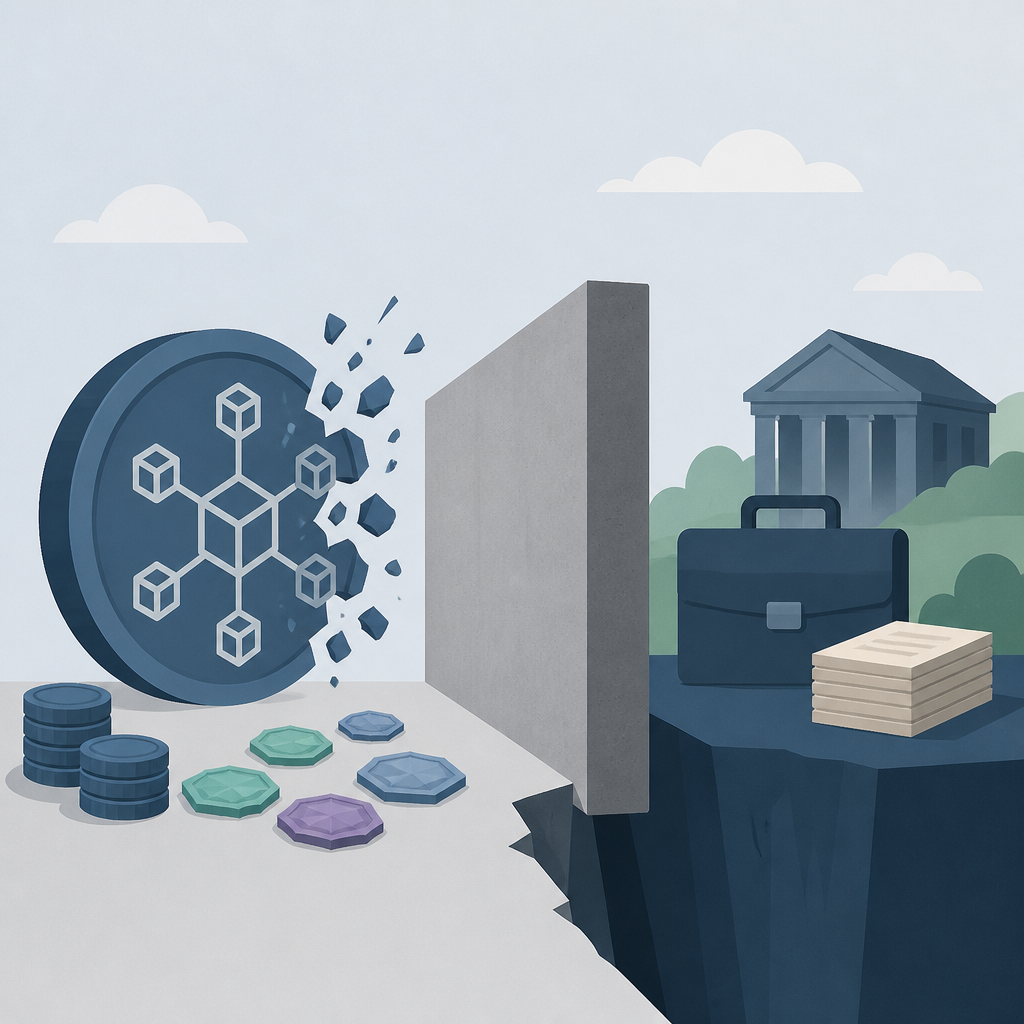
Start by listing the asset type, issuer, legal wrapper, and chain used for each product you want to evaluate. Then separate the on-chain token from the off-chain claim on the underlying asset.
Asset type | Issuer | Chain | Legal wrapper | Cash flow source | Key risk
Private credit | Protocol/SPV | Ethereum or L2 | SPV/trust | Borrower payments | Default and servicing
Trade finance | Originator | XDC or EVM chain | Invoice assignment | Invoice settlement | Fraud and counterparty risk
Treasuries | Regulated fund | Ethereum or L2 | Fund shares | Coupon and redemption | Interest rate and custody
You should see a table that makes each product legible at a glance. If you cannot identify the legal wrapper or cash flow source, the token is not ready for institutional analysis.
Step 2: Separate on-chain speed from real settlement
Your second outcome is a realistic settlement model. The source notes that token transfers can happen in seconds, but KYC, legal custody, coupon handling, and dispute resolution still depend on off-chain processes.
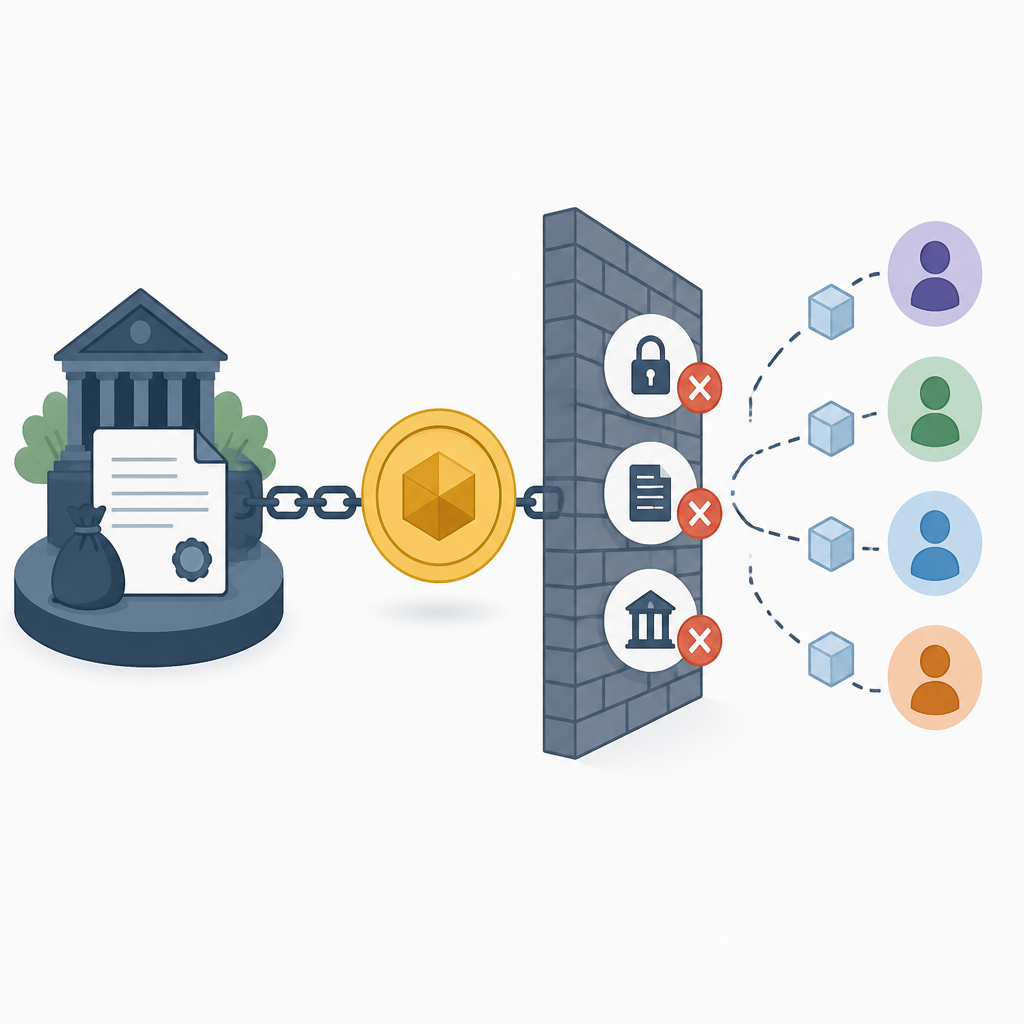
Document the full lifecycle of one transaction: onboarding, investor verification, subscription, token minting, transfer, repayment, default handling, and redemption. This shows where blockchain improves throughput and where traditional infrastructure still owns the critical path.
If you are testing a workflow, measure the time for token transfer separately from the time for compliance approval and legal settlement. You should see that the token moves faster than the asset rights do. That distinction is the difference between a faster rail and a fully automated market.
Step 3: Check credit risk and servicing dependencies
Your third outcome is a risk map that shows who actually underwrites performance. In tokenized private credit, the article points out that solvency analysis often sits with off-chain assessors, sponsors, or servicers, not with the smart contract itself.
Create a dependency list for each pool: borrower, originator, servicer, legal counsel, collateral manager, and liquidation path. Then ask whether the contract can enforce repayment without court action. If the answer is no, the token mainly digitizes exposure rather than removing risk.
You should see where default risk, servicing risk, and legal enforcement risk sit. If the pool cannot show borrower-level data, default history, and unique counterparty counts, the headline TVL number is not enough for decision-making.
Step 4: Test interoperability and standards
Your fourth outcome is a compatibility checklist for moving assets across chains without creating new custody problems. The article calls out fragmentation across ERC-3643, Tokeny-style implementations, and chain-specific token models, which can trap liquidity in silos.
Compare the token standard, transfer restrictions, whitelist logic, and bridge assumptions for each deployment. Then verify whether the asset can move between Ethereum, Solana, Polygon, or XDC without re-wrapping or introducing custody risk.
You should see whether the asset is portable or locked into one ecosystem. If a bridge is required, you need to treat that bridge as part of the trust model, not as a neutral transport layer.
Step 5: Validate the regulatory path
Your fifth outcome is a jurisdiction-by-jurisdiction compliance view. The source cites MAS rules in Singapore, the EU DLT Pilot Regime, and unresolved SEC treatment in the United States, all of which shape how tokenized assets can be issued and traded.
Build a matrix with jurisdiction, issuance limits, legal correspondence requirements, audit obligations, and securities classification. Then map whether your token is a regulated security, a fund share, a debt claim, or another instrument.
You should see which market can support issuance today and which one still needs legal structuring. If your token cannot pass KYC/AML, custody, and disclosure requirements, faster settlement will not save the product.
Step 6: Prioritize the use cases that already work
Your final outcome is a short list of cases where tokenization adds real value now. The article argues that the strongest candidates are digital-native assets, such as tokenized U.S. Treasury exposure through regulated funds, or cash flows that can be automated end to end, such as streaming royalties.
Rank each use case by automation level, legal simplicity, liquidity, and cross-chain portability. Then focus on the assets that reduce reconciliation overhead without depending on courts for every failure scenario.
You should see a narrower, more credible roadmap. The best near-term wins are not the most ambitious assets, but the ones with clean cash flows, clear legal rights, and minimal bridge dependence.
| Metric | Before/Baseline | After/Result |
|---|---|---|
| Settlement time | Days in traditional finance | Seconds for token transfer, but not full legal settlement |
| Tokenized RWA value | Earlier market estimates below current scale | About $31 billion TDV |
| Private credit on-chain | Fragmented early deployments | More than $14 billion on-chain |
| Trade finance on XDC | Limited tokenized deployment | More than $1.1 billion in tokenized value |
| Issuance compliance cost | Lower expectations from on-chain automation | More than $500,000 per issuance in some U.S. structures |
Common mistakes
- Confusing token transfer speed with full settlement. Fix: track compliance, custody, and redemption separately from blockchain transfer time.
- Assuming TVL equals healthy adoption. Fix: review borrower count, default rate, and reinvestment activity, not just headline volume.
- Treating bridges as risk-free interoperability. Fix: model bridge custody, attack surface, and rewrapping costs as part of the product.
What's next
If you want to go deeper, study token standards for regulated assets, compare RWA issuance frameworks across jurisdictions, and prototype one workflow that includes onboarding, transfer, repayment, and default handling end to end. That will tell you whether your tokenization plan is a real financial product or just a faster wrapper.
// Related Articles
- [CHAIN]
Layer 2 Is Ethereum’s Real Product, Not a Detour
- [CHAIN]
Ethereum’s price should be read as network demand, not just speculati…
- [CHAIN]
Ethereum’s shake-up turns ETH into a cleaner bet
- [CHAIN]
Bitcoin’s price page explains the market in one view
- [CHAIN]
Web3 Banking Guide for Fintech Teams
- [CHAIN]
10 prediction market builders that can ship Polymarket-style apps