RWA tokenization is moving assets on-chain
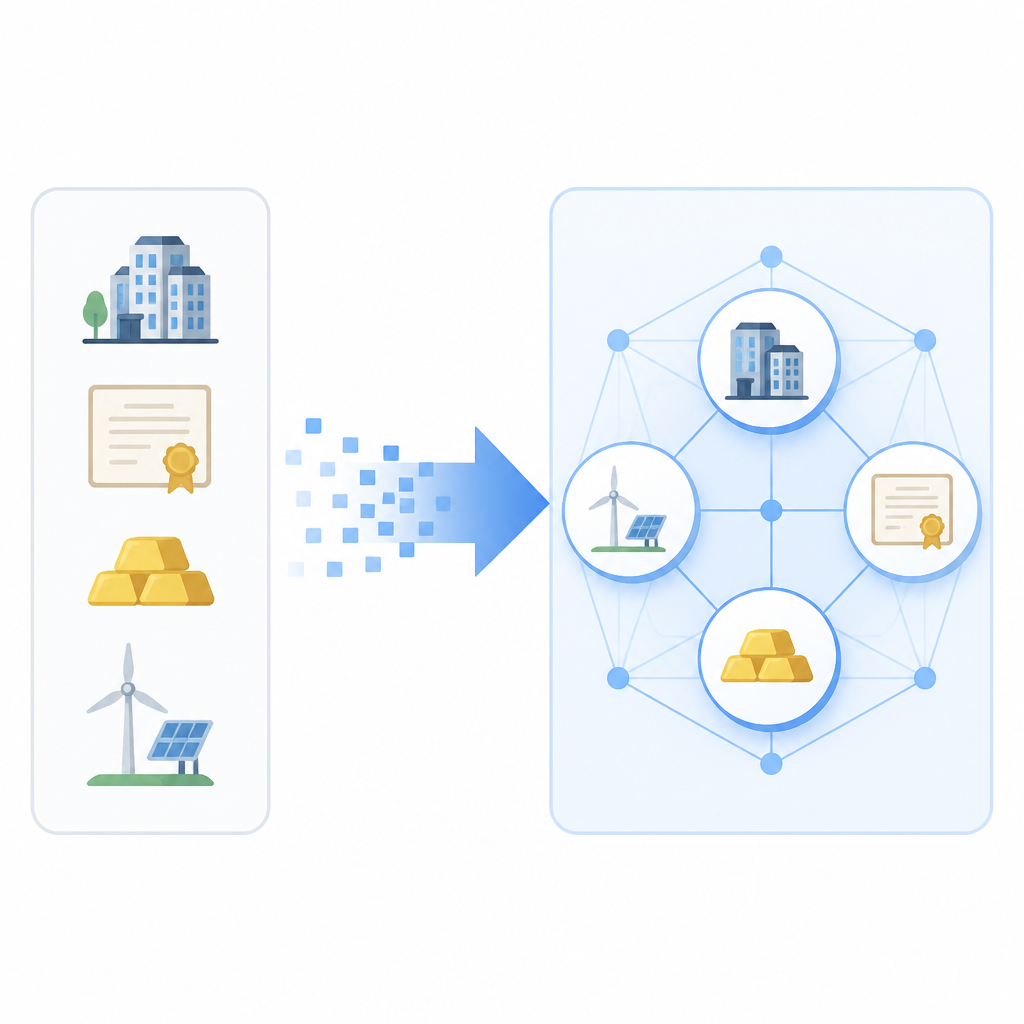
Tokenization is putting Treasuries, stocks, collectibles, and private-company exposure on blockchains now.

Tokenization is putting Treasuries, stocks, collectibles, and private-company exposure on blockchains now.
Real-world asset tokenization has moved from theory into live markets, with billions of dollars now sitting on-chain. BlackRock, Circle, Franklin Templeton, and newer trading venues like Hyperliquid are all pushing the idea in different directions.
What used to sound like a crypto slogan now has numbers behind it. Ethereum holds about $16.6 billion in tokenized real-world assets, BNB Chain has about $4 billion in RWA TVL, and tokenized equities climbed roughly 2,878% to around $963 million by January 2026.
| Metric | Value | What it means |
|---|---|---|
| Ethereum tokenized RWAs | $16.6 billion | Largest chain share for tokenized assets |
| BNB Chain RWA TVL | About $4 billion | Fast-growing chain for issuers and trading |
| Tokenized equities market | About $963 million | Rapid growth in on-chain stock exposure |
| Circle USYC | Almost $3 billion | Leading tokenized Treasury product |
| BlackRock BUIDL | About $2.4 billion | Major tokenized fund on Ethereum |
Tokenization is now a live market, not a demo
Get the latest AI news in your inbox
Weekly picks of model releases, tools, and deep dives — no spam, unsubscribe anytime.
No spam. Unsubscribe at any time.
RWA tokenization means turning a claim on a real asset into a token on a blockchain. That asset can be a Treasury bill, a fund share, a stock, a bond, a gram of gold, or even a collectible card.

The appeal is easy to understand. Tokenized assets can be split into smaller pieces, settled around the clock, and plugged into DeFi systems for borrowing, trading, or collateral.
The first big proof point was stablecoins, which put fiat money on-chain at scale. After that came tokenized bonds, including the European Investment Bank’s sterling digital bond through HSBC Orion in January 2023, followed by Hong Kong’s tokenized green bond.
Then BlackRock launched BUIDL on Ethereum in March 2024, and the market got a very different kind of signal. This was no longer a pilot with a press release attached. It was a large asset manager putting a real fund on-chain and watching demand build quickly.
The money is flowing into Treasuries, equities, and private markets
The biggest category by far is tokenized Treasuries and money market funds. That makes sense: they pay yield, settle fast, and work as collateral in DeFi. They also fit the compliance-heavy profile of institutions that want blockchain rails without crypto volatility.
Circle USYC leads the market with almost $3 billion in short-term US Treasuries tokenized on-chain. BlackRock BUIDL sits near $2.4 billion, and Franklin Templeton BENJI is around $821 million.
Tokenized stocks are smaller but growing fast. The article cites a jump of roughly 2,878% to about $963 million by January 2026. That kind of growth usually comes from a tiny base, but it still matters because it shows where the next wave of user demand may come from: exposure to public equities without the usual brokerage plumbing.
- USYC: almost $3 billion in tokenized Treasuries
- BUIDL: about $2.4 billion in assets
- BENJI: about $821 million
- Tokenized equities: about $963 million
Private-company exposure is the wildest part of the market right now. Hyperliquid’s HIP-3, activated in October 2025, lets builders stake HYPE and launch new perpetual markets. That opened the door for products like Ventuals, which offers exposure to private names such as SpaceX, OpenAI, and Anthropic.
“Every stock, every bond, every fund, every asset can be tokenized.” — Larry Fink, BlackRock 2025 Chairman’s Letter to Investors
Ethereum still leads, but BNB Chain is closing fast
Ethereum remains the center of gravity for tokenized assets. The article says roughly 50% of real-world assets, totaling $16.6 billion, are tokenized there. That is a large lead, and it reflects the chain’s deep developer base, institutional familiarity, and existing financial infrastructure.
BNB Chain is the surprise on the other side of the chart. Its RWA TVL has roughly doubled to about $4 billion across 14 active issuers, covering bonds, equities, indices, private credit, and commodities.
On 1inch’s RWA dashboard, BNB Chain leads tokenized-asset trading by volume, transactions, and active users. That matters because tokenization is not only about assets sitting in vaults. It is also about where people actually trade them.
- Ethereum: about 50% of tokenized RWAs, or $16.6 billion
- BNB Chain: about $4 billion in RWA TVL
- BNB Chain issuers: 14 active issuers
- Tokenized equities growth: roughly 2,878%
Other chains are carving out sharper niches. Solana has become a home for retail collectibles and equities. Plume, Stellar, Avalanche, and the XRP Ledger focus on speed, cost, and compliance in different combinations.
This split is telling. Ethereum still owns the institutional story, while BNB Chain is proving that distribution and trading activity can shift quickly when issuers and users find better economics elsewhere.
The weird edge cases may matter more than they look
The most interesting part of the story may be the assets that sound absurd until you look closer. Collector Crypt vaults graded Pokémon cards, mints them on Solana and BSC, and lets users redeem the physical card. That sounds niche, but it shows how tokenization can wrap a collectible in liquidity without destroying the underlying item.
There is also live tokenization for uranium, copper, gold, and silver. Gold tokens regularly crack the top 10 by trading volume, which tells you that commodities can work on-chain when the market structure is simple enough.
Then there is USD.AI, which tokenizes Nvidia GPUs used in AI data centers as collateral for on-chain loans. In plain English, the compute powering AI infrastructure is now being treated like a financeable asset class.
That is where the story stops being about crypto for crypto’s sake. It becomes a question about any asset with value, an owner, and a reason for someone to want fractional exposure. If that combination exists, someone is probably trying to put it on-chain already.
What happens next depends on regulation and distribution
The big open issue is not whether tokenization works technically. It already does. The real question is which assets get enough regulatory clarity and enough distribution to matter at scale.
The GENIUS Act, passed in July 2025, gave US stablecoins a federal framework, and that kind of clarity tends to pull more capital into adjacent tokenized products. But most Treasury products still restrict access to KYC’d or whitelisted investors, which limits the “any wallet, any asset” vision for now.
My read is simple: tokenization will spread first through products that already have clear cash flows, familiar pricing, and strong demand from institutions. Treasuries are already there. Public equities are next. Private markets and oddball collateral like GPUs will keep testing how far the model can stretch.
The next useful question is not whether everything can live on-chain. It is which assets actually deserve to.
// Related Articles
- [CHAIN]
Bitcoin Hyper turns BTC congestion into L2 pitch
- [CHAIN]
Botanix’s shutdown turns L2 economics inside out
- [CHAIN]
Ethereum L2s Shift Toward Payments and Stablecoins
- [CHAIN]
Tokenization’s real limits in private credit
- [CHAIN]
5 stablecoin developers for regulated launches
- [CHAIN]
CNBC Crypto World turns news into a crypto brief