TurboVec cuts 10M-vector RAM to 4GB without training
TurboVec shrinks a 10M-vector index from 31GB to 4GB and skips quantizer training, with speed and recall gains over FAISS.

TurboVec compresses large vector indexes to 4GB and removes quantizer training.
Read this list to see the five practical reasons TurboVec matters for RAG teams, including the 31GB-to-4GB memory drop and the no-training workflow.
| Item | Memory for 10M vectors | Training needed | Notes |
|---|---|---|---|
| FAISS IndexFlatL2 | 61.4 GB | No | Full float32 storage |
| FAISS IndexPQFastScan (4-bit) | ~7.7 GB | Yes | Learned codebook |
| TurboVec (4-bit) | ~4.0 GB | No | Rust index on TurboQuant |
| TurboVec (2-bit) | ~2.0 GB | No | Higher compression, lower precision |
1. 4-bit TurboVec for production RAG
Get the latest AI news in your inbox
Weekly picks of model releases, tools, and deep dives — no spam, unsubscribe anytime.
No spam. Unsubscribe at any time.
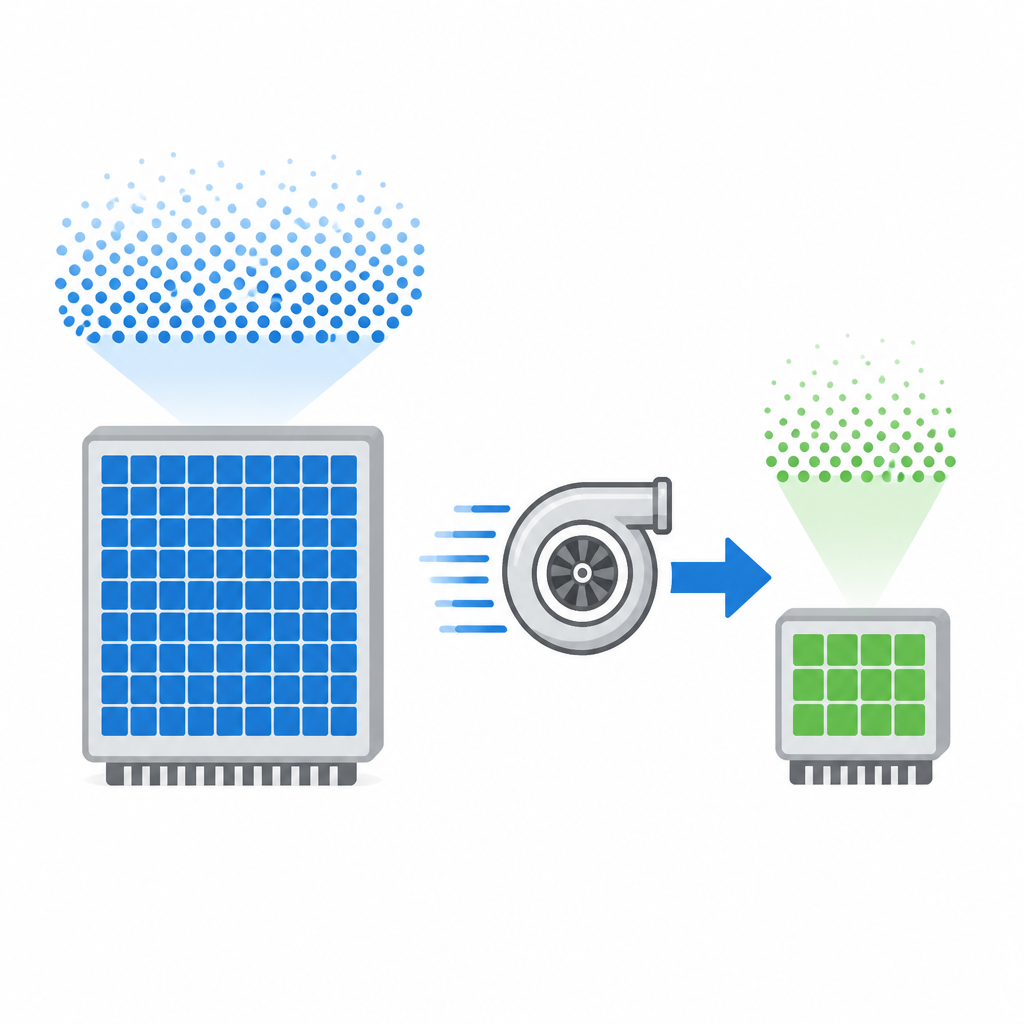
TurboVec’s main appeal is simple: a 10 million vector index that would sit around 31 GB in FAISS can shrink to about 4 GB with 4-bit TurboQuant. That changes what fits on a single machine, what fits in cache, and what fits in a budget.

The article’s example uses 1,536-dimensional embeddings, which are common for modern retrieval systems. At that size, the memory savings are large enough to move a project from dedicated infrastructure to a normal server.
- 4-bit storage: about 768 bytes per vector
- 10M vectors: about 4.0 GB total
- Compared with FAISS IndexFlatL2: roughly 15x smaller
2. Zero-training quantization for fast iteration
TurboQuant skips the usual product quantization training step. There is no codebook fitting stage, no representative sample, and no rebuild cycle when your data shifts. You add vectors directly.
That matters for teams with streaming data, frequent embedding model updates, or corpora that change every day. The workflow becomes easier to automate because the index does not depend on a learned compression model.
from turbovec import TurboQuantIndex
index = TurboQuantIndex(dim=1536, bit_width=4)
index.add(vectors)
3. Rust speed with Python access
TurboVec is written in Rust and ships with Python bindings, so it aims at production systems without asking Python teams to rewrite their stack. The implementation also uses SIMD paths, including NEON intrinsics on ARM, which is why the benchmark section emphasizes query speed rather than only compression.
That blend is useful if you want a library that fits into existing app code, but still behaves like systems software under load. It also makes deployment easier for teams that need a single binary or a tighter runtime profile.
- Rust crate for systems use
- Python package for application code
- Framework hooks for LangChain, LlamaIndex, and Haystack
4. Better fit for changing corpora
Traditional PQ can age badly when the corpus changes, because the codebook was trained on older data. TurboQuant is data-oblivious, so the same quantizer works across inputs without retraining. That makes it friendlier to live datasets, user-generated content, and rolling index updates.
The practical payoff is less operational friction. You do not need to stage a training job before every major content update, and you can keep the index aligned with the source of truth more easily.
- Incremental adds without retraining
- Cold start with no warmup sample
- Model swaps without rebuilding the compression layer
5. Lower memory pressure without giving up recall
The paper summary says TurboQuant stays within about 2.7x of the Shannon limit across bit widths and dimensions. In plain terms, the compression is close to the best you can hope for at a given bit budget, which is why the quality tradeoff is not as steep as many teams expect.
For search systems, that means you can cut memory hard while keeping retrieval usable. If your bottleneck is RAM, not raw model quality, TurboVec is the kind of tool that can change the architecture of a RAG stack.
scores, indices = index.search(query, k=10)
loaded = TurboQuantIndex.load("my_index.tq")
How to decide
Pick TurboVec if you need to run large vector search on one box, if your corpus changes often, or if you want to avoid the training step that PQ usually requires. The strongest case is a RAG system with millions of vectors and a real memory bill.
If you already have a trained FAISS pipeline and your data is stable, PQ may still be enough. But if you want smaller indexes, simpler updates, and a Rust-backed implementation with Python access, TurboVec is the more practical choice.
// Related Articles
- [IND]
Anthropic’s survey turns AI anxiety into policy
- [IND]
ChatGPT grew from chatbot to platform
- [IND]
OpenAI Files Confidential IPO After $122B Round
- [IND]
Government access orders should govern frontier model access
- [IND]
Claude Code, Cursor, and Copilot set the 2026 bar
- [IND]
Anthropic’s Claude Design launch exposed partner risk