Paying UFC fighters in Trump crypto is a conflict, not a perk
The UFC’s White House bonus plan is a Trump-family crypto promotion disguised as fighter pay.

The UFC’s White House bonus plan is a Trump-family crypto promotion disguised as fighter pay.
The UFC should not pay White House event bonuses in crypto issued by a Trump family company, because it turns a government-stage sports spectacle into a private marketing channel for the president’s business interests.
The details are plain enough. The UFC said some fighters at the South Lawn event will receive bonuses in USD1, a “stablecoin” issued by World Liberty Financial, the Trump family crypto venture. World Liberty was also named an official sponsor of the event, and the bonus pool was announced only after the sponsorship became public. That is not a neutral payment choice. It is a branded transaction tied to a presidential family company, on federal property, during a show promoted around Trump’s birthday.
The first problem is not crypto, it is the venue
Get the latest AI news in your inbox
Weekly picks of model releases, tools, and deep dives — no spam, unsubscribe anytime.
No spam. Unsubscribe at any time.
The White House is not a private arena. When a sports organization stages a fight on government grounds, the optics and the ethics are different from a normal pay-per-view card. Every sponsor, every payment method, and every announcement inherits the authority of the office. A fighter bonus paid in a Trump-linked token is not just compensation. It is an endorsement-shaped event built into the symbolism of the presidency.
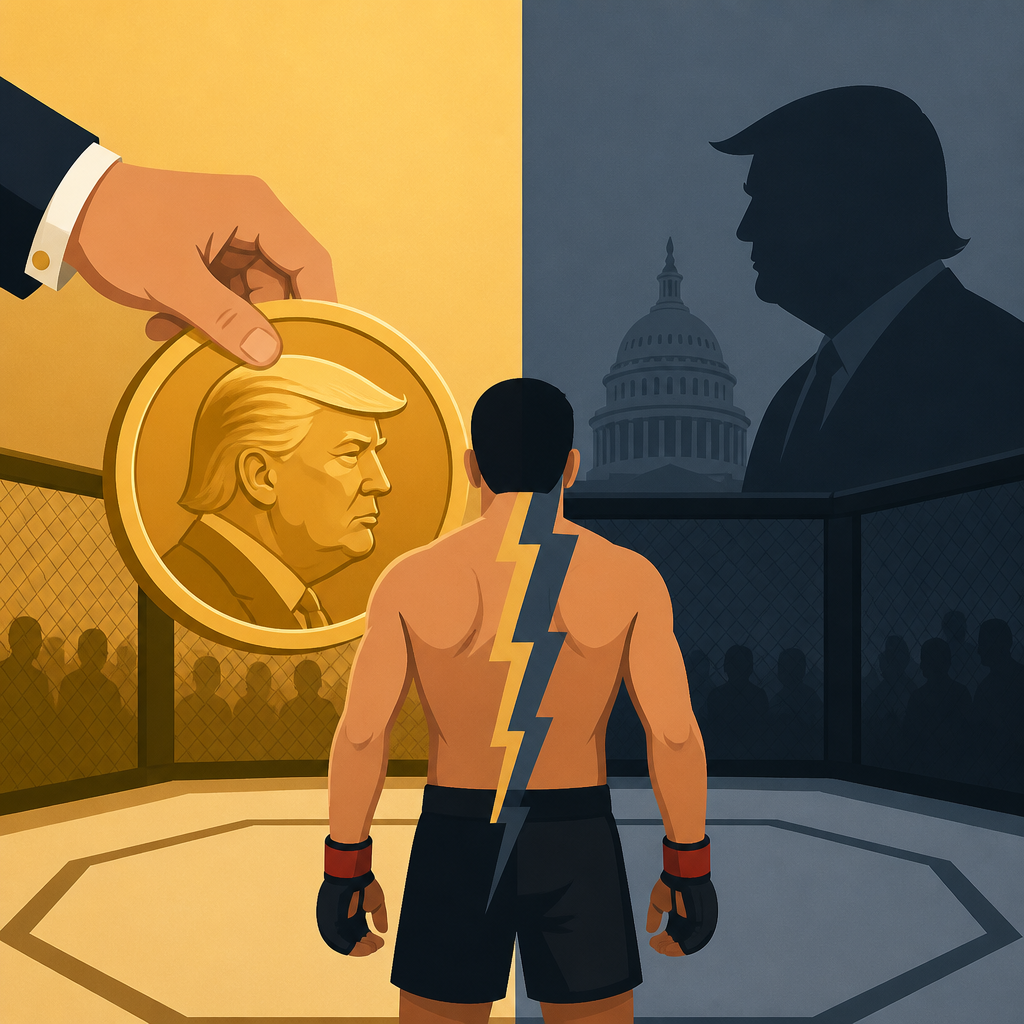
That matters because the arrangement uses public prestige to amplify private gain. The administration says there is no conflict because Trump’s assets sit in a trust managed by his children. But this is not a blind trust situation in the moral sense that people actually care about. The family business is still the family business, and the president remains the central brand asset. When a White House event pushes a token from that business, the line between official power and private monetization gets crossed in public view.
The second problem is that the payment itself is advertising
World Liberty’s USD1 stablecoin is pegged to the dollar, so the fighters are not taking on obvious price volatility. That is exactly why the move is so useful as promotion. If the UFC had simply paid a cash bonus, nobody would have learned anything about a Trump-family crypto product. By routing the bonus through USD1, the UFC gives the token a real-world use case, a headline, and a seal of legitimacy from a major sports brand.
That is why Todd Phillips’s criticism lands. He called the move advertising, and he is right. A stablecoin payment in this context functions like a marketing campaign wrapped in payroll language. It tells the market that USD1 exists, that it is usable, and that it is connected to the UFC and the White House. For a crypto company that is still trying to build trust, a public bonus pool on federal property is a promotional gift with the force of spectacle behind it.
The third problem is that the UFC is normalizing a bad precedent
Sports leagues increasingly experiment with crypto sponsorships, but this case is different because the sponsor is tied to the sitting president’s family. The UFC is not just taking money from a digital asset firm. It is helping create a precedent where public officials and their relatives can benefit from event branding while the event itself is staged under government symbolism. If that sounds small, it is only because the payment is framed as a bonus instead of a bribe.
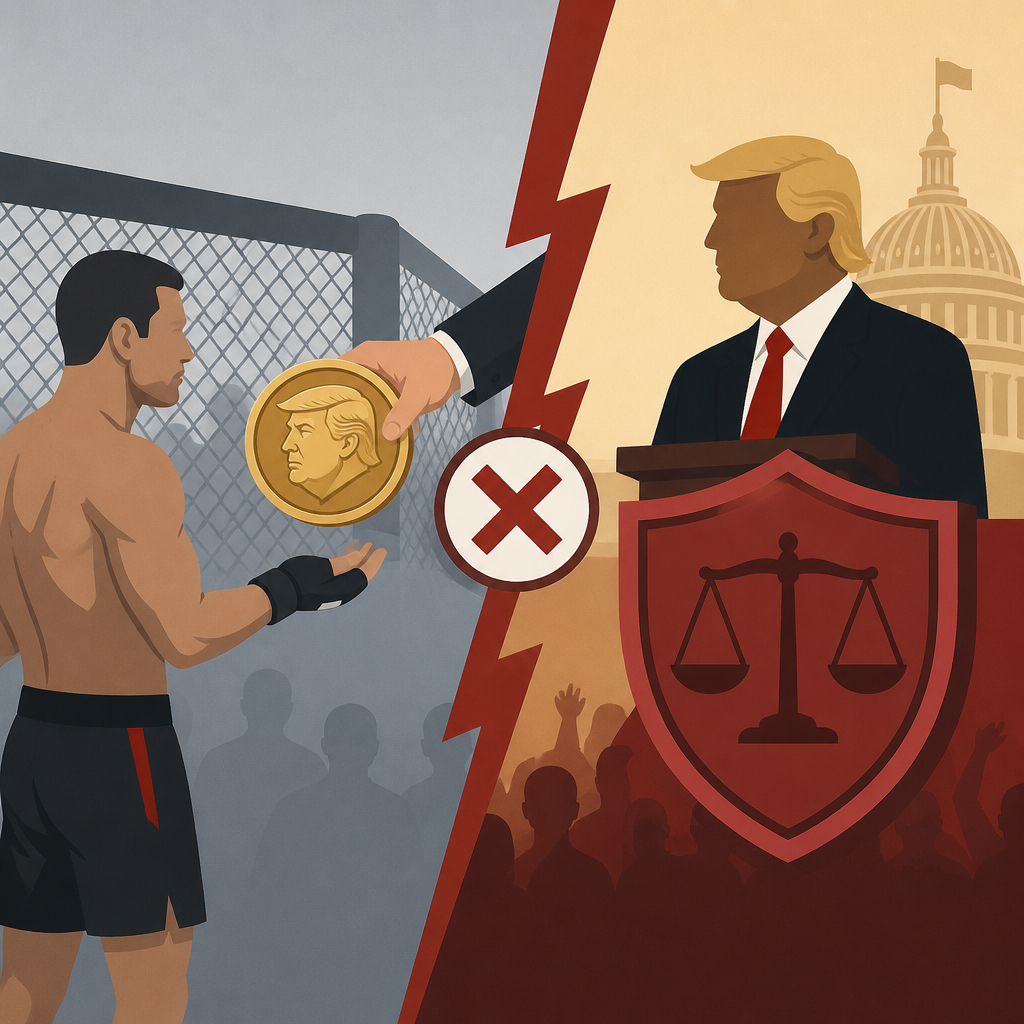
There is also a governance issue hiding inside the convenience narrative. Fighters are being told this is innovation in finance, but the real innovation is reputational laundering. A token with a dollar peg does not make the arrangement clean. It makes it easier to argue that nothing economic changed. That is the wrong test. The question is whether the arrangement uses public office to create private commercial value. On that measure, it does.
The counter-argument
Defenders will say the outrage is overblown. Fighters are still being paid, the stablecoin is backed by dollar reserves, and no one is forced to hold the token. In that view, USD1 is just a modern payment rail, and the UFC is free to choose whatever settlement method it wants. They will also point out that Trump’s assets are formally separated, and that critics are reading politics into a straightforward sponsorship deal.
That argument has one real strength: stablecoins can move money quickly and cheaply, and fighters may prefer instant digital settlement over slower legacy payments. In a normal event, that would be a fair innovation story. But this is not a normal event. The payment method is inseparable from the sponsor, the sponsor is inseparable from the president’s family, and the venue is the White House. The limit is simple: a transaction that would be harmless in Las Vegas becomes a conflict when it is staged as a public spectacle on federal grounds.
What to do with this
If you are a founder, PM, or engineer building payments, sponsorship, or creator-finance products, treat venue and affiliation as part of the product spec. Do not ship a payment flow that depends on political proximity, especially when the brand owner has a direct financial stake. If you run a sports business, keep compensation rails boring, auditable, and detached from any sponsor that can benefit from public office. The lesson is not “avoid crypto.” The lesson is “do not let payment innovation become political advertising.”
// Related Articles
- [CHAIN]
SEC Rule 611 Proposal Could Open Tokenized US Equities
- [CHAIN]
SEC Moves to Scrap Rule 611 for Tokenized Stocks
- [CHAIN]
Bitcoin Rebounds on US-Iran Deal, Stablecoin Plans Grow
- [CHAIN]
CLARITY Act lets devs ship without broker risk
- [CHAIN]
CLARITY’s developer shield could shape crypto policy
- [CHAIN]
Stablecoins Keep Crypto Liquid Without Chasing BTC