Ukraine’s AI war network points to faster combat
Ukraine’s defense AI push shows 4 ways battlefield networks could speed decisions and reshape air defense.

Ukraine’s defense AI push is centered on networks that speed battlefield decisions.
Ukraine’s senior defense AI official says the next phase of war will depend less on single systems and more on connected networks that shorten the time from detection to response.
| Item | What it does | Battlefield effect |
|---|---|---|
| MEROPS | AI-powered counter-drone system | Links sensors and interceptors for faster air defense |
| AS3 interceptor UAV | Modular interceptor drone | Helps engage hostile drones in the air |
| Unified AI network | Connects battlefield systems | Speeds decisions and coordination |
| Ukraine’s defense AI program | Military AI integration effort | Moves AI from trials into operations |
1. Connected air defense
Get the latest AI news in your inbox
Weekly picks of model releases, tools, and deep dives — no spam, unsubscribe anytime.
No spam. Unsubscribe at any time.
The clearest shift is in counter-drone defense. Rather than treating each radar, interceptor, and operator as a separate tool, Ukraine is moving toward systems that work together in one chain of detection, targeting, and response.
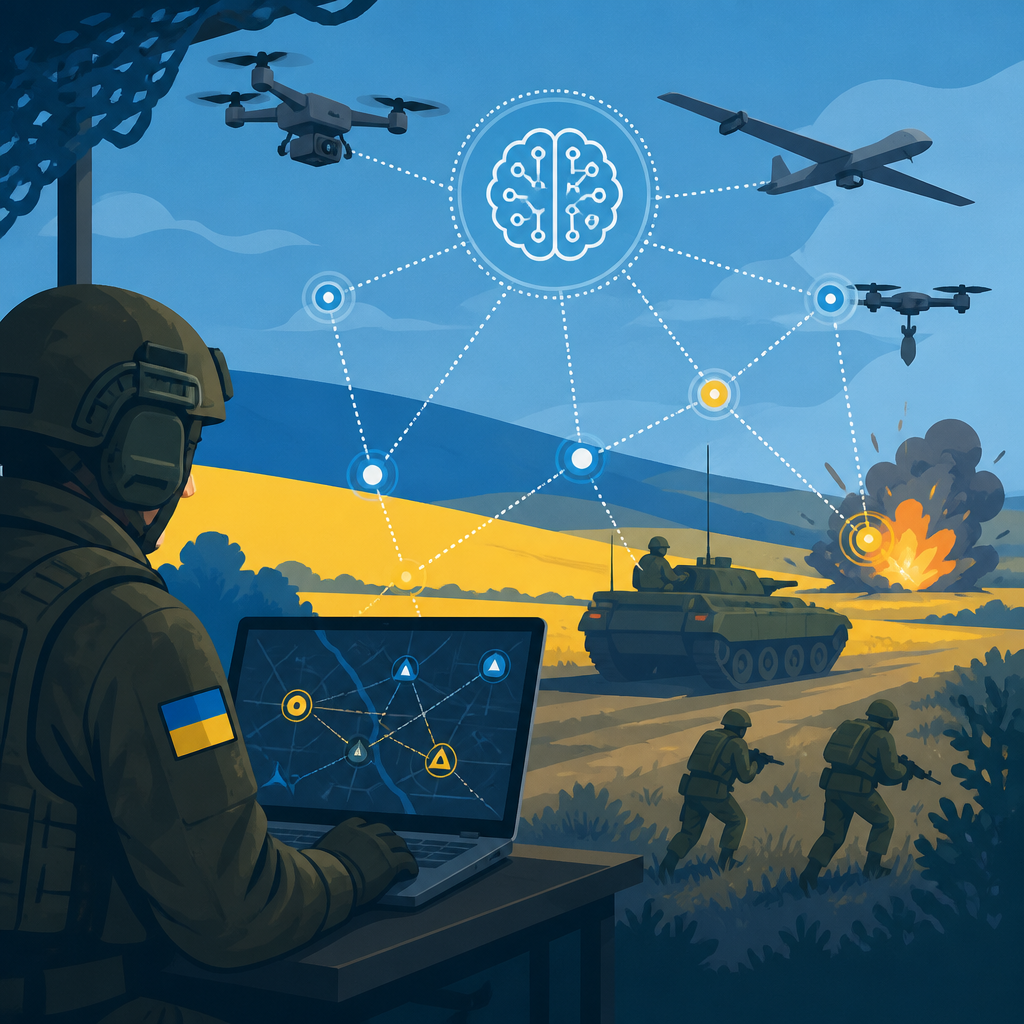
That matters because drone attacks reward speed. The faster a unit can identify a threat and assign the right interceptor, the better its odds of stopping a strike before it reaches a target.
- Sensor detects incoming drone
- AI helps classify the threat
- Interceptor UAV is assigned
- Operator gets a quicker decision path
2. MEROPS as a modular model
The Reuters report highlights MEROPS, a modular American-made AI-powered counter-drone system, as an example of this approach. Its value is not just the software layer, but the way it can connect different pieces into a single defensive workflow.
Modularity also makes battlefield upgrades easier. If one component improves, such as a sensor or interceptor drone, the system can absorb it without requiring a full redesign of the defensive setup.
- Modular architecture
- American-made system
- AI-assisted targeting and coordination
- Designed for counter-drone missions
3. Interceptor drones become part of the network
The AS3 interceptor unmanned aerial vehicle shown in training is a reminder that drones are no longer only threats. They are also part of the defense layer, used to chase, disrupt, or destroy enemy drones in flight.
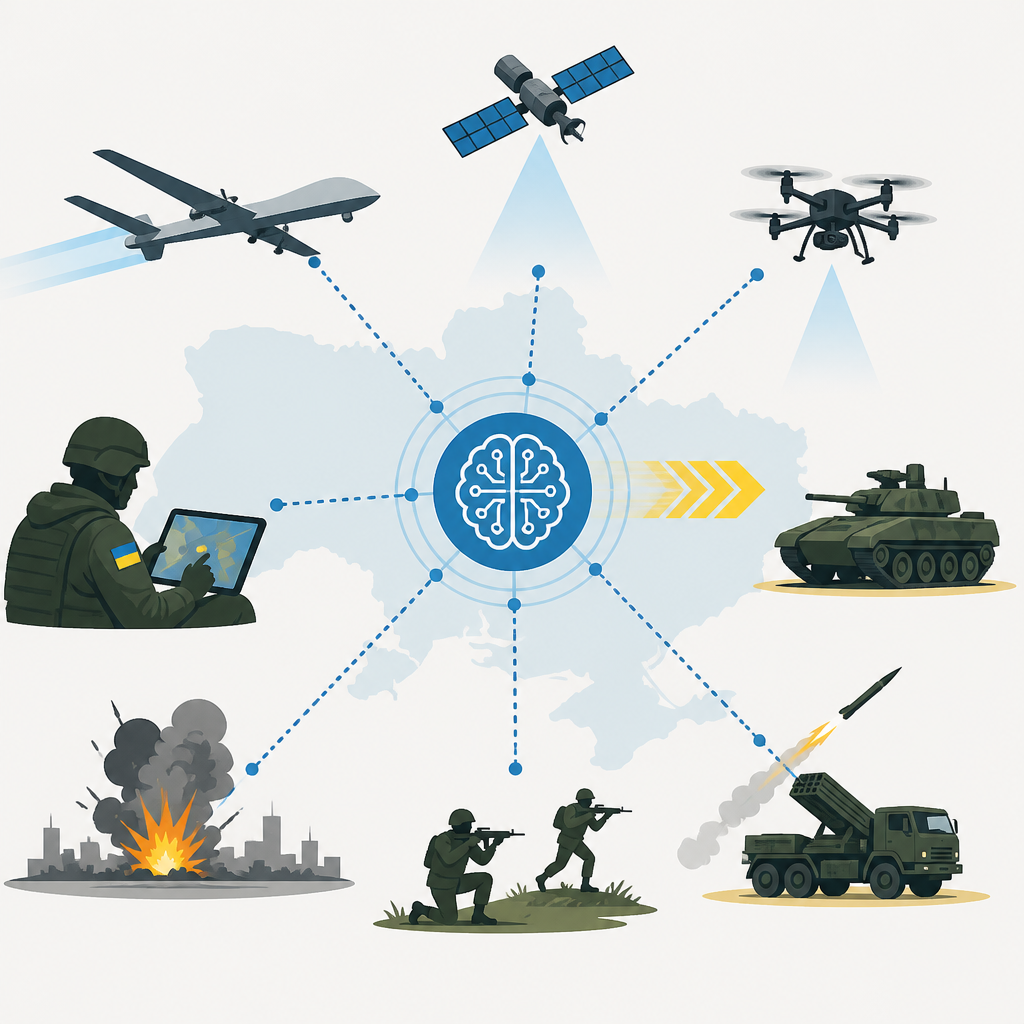
When interceptor drones are folded into a shared AI network, the operator’s job changes. Instead of manually managing every step, the human team can focus on approval, oversight, and exceptions while the system handles faster routing of information.
Detection -> AI classification -> interceptor assignment -> engagement4. Faster decisions matter more than bigger inventories
Ukraine’s official is pointing to a shift in the economics of war. In a drone-saturated fight, the side that decides first may matter more than the side that simply owns more hardware.
This is why AI integration is being framed as a battlefield multiplier. It does not replace weapons, but it can reduce delay, cut confusion, and make existing systems more effective under pressure.
- Shorter sensor-to-shooter cycle
- Less manual coordination
- Better use of limited interceptors
- More room for human judgment on edge cases
5. Ukraine is testing what comes next
The Reuters report places Ukraine at the front of a wider military experiment. The country is not just buying AI-enabled tools; it is trying to organize them into an operational model that can survive real attacks and constant adaptation.
If that model works, other militaries may copy the structure even if they use different suppliers. The important lesson is not one platform, but how AI, drones, and command systems are stitched together.
How to decide
If you care about air defense, the most important takeaway is the network, not the individual drone. MEROPS and the AS3 interceptor matter because they show how AI can speed a chain of decisions, not just improve a single machine.
If you follow defense policy, watch for whether Ukraine’s model becomes a template for other armies. The real test is whether AI can keep pace with fast-changing drone threats while still leaving humans in control.
// Related Articles
- [IND]
OpenAI’s distillation playbook explains the Kimi panic
- [IND]
Gemini 3.5 Flash lets you buy speed
- [IND]
RISC-V is past the hobby phase and should be treated as a real platfo…
- [IND]
Nvidia and OpenAI discuss a $250B AI backstop
- [IND]
Claude Opus 5 posts the lowest safety audit score
- [IND]
Anthropic expands Claude partnership with Cognizant