VCs Should Fund AI Coding, But Only If Security Comes First
VCs are right to back AI coding startups, but the winners will be the ones built for enterprise security and compliance.

VC funding for AI coding startups makes sense only when security and compliance are built in.
VCs should keep funding AI coding startups, but they should stop pretending raw model speed is enough to justify the check. The latest $135 million Series A for CodeSynth shows exactly why the money keeps flowing: developers want faster autocomplete, faster refactoring, and faster vulnerability checks. Yet the same reporting also shows the real problem. CodeSynth’s average code-completion latency is 12.3ms, but it jumps to 87ms under concurrent load, and its security engine catches 68% of OWASP Top 10 issues while leaving enterprises to stitch together their own SAST and compliance stack.
First, the market is real and the capital is rational
Get the latest AI news in your inbox
Weekly picks of model releases, tools, and deep dives — no spam, unsubscribe anytime.
No spam. Unsubscribe at any time.
AI coding tools are not a speculative side bet anymore. The category is already a $1.2 billion market in 2026, with GitHub Copilot and Replit Ghostwriter proving that developers will adopt tools that save time inside the IDE. That matters because developer tooling has a rare property in software: if it makes the workflow faster, teams feel the value immediately, and usage spreads bottom-up before procurement catches up.
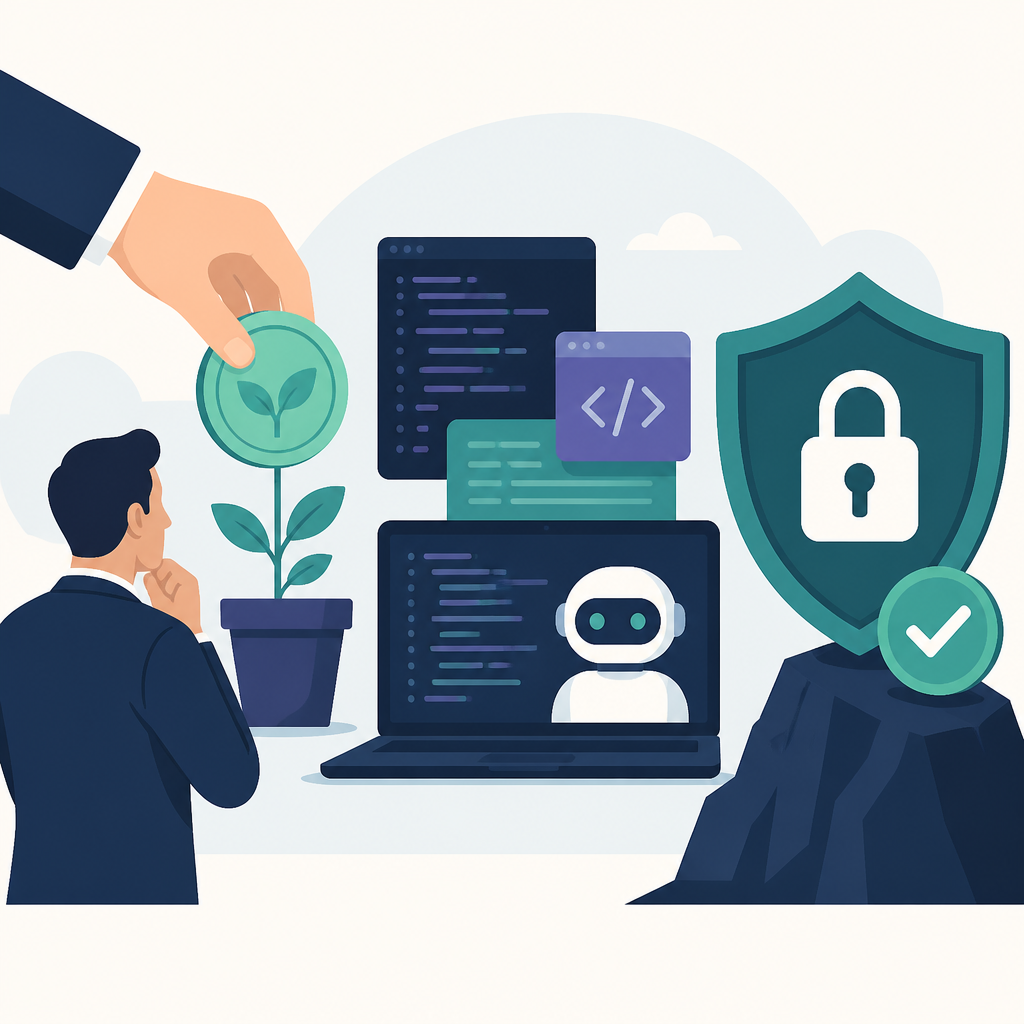
The funding data backs the enthusiasm. CB Insights tracks $3.8 billion in AI coding startup funding since 2024, which is not the behavior of a bubble that has no product-market fit. Investors are buying into a structural shift in how code gets written, reviewed, and shipped. Palihapitiya’s new round is not an anomaly. It is a signal that capital sees coding assistants as infrastructure, not novelty.
Second, the real moat is enterprise trust, not clever demos
CodeSynth’s architecture makes the trade-off obvious. Its custom ARM-based NPU setup delivers lower power consumption, but the article says it also creates security concerns because ARM NPUs lack the mature side-channel mitigations found in more established x86 environments. That matters because enterprise buyers do not evaluate AI tools like consumer apps. They evaluate blast radius, auditability, and whether the system can survive a security review without a month of exceptions.
The compliance gap is even more damaging than the hardware choice. CodeSynth is still pending SOC 2, while competitors such as Snyk and Checkmarx already have deeper compliance credibility in regulated environments. A tool that cannot integrate cleanly with existing SAST platforms forces security teams into parallel workflows, and parallel workflows die in procurement. If an AI coding startup cannot fit into a finance or healthcare SDLC without extra manual oversight, it is not enterprise-ready, no matter how polished the demo looks.
The counter-argument
The strongest case against this position is simple: startups should optimize for adoption first and harden later. In developer tools, speed wins mindshare, and mindshare creates the data, feedback, and distribution that eventually support security work. If a coding assistant helps engineers ship 20 percent faster, then the market will forgive some rough edges, especially when the product sits inside a fast-moving workflow and the security team can layer on controls afterward.
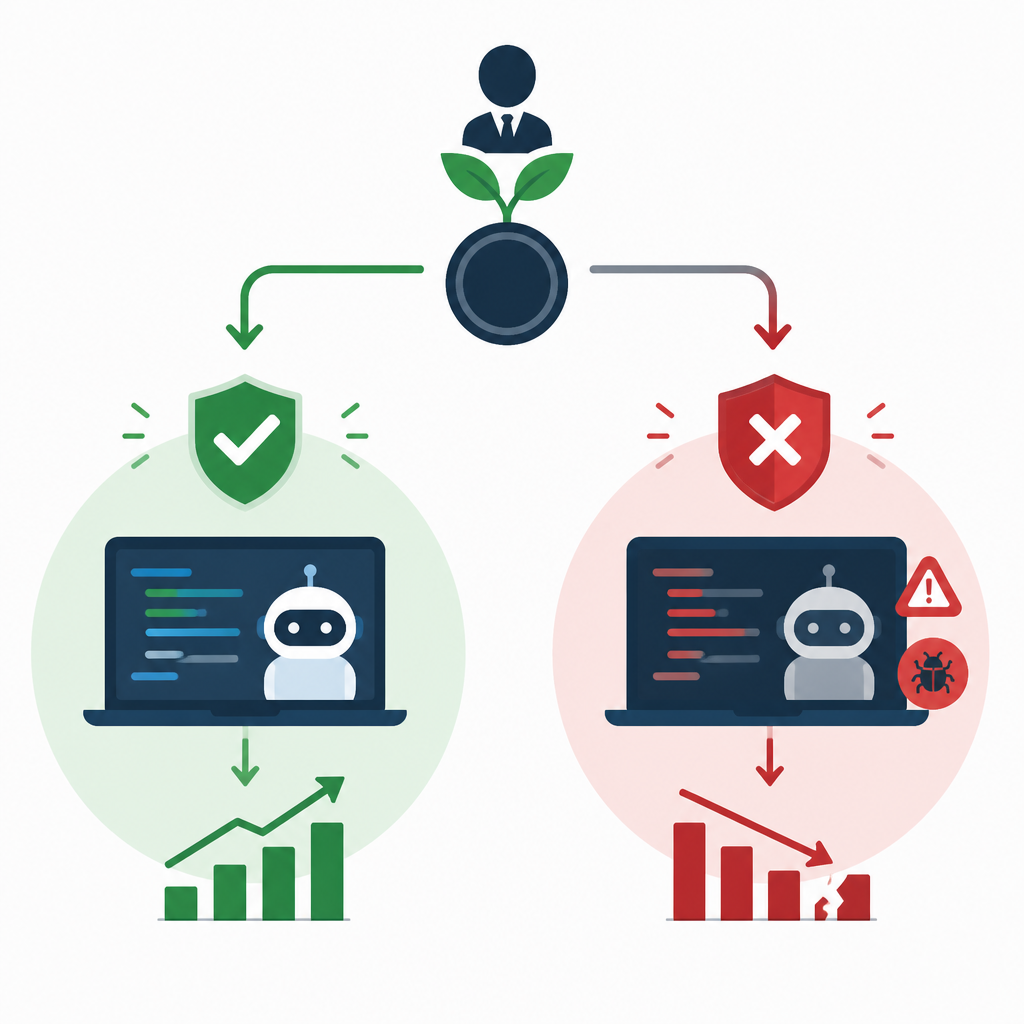
There is truth in that. Many great infrastructure companies began as narrow, developer-loved products before they became enterprise platforms. A startup that waits for perfect compliance before launch will lose to a competitor that ships first and iterates in public.
But that logic breaks in AI coding because the product is not a peripheral convenience. It sits inside the software development lifecycle, touches source code, and can influence what reaches production. That makes security a core feature, not a future enhancement. When a tool already shows 87ms p99 latency under load, lacks native integration with established SAST systems, and still needs SOC 2 Type II, the right answer is not to wave away the gaps. The right answer is to admit that enterprise buyers will not standardize on it until those gaps close.
What to do with this
Founders should build AI coding products around compliance and integration from day one, not as a post-Series A cleanup task. Engineers should treat latency, observability, and security coverage as product requirements, not ops details. PMs should measure success by enterprise fit, not just daily active users or autocomplete delight. If your AI coding tool cannot plug into existing security workflows, pass a real audit, and stay responsive under load, it is a demo with a valuation, not a durable business.
// Related Articles
- [IND]
WorkBuddy Skills: 5 picks that fit real office work
- [IND]
GLM-5.3’s coding gains came from post-training
- [IND]
Anthropic’s data center push now has big capital backing
- [IND]
DailyArxiv turns arXiv keywords into a daily paper feed
- [IND]
Claude vs ChatGPT (2026): Is Claude Better?
- [IND]
CBDC Governance: Standards and Stakeholder Roles