Web3 game developers turn stacks into ecosystems
A practical breakdown of Antier’s Web3 gaming stack, plus a copy-ready template for planning scalable blockchain game platforms.

Old Web3 games shipped features; this turns them into scalable ecosystems.
I’ve been looking at a lot of Web3 game pitches lately, and the same thing keeps bothering me. The deck says “game,” but the stack reads like a pile of disconnected services: wallet, NFT minting, marketplace, token, chain choice, analytics, and maybe a half-baked community loop if someone remembered it. It’s not that the pieces are wrong. It’s that they’re usually assembled like someone was checking boxes instead of building a game people actually want to keep playing.
That’s why Antier’s Web3 gaming infrastructure post caught my attention. It’s not subtle, and honestly that’s part of the problem and the value. The page is basically a catalog of everything they can sell you, but buried in that giant list is a useful idea: if you want a Web3 game to scale, you can’t treat it like a standalone title. You need the infrastructure, the economy, and the player ownership model to behave like one system. I’ve seen teams miss this and then wonder why retention dies the minute the token chart gets ugly.
Stop building “a game” and start building a system
Get the latest AI news in your inbox
Weekly picks of model releases, tools, and deep dives — no spam, unsubscribe anytime.
No spam. Unsubscribe at any time.
“Today, successful projects operate more like digital ecosystems than standalone titles. They include token economies, NFT assets, decentralized marketplaces, player-owned economies, and blockchain-powered infrastructure.”
What this actually means is that the game is no longer the whole product. The game is the front door. The real product is the network of ownership, trade, progression, and incentives around it. If those pieces don’t talk to each other, your “Web3 game” is just a game with extra maintenance.
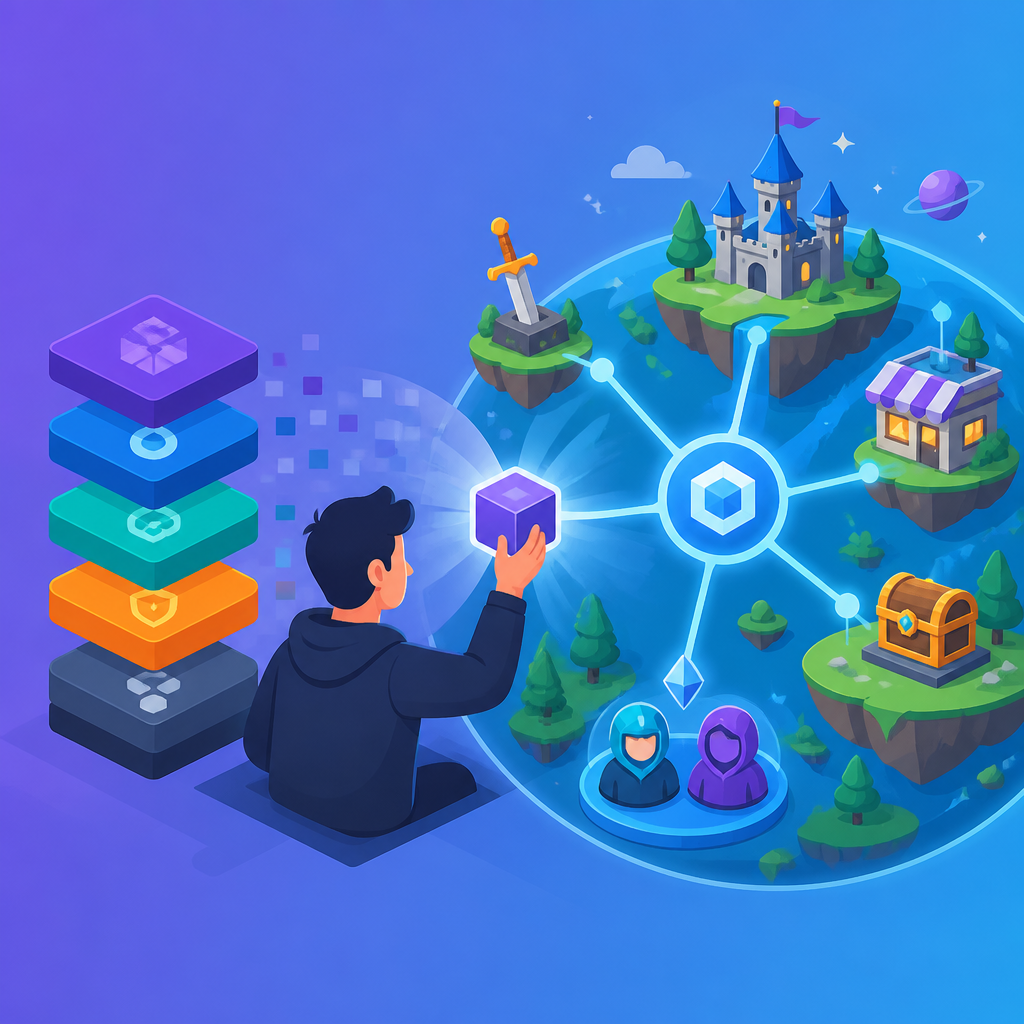
I’ve run into this when teams ask me to review their economy design. They’ll have a slick combat loop or a decent collectible system, but the marketplace is an afterthought, the token has no sinks, and player ownership is basically “you can buy this skin on-chain.” That’s not an ecosystem. That’s a receipt printer.
Antier’s framing is useful because it forces a different question: what survives if the game client changes? What still matters if a new feature ships? If the answer is “nothing except the art,” then the platform is fragile. A real ecosystem has durable primitives: assets, liquidity, identity, access, and governance. Those are the parts that keep value moving even when the content updates.
How to apply it: I’d start every Web3 game plan with a one-page ecosystem map. Not “features.” Map the loops. Who earns what? Who spends what? Where do assets live? What can be traded? What is soulbound? What is off-chain but verified on-chain? If you can’t draw the flow on one page, you’re not ready to build the platform.
Token economies need boring rules, not hype
“token economies”
That tiny phrase hides the part most teams get wrong. A token economy is not a marketing layer. It’s an operating system for value flow. If I had a dollar for every time I saw “utility” described as “use it in-game,” I’d have enough to fund a few failed launches myself.
What this actually means is that tokens need jobs. Not one job. Multiple jobs, each with constraints. They can gate access, pay rewards, unlock crafting, power governance, or act as a settlement layer. But if the only use is speculation, the economy becomes a casino with a whitepaper.
I’ve seen teams copy the same mistake across chains. They launch a token, promise staking, then realize nobody wants to stake because the yield is just inflation. So they add more rewards, then more rewards, then the economy gets louder and weaker at the same time. The fix is not “better tokenomics” in the abstract. The fix is narrower design: fewer emissions, clearer sinks, and a reason for the token to exist even when the market is quiet.
How to apply it: define the token’s role before you define its supply. Write down three things it must do and three things it must never do. Then test each mechanic against one question: does this create long-term participation, or does it just create short-term extraction? If you can’t answer that cleanly, pause the token launch.
- Use one token for one dominant purpose whenever possible.
- Build sinks before you build rewards.
- Tie emissions to actual activity, not vanity metrics.
NFTs should unlock behavior, not just ownership
“NFT assets”
Here’s where a lot of Web3 game teams still feel stuck in 2021. They hear NFT and think “collectible.” Sometimes that’s fine, but if the NFT is only a picture with a serial number, the player experience gets thin fast. Players don’t stay because they own a JPEG. They stay because ownership changes what they can do.

What this actually means is that NFTs should be functional. They can represent characters, land, weapons, passes, upgrades, memberships, or event access. The point is not the token itself. The point is the permission it grants inside the game economy.
I ran into this in a design review where the team had beautifully rendered items, each minted as an NFT, but the items had no gameplay effect beyond cosmetics. The market was active for a week. Then it stalled. Why? Because the assets were collectible in theory, but not operational in practice. Nobody needed them to progress, coordinate, or participate in a higher-value loop.
How to apply it: pick one asset class and make it do real work. A land NFT might generate resources. A membership NFT might unlock raids or governance. A weapon NFT might degrade, fuse, or evolve. If an asset never changes behavior, it’s just a receipt with artwork attached.
- Make at least one NFT type affect gameplay progression.
- Design asset decay, upgrade, or fusion so assets keep moving.
- Separate prestige assets from utility assets so the market doesn’t flatten.
Marketplaces are not add-ons, they’re circulation engines
“decentralized marketplaces”
I’ve watched too many teams bolt on a marketplace after launch and act surprised when trading feels dead. Of course it does. If the economy was never designed for circulation, the marketplace becomes a dusty hallway nobody walks through.
What this actually means is that marketplaces are part of the game loop, not a side feature. They let players trade, price, speculate, craft, and liquidate. They also reveal whether your assets have real demand or just temporary novelty.
Antier’s wording matters here because “decentralized marketplace” sounds nice, but the hard part is not decentralization. The hard part is liquidity. A marketplace without active buyers and sellers is just a UI with filters. I’ve seen teams obsess over fee splits before they’ve solved basic listing behavior. That’s backwards.
How to apply it: design the marketplace around one of three patterns. First, primary sale, where the game sells items directly. Second, peer-to-peer trade, where players set prices. Third, protocol-driven exchange, where assets are swapped or pooled. Don’t try to ship all three on day one. Start with the simplest circulation path that matches your economy.
If you want a reference point for marketplace mechanics, look at OpenSea for asset trading patterns, Magic Eden for NFT market behavior, and Coinbase’s smart contract primer if your team needs a less hand-wavy explanation of on-chain execution. None of those are games, which is exactly the point: good game marketplaces borrow from proven trading behavior instead of inventing nonsense.
Player-owned economies only work when you protect the edges
“player-owned economies”
This part sounds great in a pitch and messy in production. Player-owned economies are where Web3 games either feel alive or implode under their own incentives. If players truly own assets, then they also control supply, pricing, and resale. That’s powerful. It’s also dangerous if you didn’t plan for speculation, farming, botting, and wealth concentration.
What this actually means is that ownership has to be bounded by rules. Players can own things, but the game still needs guardrails. Otherwise the most efficient behavior wins, and the most efficient behavior is usually the least fun one.
I’ve seen this when a team opened trading too early. A handful of players optimized the economy, bots followed, and regular players got priced out of basic progression items. The team blamed “market dynamics” like that was some natural force instead of a design failure. It wasn’t natural. It was predictable.
How to apply it: treat player ownership like a contract with constraints. Use cooldowns, crafting requirements, account-level limits, anti-bot checks, and progressive access. Build systems that reward participation over extraction. If you want economies to feel player-owned, players need agency. But if you want the game to last, they also need friction.
Blockchain infrastructure should disappear into the background
“blockchain-powered infrastructure”
Most teams get this wrong by making the chain the headline. Players do not care what chain your game uses unless the chain gets in the way. They care about speed, cost, asset safety, and whether the game feels like a game.
What this actually means is that infrastructure should support the experience, not dominate it. Wallet setup, transaction flow, asset bridging, identity, and chain selection all need to feel boring. If your onboarding feels like a tax form, you’ve already lost a chunk of your audience.
Antier’s page is stuffed with infrastructure options, from blockchain development to Web3 game development, plus chain-specific references like Polygon zkEVM, Arbitrum Orbit, and Solana. I’m not endorsing the stack as-is. I’m saying the menu tells you the real job: pick infrastructure that matches your throughput, fee tolerance, and player behavior.
How to apply it: choose infrastructure from the player’s point of view. If your game has frequent micro-transactions, low fees matter. If you need custom logic, modular chain design may matter more. If your audience is mainstream, wallet abstraction matters more than chain purity. Pick the boring option that reduces friction.
Hiring the right developers means hiring for systems thinking
“Hire Web3 Game Developers to Build Scalable Web3 Gaming Platforms”
That headline is blunt, and honestly, it points to the real problem. You don’t just need people who can write Solidity or wire a wallet. You need developers who understand game loops, economy pressure, backend reliability, and user behavior. A Web3 game dev who only thinks in contracts will ship a contract. That’s not enough.
What this actually means is that hiring should focus on cross-domain judgment. Can the developer reason about asset lifecycle? Can they spot when an economy mechanic will get farmed? Can they balance on-chain transparency with off-chain performance? Those are the people who keep a platform from turning into a pile of patches.
I’ve worked with teams that hired blockchain specialists first and game engineers later. The result was predictable: elegant infrastructure, awkward gameplay. The better pattern is to hire for the loop first. Then add chain expertise where it actually matters. If your game can’t retain players, no amount of chain architecture will save it.
How to apply it: ask candidates to walk through one complete player journey, from onboarding to first purchase to resale to progression. If they can’t describe the edge cases, they probably can’t build the system. And if they only talk about token utility, I’d be very cautious.
The template you can copy
# Web3 Game Platform Planning Template

## 1) Game summary
- Game name:
- Genre:
- Target players:
- Core loop:
- Why Web3 is needed here:

## 2) Ecosystem map
### Assets
- Asset type:
- On-chain or off-chain:
- What it unlocks:
- Can it be traded? Y/N
- Can it be burned, fused, upgraded, or rented?

### Currency / tokens
- Token name:
- Primary job:
- Secondary jobs:
- Supply model:
- Emissions source:
- Sinks:
- Anti-inflation guardrails:

### Marketplace
- Primary sale model:
- Secondary trading model:
- Fees:
- Royalties:
- Liquidity plan:
- Anti-bot / anti-farm controls:

### Player ownership rules
- What players truly own:
- What the studio still controls:
- Transfer limits:
- Progression limits:
- Abuse prevention:

## 3) Infrastructure choices
- Chain / L2 / appchain:
- Wallet model:
- Transaction frequency:
- Fee tolerance:
- Identity / account abstraction:
- Indexing / analytics:
- Storage:
- Bridge requirements:

## 4) Build order
1. Prototype core loop
2. Test economy sinks and rewards
3. Add asset ownership
4. Add marketplace circulation
5. Add wallet/onboarding polish
6. Add governance or advanced trading only after retention is proven

## 5) Hiring checklist
### Need these skills
- Game systems design
- Smart contract development
- Backend engineering
- Economy balancing
- Security review
- Marketplace / trading logic

### Interview prompts
- Walk me through a player’s first 30 minutes.
- What breaks if a bot farms the reward loop?
- Which assets should never be freely tradable?
- Where should the chain be invisible to the player?
- How do you prevent inflation without killing engagement?

## 6) Red flags
- Token first, gameplay second
- Marketplace with no real demand
- NFTs with no utility
- Too many rewards, no sinks
- Onboarding that requires crypto knowledge
- Chain choice made for branding instead of player experience

## 7) Launch checklist
- Core loop tested with real users
- Economy stress-tested
- Marketplace liquidity plan in place
- Wallet onboarding simplified
- Monitoring for bots, exploits, and inflation
- Clear rules for ownership, trading, and progression
That’s the version I’d actually hand to a team before they start spending money. It’s not glamorous, but it forces the right conversations early, which is where most Web3 game projects either save themselves or waste six months.
If you want to go deeper on the source material, the original post is here: Antier’s Web3 gaming infrastructure article. What I’ve written above is my breakdown of the framing and the practical implications, not a copy of their sales page. The original page is doing promotion; I’m stripping it down into something you can actually use.
// Related Articles
- [CHAIN]
Web3 platforms need fee discipline, not token theatrics, to make money
- [CHAIN]
Riyadh’s blockchain show proves Web3 is now infrastructure
- [CHAIN]
Layer 2 is changing blockchain payments for banks
- [CHAIN]
Ethereum.org’s app list turns discovery into a map
- [CHAIN]
Celestia’s Fibre push targets 1 Tb/s blockspace
- [CHAIN]
AI utility tokens are still just presale marketing, not infrastructure