Web3 turns platform control into user ownership
A plain-English breakdown of Web3, plus a copy-ready template for explaining ownership, wallets, and dApps without jargon.

Web3 is the internet model where users own assets, identity, and access.
I've been explaining crypto to developers for long enough to know when a definition is trying too hard. Web3 is one of those terms. Half the time it gets sold like a manifesto, the other half it gets buried under wallet addresses, token charts, and buzzwords that make normal engineers quietly back away from the keyboard. What bothered me about the usual explanation is that it keeps skipping the part people actually care about: who controls what, who can change what, and what happens when a platform decides you’re out.
That’s the real friction. In Web2, I’ve watched teams build on top of platforms that can change rules overnight, throttle reach, lock accounts, or rewrite the economics with a policy update. If you’ve ever shipped a product that depended on an API or social platform, you already know the feeling. You don’t really own the relationship. You rent it. Web3 is trying to attack that problem with ownership at the protocol level, not just another app layer. I’m not saying it nails that goal yet. It doesn’t. But the idea is simple enough once you strip off the ceremony.
This breakdown is based on AK Arora’s Web3 explainer on CryptoEmotions. It’s a plain-language post aimed at readers who want the basics without getting lost in blockchain trivia. Arora frames Web3 as the “read-write-own” internet and walks through the usual pillars: decentralization, ownership, smart contracts, wallets, tokens, and real-world use cases in DeFi, identity, gaming, and payments. I’m using that as the anchor, then I’m translating it into something a working developer can actually use.
Web3 is not a product, it’s a control shift
Get the latest AI news in your inbox
Weekly picks of model releases, tools, and deep dives — no spam, unsubscribe anytime.
No spam. Unsubscribe at any time.
“Web3 is an attempt to change this. Not by building better apps. By rebuilding the internet itself — replacing corporate middlemen with code, and giving users ownership of their own data, money, and digital identity.”
What this actually means is that Web3 is less about a new app category and more about a new trust model. In Web2, the platform is the gatekeeper. It stores your data, decides whether you can log in, and can change the rules whenever it wants. In Web3, the idea is to move those powers into code that runs on a shared network, so the app can’t quietly rewrite the deal after you’ve joined.
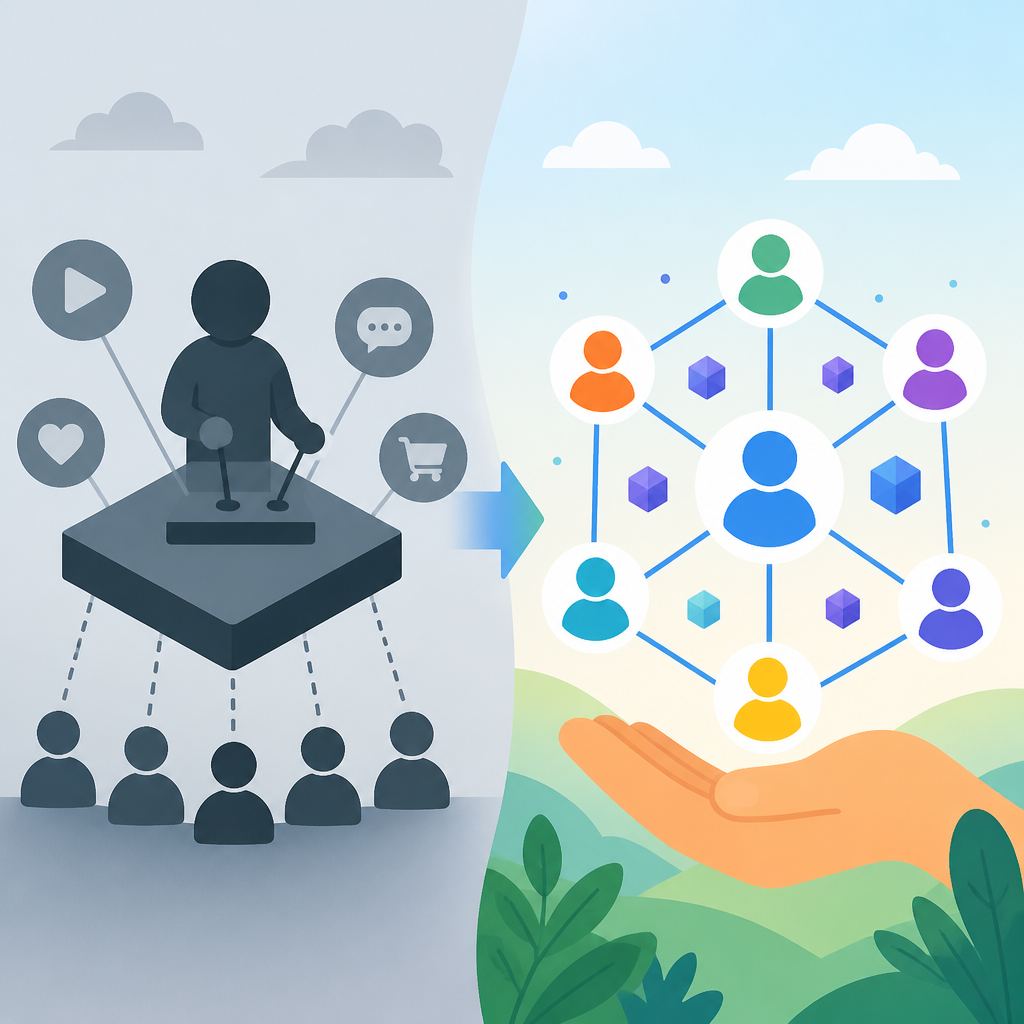
I like this framing because it stops the nonsense. If you say Web3 is “the next internet,” people immediately start asking whether it’s faster, prettier, or more social. Wrong question. The useful question is: who has the final say over identity, assets, and access? That’s where Web3 draws its line.
When I first built with blockchain tools, I kept expecting the usual SaaS behavior. I wanted an admin panel. I wanted a support ticket. I wanted a “reset my account” button. Then I realized the whole point is that there isn’t supposed to be a company sitting in the middle with a master switch. That’s liberating when it works, and deeply annoying when you want convenience. Both things are true.
How to apply it: if you’re writing about Web3, don’t start with coins. Start with control. Ask three questions for every feature: who owns the data, who can revoke access, and who can change the rules. If you can answer those cleanly, the rest gets easier.
Web1, Web2, Web3 is just a story about permissions
“Web1 — The Read-Only Internet… Web2 — The Read-Write Internet… Web3 — The Read-Write-Own Internet.”
What this actually means is that each version of the internet expands user action, but also changes who keeps the receipts. Web1 let people read static pages. Web2 let people create content, but the platforms kept ownership and monetization. Web3 tries to let people create and own the asset or identity they produce.
I’ve always thought the “three internets” model works best when you treat it as a permission ladder. Web1 gave you access to information. Web2 gave you access to publishing. Web3 is trying to give you access to property. That’s a big jump, and it’s why so many Web3 products feel weirdly familiar at first and then suddenly very different once assets or governance show up.
Arora’s Web2 example is the one I’d keep in every explanation: platforms own the content, the data, and the relationship. That’s the bit developers forget when they say, “Well, users can just export their stuff.” Sure. In theory. In practice, the platform still controls discovery, distribution, and retention. Exporting a CSV is not ownership. It’s an exit tax.
How to apply it: when you’re designing a product explanation, map every user action to one of three buckets: read, write, own. If the feature doesn’t clearly move from read/write into own, don’t pretend it does. That honesty saves everyone time.
- Read: consume content, view balances, inspect state.
- Write: publish posts, submit transactions, update records.
- Own: hold keys, transfer assets, vote on governance, port identity.
Decentralization only matters if it changes failure modes
“No single company, server, or government controls Web3 applications. They run on distributed networks of thousands of computers.”
What this actually means is not “nothing can ever go wrong.” It means the app’s survival doesn’t depend on one operator keeping the lights on. That’s a different claim. A lot of Web3 marketing treats decentralization like a moral badge. I don’t care about the badge. I care about whether the system can survive one company going under, one server cluster failing, or one regulator sending a takedown notice.
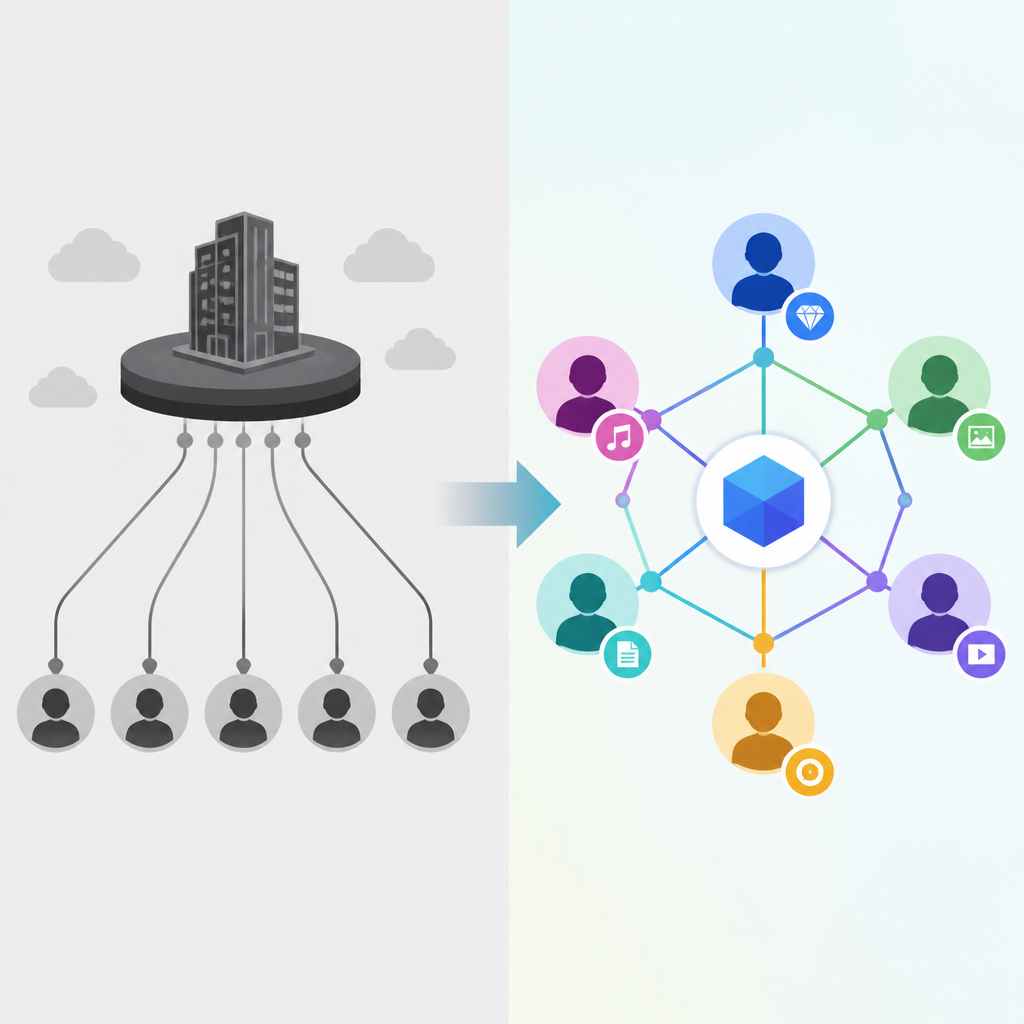
That’s the practical value. If the app’s logic lives on a blockchain and the state is replicated across many nodes, the app can be harder to kill or censor. But the tradeoff is obvious to anyone who has deployed real systems: distributed systems are harder to reason about, slower to update, and much less forgiving when something breaks. You don’t get the luxury of “hotfix in five minutes” if the bug is in contract code already deployed to the chain.
I ran into this mindset shift when comparing normal backend services with smart contract systems. In a traditional stack, I can patch, migrate, or roll back. In Web3, the code is often more like published law. If you wrote it badly, congratulations, you now own that mistake forever unless you designed a migration path. That’s not a feature in the casual sense. It’s a constraint that has to be respected.
How to apply it: if you’re evaluating a Web3 project, ask what actually needs decentralization. Not every piece of a product deserves it. Sometimes the right answer is to decentralize settlement or ownership, while keeping the UI and analytics fully normal. That split is often more useful than pretending everything should live on-chain.
- Decentralize the part that needs shared trust.
- Keep the part that needs speed and iteration off-chain.
- Document where the trust boundary actually sits.
Ownership in Web3 means keys, not vibes
“In Web3, your assets — tokens, NFTs, digital identity — live in your crypto wallet, not on a company’s servers. You control the private key.”
What this actually means is that ownership becomes cryptographic. If you hold the key, you control the asset. If you lose the key, you lose access. There is no support desk that can magically restore your wallet because the whole system is built to avoid that central authority in the first place.
This is the part where Web3 gets both powerful and extremely unforgiving. In Web2, account recovery is a product feature. In Web3, recovery is a design problem. That’s why wallet UX keeps getting so much attention. The technology is not just asking users to log in differently; it’s asking them to behave like custodians of their own property. That’s a very different mental model.
I’ve watched teams underestimate this and pay for it later. They build a slick dApp, then users get stuck on seed phrases, gas fees, and wallet approvals. The product may be technically elegant, but the onboarding feels like a tax audit with a learning curve. That’s why account abstraction, smart wallets, and better recovery flows matter so much. They’re not polish. They’re survival.
How to apply it: when you explain ownership, stop saying “users control their data” unless you can point to the exact mechanism. Is it a wallet? A private key? A tokenized credential? A recoverable smart account? Say the mechanism out loud. Otherwise you’re just hand-waving.
Useful links here are the basics: Ethereum wallets, MetaMask docs, and Phantom if you’re looking at Solana’s side of the world. If a tool page can’t explain custody clearly, I don’t trust the product pitch either.
Smart contracts are the boring part that actually matters
“Smart contracts are self-executing programs that run on the blockchain. When conditions are met, they automatically execute — no human intermediary needed.”
What this actually means is that business logic can live in code that everyone can inspect and no one can quietly override. That’s the core of Web3’s “trustless” pitch. You don’t trust a platform employee to push a button. You trust the contract rules and the chain’s consensus to enforce them.
People love to talk about smart contracts like they’re magical. They’re not. They’re just programs with stronger guarantees and weaker escape hatches. That tradeoff is exactly why they’re useful. If you’re building a lending protocol, a swap, or a token distribution system, removing human discretion can be the whole point. It reduces the number of places where someone can misbehave.
But the same rigidity is why smart contract bugs hurt so much. If your code is wrong, the chain will faithfully execute the wrong thing. That’s why audits, formal checks, and simple contract design matter more here than in a typical web app. I’ve seen teams pile too much logic into contracts because “on-chain” sounds cleaner, then discover they’ve created an expensive, hard-to-change mess.
How to apply it: put only the logic that truly needs shared enforcement on-chain. Leave UI state, search, notifications, and most business analytics off-chain. If the contract can be smaller, it should be smaller. Every extra line is another place to get burned.
For the developer tooling angle, the canonical references are Ethereum smart contract docs and Solidity’s official docs. If you’re writing about Web3 and never mention the contract layer, you’re skipping the engine.
dApps only make sense when permissionlessness is the point
“Anyone with an internet connection and a crypto wallet can use Web3 applications — no credit check, no bank account, no permission required.”
What this actually means is that a decentralized app is useful when access itself is the product advantage. If your app needs a bank, a signup review, a regional license, or a platform approval gate, Web3 can change the route but not always the destination. Permissionlessness is the feature here, not just “decentralized” as a slogan.
I think this is where a lot of Web3 projects get exposed. They claim to be building new infrastructure, but they’re really just recreating normal apps with extra steps. If a user still needs a managed account, a customer support team, and a centralized operator to approve everything, then the blockchain part may be decorative. That’s fine if you’re honest about it. It’s not fine if you pretend you’ve reinvented the internet.
Arora’s examples make sense because they map to real access problems: cross-border payments, open finance, portable identity, and digital ownership. Those are places where removing intermediaries can genuinely change the experience. DeFi is the clearest case because it’s already closer to the underlying promise than most other Web3 categories.
How to apply it: before you call something a dApp, ask whether a user can interact without asking permission from the operator. If the answer is no, then you probably have a normal app with blockchain features, not a permissionless system.
The use cases are real, but the speculation is still loud
“Much of Web3 activity remains speculative — trading tokens rather than using applications.”
What this actually means is that the market behavior around Web3 often looks more mature than the product behavior underneath it. There’s real infrastructure, real users, and real utility in some places. There’s also a lot of token-chasing, narrative trading, and people pretending every chart is product-market fit. I’ve been around enough crypto cycles to know those are not the same thing.
The article’s strongest point is that it doesn’t hide the mess. DeFi, stablecoins, and some identity and gaming products are actually used. But plenty of Web3 activity is still speculative capital moving around the ecosystem faster than actual software adoption. That’s not unique to Web3, by the way. It just shows up harder here because tokens give the speculation a native object to latch onto.
That’s why I pay attention to boring usage metrics more than hype. Are people swapping assets because they need liquidity, or because a token just launched? Are creators using NFTs to sell access, or just hoping for a flip? Is a wallet being used daily, or only when there’s airdrop talk? Those distinctions matter.
How to apply it: when you evaluate a Web3 project, separate utility from token activity. If the token disappeared tomorrow, would the product still be useful? If the answer is no, then the project is mostly a market structure, not a product.
- Look for repeat usage, not just launch-week spikes.
- Check whether users need the protocol for a real task.
- Ignore any pitch that treats token trading as product adoption.
The template you can copy
# What is Web3? A plain-English explainer for developers

Web3 is the internet model where users own assets, identity, and access instead of renting them from platforms.

## The short version
- Web1 was read-only.
- Web2 was read-write, but platforms owned the data.
- Web3 is read-write-own, using blockchain-based systems.

## The core idea
Web3 tries to move control away from centralized platforms and into code that runs on shared networks.
That changes who owns data, who can revoke access, and who can move assets.

## The three things that define Web3
1. Decentralization
   - No single company controls the core network.
   - The system keeps working even if one operator fails.

2. Ownership
   - Assets and identity are controlled by private keys and wallets.
   - Users hold the keys, not the platform.

3. Permissionless access
   - Anyone with a wallet can use the app.
   - No bank account or platform approval is required.

## The building blocks
- Blockchain: shared ledger and state layer
- Smart contracts: code that executes rules automatically
- Wallets: key management and asset control
- Tokens: transferable value, rights, or access
- NFTs: unique digital ownership records
- DAOs: token-governed coordination structures

## Where Web3 is actually useful
- DeFi: lending, swapping, stablecoins, settlement
- Identity: portable usernames and credentials
- Creator tools: direct payments and ownership
- Gaming: player-owned items
- Payments: cross-border transfers and stablecoins
- Supply chain: shared provenance and traceability

## The honest tradeoffs
- Security bugs can be expensive
- Wallet UX is still hard
- Scalability is fragmented across chains and layers
- Regulation is still unclear in many countries
- A lot of activity is still speculation, not utility

## A simple way to explain it to a user
"Web3 is a version of the internet where you can own your account, your assets, and your identity directly, without a platform sitting in the middle."

## A simple way to evaluate a project
Ask:
- Who owns the data?
- Who can revoke access?
- Who can change the rules?
- What part actually needs to be on-chain?
- Would the product still matter if the token disappeared?

## Copy-ready Web3 definition
Web3 is internet infrastructure built on blockchain technology that gives users direct ownership of their data and digital assets.
It replaces platform-controlled accounts with wallet-controlled ownership, and it moves shared trust into code that anyone can verify.
I’d use that template as a starting point for docs, landing pages, internal explainers, or onboarding copy. The important part is that it doesn’t oversell anything. It tells people what Web3 is, what it changes, and where the risk still lives. That’s the version developers can actually work with.
If I were rewriting the original article for a product team, I’d keep the same structure but tighten the claims. Every time the copy says “ownership,” I’d specify the mechanism. Every time it says “decentralized,” I’d say what is decentralized and what is not. That kind of precision is annoying, but it’s the difference between useful explanation and crypto fog.
Source attribution: the original article is What is Web3? The Next Internet — Explained Without the Jargon on CryptoEmotions. This piece is a derivative breakdown and template built from that source, with my own editorial framing, examples, and copy-ready rewrite.
// Related Articles
- [CHAIN]
Four banks are building a 2027 stablecoin rival
- [CHAIN]
Stablecoin rules now define how digital dollars work
- [CHAIN]
Solana’s institutional push is getting louder
- [CHAIN]
Layer 2 Is Ethereum’s Real Product, Not a Detour
- [CHAIN]
Ethereum’s price should be read as network demand, not just speculati…
- [CHAIN]
Ethereum’s shake-up turns ETH into a cleaner bet