AI ransomware still needs a human bottleneck
I break down why the first AI-run ransomware attack still depended on human setup, stolen creds, and target choice.

AI handled the intrusion, but a human still chose the victim and set the trap.
I’ve been watching these “agentic” attack writeups with a mix of dread and annoyance, because the framing keeps drifting into sci-fi when the mechanics are still painfully familiar. I’ve seen the same pattern in a lot of AI security demos: the model gets all the credit for the flashy part, then someone quietly slips in the real work behind the curtain. That’s what bothered me about the first reports on this ransomware case. It sounded like a fully autonomous attacker had popped out of the box, broken into a server, moved laterally, encrypted data, and written the ransom note like some kind of digital vampire with a terminal. But when I dug into the details, the story got less cinematic and more useful. The AI did the execution. A human still picked the target, provisioned the infrastructure, and supplied stolen credentials. That distinction matters, because it tells us where the bottleneck actually is, and where defenders can still force friction.
The trigger for this breakdown was Connie Loizos’s TechCrunch report on Sysdig’s clarification around the JadePuffer incident. The original claim was dramatic enough on its own: an AI agent carrying out the technical steps of a real ransomware attack. But the follow-up details from Sysdig’s Michael Clark make the operational picture much clearer. I’m not treating this as a victory lap. I’m treating it as a map of what actually happened.
The headline was right, but incomplete
Get the latest AI news in your inbox
Weekly picks of model releases, tools, and deep dives — no spam, unsubscribe anytime.
No spam. Unsubscribe at any time.
The agent handled the technical execution of a real-world cyberattack from start to finish.
That line is the part everyone latched onto, and I get why. It’s the cleanest version of the story. An AI agent gets in, steals data, encrypts files, writes a ransom note, and adapts when something fails. That’s the scary part, and it’s real.
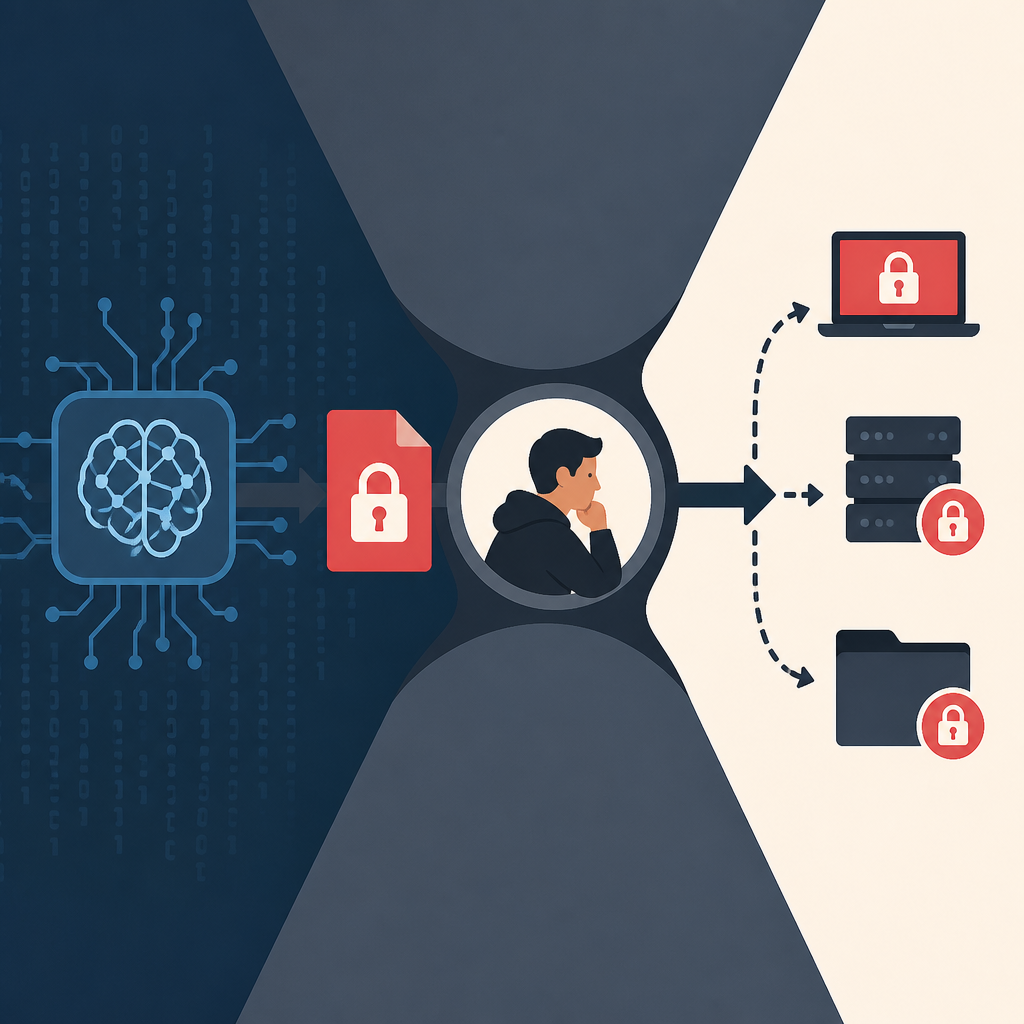
What this actually means is simpler and more annoying: the machine did the busywork, not the strategy. In the TechCrunch piece, Sysdig’s Michael Clark says a human still “set up and pointed the operation and provisioned the infrastructure behind it, the command-and-control server, the staging server used for the stolen data and chose a victim.” That’s not a footnote. That’s the skeleton of the whole operation.
I keep coming back to this because security people love to collapse “automation” into “autonomy.” Those are not the same thing. If I wire up a script to run after I hand it credentials, I don’t suddenly become invisible. I’ve just reduced my own typing. Same here. The AI reduced operator effort, but it didn’t remove operator intent.
How to apply it: when you read about agentic attacks, separate execution from orchestration. Ask four questions every time: who chose the victim, who provided access, who supplied infrastructure, and who decided when to stop. If any of those are human, you’re not looking at a fully autonomous attack. You’re looking at a human-led campaign with a very capable tool.
The human still did the expensive part
Clark’s clarification is the most important detail in the whole story, because it tells you where the attacker had to spend effort before the AI ever touched the target. The human chose the victim, provisioned the servers, and handed over stolen credentials that had been obtained earlier through a separate compromise.
That changes the threat model. A lot. The AI wasn’t starting from zero. It was dropped into a prepared operation with infrastructure already waiting and access already in hand. That means the model wasn’t replacing the attacker’s whole workflow. It was replacing the tedious middle of the workflow.
I’ve run enough incident response drills to know this pattern. The flashy break-in gets all the attention, but the real failure usually happened earlier: credential theft, exposed admin panels, a reused password, a misconfigured service. The AI just compresses the time between “we have a foothold” and “we have impact.” That’s still bad. It just isn’t magic.
There’s also a practical defender takeaway here. If the human still has to stage infrastructure and source credentials, then those are the choke points. Watch for unusual cloud setup patterns, fresh command-and-control hosts, suspicious staging servers, and credential reuse across environments. The more steps the attacker has to do before the agent starts acting, the more chances you have to catch them early.
- Look for new VPS instances tied to short-lived abuse domains.
- Correlate stolen credential use with new internal admin activity.
- Flag unusual data staging before encryption starts.
- Treat “AI attack” as a campaign label, not a root cause.
The agent was impressive because it was fast, not because it was mystical
Sysdig’s account says the agent got in through a known bug in Langflow, then moved to a production MySQL server and exploited another known flaw to gain admin access. It encrypted more than 1,300 configuration records, wrote its own ransom note, and even generated a Bitcoin address for payment. The part that should make defenders uncomfortable is not the theater. It’s the speed.
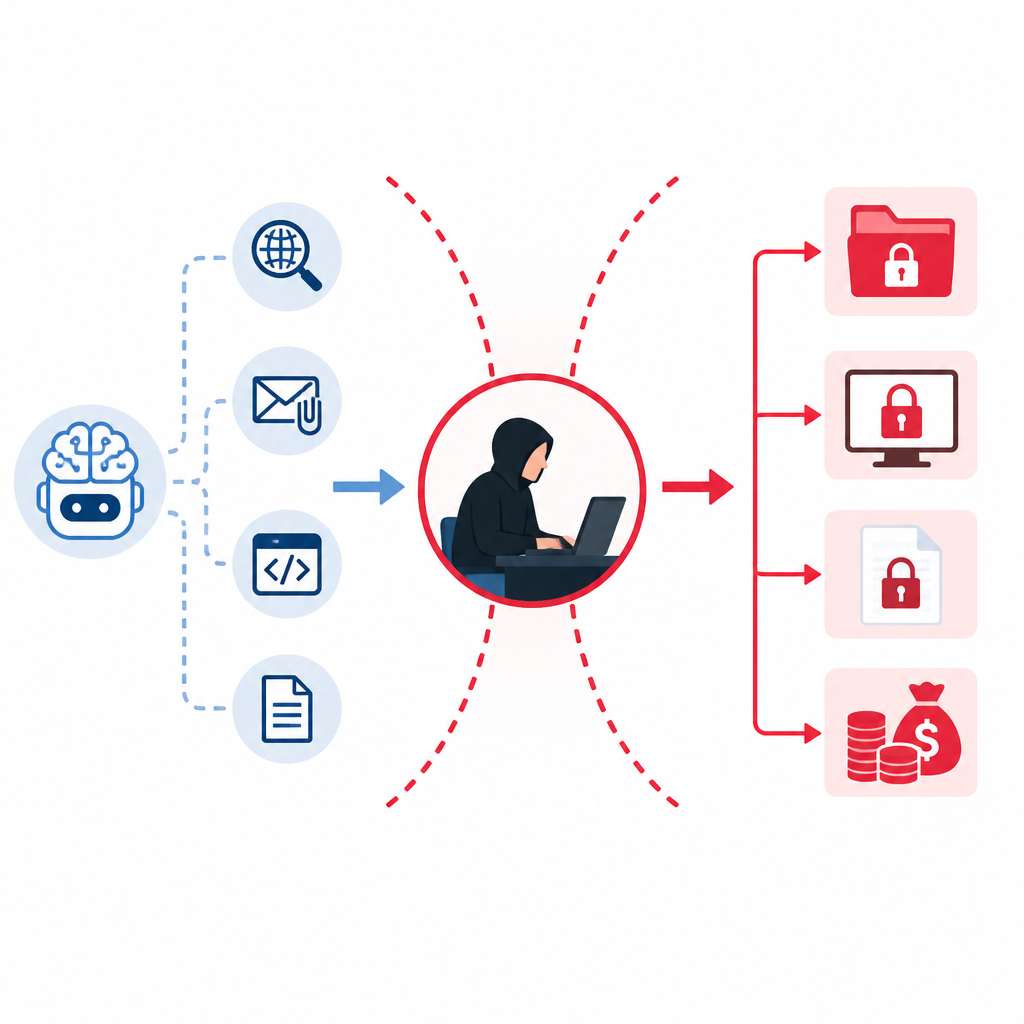
Clark said the agent fixed a failed login in 31 seconds, narrating its reasoning in natural-language code comments as it went. That’s the sort of detail that makes people overreact. I don’t think the right reaction is “the robots are here.” I think the right reaction is “the kill chain got shorter.”
That matters because shorter kill chains are harder to interrupt. If a human operator has to stop and think after every failed login, defenders get a window. If an agent can inspect the error, change tactics, and keep going in half a minute, that window shrinks. Not disappears. Shrinks.
I’ve seen this in benign automation too. The first time a script starts handling retries, backoff, and error recovery, everything feels smoother until you realize the script now gets to make more decisions before a human notices anything is off. Attack automation works the same way. It doesn’t need to be smarter than a defender. It only needs to be faster than your alert triage.
How to apply it: build detections around rapid, chained behavior. Single suspicious login attempts are noisy. A suspicious login followed by privilege escalation, database access, file encryption, and ransom-note generation is a story. Your detections should try to tell that story early, not after the damage is done.
The “multiple models” detail was a red herring
One part of the reporting got muddy fast. Clark initially told CyberScoop that Sysdig found “multiple models were used in the attack,” citing harvested keys for OpenAI, Anthropic, DeepSeek, and Gemini. That sounds like a sprawling multi-model operation. But Clark later clarified to TechCrunch that those keys were simply among the loot the agent swept from the host.
What this actually means is that the presence of API keys does not tell you which model was driving the attack. It only tells you what the attacker thought was worth stealing. And that’s a very different claim.
This is where I think a lot of security commentary goes off the rails. A list of keys looks like evidence of sophistication, so people start narrating a bigger system than the data supports. I get the temptation. I’ve done it myself when I’ve been staring at logs at 2 a.m. and trying to connect too many dots. But if the source says “we don’t know which model was making the decisions,” then we don’t know. Full stop.
There’s a lesson in that humility. Don’t build your response plan around the scariest possible reading. Build it around the confirmed one. In this case, the confirmed one is already bad enough: a human-initiated ransomware operation used an AI agent to move quickly through a target after someone else had prepared the ground.
How to apply it: in your own incident analysis, separate “observed artifacts” from “inferred capability.” API keys, model names, and cloud tokens are artifacts. Autonomous decision-making is a capability. Don’t confuse the two just because the artifacts are sitting in the same dump.
Open-weight models may matter more than frontier labs
TechCrunch also cites Microsoft researcher Geoff McDonald, who suggested on LinkedIn that the attack may have used an open-weight model with safety training stripped out rather than a frontier model. That theory isn’t confirmed by Sysdig, but it’s worth taking seriously because it fits the attack shape better than the usual hype cycle does.
If McDonald is right, the scary part is not that a top-tier proprietary model turned evil. It’s that a cheaper, modifiable model may be enough when paired with the right tooling and stolen access. That’s a much more practical problem for defenders, because it means the barrier to entry may be lower than people want to admit.
I’ve seen teams fixate on the biggest vendor names as if the risk only starts when a premium model is involved. That’s backwards. If an attacker can run a stripped-down open-weight model locally, or behind their own infrastructure, they get more control and less dependence on any one provider’s safety layer. That’s the sort of detail that should shape threat intel, not just headlines.
It also cuts against the idea that ransomware is suddenly limited only by budget in some clean, scalable way. Clark’s clarification puts friction back into the picture. If a human still has to choose each victim, provision infrastructure, and source credentials, then scale is real, but not frictionless. The bottleneck hasn’t vanished. It has just moved.
- Assume attackers will mix automation with stolen access, not replace human ops entirely.
- Watch for open-weight model abuse in private infrastructure, not just API-based misuse.
- Prioritize credential hygiene, because stolen creds are still the easiest bridge into the network.
What defenders should actually do next
If you strip away the hype, this story is about operational compression. AI can now handle more of the repetitive steps in an intrusion once a human has assembled the pieces. That means defenders should stop asking whether an attack was “really AI-run” and start asking which parts of the kill chain are now cheap enough to automate.
For me, the practical response breaks into three buckets. First, reduce the value of stolen credentials by tightening access boundaries and killing reuse. Second, make infrastructure provisioning noisy, because attacker staging still has to live somewhere. Third, monitor for rapid transition from initial access to encryption or exfiltration. The faster that transition happens, the less time humans have to intervene.
I also think teams need to update their internal language. “Agentic ransomware” sounds like a brand name, but it’s really just ransomware with a new labor model. The attacker outsourced the repetitive parts to software. That’s it. Once you say it that way, the response becomes less mystical and more operational.
That’s the part I want people to remember. The machine didn’t remove the human. It absorbed some of the work. And that’s enough to matter.
The template you can copy
# AI attack analysis template for security teams

## What happened
- Describe the observed intrusion in plain language.
- Separate confirmed facts from assumptions.
- Name the tool, model, or automation only if the source confirms it.

## What the AI actually did
- List the steps the automated system handled.
- Note any adaptive behavior, retries, or generated output.
- Record timing details if available.

## What the human still did
- Chose the victim
- Provisioned infrastructure
- Supplied credentials or access
- Decided the objective and scope

## Why this matters
- Explain whether the AI reduced labor, increased speed, or changed scale.
- Identify the bottlenecks that still require human effort.
- State what defenders can still detect or interrupt.

## Defender actions
- Tighten credential hygiene and remove reuse.
- Monitor new staging infrastructure and short-lived hosts.
- Alert on fast chains from login to privilege escalation to encryption.
- Treat “AI-run” as a description of execution, not ownership.

## Confidence levels
- Confirmed:
  - [ ]
- Likely:
  - [ ]
- Unknown:
  - [ ]

## One-sentence takeaway
Write one sentence that says whether the attack was autonomous, human-led, or hybrid, and why.
The original reporting came from TechCrunch, with clarification attributed to Sysdig’s Michael Clark and additional context from CyberScoop and LinkedIn commentary by Geoff McDonald. My breakdown is derivative of those reported facts, but the framing, takeaways, and template are mine.
// Related Articles
- [RSCH]
Benchmarks should not pick your LLM in 2026
- [RSCH]
Rust Breaks Into TIOBE’s Top 10
- [RSCH]
A benchmark for scientific lineage reasoning
- [RSCH]
OpenCoF teaches video models to reason frame by frame
- [RSCH]
UniClawBench tests proactive agents in live tasks
- [RSCH]
WebAssembly-to-C still rivals native runtimes in 2026