AI writes code, but teams still own the debt
AI speeds up coding, but verification, testing, and maintenance still create technical debt teams must pay down.

AI can generate code fast, but teams still own the testing, verification, and maintenance debt.
AI coding tools can produce working-looking software in minutes, but the real cost shows up later in reviews, tests, and incident response. The New Stack’s argument is simple: the code may arrive faster, yet the responsibility for correctness still sits with the engineering team.
That matters because AI output is not free. Every generated function can add hidden complexity, and every shortcut in validation can become a bug, a security issue, or a future refactor.
| Signal | What it means | Why it matters |
|---|---|---|
| AI-generated code | Fast initial output | Speeds up drafting, not ownership |
| Verification | Tests, review, runtime checks | Prevents bad code from shipping |
| Technical debt | Cleanup and maintenance cost | Shows up after the demo |
| Agentic development | More autonomous code creation | Makes verification more important |
Speed is cheap; correctness is expensive
Get the latest AI news in your inbox
Weekly picks of model releases, tools, and deep dives — no spam, unsubscribe anytime.
No spam. Unsubscribe at any time.
The article’s core point is that AI changes the pace of coding, not the physics of software quality. A model can draft a service, a script, or a test file in seconds, but that output still needs human judgment before it becomes production code.
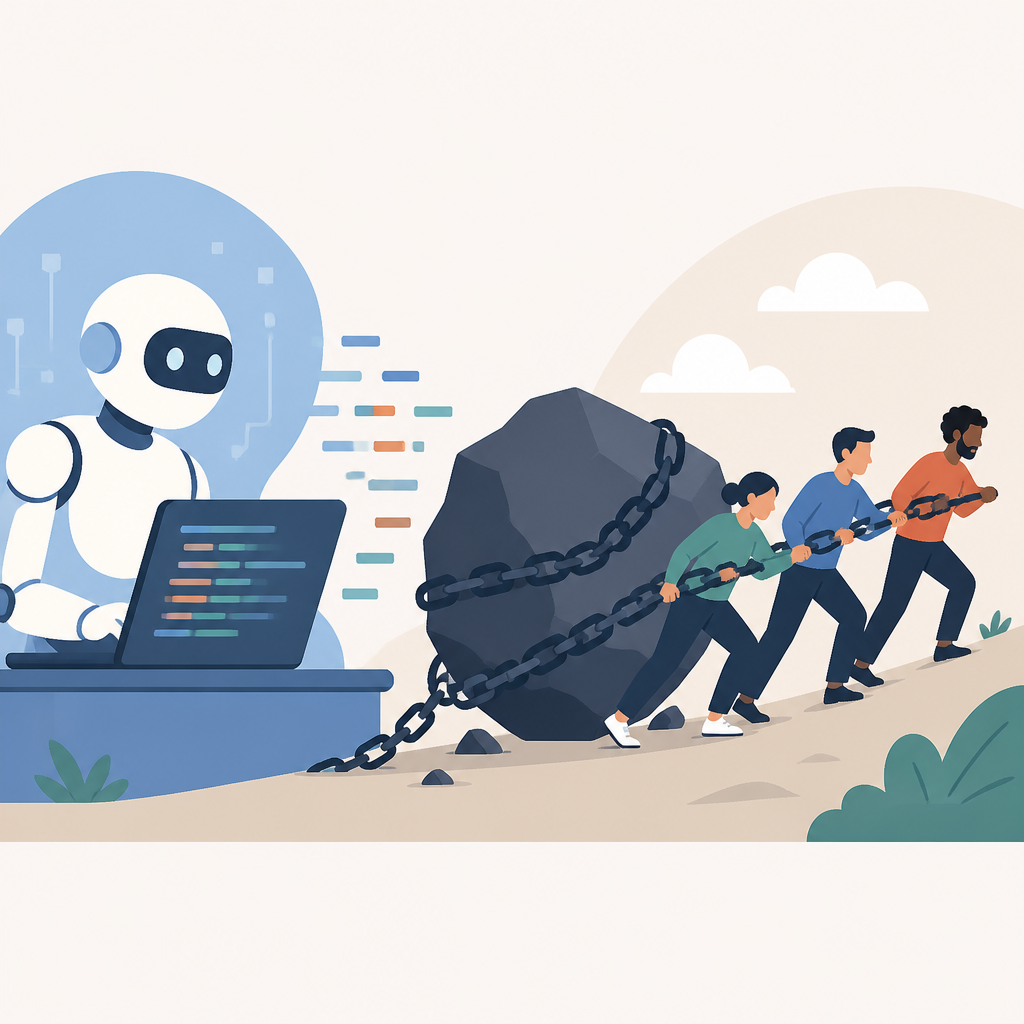
That is especially true in systems work, where a small mistake can ripple into outages, data loss, or security exposure. If AI writes a helper function that passes a quick smoke test, the team still has to ask whether it behaves under load, whether it handles edge cases, and whether it fits the rest of the codebase.
This is why “faster coding” is a misleading headline. The real bottleneck moves from typing to verification, and that shift can make teams feel productive while quietly increasing future cleanup work.
- AI reduces drafting time, but it does not remove review time.
- Generated code can increase the volume of code a team must maintain.
- Verification work grows as more code is produced by models.
- Technical debt can accumulate faster when output is cheap.
Verification becomes the real engineering job
The article frames verification as the new center of gravity for AI-assisted development. If a tool can generate code on demand, then the value moves to checking behavior, validating assumptions, and proving that the code does what the team expects.
That means tests matter more, but so do code review standards, runtime checks, and deployment guardrails. Teams that treat AI output like trusted code will ship faster for a while, then pay for it in debugging sessions and emergency fixes.
“The real challenge is not generating code, but verifying that it is correct.” — Arjun Iyer
That quote captures the practical tension in AI coding right now. The model can write a function, but it cannot own a pager, explain a production incident, or decide whether a shortcut is worth the risk.
For teams building cloud software, this is where process matters more than hype. A strong pipeline can catch bad output early; a weak one turns AI assistance into a debt factory.
Cloud-native teams feel the pain fastest
Cloud-native systems amplify the cost of sloppy code because they are distributed, stateful, and hard to debug after deployment. A mistake in one service can trigger retries, timeouts, data inconsistencies, or a noisy incident that takes hours to untangle.
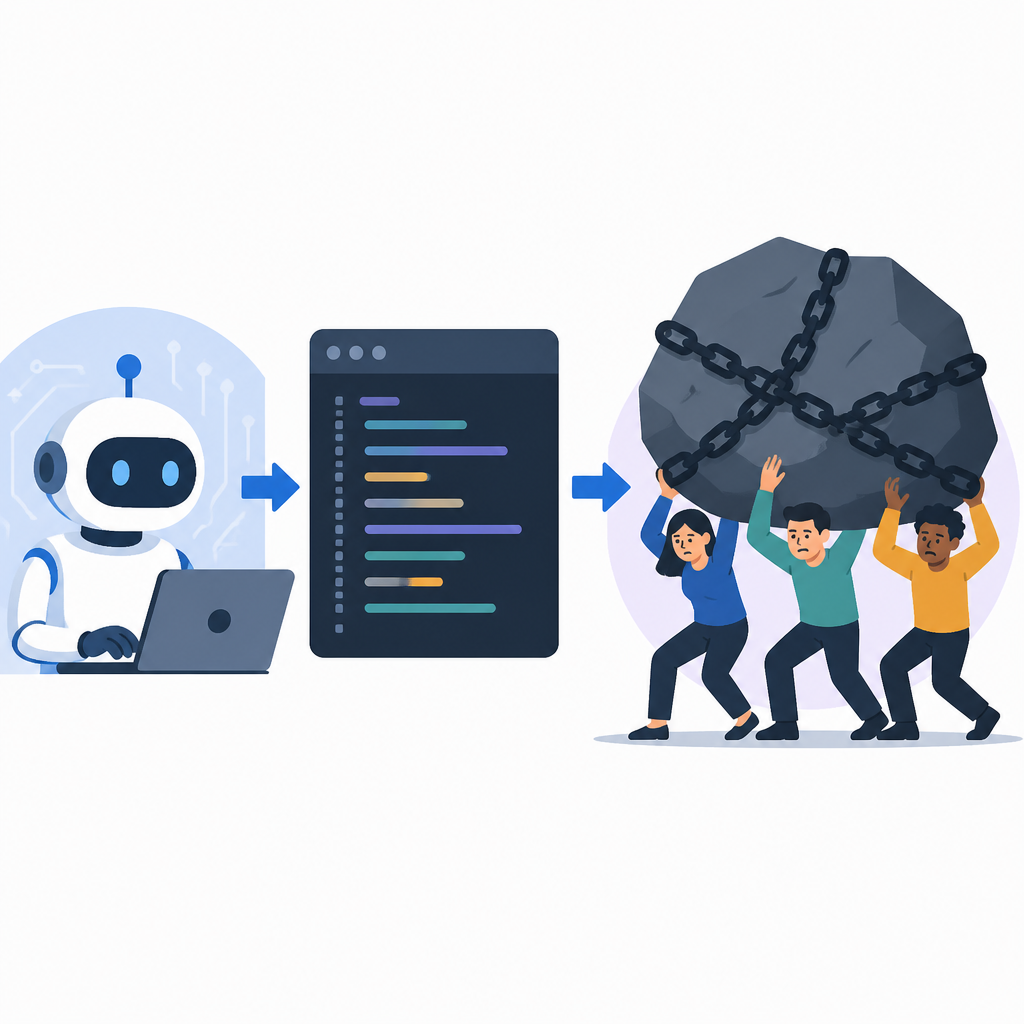
That is why AI-generated code in this environment needs stricter checks than a local script or a throwaway prototype. The more moving parts a system has, the less tolerance it has for guesswork.
Here is the practical comparison:
- A local utility script can survive a rough edge; a payment service usually cannot.
- A prototype can tolerate manual cleanup; a production microservice needs repeatable tests and traceability.
- A small team can inspect a few generated files quickly; a large platform team has to think about long-term maintainability and on-call burden.
- A single bad commit in a simple app may be annoying; the same mistake in a distributed system can become an outage.
That is why the article’s warning feels timely. AI coding tools are getting better at producing plausible software, but plausibility is not the same thing as correctness.
Teams that want the upside need to treat AI as a junior contributor with no context, no memory, and no accountability.
The real metric is debt per line, not lines per minute
There is a temptation to measure AI success by how much code it produces. That metric flatters the tool and hides the cleanup bill. A better question is whether the generated code lowers cycle time without increasing the long-term burden on the team.
That means comparing AI-assisted work against the old baseline with real numbers: defect rates, review time, test coverage, mean time to recovery, and the amount of code that gets rewritten within a few sprints.
It also means asking where AI actually helps. Drafting boilerplate, generating tests, and exploring alternate implementations can save time. Writing core business logic, security-sensitive code, or complex distributed workflows is a different story.
If you want a simple rule, use AI where mistakes are cheap and verification is easy. Keep humans close where mistakes are expensive and consequences are hard to reverse.
The article’s message is less about fear and more about discipline: AI can accelerate software creation, but it does not erase the bill. Teams that build verification into their workflow will get the benefits without drowning in cleanup, and the ones that skip that step will learn the hard way that speed is not the same thing as progress.
My bet is that the next wave of AI coding tools will be judged less by how much they generate and more by how much debt they avoid. The teams that win will be the ones that can prove their code is correct before it ever reaches production.
// Related Articles