Anthropic backs dedicated data centers with Macquarie, GIC
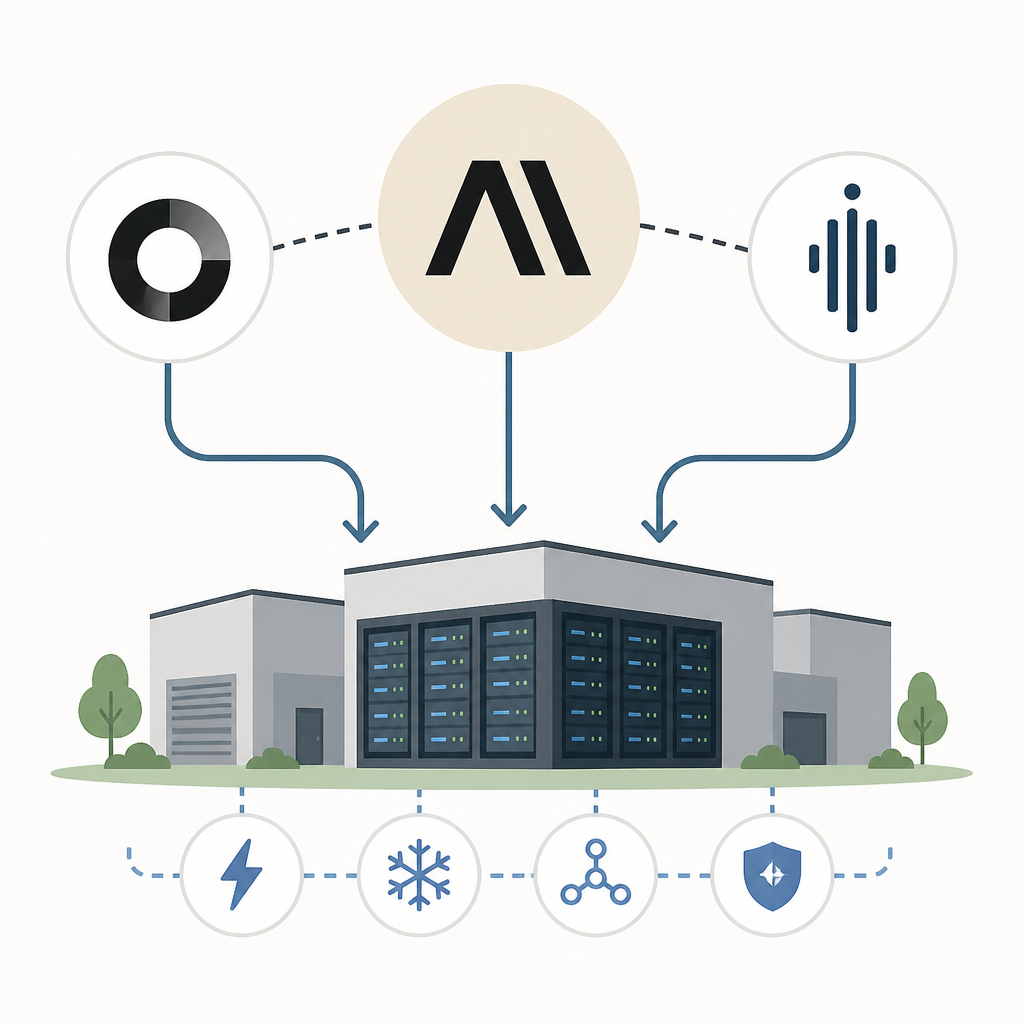
Anthropic, Macquarie Asset Management, and GIC formed Theseus Infrastructure to build dedicated data centers for Claude at scale.

Anthropic, Macquarie Asset Management, and GIC are forming Theseus Infrastructure to build dedicated data centers for Claude.
Anthropic says demand for Claude is still climbing fast, and the company is now moving to secure more of the physical infrastructure behind it. On 10 August 2026, Anthropic, Macquarie Asset Management, and GIC announced a new platform called Theseus Infrastructure to develop, operate, and lease data center capacity under long-term agreements.
The deal is about more than office space for servers. It is a bet that AI demand will keep rising enough to justify purpose-built sites, multi-year financing, and a tenant model where Anthropic anchors the projects from day one.
| Item | Detail |
|---|---|
| Announcement date | 10 August 2026 |
| New platform | Theseus Infrastructure |
| Initial geography | United States |
| Ownership | Funds managed by Macquarie Asset Management and GIC |
| Tenant model | Anthropic as anchor tenant under long-term agreements |
What Theseus Infrastructure is actually building
Get the latest AI news in your inbox
Weekly picks of model releases, tools, and deep dives — no spam, unsubscribe anytime.
No spam. Unsubscribe at any time.
Theseus Infrastructure is not a generic real estate fund with some cloud tenants on the side. The platform is meant to identify new sites, develop them, operate them, and lease them to Anthropic for long-term use. The announcement says each facility will be purpose-built for Anthropic’s growing capacity needs.

That wording matters because AI infrastructure is getting more specialized. A modern data center for frontier model training and inference needs power, cooling, network access, and operational discipline that go well beyond standard enterprise hosting. If the site is designed around one buyer, the economics can look very different from a colocation deal with dozens of customers.
Anthropic’s role is straightforward: it will be the anchor tenant. Macquarie Asset Management and GIC will own the platform and fund most of the equity for each project. In plain English, the capital stack is being built around a long-duration AI customer, not speculative vacant capacity.
- Theseus Infrastructure will develop new sites rather than buy finished capacity.
- Anthropic gets dedicated infrastructure tied to long-term agreements.
- Macquarie Asset Management and GIC provide the equity base.
- The first wave of projects will focus on the United States.
Why this deal matters for AI compute
Anthropic’s statement is blunt: demand for Claude is growing across businesses, developers, and consumers, and that demand needs more compute. That is the real story here. The model company is moving upstream into the physical layer because renting capacity in the open market is slower and less predictable than locking in dedicated sites.
This also tells you something about the state of AI economics in 2026. The biggest model builders are no longer thinking only about software margins and API growth. They are thinking about power availability, construction timelines, land, interconnects, and who pays when electricity costs rise.
Anthropic also said it will cover electricity price increases that consumers might otherwise face from these sites, following commitments it announced earlier this year. That is a notable promise because it tries to address a common criticism of large AI infrastructure projects: local communities often worry that giant data centers will strain the grid and push costs upward.
“Demand for Claude continues to grow rapidly across businesses, developers, and consumers, and meeting that demand requires significant new compute.”
That quote from Anthropic is the whole thesis in one sentence. The company is saying that product demand has outgrown the amount of compute it can comfortably rely on through standard market channels, so it needs a more direct path to capacity.
Why Macquarie and GIC are in the room
Macquarie has spent years building a reputation in infrastructure finance, and this deal fits that profile. The company says it brings global expertise in developing, financing, and operating large-scale digital infrastructure. That matters because AI data centers are expensive, technical, and slow to build. Investors in this category are not just buying square footage; they are buying execution.
GIC is a long-term capital provider with a deep infrastructure book, and its role here is consistent with how sovereign wealth investors have been approaching AI-adjacent assets: back the physical layer, collect steady returns, and avoid chasing the headline model race directly.
There is also a clean alignment of incentives. Anthropic gets capacity it can plan around. Macquarie and GIC get an anchor tenant with a strong growth profile. Communities where the sites are built get construction jobs and permanent operations roles. The announcement says the planned developments will create thousands of construction jobs and permanent operational roles.
- Anthropic gets predictable access to compute capacity.
- Macquarie and GIC get long-term contracted infrastructure exposure.
- Local markets get construction work and ongoing operations jobs.
- The projects are structured around a named tenant, which reduces vacancy risk.
What to watch next
The key question is whether Theseus Infrastructure becomes a template for how frontier AI companies secure compute in the next few years. If the model works, other AI labs may copy the structure: pair a fast-growing AI tenant with infrastructure investors, lock in power and land early, and build sites designed for one customer’s needs.
That would push AI competition further into the physical world. The winners would not just be the companies with the best model releases, but the ones that can line up power, financing, and construction fast enough to keep training and inference capacity ahead of demand.
For now, the signal is clear: Anthropic is treating data centers as strategic capacity, not background plumbing. If these projects move quickly in the United States, the next question is whether the same model spreads to Europe and Asia, where power markets, permitting, and grid politics can change the math very quickly.
// Related Articles
- [IND]
5 banking workflow patterns SAS Viya keeps governed
- [IND]
Wall Street backs Nvidia’s AI financing push
- [IND]
Claude Code Is No Longer the Clear Front-Runner
- [IND]
Anthropic Builds Its Own Chip Team for Claude
- [IND]
2027 AI capex bets are already taking shape
- [IND]
OpenAI and Anthropic take 80% of AI 50 funding