Kimi K2.6 turns open-source coding into agents
5 ways Kimi K2.6 improves open-source coding, from 4,000+ tool calls to 300-agent swarms and faster long-horizon execution.

Kimi K2.6 improves open-source coding with longer runs, faster tool use, and larger agent swarms.
Kimi’s K2.6 release is built for developers who want more than code completion: it ships with long-horizon execution, agent swarms, and benchmark gains that show up in real workflows. One internal run used 4,000+ tool calls over 12 hours and pushed throughput from about 15 to 193 tokens/sec.
| Item | Scale | Reported gain |
|---|---|---|
| Kimi K2.6 long-horizon coding | 4,000+ tool calls, 12+ hours | ~15 to ~193 tokens/sec |
| exchange-core optimization | 1,000+ tool calls, 13 hours | 0.43 to 1.24 MT/s medium throughput |
| Agent Swarm | 300 sub-agents, 4,000 steps | Up from 100 sub-agents and 1,500 steps |
| CodeBuddy eval | Internal benchmark | +12% code generation accuracy, 96.60% tool success |
1. Long-horizon coding that keeps going
Get the latest AI news in your inbox
Weekly picks of model releases, tools, and deep dives — no spam, unsubscribe anytime.
No spam. Unsubscribe at any time.
K2.6 is aimed at tasks that last hours, not minutes. The blog says it handles front-end work, devops, performance tuning, and language shifts across Rust, Go, and Python with better generalization than K2.5.

That matters when the model has to recover from dead ends, revisit earlier decisions, and keep the project moving without a human stepping in after every failure. In beta tests, K2.6 was described as better at navigating nuanced API behavior and staying productive longer before hitting a wall.
- 4,000+ tool calls in one run
- 12+ hours of continuous execution
- 14 iterations in a local Mac deployment test
2. Faster tool use in real codebases
One of the clearest examples in the post is the local deployment of Qwen3.5-0.8B on a Mac. K2.6 implemented and optimized inference in Zig, then raised throughput from about 15 tokens/sec to 193 tokens/sec.
The same theme appears in the exchange-core case, where K2.6 analyzed flame graphs, changed thread topology, and edited more than 4,000 lines of code. The result was a 185% lift in medium throughput and a 133% gain in performance throughput.
- Qwen3.5-0.8B deployed locally on Mac
- Zig used for inference optimization
- exchange-core thread topology changed from 4ME+2RE to 2ME+1RE
3. Agent swarms that split work across many specialists
Kimi describes Agent Swarm as scaling out instead of only scaling up. K2.6 can decompose a task into specialized sub-agents that run in parallel, then combine search, research, writing, and content generation into one run.
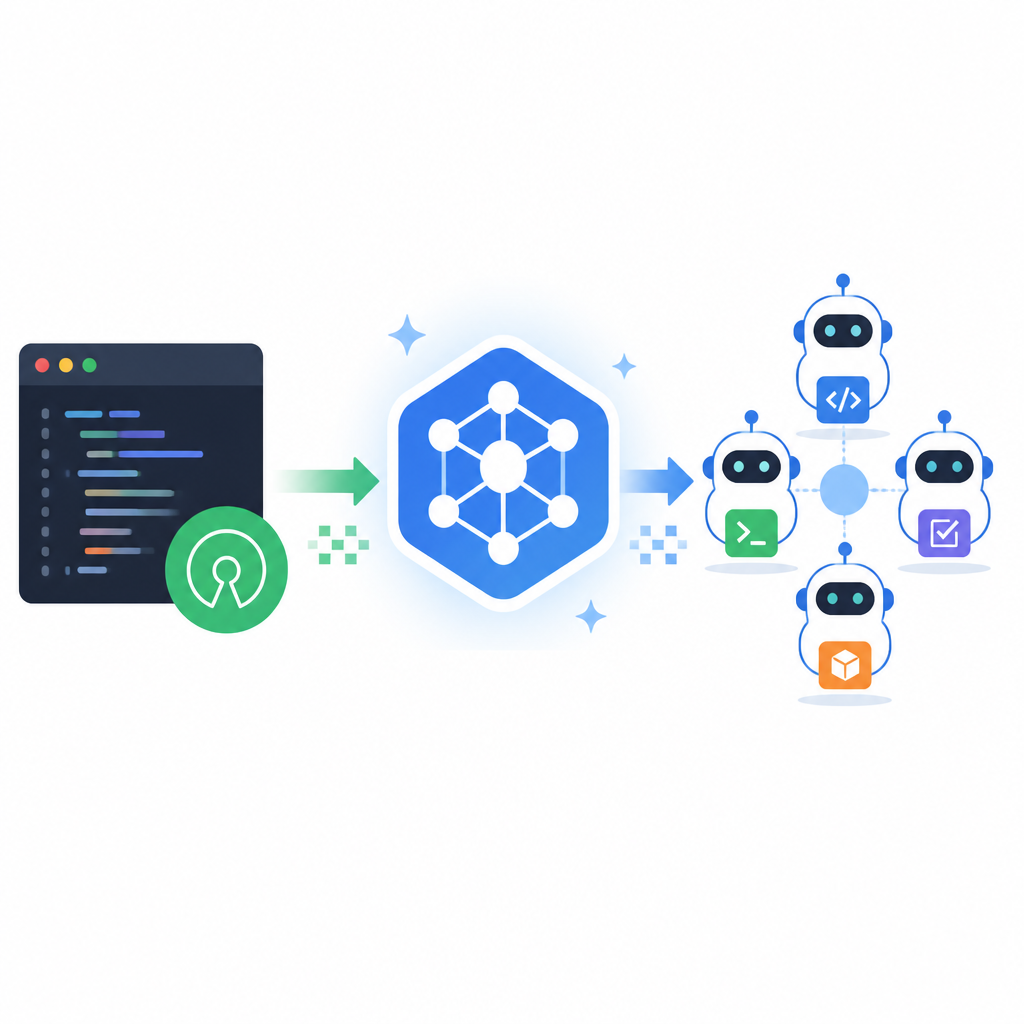
The reported scale is large: up to 300 sub-agents and 4,000 coordinated steps. K2.5’s research preview reached 100 sub-agents and 1,500 steps, so the new version is not just a small tuning pass. It is meant for multi-output jobs like documents, websites, slides, and spreadsheets.
- 300 sub-agents executing in parallel
- 4,000 coordinated steps
- Outputs can include docs, slides, spreadsheets, and websites
4. Coding-driven design for front ends and light full-stack work
K2.6 is not limited to backend or terminal tasks. The blog shows it turning prompts into structured interfaces with hero sections, animation, and interactive elements, while also handling simple full-stack flows such as authentication, user interaction, and database operations.
That makes it useful for teams that need a fast first pass on product pages or internal tools. The internal Kimi Design Bench covers visual input tasks, landing pages, full-stack apps, and creative programming, and K2.6 is reported to perform well across those categories.
- Landing page construction
- Full-stack application development
- Image and video generation tool use for richer assets
5. Benchmarks and partner feedback point to stronger reliability
The post includes several external and internal signals that K2.6 is more dependable than K2.5. CodeBuddy reports a 12% rise in code generation accuracy, an 18% gain in long-context stability, and a 96.60% tool invocation success rate.
Partner quotes also emphasize better instruction following, more careful task decomposition, and stronger performance on long multi-step sessions. For teams choosing an open model for agentic coding, the pattern is clear: K2.6 is positioned as a safer pick when the job is complex, long, and expensive to retry.
- Code generation accuracy: +12%
- Long-context stability: +18%
- Tool invocation success rate: 96.60%
How to decide
Pick K2.6 if your work involves long-running coding tasks, multi-step tool use, or agent workflows that need to keep state across many iterations. It is also the better fit if you want open-source code generation that can stretch into design, docs, and light full-stack delivery.
If your needs are narrower, a smaller model may be enough. But if you care about sustained execution, larger swarms, and fewer interruptions during complex engineering work, K2.6 is the one in this release that most clearly targets that job.
// Related Articles
- [IND]
Qualcomm is right to bet on AI devices, not just AI apps
- [IND]
China’s Open-Source AI Play Is Pressuring U.S. Labs
- [IND]
Free and open-source software powers modern computing
- [IND]
OpenAlternative makes software replacement easier to compare
- [IND]
James II Project adds a Tuesday meal site
- [IND]
Databricks is right: model serving should adapt, not be tuned by hand