Pentagon’s Agent Network speeds AI battle decisions
1 Pentagon project aims to cut the time from intelligence discovery to commander action in AI-enabled battle management.

The Pentagon’s Agent Network is meant to speed AI battle management by shortening the path from discovery to decision.
The Defense Department has launched Agent Network, a Pace-Setting Project built to compress the time between intelligence discovery and commander decision-making. The effort points to a broader push to use AI for faster targeting and battle management, with the main payoff measured in minutes saved when speed matters most.
| Item | What it does | Operational goal |
|---|---|---|
| Agent Network | AI-enabled battle management | Shorten discovery-to-decision time |
| Targeting support | AI-assisted targeting workflow | Speed commander action |
| Pace-Setting Project | Defense innovation program | Accelerate adoption |
1. Agent Network
Get the latest AI news in your inbox
Weekly picks of model releases, tools, and deep dives — no spam, unsubscribe anytime.
No spam. Unsubscribe at any time.
Agent Network is the Pentagon initiative at the center of this move. Its job is not just to add another AI demo, but to help commanders get from raw intelligence to a usable decision faster than current processes allow.
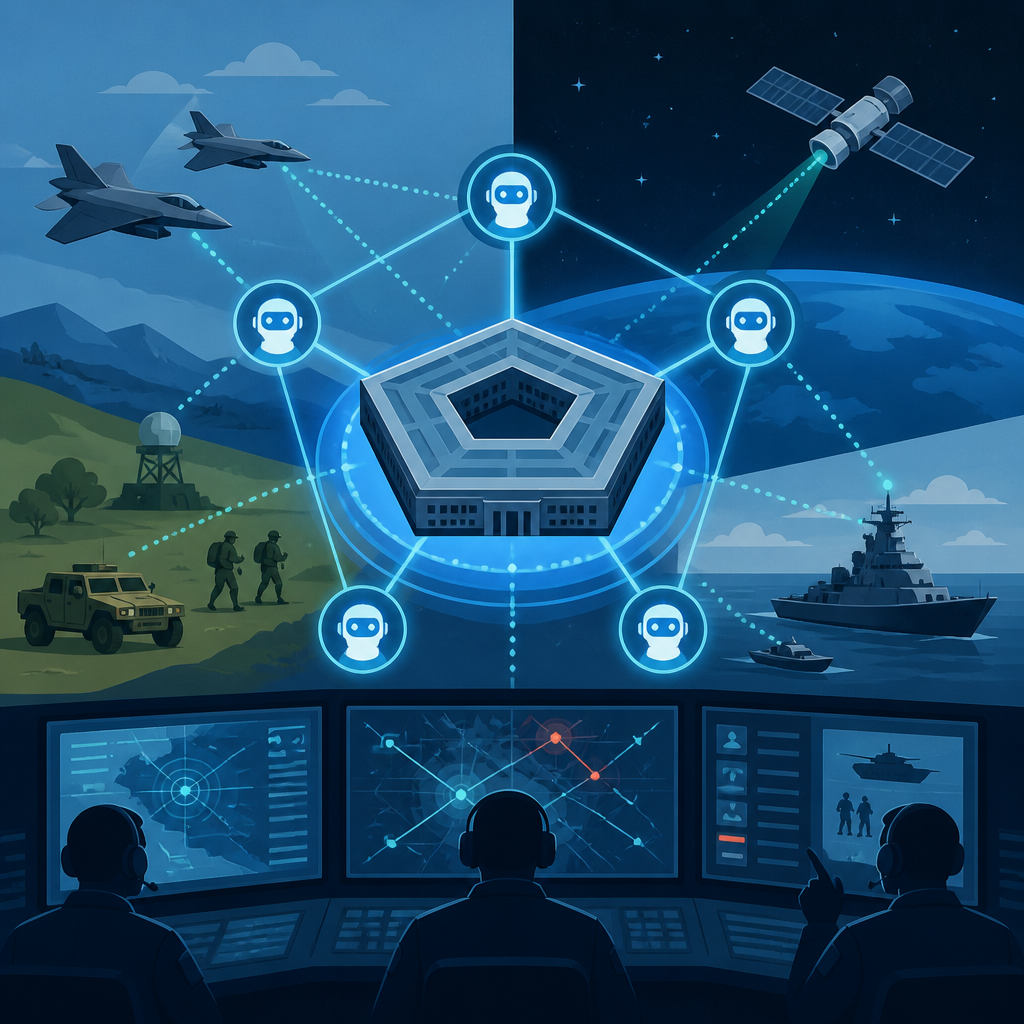
That focus matters because battle management often slows down when data has to move through too many hands, screens, and approvals. By framing the project around decision speed, the Defense Department is signaling that AI should reduce friction in the command cycle, not just generate more analysis.
- Program type: Pace-Setting Project
- Main use case: AI-enabled battle management
- Core metric: time from intelligence discovery to command action
2. AI-enabled battle management
Battle management is the larger workflow Agent Network is meant to improve. In practice, that means helping military teams sort information, identify relevant signals, and turn them into actions that commanders can trust quickly.
The AI angle is important because modern operations can produce more data than human staff can process at the pace required. If the system can narrow the gap between sensing and deciding, it may give commanders a better chance to act before an opportunity disappears.
- Inputs: intelligence feeds, operational data, targeting cues
- Outputs: prioritized information and decision support
- Benefit: less time spent moving from data to action
3. Targeting support
Targeting is one of the most sensitive and time-dependent parts of military operations, which is why it appears in the project’s stated goals. Agent Network is intended to help compress the time needed to identify targets and pass useful information to commanders.
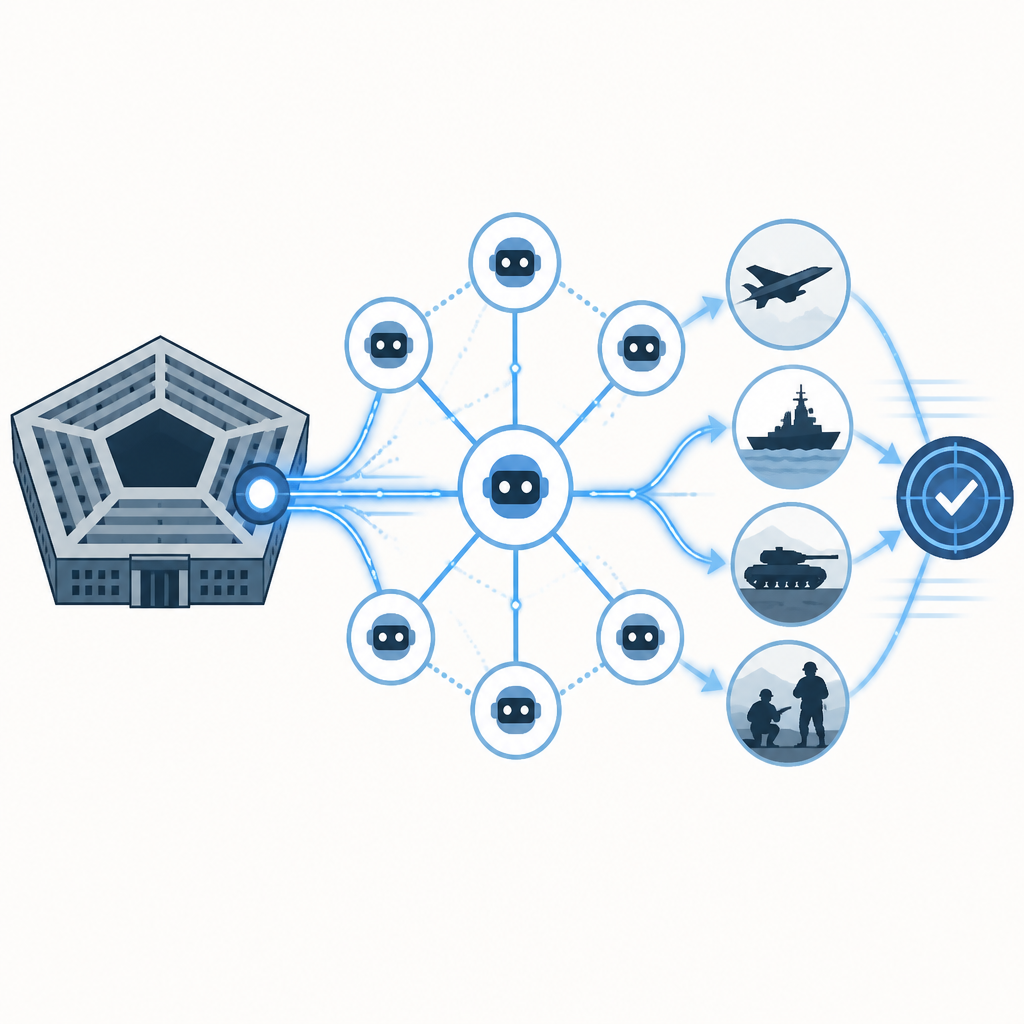
That does not mean AI is making the final call on its own. The article points to a system designed to assist the decision chain, which suggests a human-led process with software helping organize and accelerate the work.
- Function: speed target identification and review
- Decision role: support commanders, not replace them
- Value: faster handoff from intelligence to action
4. Pace-Setting Project status
Calling Agent Network a Pace-Setting Project gives it a specific place inside the Pentagon’s innovation pipeline. The label implies a program meant to move faster than standard acquisition or experimentation tracks and set a model for later efforts.
For readers tracking defense AI, that status is as important as the technology itself. It suggests the department is not treating this as a side experiment, but as a project intended to shape how future AI-enabled command tools are built and adopted.
- Purpose: accelerate development and adoption
- Signal: higher priority than a routine pilot
- Likely effect: influence future battle management tools
5. Decision-speed as the real metric
The most telling detail in the announcement is the emphasis on compressing the time between discovery and decision. That phrasing shows the Pentagon is measuring success by operational tempo, not by the novelty of the software.
In other words, the project is about shortening a chain of events that can decide outcomes in fast-moving environments. If Agent Network works as intended, the gain will be less about flashy AI and more about giving commanders a cleaner, quicker path to act.
- Primary metric: reduced decision cycle time
- Secondary gain: better use of intelligence
- End goal: faster, more informed command action
How to decide
If you track defense technology policy, Agent Network is the item to watch for what the Pentagon wants AI to do next: speed up command decisions. If you care more about acquisition signals, the Pace-Setting Project label matters because it hints at a program meant to move quickly and shape future work.
If you are comparing this with other AI defense efforts, focus less on the model itself and more on the workflow it is meant to change. The real test is whether it can shorten the path from intelligence to action without adding new bottlenecks.
// Related Articles
- [IND]
WorkBuddy Skills: 5 picks that fit real office work
- [IND]
GLM-5.3’s coding gains came from post-training
- [IND]
Anthropic’s data center push now has big capital backing
- [IND]
DailyArxiv turns arXiv keywords into a daily paper feed
- [IND]
Claude vs ChatGPT (2026): Is Claude Better?
- [IND]
CBDC Governance: Standards and Stakeholder Roles