Why DeepSeek V4 plus Claude Code is the wrong way to judge coding mod…

DeepSeek V4 plus Claude Code is not a fair benchmark of coding quality, and treating it like one leads teams to the wrong buying and engineering decisions.
The only concrete evidence in the source is a configuration snippet that wires Claude Code to DeepSeek through Anthropic-compatible environment variables: ANTHROPIC_AUTH_TOKEN points to a DeepSeek API key, ANTHROPIC_BASE_URL is set to https://api.deepseek.com/anthropic, ANTHROPIC_MODEL is DeepSeek-V4-Pro, API_TIMEOUT_MS is 3000000, and nonessential traffic is disabled. That setup tells you something important: this is an integration recipe, not a rigorous evaluation. It proves interoperability and a willingness to route one product through another product's interface. It does not prove that the underlying model is better, worse, or even meaningfully different in real-world coding work.
First argument: interface compatibility is not product quality
Get the latest AI news in your inbox
Weekly picks of model releases, tools, and deep dives — no spam, unsubscribe anytime.
No spam. Unsubscribe at any time.
The first mistake is confusing a wrapper test with a model test. Claude Code is the client, DeepSeek is the backend, and the Anthropic-compatible layer is the bridge. When the entire experiment depends on a compatibility shim, you are measuring whether the bridge holds, not whether the engine is superior. In practice, that means the result is already filtered through prompt formatting, tool-call conventions, timeout behavior, and whatever assumptions the client makes about Anthropic-style responses.
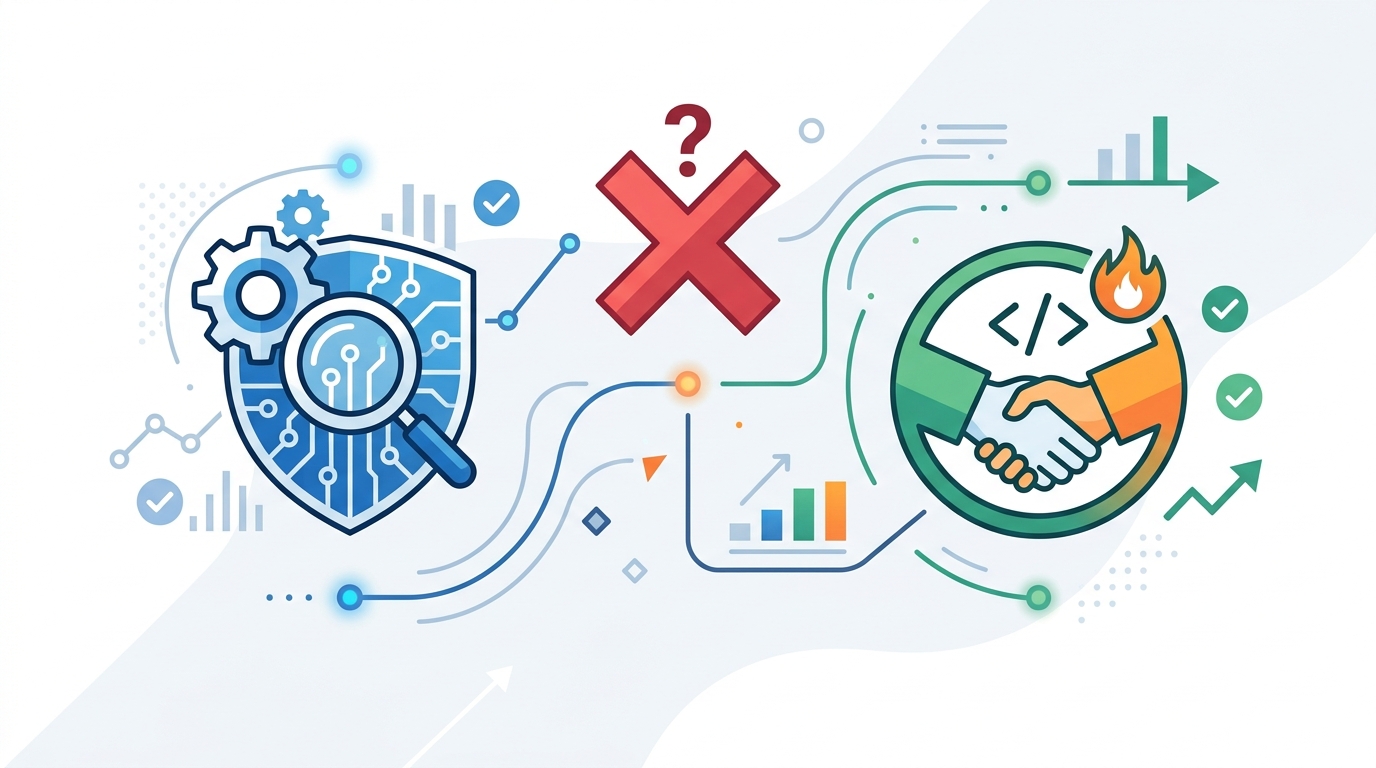
A simple example shows the problem. If a team swaps in a different database behind the same ORM and the app still runs, nobody concludes the ORM made the database faster. They conclude the integration worked. This DeepSeek setup is the same category of proof. It is useful for adoption, not for ranking models. A model can look strong inside a compatible client while still failing on latency, instruction following, context handling, or codebase navigation once the wrapper is removed.
Second argument: the configuration optimizes for anecdote, not truth
The environment variables in the source reveal an experiment tuned for success, not for measurement. API_TIMEOUT_MS is set absurdly high at 3000000, which reduces the chance of failure from slow responses. CLAUDE_CODE_DISABLE_NONESSENTIAL_TRAFFIC is set to 1, which cuts background noise and likely improves the user experience. Those are reasonable tweaks for a personal workflow. They are terrible if your goal is to answer the question, “How does this model perform under normal conditions?”
This matters because coding models live or die on operational friction. A model that works only when you suppress traffic, stretch timeouts, and route through a custom endpoint is not automatically a better coding assistant. It is a model that benefits from special handling. The right comparison is not “does it work in this carefully prepared environment?” The right comparison is “how much setup, babysitting, and tolerance for edge cases does it need before it becomes reliable enough for daily use?” On that standard, the source gives us no proof of superiority at all.
The counter-argument
To steelman the opposing view: this kind of setup is exactly how serious practitioners evaluate tools. Real developers do not care about vendor purity; they care about whether a model can slot into an existing workflow and produce useful code. If DeepSeek can be pointed at Claude Code through an Anthropic-compatible endpoint and deliver good results, that is a practical win. In a world where APIs are abstractions and clients are replaceable, integration success is part of product value.
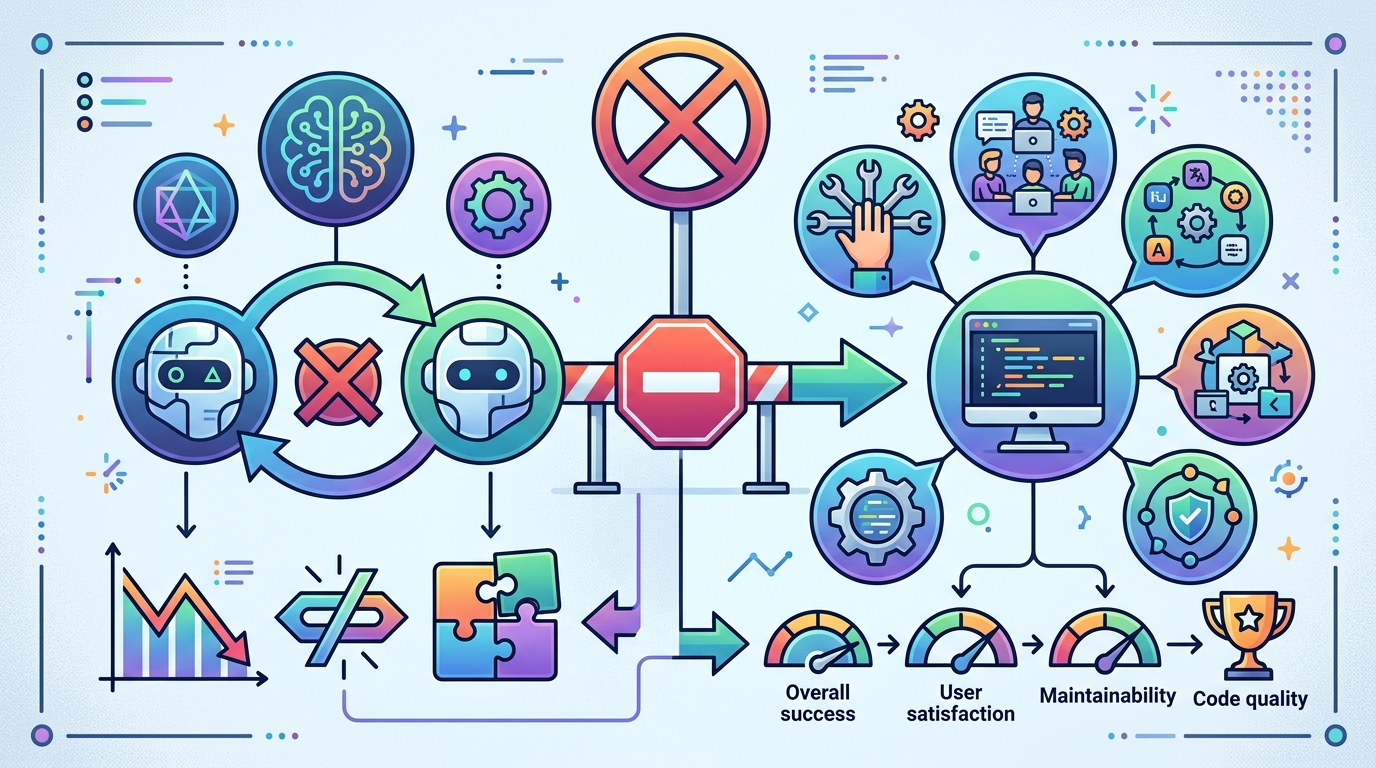
There is also a legitimate argument that benchmark theater is overrated. Many public comparisons ignore the actual job to be done. A model that shines in a controlled benchmark can still be annoying in a terminal, while a model that is easy to wire into a trusted tool can create immediate productivity gains. For engineers shipping features, the shortest path to working code often matters more than abstract leaderboard placement.
That counter-argument is strong, but it does not rescue the conclusion people often draw from this kind of post. Integration value is real, yet it is not the same as model quality. If the claim is “this setup is useful,” I agree. If the claim is “this proves DeepSeek V4 is outstanding or inferior as a coding model,” I reject it. The source shows a routing configuration and a set of guardrails, not a reproducible comparison, not task-level metrics, and not evidence that would survive contact with a different repo, a different prompt, or a less forgiving timeout.
What to do with this
If you are an engineer, treat Anthropic-compatible routing as an implementation detail, not a verdict. Test models on your own codebase with the same tasks you actually do: bug fixing, refactoring, test generation, and multi-file edits. If you are a PM, do not let a flashy integration post drive vendor selection; ask for latency, failure rate, edit accuracy, and human review time saved. If you are a founder, optimize for operational fit first and model prestige second. The right question is not whether a model can be made to work inside Claude Code. The right question is whether it consistently earns its place in your workflow without special pleading.
// Related Articles
- [IND]
Musk’s Grok Imagine bets big on an Odyssey film
- [IND]
Rust 661’s best releases for builders this week
- [IND]
Deepwoken’s Second Layer hides Ethiron below Scyphozia
- [IND]
AMD is right to use Anthropic to break CUDA’s grip
- [IND]
AI Weekly: 2026-07-20 ~ 2026-07-27
- [IND]
WAIC 2026 turns AI hype into real work