10 AI agent workflows that turn B2B catalogs into leads
10 AI agent workflows help B2B catalogs guide buyers, qualify demand, and route richer leads with product context.

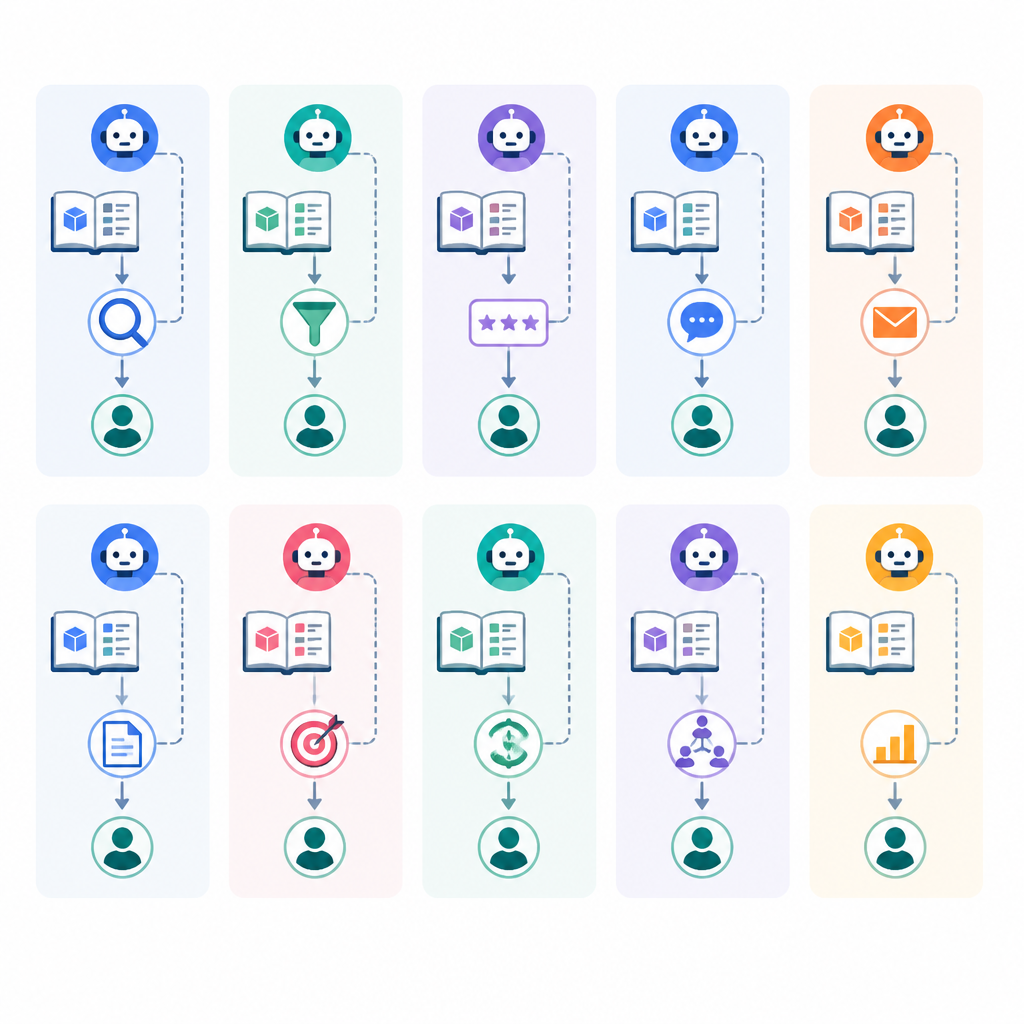
These 10 workflows help B2B catalogs guide buyers and route richer leads.
Complex B2B catalogs get easier to sell when AI agents handle discovery, qualification, and routing. Threekit says a guided agent can cut product selection time by up to 60%.
| Item | Primary job | Best outcome |
|---|---|---|
| Intent-to-Lead | Capture intent and context | Dealer-ready leads |
| Natural Language Discovery | Translate plain language | Faster product matching |
| Photo-to-Configuration | Read uploaded images | Quick replacement matches |
| Bundle Builder | Suggest complete solutions | Higher average order value |
| Qualification Agent | Collect budget and timing | Better lead scoring |
| Dealer Routing | Send leads to the right partner | Faster follow-up |
| Self-Service Configuration | Let buyers configure alone | Less rep dependency |
| Proposal Generation | Format quotes and summaries | Cleaner sales handoff |
| Inventory-Aware Recommendation | Favor in-stock items | Fewer stock delays |
| Multi-Persona Experience | Adapt by audience | Better fit for each visitor |
1. Threekit Intent-to-Lead Workflow
Get the latest AI news in your inbox
Weekly picks of model releases, tools, and deep dives — no spam, unsubscribe anytime.
No spam. Unsubscribe at any time.
This workflow turns anonymous browsing into a qualified sales motion. The agent asks follow-up questions, applies catalog rules, and attaches product context before a lead reaches a dealer.
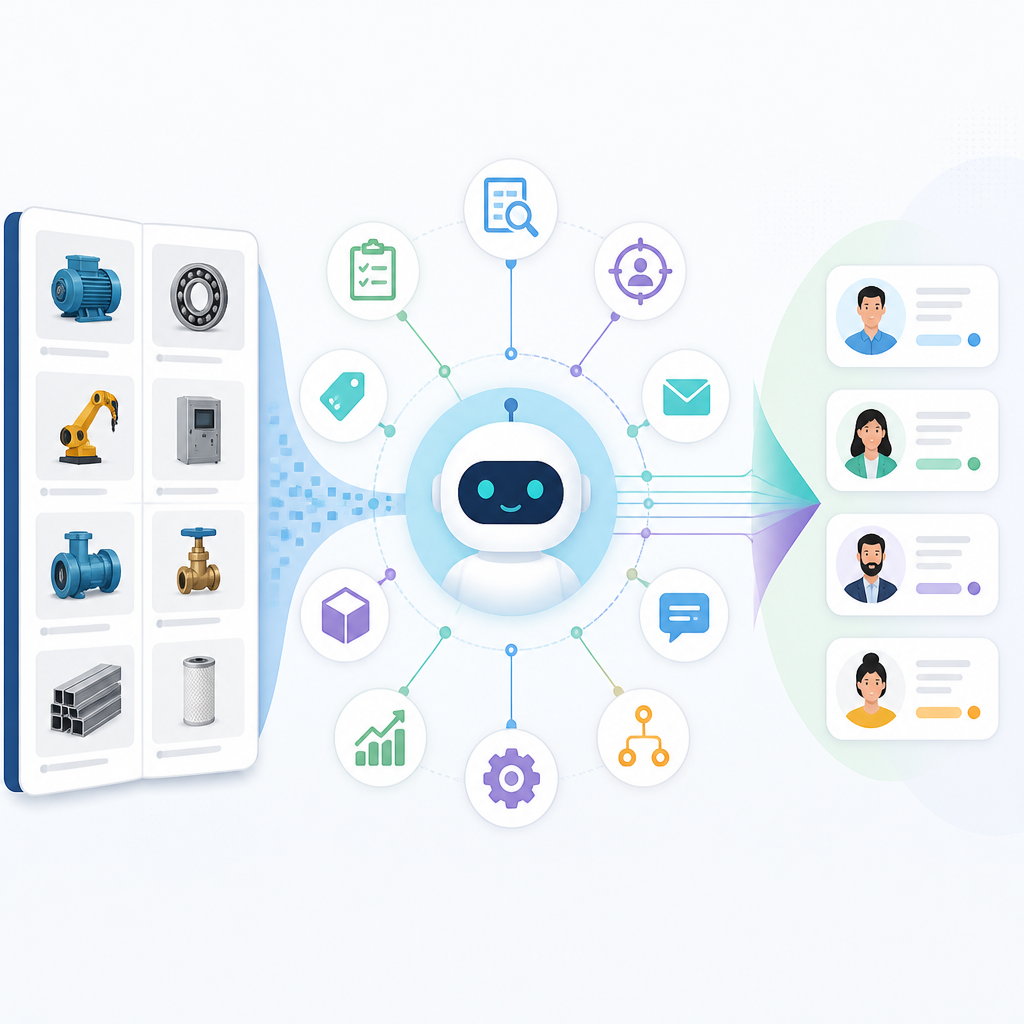
It is built for manufacturers that sell through dealers, distributors, or both. The payoff is simple: fewer generic form fills, more leads with selections, budget signals, and conversation history.
- Guided selling in plain language
- Visual configuration in 2D, 3D, or AR
- Lead enrichment with viewed products and intent signals
- Deployment across website, dealer portal, and distributor catalog
2. Natural Language Discovery Workflow
This workflow helps buyers describe what they need without learning part numbers first. A visitor can type a technical need in everyday language, and the agent narrows the catalog to valid matches.
It works well when the buyer knows the problem but not the SKU. That makes it useful for both end customers and dealers who need to search across large product lines quickly.
- Handles ambiguous requests like pressure, environment, or size constraints
- Uses clarifying questions to narrow the field
- Maps plain language to technical attributes
3. Photo-to-Configuration Workflow
This workflow lets a dealer upload a job-site image and get a product match. The agent reads the image, identifies the category, and suggests a replacement or upgrade path.
It is a strong fit for field service and replacement sales, where speed matters and no one wants to search a catalog on a phone. The main tradeoff is that image quality affects accuracy.
- Image-based product identification
- Replacement matching for worn components
- Upgrade suggestions for newer or higher-margin models
4. Bundle Builder Workflow
This workflow moves buyers from a single SKU to a complete solution. Instead of stopping at the primary product, the agent suggests accessories, compatible items, and everything needed to finish the job.
That matters in categories where missing accessories create support calls or delayed installs. It also gives sales teams a cleaner path to larger orders because the bundle is built into the conversation.
- Surfaces required and optional add-ons
- Checks compatibility before quote generation
- Can steer toward higher-margin alternatives
5. Qualification Agent Workflow
This workflow captures the buying signals that make a lead useful. Instead of sending a dealer a name and email, it collects timeline, budget, and decision-maker detail before routing the contact.
That extra context changes the first call. Dealers can prioritize real opportunities sooner, and sales teams spend less time sorting weak inquiries from serious ones.
- Timeline capture for urgency
- Budget signaling for lead scoring
- Decision-maker prompts for buying authority
6. Dealer Routing Workflow
This workflow sends qualified leads to the right channel partner based on geography, specialty, or account rules. It is useful when one manufacturer works with many dealers and needs tighter lead distribution.
Without routing logic, good leads can stall or land with the wrong partner. With routing in place, the buyer reaches someone who can actually quote, stock, or install the product.
- Geography-based assignment
- Expertise-based partner selection
- Rule-driven distribution for dealer networks
7. Self-Service Configuration Workflow
This workflow lets buyers configure products on their own without waiting for a rep. The agent guides the process, checks constraints, and keeps the buyer inside valid options.
It is a good fit for teams that want to reduce rep dependency while still protecting accuracy. Buyers move faster, and reps spend more time on complex deals instead of routine configuration.
- Buyer-led product setup
- Constraint checking during configuration
- Less back-and-forth with inside sales
8. Proposal Generation Workflow
This workflow turns selected products into a formatted proposal or solution summary. It gives dealers and reps a cleaner handoff than a raw cart or a loose list of SKUs.
For B2B sales, that matters because proposal quality affects speed and confidence. When pricing context and product details are already organized, the next step is easier for everyone.
- Formatted solution summaries
- Selected products with pricing context
- Cleaner handoff to sales or dealer teams
9. Inventory-Aware Recommendation Workflow
This workflow favors products that are in stock and available now. It can also steer buyers toward higher-margin items when more than one option fits the request.
That helps reduce quote delays and avoids recommending items that create fulfillment problems. It is especially useful when supply constraints or margin goals matter as much as product fit.
- Stock-aware product ranking
- Availability-first recommendations
- Margin-aware alternative suggestions
10. Multi-Persona Experience Workflow
This workflow adapts the same agent for different audiences, such as homeowners, dealers, architects, and reps. Each group gets language, prompts, and guidance that match how they buy.
That flexibility matters because one catalog often has many users with different goals. A homeowner wants reassurance, while a dealer wants speed and a rep wants qualification detail.
- Audience-specific prompts and copy
- Shared catalog logic across roles
- Better fit for mixed B2B and B2C journeys
How to decide
If your biggest problem is lead quality, start with Intent-to-Lead or Qualification Agent. If buyers struggle to describe what they need, Natural Language Discovery is the better first step. If your field team works from photos, Photo-to-Configuration will save the most time.
For teams trying to raise order value, Bundle Builder and Inventory-Aware Recommendation are the strongest fit. If your channel model is complex, Dealer Routing and Multi-Persona Experience help the right people see the right offer at the right moment.
// Related Articles