AI Agents in Crypto: 2026 Protocol Guide
A step-by-step guide to understanding and using autonomous crypto agents in 2026.

A step-by-step guide to understanding and using autonomous crypto agents in 2026.
This guide is for developers and crypto traders who want to understand the difference between autonomous AI agents and AI trading bots, then decide how to use each one safely. After following the steps, you will know the main agent protocols, how to evaluate them, and how to take a first position without confusing speculation with infrastructure.
You will also leave with a practical checklist for wallet setup, exchange access, and risk controls. The examples below reference Altrady’s article and the open-source Virtuals Protocol GitHub plus ai16z Eliza GitHub for the agent stack.
Before you start
Get the latest AI news in your inbox
Weekly picks of model releases, tools, and deep dives — no spam, unsubscribe anytime.
No spam. Unsubscribe at any time.
- Exchange accounts on Binance, Coinbase, Kraken, or Bybit.
- Wallet access for Base and Solana.
- API keys for any trading platform you plan to use.
- Node.js 20+ if you want to inspect or run agent tooling locally.
- Basic familiarity with on-chain wallets, token transfers, and gas fees.
- Optional: a crypto trading dashboard such as Altrady for portfolio tracking.
Step 1: Separate agent tokens from trading bots
Your first outcome is a clean mental model: AI agents are autonomous entities, while AI trading bots are tools you configure. That distinction matters because it changes how you assess control, custody, and risk.
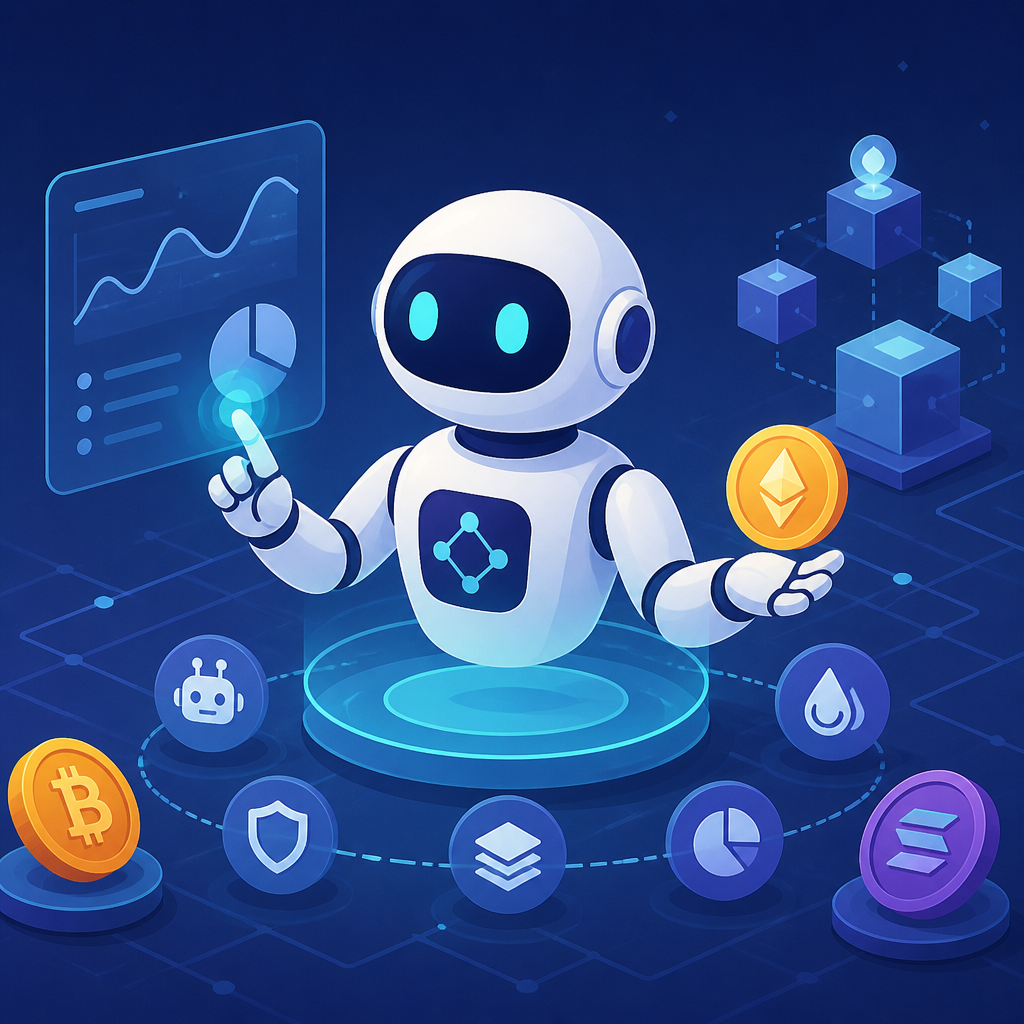
Use this rule of thumb. If the system holds its own wallet, makes decisions without asking for each action, or acts on social, treasury, or governance tasks, treat it as an agent. If it waits for your signal, then executes on your exchange account, treat it as a bot.
For a quick check, compare an agent like AIXBT or ai16z with a signal bot on a platform such as Altrady. The bot trades your capital under your rules. The agent may manage its own tokenized identity and make decisions continuously.
You should see the difference clearly enough to classify any new project as either infrastructure, agent, or trading tool before you buy.
Step 2: Map the major protocols and tokens
Your next outcome is a shortlist of the categories that matter in 2026. The article highlights four buckets: launchpads, standalone agent tokens, decentralized AI networks, and trading bots.
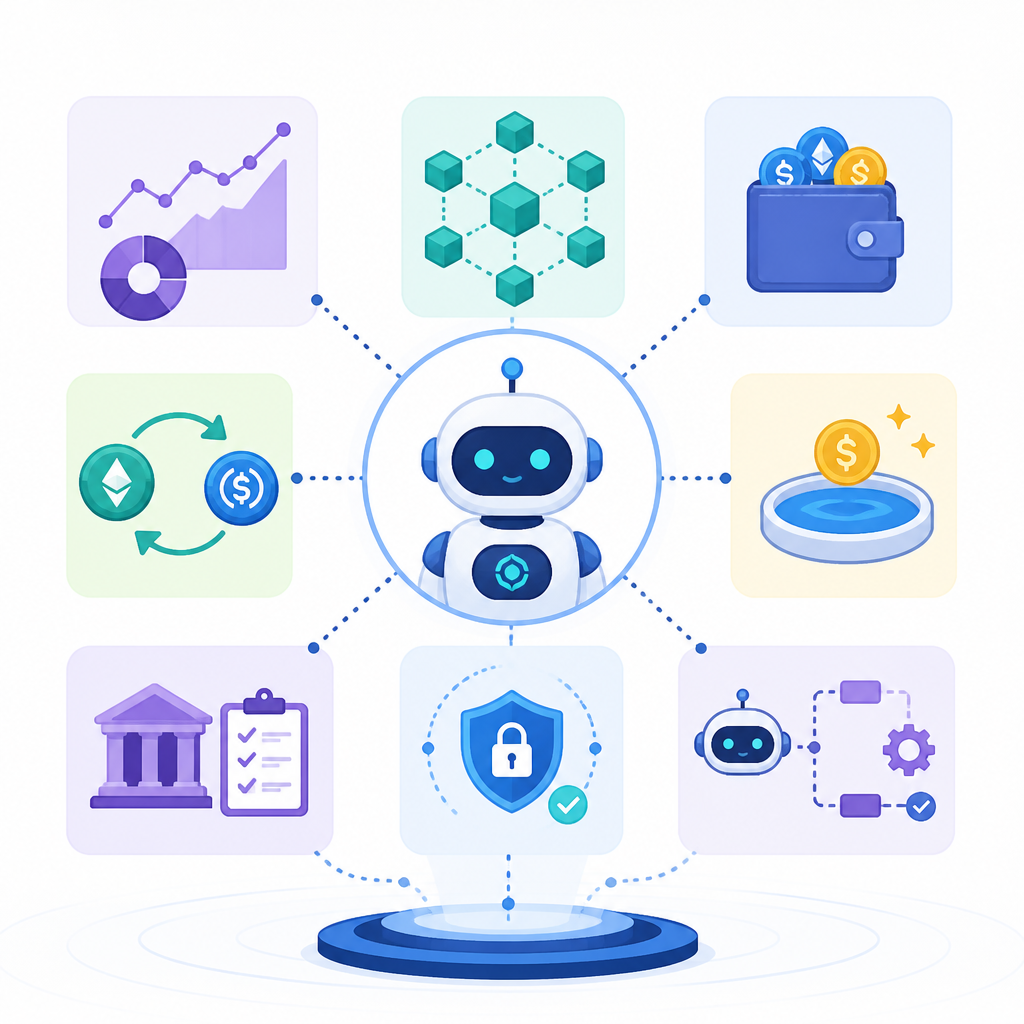
Start with the biggest names. Virtuals Protocol is the leading launchpad on Base. ai16z is the main open-source framework and DAO on Solana. Bittensor is the dominant decentralized AI network. AIXBT is a representative standalone agent token.
Then decide what you are actually buying. A launchpad token is a bet on ecosystem growth. A standalone agent token is a bet on one persona or product. A network token like TAO is a bet on distributed AI services and subnet demand.
You should see a simple map in your notes: launchpad, agent, network, or tool, with one example written under each.
Step 3: Build a first-use wallet and exchange workflow
Your third outcome is an execution path that lets you buy, hold, or monitor tokens without mixing custody models. This is the step where many traders make avoidable mistakes.
Set up a wallet for Base and Solana, then connect your exchange accounts only where needed. If you plan to trade across multiple venues, keep a dashboard that aggregates balances and positions so you can see exposure in one place.
1. Create a wallet for Base and Solana networks.
2. Enable 2FA on your exchange accounts.
3. Add API keys only with the minimum permissions needed.
4. Test a small transfer before moving larger capital.
5. Record the token contract, chain, and custody location for each position.
You should see your wallet funded, your exchange APIs connected, and each asset labeled by chain and custody type.
Step 4: Choose a participation path
Your fourth outcome is a strategy that matches your risk tolerance. The article gives three practical paths, and each one serves a different goal.
Path one is to hold major tokens such as TAO, VIRTUAL, ai16z, or AIXBT. This is the simplest route and works well if you want broad narrative exposure. Path two is to trade new agent launches on Virtuals with small size and strict stops. Path three is to stake TAO to Bittensor subnets if you want yield-oriented exposure.
If you are a developer, you can also inspect the open-source agent stack and build a test agent in Eliza before allocating capital. That gives you a better feel for prompts, memory, and execution limits.
You should see one primary path selected and one backup path documented, not three competing strategies at once.
Step 5: Apply a risk filter before entry
Your fifth outcome is a pre-trade filter that reduces the chance of buying hype without utility. The article emphasizes concentration risk, hype-cycle risk, operational risk, and centralization risk.
Check whether the token depends on a single persona, whether the project has enough liquidity, whether the agent can be manipulated through prompt injection or social engineering, and whether the keys live on centralized infrastructure.
Use position sizing to make the risk concrete. Small initial allocations are appropriate for new agent launches, while larger allocations are more defensible for infrastructure names with deeper liquidity and broader adoption.
You should see a written go or no-go decision before each purchase, along with the exact reason for taking the trade.
| Metric | Before/Baseline | After/Result |
|---|---|---|
| Category share concentration | Unclear exposure across many names | Virtuals and ai16z hold 56.8% of the AI agent market |
| Market size | Niche narrative | AI agents sector at roughly $15.3 billion |
| Launchpad scale | Few experimental deployments | Virtuals enabled about 14,000 AI agent tokens |
| Leading protocol size | Small fragmented ecosystem | Virtuals near $5.01 billion and Bittensor around $3.2-3.4 billion |
Common mistakes
- Buying every AI-themed token as if it were an agent. Fix: classify each project first as agent, network, launchpad, or bot.
- Using full-size positions on new launches. Fix: start with small allocations and predefined exits.
- Assuming autonomy means safety. Fix: review wallet custody, model behavior, and platform centralization before entry.
What’s next
If you want to go deeper, compare the agent frameworks behind Virtuals and ai16z, then test one agent workflow in a sandbox before you risk capital. From there, build a watchlist that separates narrative tokens from infrastructure tokens and review it weekly.
// Related Articles
- [AGENT]
ChatGPT now remembers your Mac work history
- [AGENT]
Grok Bot turns browser chores into cloud work
- [AGENT]
Agent Plugins 1.0.0 turns skills into folders
- [AGENT]
FaithEyes lets you train tool-faithful vision agents
- [AGENT]
Connect Qwen 3.8 Max to CLI Agents
- [AGENT]
Fine-tune a small LLM for legal labeling