10 AI code review tools that catch issues earlier
10 AI code review tools compared on security, accuracy, and workflow fit for teams that want faster reviews and fewer misses.

These 10 AI code review tools help teams catch bugs, security issues, and code smells earlier.
With PR volume rising and security pressure increasing, these 10 tools show where AI can save review time and where human judgment still matters.
| Item | Primary focus | Best fit |
|---|---|---|
| Panto AI | Code review + AppSec | Teams wanting one workflow for quality, security, and compliance |
| SonarQube | Code quality + security | Teams enforcing policy in CI/CD |
| Aikido Security | Security review | Startups and mid-sized teams |
| CodeAnt AI | Review + pen testing | Security-heavy teams |
| CodeRabbit | PR review and readability | Teams focused on developer feedback |
| Semgrep | Custom static analysis | Teams needing fine-grained rules |
| Codacy | Quality trends | Polyglot teams tracking technical debt |
| GitHub Copilot | Code generation help | Developers who want faster drafting |
1. Panto AI
Get the latest AI news in your inbox
Weekly picks of model releases, tools, and deep dives — no spam, unsubscribe anytime.
No spam. Unsubscribe at any time.
Panto AI combines code review, secrets detection, dependency scanning, and infrastructure-as-code checks in one workflow. It is built for teams that want PR feedback tied to repository context instead of isolated alerts.
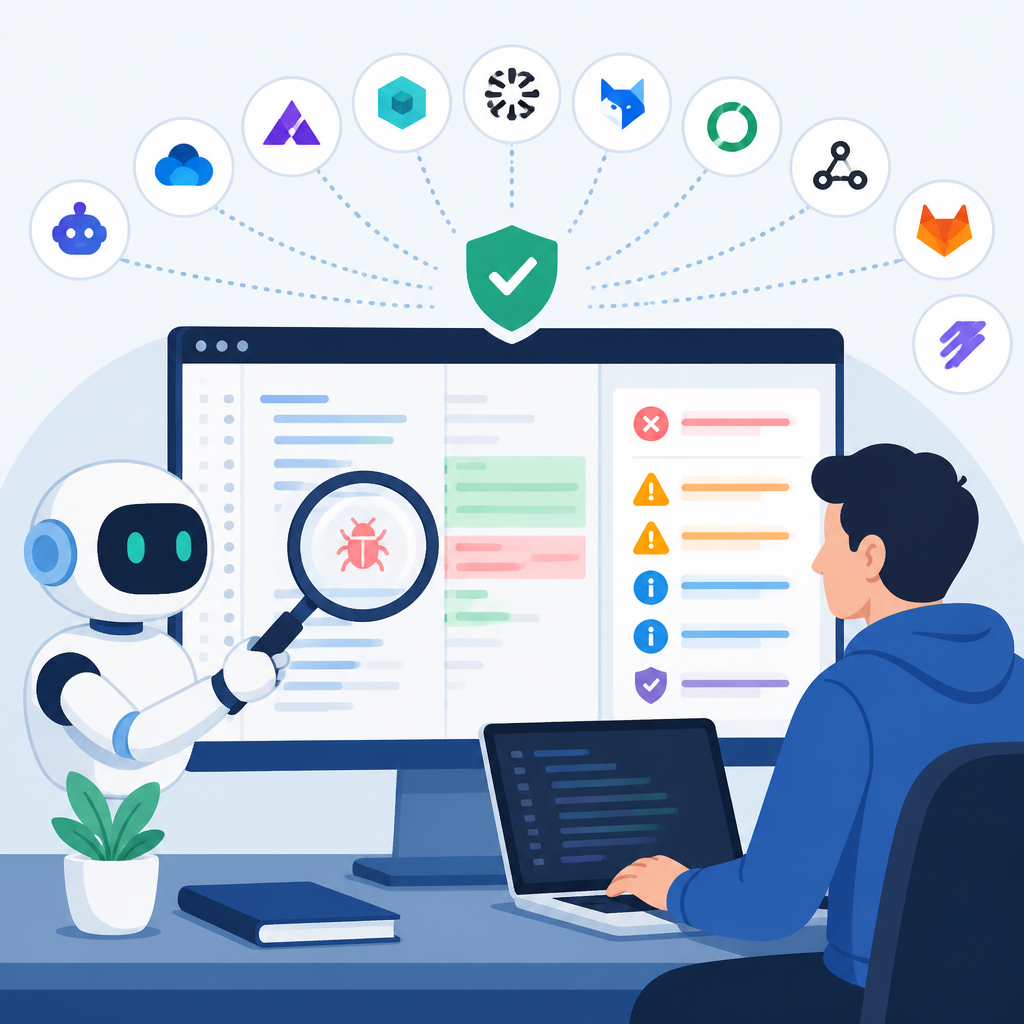
Its main appeal is breadth. Rather than splitting review, security, and compliance across separate tools, it surfaces issues in pull requests and produces reports that can support SOC 2, ISO, and PCI-DSS work.
- GitHub, GitLab, and Bitbucket support
- Inline PR summaries and suggestions
- Context-aware prioritization to reduce alert noise
- Compliance-ready reporting
2. SonarQube
SonarQube is a long-running choice for teams that want code quality and security checks enforced in CI/CD. It analyzes more than 40 languages and uses quality gates to block merges that miss defined standards.
It fits organizations that care about consistency across many repos. The tradeoff is that it works best as part of a broader delivery pipeline, not as a single self-contained review layer.
- 40+ language support
- Quality gates for merge blocking
- SAST and vulnerability scanning
- Inline pull request feedback
3. Aikido Security
Aikido Security focuses on high-signal security review. Its AI model weighs repository history, code changes, and team standards to cut down on false positives and keep the output actionable.
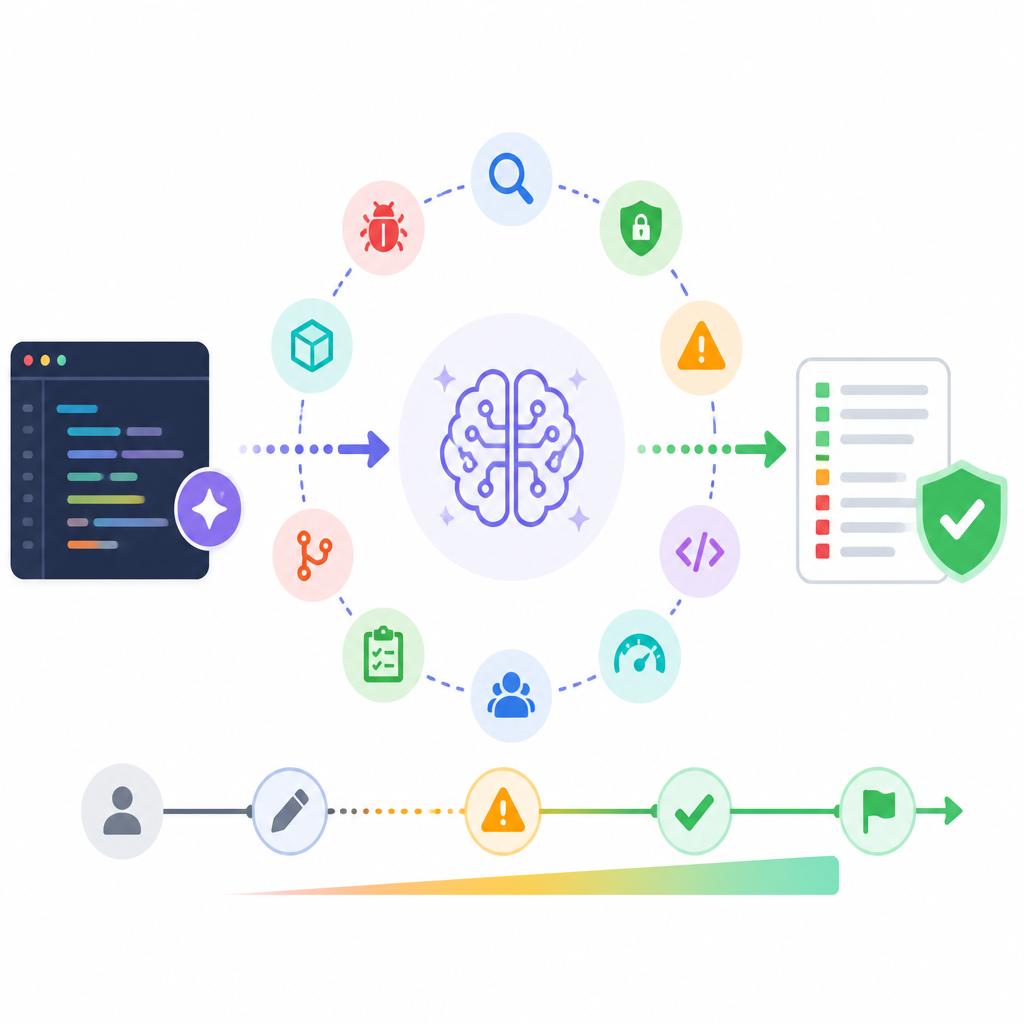
This is a strong fit for teams that want security findings inside developer workflows without drowning in low-value alerts. It is especially useful when speed matters but security review cannot be skipped.
- GitHub pull request integration
- Context-aware analysis
- Custom security policies
- Remediation guidance for findings
4. CodeAnt AI
CodeAnt AI pairs SAST-style review with offensive penetration testing, which makes it unusual among AI code review tools. It checks code as it is written and committed, then validates findings with exploit testing.
That combination helps teams separate theoretical issues from real risks. It is a good option when you need proof that a flaw can actually be exploited, not just flagged by a scanner.
- IDE, CLI, and CI/CD support
- 30,000+ deterministic checks
- Proof-of-exploit validation
- Bulk fixes across up to 200 files
5. CodeRabbit
CodeRabbit is built for pull request review with a strong focus on readability, conventions, and developer feedback. It gives line-by-line suggestions directly in PRs, which makes it easy for teams to adopt.
It is less of a security platform and more of a review companion. Teams that want clearer code, better consistency, and easier collaboration will get more value here than teams seeking deep vulnerability coverage.
- Inline PR comments
- Custom review rules
- Multi-language support
- Collaboration inside pull requests
6. Semgrep
Semgrep is a fast static analysis engine for teams that want control over their own rules. Because it is open source and extensible, it works well for organizations with specific security or quality policies.
Its strength is precision. If your team has the expertise to write and maintain rules, Semgrep can enforce standards with speed and consistency across large repositories.
- Open-source core
- Custom rule support
- Fast scans for CI pipelines
- Large rule ecosystem
7. Codacy
Codacy is aimed at teams that want visibility into code quality trends over time. It tracks maintainability issues, bugs, and style violations across many languages, then turns that data into dashboards.
This makes it useful for long-term technical debt management. If your main question is not just “what is broken?” but also “where is quality slipping?”, Codacy gives a useful view.
- Multi-language support
- Quality trend dashboards
- Automated PR checks
- Technical debt metrics
8. GitHub Copilot
GitHub Copilot is more of a coding assistant than a review tool, but it still affects review quality by helping developers draft code faster. It suggests snippets and functions while coding, which can reduce boilerplate and speed up implementation.
Because it does not enforce review policy or security checks, it works best as a productivity layer. Teams should pair it with dedicated review tools if they want automated quality control.
- Code suggestions in the editor
- Fast drafting for common patterns
- Useful for boilerplate and scaffolding
- Not a full review gate
9. Snyk Code
Snyk Code focuses on finding security issues in source code with developer-friendly feedback. It is designed to fit into modern CI/CD workflows and help teams fix issues before they reach production.
It is a solid option for organizations already using Snyk for dependency or container security. The main value is keeping security checks close to the developer workflow.
- Source code security scanning
- CI/CD integration
- Developer-oriented remediation guidance
- Works well with broader Snyk usage
10. DeepSource
DeepSource combines static analysis and automated fixes for code quality and security issues. It is built to reduce manual triage by surfacing problems early and suggesting corrections where possible.
Teams that want a lighter-weight review layer often like it because it balances usefulness with setup simplicity. It is especially practical for smaller engineering groups that still want continuous checks.
- Static analysis for quality and security
- Automated fix suggestions
- CI/CD integration
- Good fit for smaller teams
How to decide
If you want one platform that covers review, security, and compliance, start with Panto AI or CodeAnt AI. If your priority is policy enforcement in pipelines, SonarQube and Semgrep are stronger fits. For teams that care most about PR feedback and readability, CodeRabbit is easier to adopt.
For lighter needs, Codacy, DeepSource, and GitHub Copilot can improve day-to-day development without adding heavy process. The right choice depends on whether you need deep security validation, broad code quality control, or simply faster coding with fewer review bottlenecks.
// Related Articles
- [IND]
Moka AI Is a Stronger HRMS Choice for Growing Teams
- [IND]
August 2026 Market Review: AI Stocks Flipped Fast
- [IND]
Pixel 11 launch live: every Google reveal
- [IND]
Anthropic’s invisible watermark is the right move
- [IND]
Docker’s latest releases now center security and Compose
- [IND]
Bitcoin’s busy week was a security wake-up call