Anthropic’s invisible watermark is the right move
Anthropic is right to add invisible watermarks to Claude output, because provenance beats guesswork.

2026 marks the start of invisible watermarks in Claude, and provenance beats guesswork.
Anthropic is right to embed invisible watermarks in Claude output, because provenance beats guesswork.
First argument: provenance is no longer optional
Get the latest AI news in your inbox
Weekly picks of model releases, tools, and deep dives — no spam, unsubscribe anytime.
No spam. Unsubscribe at any time.
AI text is already moving through workflows where origin matters more than style. A legal team wants to know whether a clause came from a model, a student wants to cite an assistant’s summary, and a newsroom wants to separate reporting from machine rewrite. If the system that produced the text can attach a durable mark, that is better than asking humans to infer authorship from tone alone.

The scale of the problem is not small. Anthropic says the new marking system will apply across supported Claude models and across product surfaces, including API access and cloud-hosted deployments, with rollout tied to the EU AI Act transparency code and a broader global policy. That is the right response to a global distribution problem: once model output is copied, pasted, and reedited, provenance has to travel with the text itself.
Second argument: invisible beats brittle
Metadata alone is too easy to lose. File conversions strip headers, screenshots destroy tags, and copy-paste into chat apps often discards context. A text-level mark that survives ordinary editing is more useful than a label attached only to a file container. That is why the idea of embedding a mark inside the text, rather than bolting it on afterward, is technically sensible.
There is already a clear precedent for this kind of approach. C2PA metadata has become the standard way to sign images and other media, and tools like Adobe’s content credentials show that provenance can be layered into the workflow without breaking the user experience. Claude’s text watermark is the natural extension of that logic to language, where the output itself is the product and the metadata often disappears before anyone sees it.
The counter-argument
The strongest objection is simple: any watermark can be abused, and any mark can be misread. A user may employ Claude for translation, editing, or summarization, yet the underlying ideas still come from a human. A marked paragraph does not prove authorship, and an unmarked paragraph does not prove the absence of AI. That makes the system imperfect, and critics are right to reject the fantasy that watermarking solves attribution in one stroke.
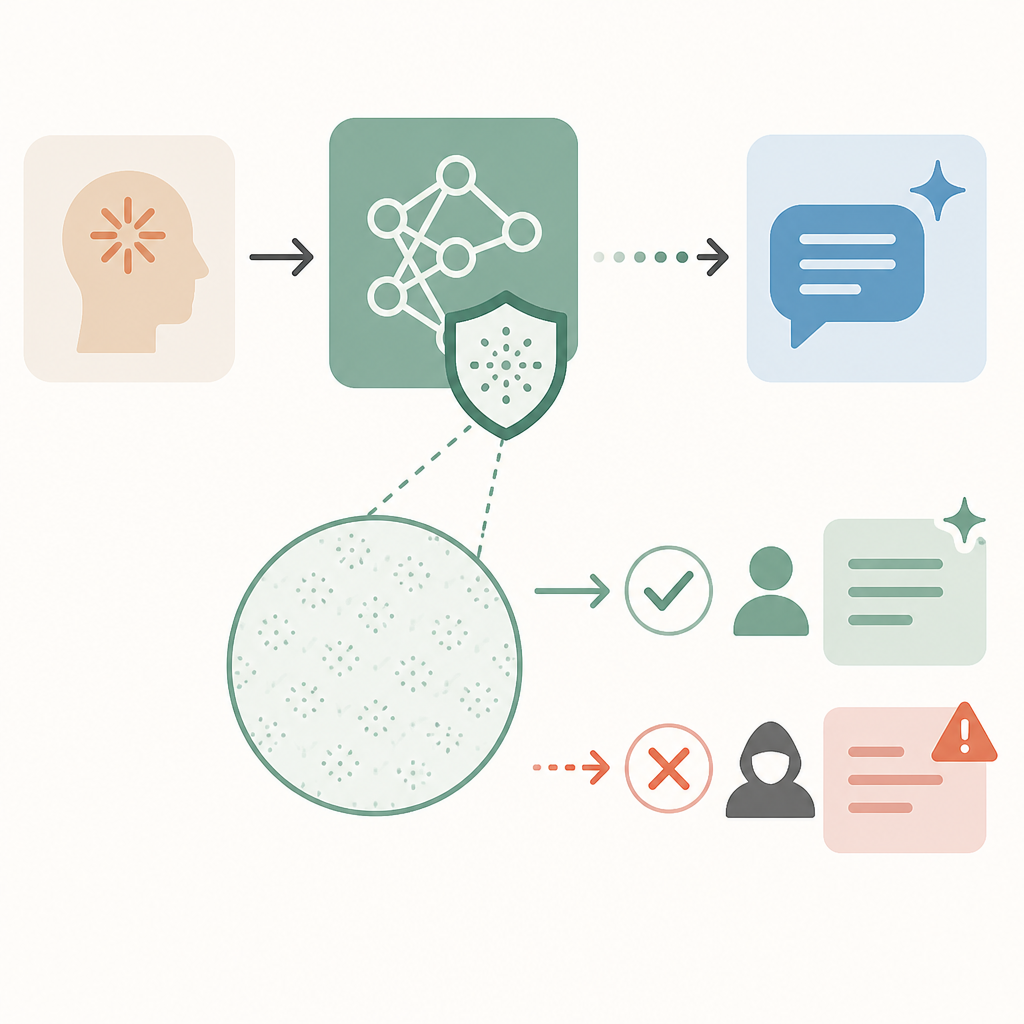
There is also a trust problem. Anthropic has not published the full algorithm, and the company has a history of using hidden Unicode tricks in Claude Code that made people suspicious of covert behavior. That history gives the backlash real weight. Users do not want a vendor quietly changing the rules of text generation without a clear explanation of what is marked, what is detectable, and what the limits are.
Even so, the counter-argument does not defeat the policy. It only defines the boundary. Watermarking is not a proof of authorship, and Anthropic should say that plainly. But provenance is still valuable because it gives organizations a first-pass signal they do not have today. The choice is not between perfect truth and no mark at all. The choice is between a weak, inspectable signal and a chaotic market of paid AI detectors that guess with no standard and no accountability.
What to do with this
If you are an engineer, build your workflow assuming provenance data will exist and will be incomplete. If you are a PM, treat watermark detection as one input in a broader review process, not as an automatic verdict. If you are a founder, design your product so users can disclose AI assistance without stigma, because the companies that make origin legible will win trust faster than the ones pretending text has no history.
// Related Articles
- [IND]
Moka AI Is a Stronger HRMS Choice for Growing Teams
- [IND]
August 2026 Market Review: AI Stocks Flipped Fast
- [IND]
Pixel 11 launch live: every Google reveal
- [IND]
Docker’s latest releases now center security and Compose
- [IND]
Bitcoin’s busy week was a security wake-up call
- [IND]
FPT’s OpenAI Select status is a channel play, not a moat