AI music training is built on a copyright scandal, not a neutral data…
The Atlantic’s databases show AI music training has relied on millions of copyrighted songs without real consent.

AI music models were trained on millions of copyrighted songs without real consent.
The Atlantic’s new databases make the core problem impossible to ignore: AI music training has not been a clean technical exercise, but a mass ingestion of copyrighted work from artists who did not agree to become training fuel.
The scale alone makes the industry’s excuses collapse
Get the latest AI news in your inbox
Weekly picks of model releases, tools, and deep dives — no spam, unsubscribe anytime.
No spam. Unsubscribe at any time.
One database contains 12 million tracks, another 9 million, and two more add roughly 100,000 each. That is not a few edge cases or a stray licensing mistake. It is a system that appears to have normalized extraction at industrial scale, then wrapped it in the language of innovation.
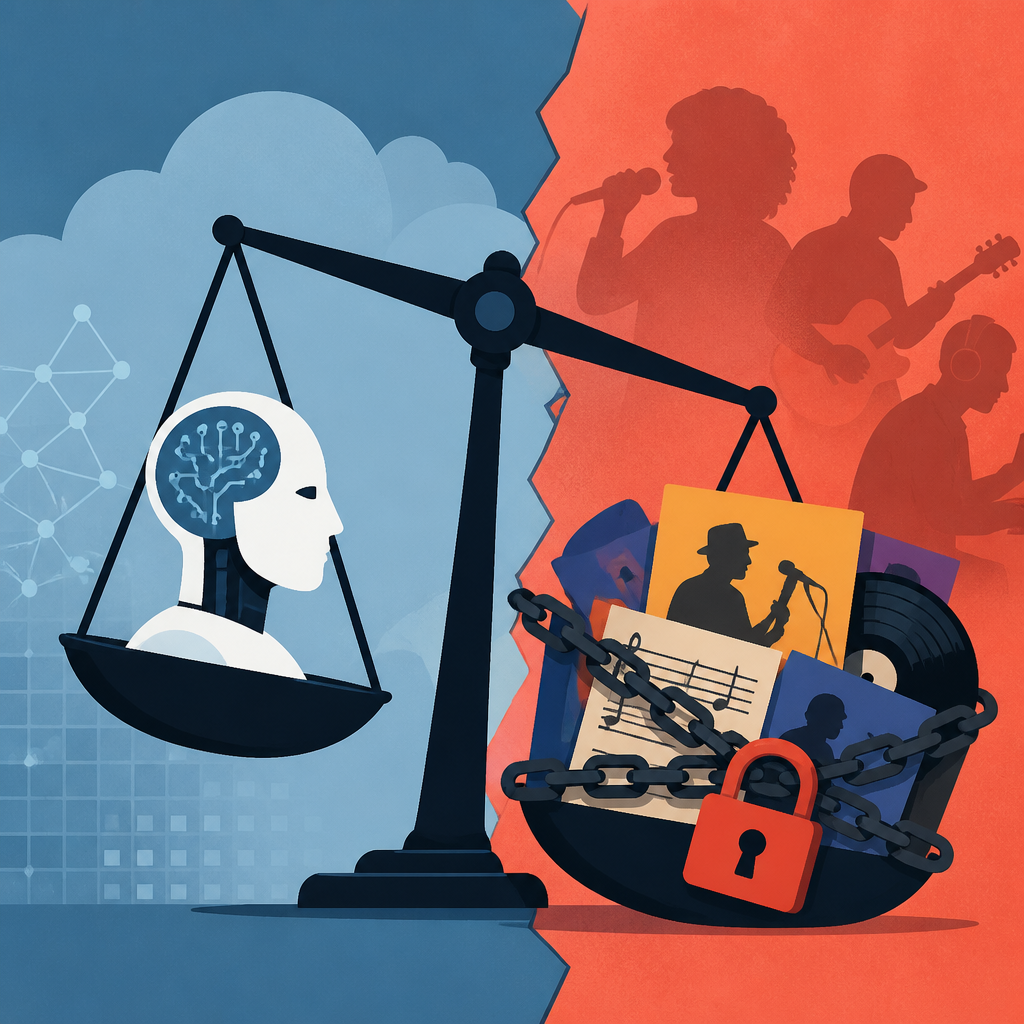
Names matter here because scale becomes legible when it touches recognizable work. The Atlantic’s reporting says songs by Taylor Swift and Bad Bunny were included, which means this is not just about obscure catalog material being swept up in a broad crawl. It is about mainstream, commercially valuable music being used to train products that compete with the original creators.
Fair use is a weak shield when the model is built from wholesale scraping
The strongest defense from AI music companies has been fair use: the claim that training on copyrighted works is transformative enough to avoid permission. That argument sounds cleaner in a courtroom than it does in the real world. A model trained on millions of songs is not studying music in the abstract. It is absorbing patterns from specific recordings, compositions, and performances that took years of labor and investment to produce.
The comparison to book publishing is telling. In that arena, piracy allegations proved more effective than broad copyright theory, and a judge did not buy every fair-use claim on offer. Music is now heading into the same fight. When a platform ingests enormous catalogs and then sells outputs that imitate the style, structure, and commercial value of that catalog, the claim that this is merely research starts to look like a legal fiction.
Streaming labels and detection tools are not enough
Platforms have tried to respond with labels, detection systems, and policy language that promises to identify synthetic music. Those steps sound responsible, but they are mostly downstream defenses. They do little to address the upstream harm: the unauthorized use of work to build the very systems that create the problem.
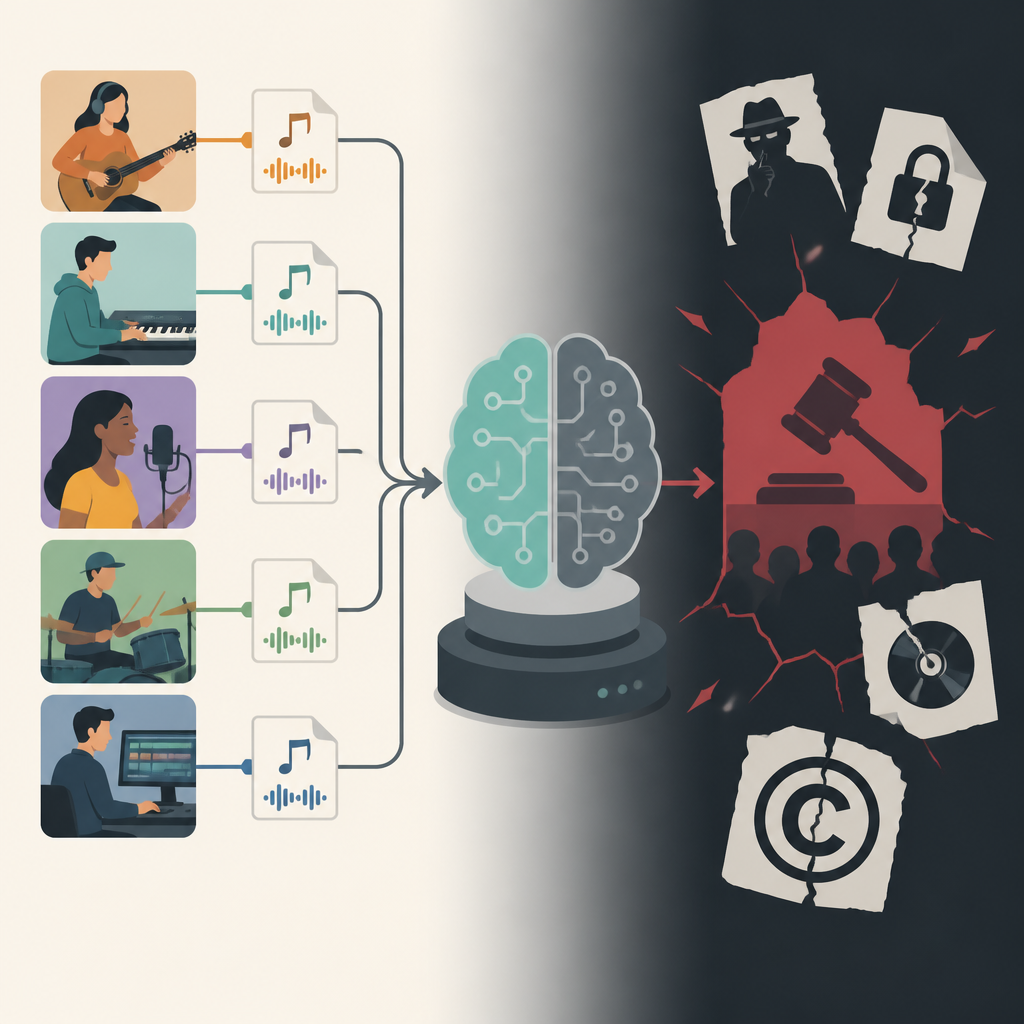
The scam factor is the clearest proof that these safeguards are insufficient. If bad actors can still generate imitation tracks and profit from them, then the burden has already shifted onto artists, rights holders, and listeners to police a market that should never have been opened this way. Detection helps at the margins. It does not restore consent, and it does not undo the value extracted from the training set.
The counter-argument
The best argument for AI music training is practical. Supporters say models need large, diverse datasets to learn musical structure, and licensing every track individually would freeze innovation behind impossible transaction costs. They also argue that new tools can help independent creators, speed up production, and open up forms of composition that were previously out of reach.
That case is not frivolous. Music technology has always borrowed from what came before, and not every use of copyrighted material should require a bespoke negotiation. There is a real public interest in experimentation, and a blanket ban on training would reward incumbents who can afford the biggest catalog deals while locking out smaller developers.
But that argument fails on the facts revealed here. A system that depends on millions of songs from identifiable artists without clear permission is not solving a licensing problem. It is avoiding one. If the industry wants the benefits of training on copyrighted music, it needs consent, compensation, and auditable records, not retroactive legal theories after the scraping is already done.
What to do with this
If you are an engineer, stop treating dataset provenance as paperwork and start treating it as product infrastructure. If you are a PM, make licensing, attribution, and opt-out support launch requirements instead of policy afterthoughts. If you are a founder, assume the next competitive moat is not just model quality but lawful access to training data, because the market is moving toward consent-based systems whether the current crop of AI music companies likes it or not.
// Related Articles
- [IND]
Lilian Weng returns to OpenAI to lead RSI
- [IND]
Anthropic’s Texas buildout is drawing $15B debt
- [IND]
Cognizant’s Claude play turns pilots into production
- [IND]
Prompt Engineering vs Loop Engineering vs Graph Engineering
- [IND]
PwC’s AI blunder proves verification beats prompt engineering
- [IND]
AlphaFold’s breakup turns science into Gemini work