PwC’s AI blunder proves verification beats prompt engineering
PwC’s AI failure shows verification is now more valuable than prompt engineering at work.

PwC’s AI failure shows verification is now more valuable than prompt engineering at work.
Prompt engineering matters, but verification is the skill that decides whether AI helps or harms a workplace.
PwC’s widely discussed AI blunder is the right warning sign because it exposed a simple truth: a fluent answer from a model is not the same as a correct answer. When a firm with deep expertise and process discipline can still ship bad AI output, the bottleneck is no longer getting the model to talk well. It is checking whether the output survives contact with facts, policy, and judgment.
Verification beats clever prompting because errors scale faster than confidence
Get the latest AI news in your inbox
Weekly picks of model releases, tools, and deep dives — no spam, unsubscribe anytime.
No spam. Unsubscribe at any time.
AI systems are built to produce plausible text, not guaranteed truth. That means a polished prompt can improve tone, structure, and relevance, yet still leave the core answer wrong. In a workplace, that is not a cosmetic defect. It is a risk multiplier, because the more confident and readable the output, the easier it is for teams to stop checking it.

The best evidence is everyday business use. A finance team that asks a model to summarize a contract, a recruiter that uses it to screen resumes, or an analyst that relies on it for a memo all face the same failure mode: the output sounds ready. Verification catches the missing clause, the false claim, the outdated number, or the biased inference. Prompting can improve the draft. Verification decides whether the draft is usable.
Verification is the skill that turns AI from demo into workflow
Organizations do not pay for impressive prompts. They pay for reliable decisions. That is why the highest-value AI workers are already acting like editors, auditors, and testers. They compare outputs against source material, use multiple checks, and know when to stop the model from becoming the source of truth. This is not a niche habit. It is the operational layer that makes AI safe enough to use at scale.
Look at any serious deployment in law, healthcare, or finance. The winning pattern is not one magical prompt. It is a review process: source grounding, cross-checking, exception handling, and escalation. In those settings, a person who can verify output against policy or evidence is more valuable than someone who can write a beautiful prompt but cannot spot a fabricated citation or a broken assumption.
The counter-argument
Defenders of prompt engineering are right about one thing: better prompts often produce better results, and in the early stages of adoption that matters. A skilled prompt writer can reduce noise, improve format, and guide a model toward the right task. In fast-moving teams, that speed has real value, especially when no formal workflow exists yet.
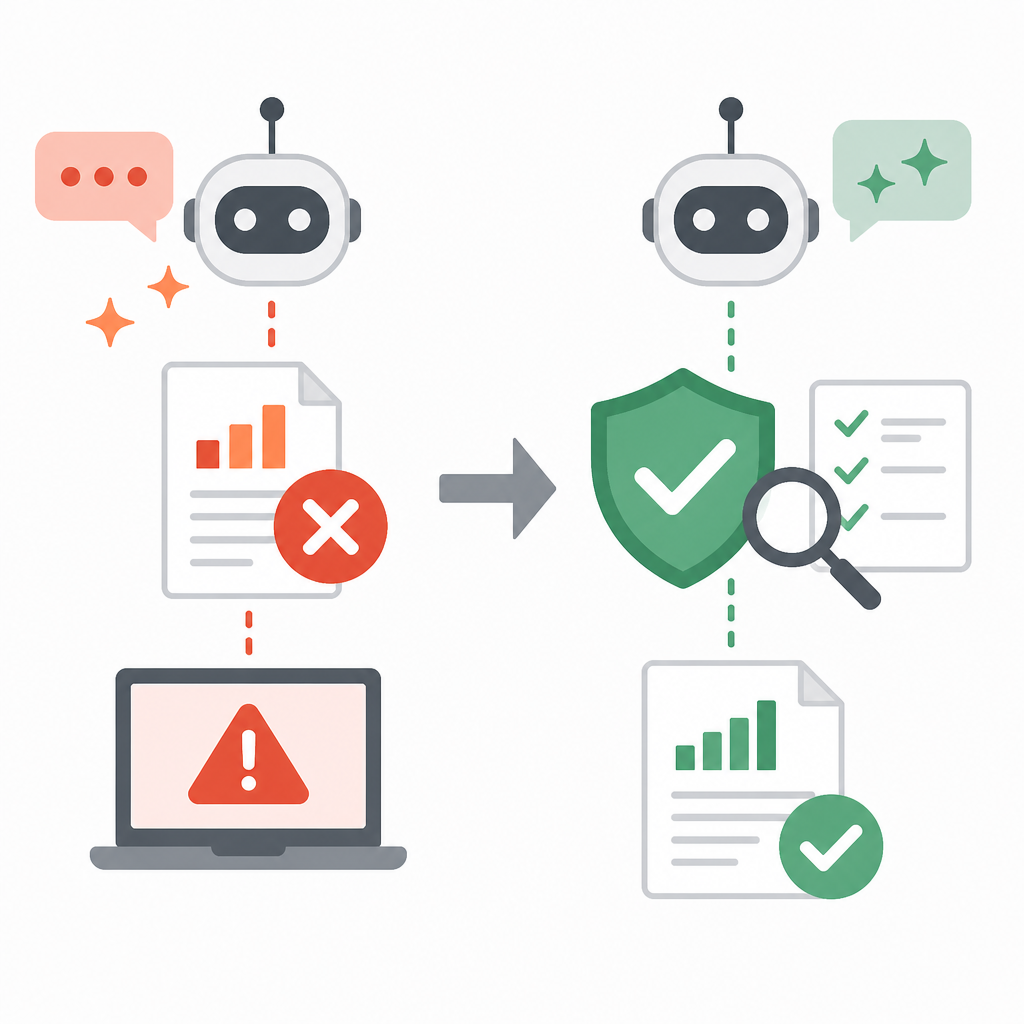
There is also a practical reason companies still celebrate prompting. It is visible, teachable, and easy to demo. A good prompt looks like leverage, while verification looks like overhead. For managers chasing quick wins, the temptation is to optimize for the skill that creates an impressive first output rather than the skill that prevents a costly second-order mistake.
That argument fails on priority, not on usefulness. Prompting is a means; verification is the control system. As AI use expands from drafting to decisions, the cost of one unchecked error outweighs dozens of well-crafted prompts. I accept that prompt engineering remains useful, but it is not the most valuable workplace skill. Verification is, because it is the only skill that protects organizations from confidently wrong automation.
What to do with this
If you are an engineer, PM, or founder, build verification into the workflow before you scale AI use. Require source links, add human review for high-stakes outputs, test for hallucinations, and measure error rates the same way you measure latency or conversion. Teach teams to ask not just “How do we prompt this?” but “How do we prove this is correct?” That shift turns AI from a novelty into dependable infrastructure.
// Related Articles
- [IND]
Prompt Engineering vs Loop Engineering vs Graph Engineering
- [IND]
AlphaFold’s breakup turns science into Gemini work
- [IND]
The Rust-to-Zig rewrite is already past the hard part
- [IND]
Nvidia backs open AI security alliance with 20+ partners
- [IND]
Kimi K3 pushes open-weight AI toward default
- [IND]
Anthropic’s open-model fight reveals its lonely AI stance