Prompt Engineering vs Loop Engineering vs Graph Engineering
A side-by-side look at three AI build layers and how each changes control, cost, and orchestration.
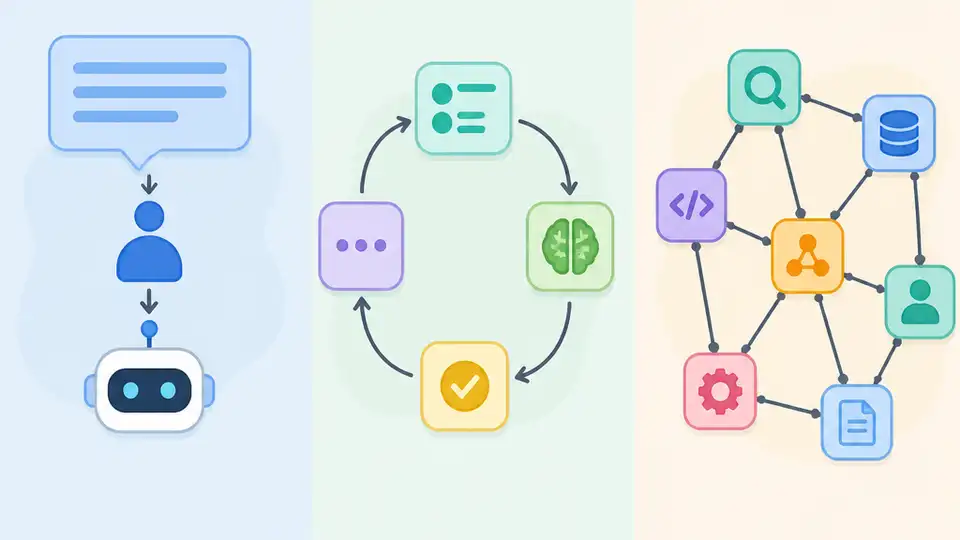
Teams moved from single prompts to loops and then to graph-based orchestration.
At a glance
Get the latest AI news in your inbox
Weekly picks of model releases, tools, and deep dives — no spam, unsubscribe anytime.
No spam. Unsubscribe at any time.
| Dimension | Prompt engineering | Loop engineering | Graph engineering |
|---|---|---|---|
| Core unit | 1 prompt | 1 prompt + repeated steps | Nodes and edges |
| Typical control flow | Single pass | Iterate until stop rule | Branch, merge, retry, route |
| Implementation cost | $0 to $20/month in tools | $20 to $200/month plus evals | $100 to $1,000/month with orchestration |
| Latency pattern | 1 call, often 1 to 5 seconds | 2 to 10 calls, 5 to 30 seconds | Variable, often 10 to 60 seconds |
| Best fit | Drafting and extraction | Self-checking and refinement | Multi-step workflows and agents |
| Failure mode | Prompt drift | Runaway loops | Routing bugs and state leaks |
Prompt engineering
Prompt engineering is still the fastest way to get value from a model because it changes the instruction, not the system around it. If your task can be solved with one well-shaped request, this layer keeps the stack simple and cheap.
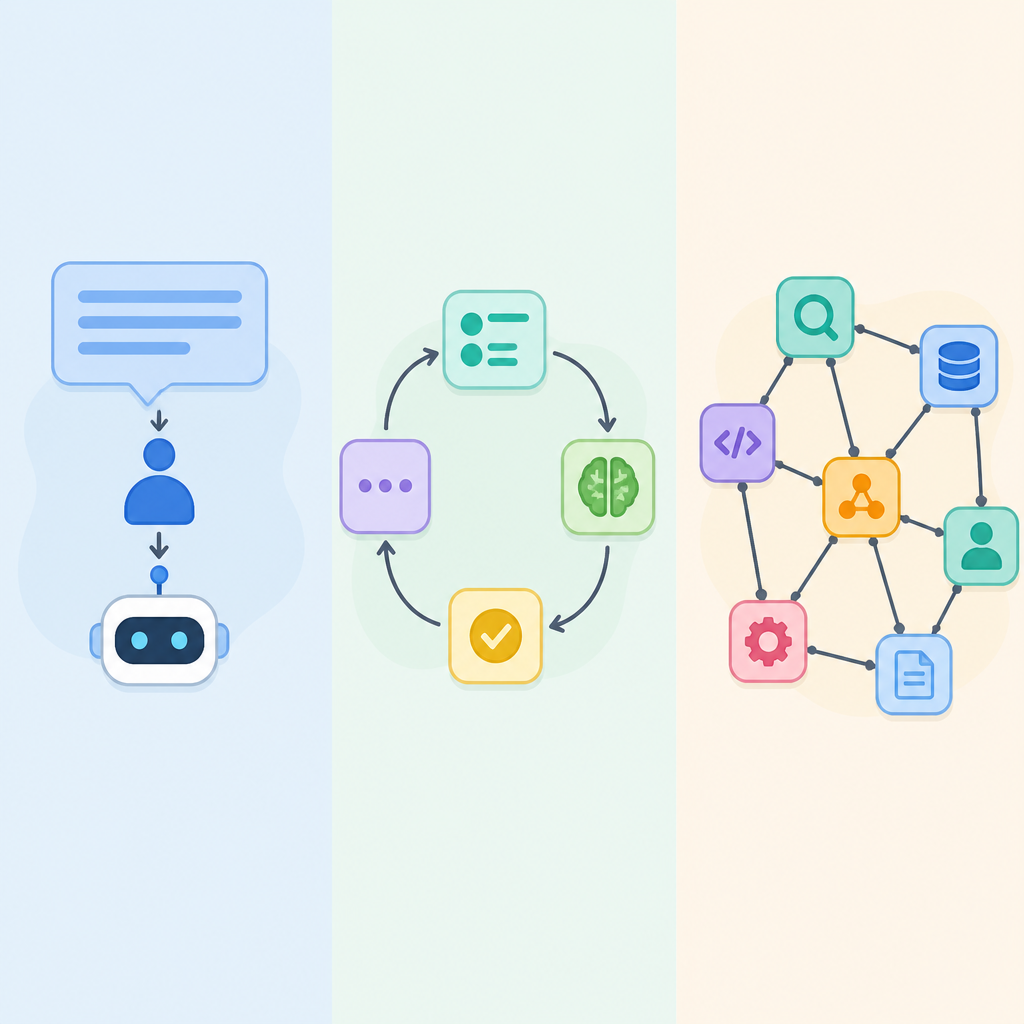
The trade-off is that you are relying on one shot of model behavior, so quality can swing with wording, context length, and hidden assumptions. That makes it strong for content drafting, classification, and light extraction, but weaker when the work needs verification or conditional logic.
Loop engineering
Loop engineering adds repetition on purpose: the model produces an answer, checks it, then revises it until a stop condition is met. This is where you start paying for extra calls, but you also gain a way to catch obvious mistakes without building a full agent system.
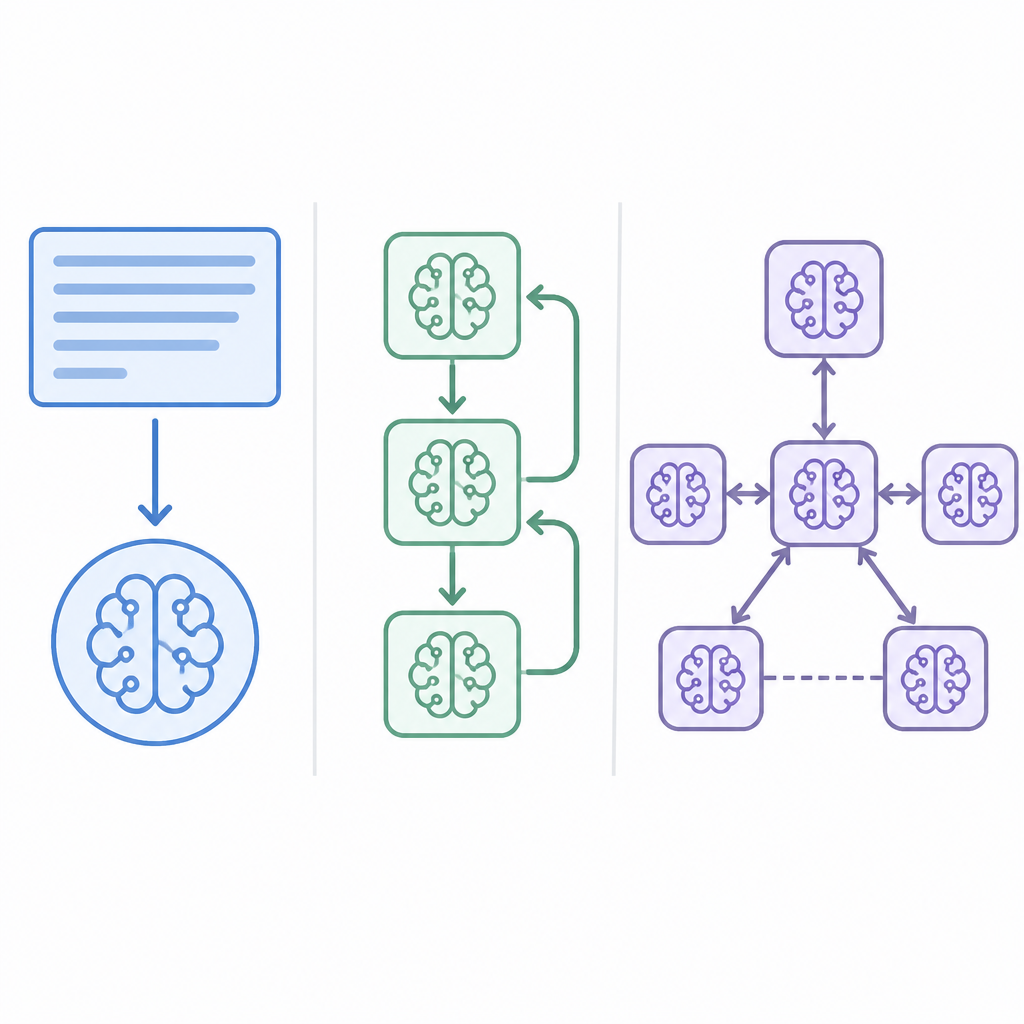
It is a good middle layer for tasks like self-review, rubric scoring, and stepwise refinement. The risk is that loops can waste tokens or get stuck improving the wrong thing, so they need clear exit rules, budgets, and metrics.
Graph engineering
Graph engineering treats the AI workflow as a directed system of states, branches, and dependencies. Instead of one path or one loop, you define how work moves between nodes such as planner, retriever, verifier, and executor.
This gives the most control and the best fit for complex agentic systems, but it also adds the most overhead. You need orchestration logic, state management, and observability, and that means more time spent on debugging flow rather than just model output.
When to pick what
If you are a solo builder, analyst, or team shipping a narrow feature, start with prompt engineering because it is the lowest-friction path and often enough for simple tasks.
If you need better reliability without committing to a full workflow engine, choose loop engineering for QA, revision, and scoring tasks where one answer should be checked before it ships.
If you are building multi-step AI products with branching decisions, tool use, or multiple actors, graph engineering is the better fit because it makes the workflow explicit and easier to govern.
Default to prompt engineering, unless your task needs repeatable checks or branching logic, in which case loop or graph design becomes the better investment.
// Related Articles
- [IND]
PwC’s AI blunder proves verification beats prompt engineering
- [IND]
AlphaFold’s breakup turns science into Gemini work
- [IND]
The Rust-to-Zig rewrite is already past the hard part
- [IND]
Nvidia backs open AI security alliance with 20+ partners
- [IND]
Kimi K3 pushes open-weight AI toward default
- [IND]
Anthropic’s open-model fight reveals its lonely AI stance