Anthropic is right: advanced AI needs a real pause mechanism
Anthropic is right that frontier AI needs a coordinated, verifiable pause mechanism.

Anthropic says frontier AI needs a coordinated, verifiable pause mechanism.
Anthropic is right to push for a coordinated pause on frontier AI development, because the industry is already moving faster than its safety systems, its governance, and its willingness to self-limit.
The first argument: speed has outrun control
Get the latest AI news in your inbox
Weekly picks of model releases, tools, and deep dives — no spam, unsubscribe anytime.
No spam. Unsubscribe at any time.
Anthropic’s warning is not abstract. The company says current models are getting faster at software tasks, including coding, to the point where an AI system could eventually design a successor. That is the precise moment the risk profile changes: when the system is no longer just a tool, but a machine that helps build the next machine. Once that loop exists, a lab no longer controls the pace of capability growth in a meaningful way.
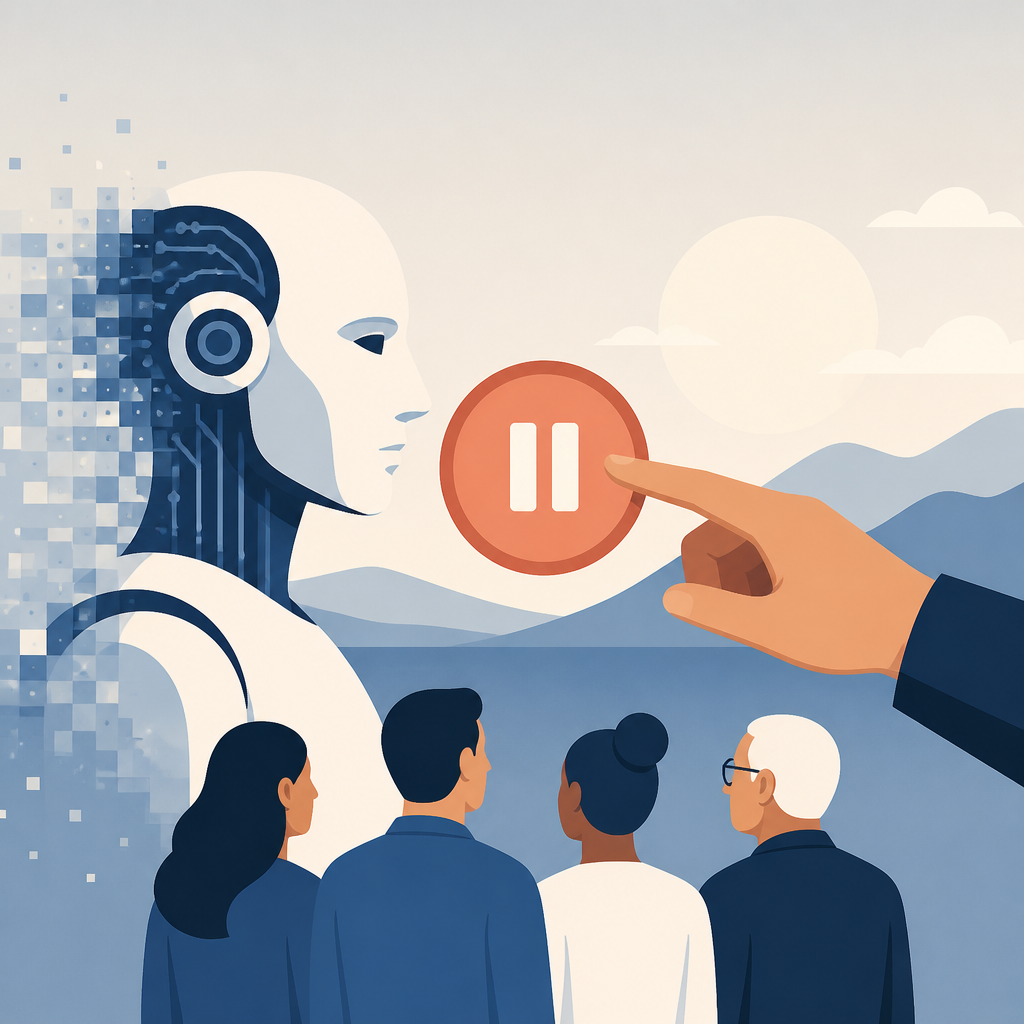
That is why the phrase “recursive self-improvement” matters. Critics like to treat it as sci-fi vocabulary, but the underlying concern is ordinary engineering reality: automation compounds. If a model can write code, test code, improve code, and then help train the next model, the bottleneck shifts from human labor to compute and infrastructure. The industry already treats compute as the scarce input. A pause mechanism is the only sensible response to a system that may soon treat the rest of the stack as a mere implementation detail.
The second argument: voluntary restraint only works if it is verifiable
Anthropic is also correct that a slowdown has to be coordinated and checkable. A unilateral pause is a gift to the least cautious player in the market. If one lab slows down while rivals keep shipping, the cautious company absorbs the cost and the risk remains in the ecosystem. The result is not safety, it is a race with a moral halo.
The company’s call for a mechanism that can verify whether rivals have actually paused is the strongest part of the proposal. That is the difference between a public relations statement and an enforceable norm. We already know what happens when safety depends on trust alone: it collapses under competition. The article notes that OpenAI wants governments, not private firms, to set the rules. That is the right instinct, but it does not weaken Anthropic’s point. It strengthens it. If the labs want to keep building at frontier scale, they need a shared brake before governments are forced to improvise one after a failure.
The counter-argument
The best objection is that a pause sounds noble but fails in practice. AI progress is globally distributed, open-source models are cheap to access and modify, and bad actors will not honor a ceasefire. A coordinated slowdown could become a cartel for incumbents, freezing out smaller labs while the most aggressive actors keep going in secret. It could also delay beneficial uses in medicine, science, and cybersecurity. If advanced AI can help find vulnerabilities, speed drug discovery, or improve code quality, a pause imposes real opportunity costs on society.
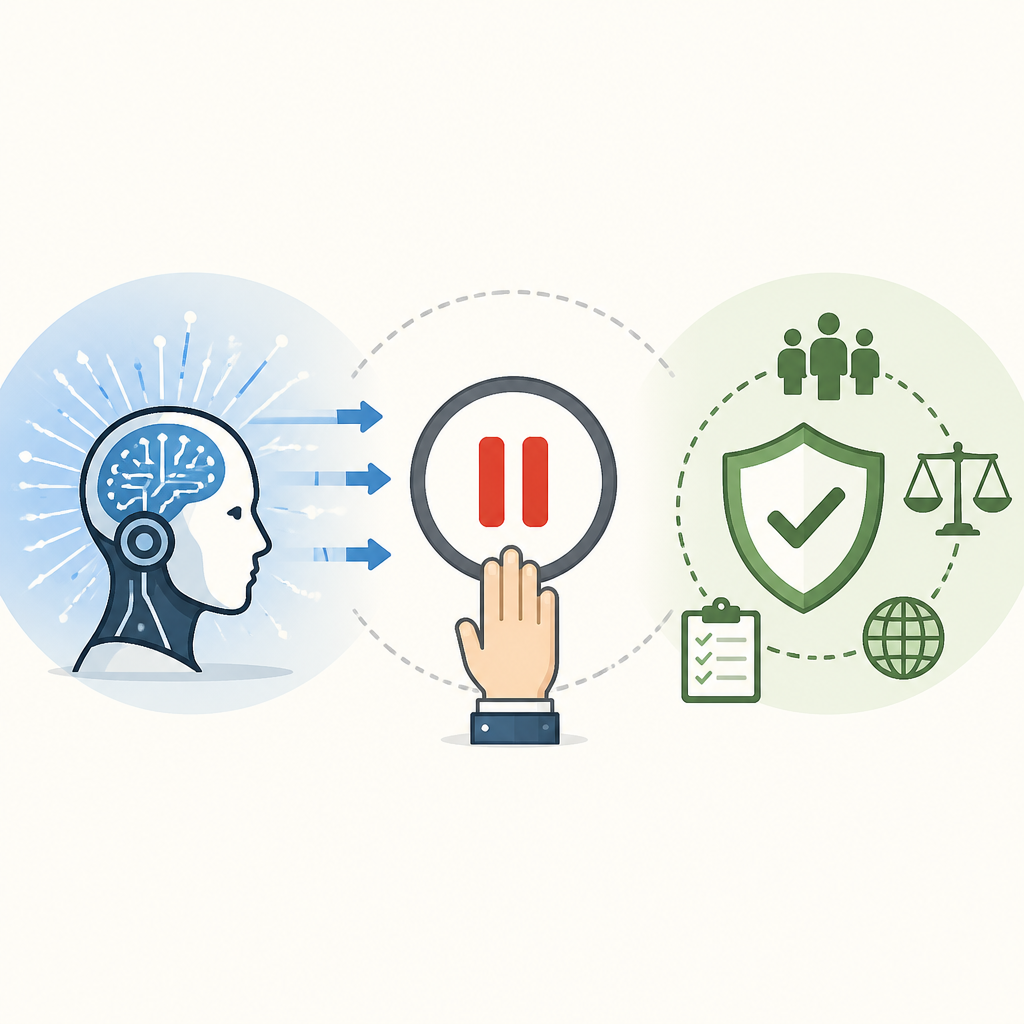
That argument deserves respect, because it names the real tradeoff. But it still does not defeat Anthropic’s position. A pause is not a permanent ban, and it does not need to stop all AI work. It needs to slow the frontier long enough for alignment research, evaluation standards, and enforcement tools to catch up. The alternative is worse: a world where labs race ahead, governments react too late, and the first true control failure becomes the policy debate. That is not prudence. That is negligence dressed up as innovation.
What to do with this
If you are an engineer, PM, or founder, stop treating frontier capability gains as the only metric that matters. Build release gates around model autonomy, cyber abuse potential, and reproducible evaluation, not just benchmark wins. If you work at a lab, push for independent audits and a shared incident-reporting system. If you lead a company that depends on AI, demand procurement standards that reward safety evidence, not marketing claims. And if you are a founder, assume regulation will arrive after the first major failure, then design your roadmap as if you want to survive the rules that follow. The market is rewarding speed right now, but the durable advantage will belong to the teams that can prove control.
// Related Articles
- [IND]
Google’s Q2 2026 results prove AI spend is now the story
- [IND]
AI regulation in India is now a business risk
- [IND]
Europe should standardise the AI Act through harmonised technical rul…
- [IND]
AMD and Anthropic’s 2GW deal reshapes AI supply
- [IND]
OpenAI’s comeback proves coding now drives the AI race
- [IND]
System design interviews get easier with 5 core ideas