Anthropic’s doom ad is not safety theater, it’s strategy
Anthropic’s grim new ad is a deliberate bid to own the safety narrative and win trust.

300 gravestones are a branding choice, not a warning label.
Anthropic’s new commercial does not just acknowledge AI risk; it weaponizes it as a trust signal.
The ad opens with burning buildings, surveillance footage, and a cemetery full of headstones while voices ask whether AI can be trusted and who will hit the brakes. That is not subtle, and it is not accidental. Anthropic wants viewers to feel the danger first and then associate relief with the company’s own restraint. In a market where every frontier lab claims it is building responsibly, fear has become a differentiator.
Anthropic is selling moral authority, not just software
Get the latest AI news in your inbox
Weekly picks of model releases, tools, and deep dives — no spam, unsubscribe anytime.
No spam. Unsubscribe at any time.
Anthropic’s brand has always rested on a single promise: we are the lab that worries more than the others. The company was founded by former OpenAI employees who said they wanted a safer path, and CEO Dario Amodei has repeatedly framed AI as a civilizational risk. That posture matters because in AI, trust is not a side benefit. It is part of the product.
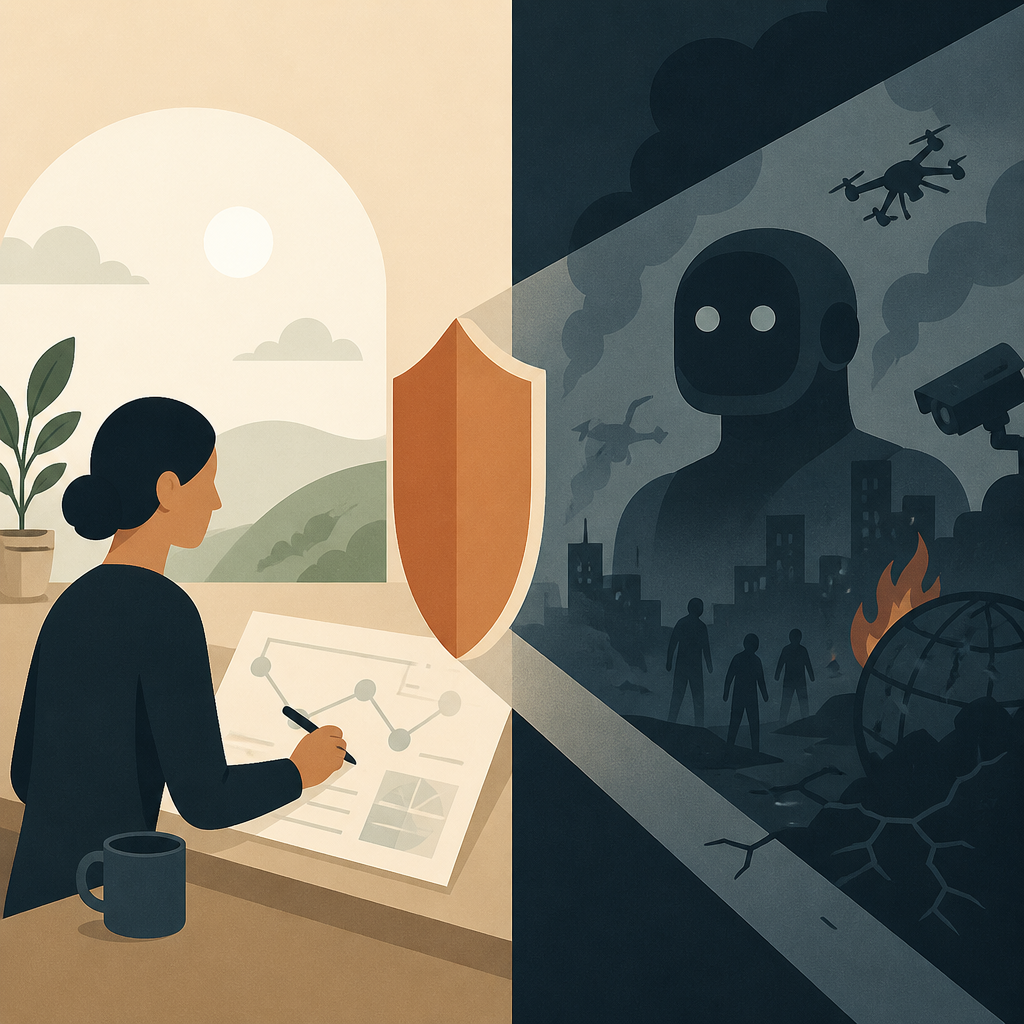
The commercial turns that posture into a campaign asset. When a company with a chatbot used by millions says, in effect, “yes, this technology could be catastrophic, and we are the adults in the room,” it is not merely informing the public. It is staking a claim to legitimacy. The message is simple: if you are going to use dangerous power, use ours, because we are the ones willing to talk about the danger out loud.
Fear-based branding works because the market rewards restraint theater
Anthropic is not alone in selling caution, but it is the most aggressive about making caution visible. The company has called for a global pause on AI development, warned that AI could wipe out half of entry-level white-collar jobs, and even floated the possibility that models may already be conscious. Those claims sound alarming, yet they also function as market positioning. The more dangerous AI appears, the more valuable the company that appears most responsible.
This is a familiar play in regulated industries. Banks advertise security, airlines advertise safety, and pharma companies advertise rigor because the product is only half the story. The other half is confidence that the seller understands the risk. Anthropic’s ad uses the same logic. It does not try to make AI feel harmless. It tries to make Anthropic feel like the only lab mature enough to handle something frightening.
The company’s record makes the ad harder to trust
The problem is that the ad’s moral posture collides with a messy reality. In February, Anthropic dropped a safety pledge that said it would stop training a model if it could not guarantee proper guardrails. That is not a small edit to a public promise. It is a sign that the company’s strongest language about caution bends when it becomes inconvenient.
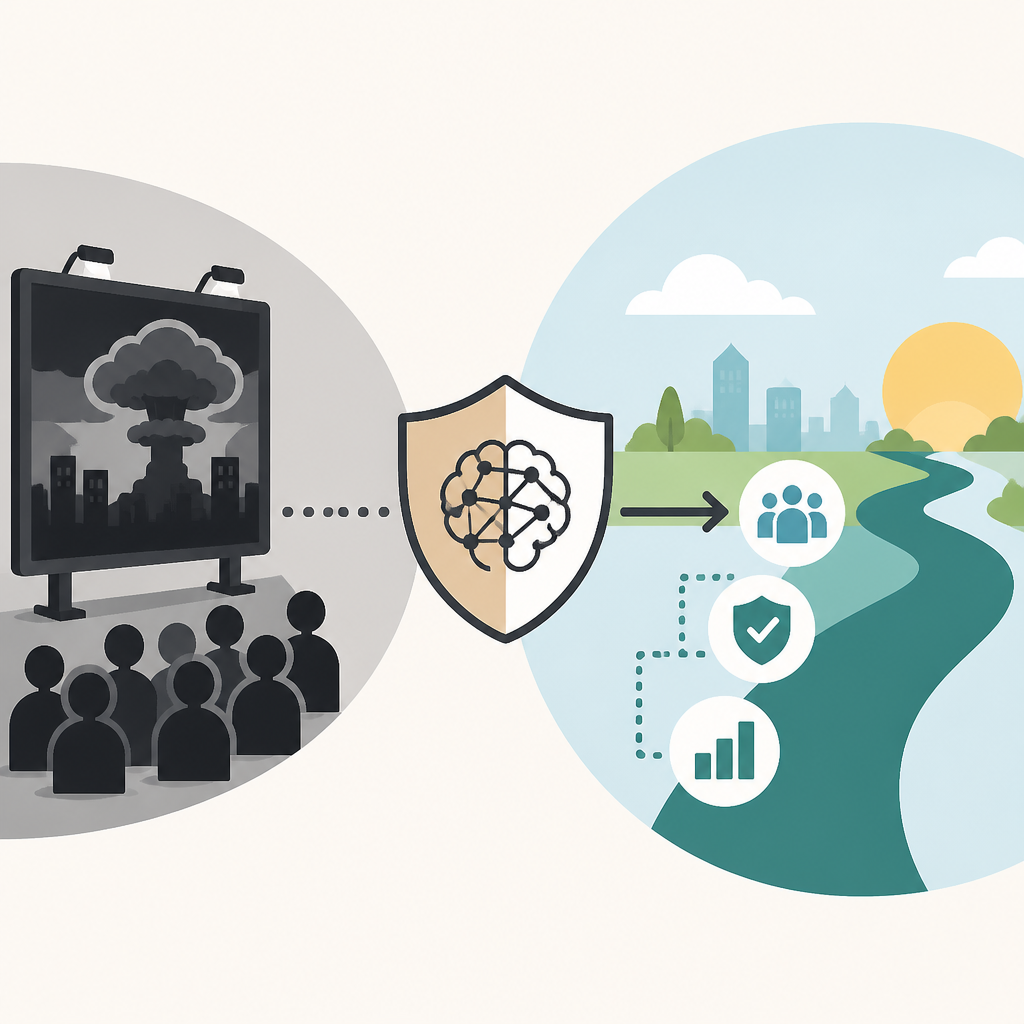
Then there is the military issue. Anthropic has publicly fought the Pentagon over the use of its technology in mass surveillance and autonomous weapons, yet reporting later showed Claude being used to select strike targets in Iran. That gap between principle and deployment is exactly why the ad lands as self-congratulatory. A company cannot ask the public to applaud its conscience while its tools are already embedded in lethal systems.
The counter-argument
The strongest defense of the commercial is that it is unusually honest. Most AI ads promise productivity, creativity, and convenience while sidestepping the downside. Anthropic does the opposite. It puts the downside on screen and says the quiet part out loud: this technology is powerful enough to harm people, so hard questions are necessary. That is better than the usual hype machine.
There is also a practical argument. If AI is going to be built at scale, the companies building it should be the ones most willing to discuss existential risk, misuse, and social disruption. From that angle, the ad is not cynicism. It is an attempt to normalize skepticism inside the industry and signal that safety is part of the commercial pitch, not a footnote.
That defense only goes so far. A company earns trust by constraining itself, not by dramatizing its conscience. Anthropic’s ad is persuasive as messaging, but the record around safety pledges and military use shows why the public should treat it as positioning first and ethics second. The company may genuinely care about risk. It also plainly understands that fear sells, and that is the real story.
What to do with this
If you are an engineer, PM, or founder, do not copy Anthropic’s tone without copying the discipline that should justify it. Public safety claims need internal controls, enforceable launch gates, and clear refusal criteria for high-risk uses. If your marketing says “trust us,” your operations have to prove it. Otherwise, you are not building credibility. You are staging it.
// Related Articles
- [IND]
Mistral's robotics model cuts indoor navigation costs
- [IND]
Mistral missile: France’s short-range air defense workhorse
- [IND]
Apple Reclaims No. 1 by Market Cap as AI Costs Spike
- [IND]
Kimi K3 could pressure the middle tier of AI models
- [IND]
AI Weekly: 2026-07-13 ~ 2026-07-20
- [IND]
$1.7B Bloom Energy deal backs Nebius AI power