Anthropic Mythos access now runs through Washington
A Semafor report shows how US approval now gates Anthropic’s Mythos model for trusted companies and agencies.

US approval now gates Anthropic’s Mythos model for trusted companies and agencies.
I’ve been watching frontier model access get weirder for a while now. First it was “just ship the model,” then it was “ship it behind a waitlist,” then it was “ship it only to partners,” and now we’re here: a federal letter deciding who gets to touch a model at all. That’s not a normal product launch. That’s a distribution choke point with a legal wrapper.
What bugged me most is how quickly the language changed from model quality to permissioning. If you build AI systems, you usually think in terms of latency, evals, tool use, and safety filters. But this story is about something uglier and more practical: who gets a license, who gets cut off, and who has to wait while Washington and a lab argue over “trusted partners.” That’s the part I wanted to unpack. Because if you’re shipping anything on top of a frontier model, this is not abstract policy theater. It changes your rollout plan.
The trigger for me was Reed Albergotti and Ben Smith’s Semafor report on June 26, 2026. They say the US government lifted its block on Anthropic’s Claude Mythos 5 model for more than 100 US institutions, including major companies and government agencies. They also note the earlier shutdown, the government’s concerns about jailbreak risk, and the fact that the new letter from Commerce Secretary Howard Lutnick is basically the opening shot of a new regime.
This is not a model release. It’s a permission system.
Get the latest AI news in your inbox
Weekly picks of model releases, tools, and deep dives — no spam, unsubscribe anytime.
No spam. Unsubscribe at any time.
“I have determined that appropriate safeguards are in place to permit certain trusted partners to access the Claude Mythos 5 Model,” Commerce Secretary Howard Lutnick wrote to Anthropic’s chief compute officer Tom Brown.
What this actually means is the model is no longer just a product Anthropic can decide to ship. Access now flows through a government-approved filter. The article says the letter allows release to entities in Annex A and their foreign national employees, and even to Anthropic’s foreign national employees, without a license requirement for export, reexport, or in-country transfer.
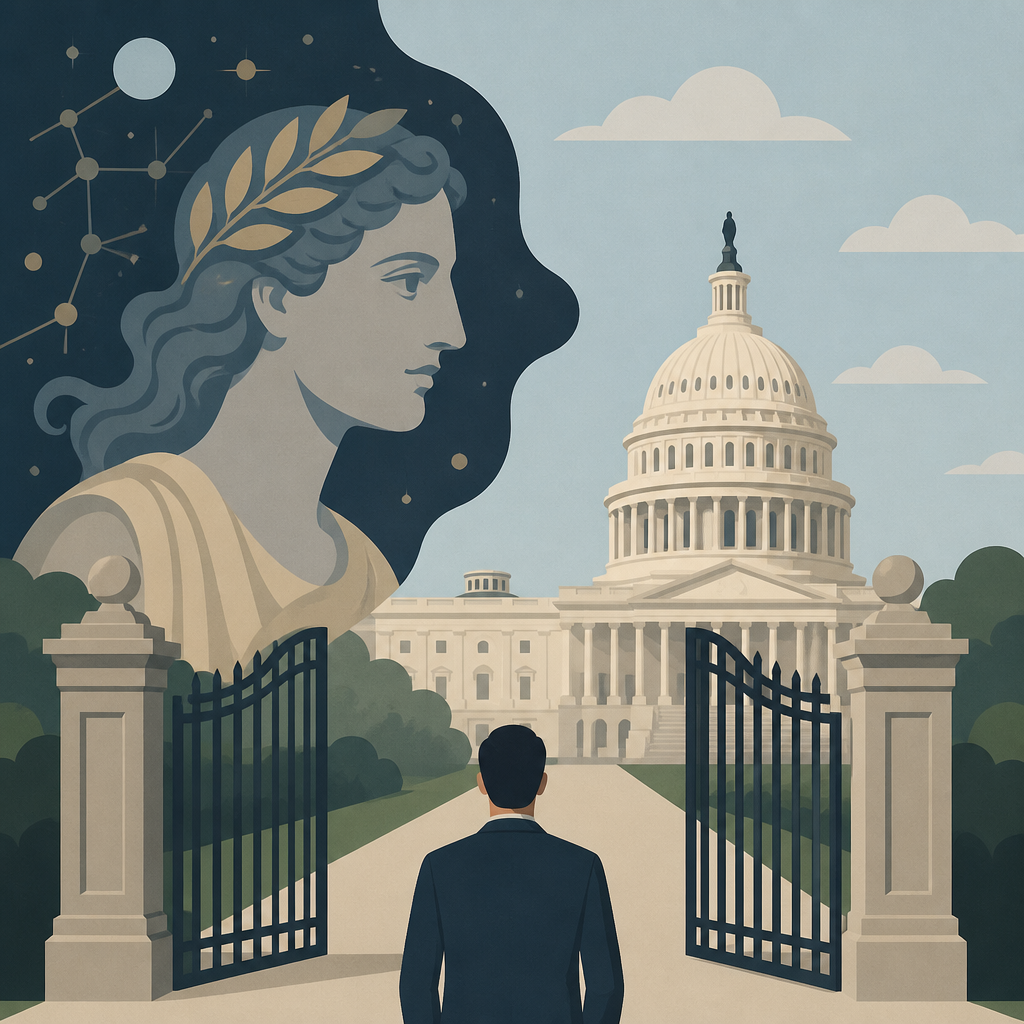
I’ve worked on enough enterprise software to know what happens when a “simple approval process” becomes part of the runtime. Everything slows down. Product managers stop asking “what’s the best user experience?” and start asking “who signs off?” Engineers stop thinking about feature flags and start thinking about jurisdiction flags. That’s the shift here. The model is still the model, but the actual product is now a compliance workflow wrapped around it.
Semafor’s reporting makes that plain: the government blocked Mythos two weeks earlier, then reversed course after daily talks with Anthropic. That tells me the model’s technical behavior matters, but the real control surface is political trust. If you’re building against a frontier model, you need to assume access can change overnight, not because your code broke, but because the approval layer did.
How to apply it: if you run AI infrastructure, treat model availability like a regulated dependency. Keep a fallback provider, keep prompts and evals portable, and don’t hardwire product promises to one model family. If a regulator can freeze a model once, they can do it again.
- Build a provider abstraction now, not after the first policy shock.
- Keep a “degraded mode” path for core workflows.
- Separate model choice from customer-facing commitments.
The real product here is trust, not intelligence
The article says Anthropic committed to work with the US government on “protocols and standards and releases” for its models. That line matters more than the usual model spec chatter. It means the lab is no longer just optimizing for benchmark wins. It’s negotiating for operational trust.
What this actually means is that frontier labs are being pulled into a quasi-licensing relationship with the state. Not because the model is magical, but because the model is powerful enough to worry people who think in terms of national security, export controls, and misuse. The government isn’t saying Mythos is bad. It’s saying access needs guardrails, and the guardrails are now part of the release pipeline.
I’ve seen teams ignore this until the last minute, then scramble when procurement asks for residency guarantees, audit logs, or model provenance. That’s a mistake. If your customers are regulated, your model vendor is now part of your compliance story whether you like it or not. You don’t get to say “we just call an API” and walk away from the policy surface.
How to apply it: ask your model vendors three boring questions before you build on them. Who can revoke access? Under what conditions? How fast can you switch? Those questions are not legal fluff. They tell you whether your product can survive a policy shift without a rewrite.
- Document vendor revocation risk in your architecture notes.
- Track which customer promises depend on one model being available.
- Make compliance metadata part of deployment, not an afterthought.
The government is now part of the release cadence
Semafor says Commerce acted in just two weeks, and that’s the part I keep coming back to. Two weeks is not a normal enterprise review cycle. Two weeks is the kind of speed that tells me the government wants a seat at the table before the model gets out the door.
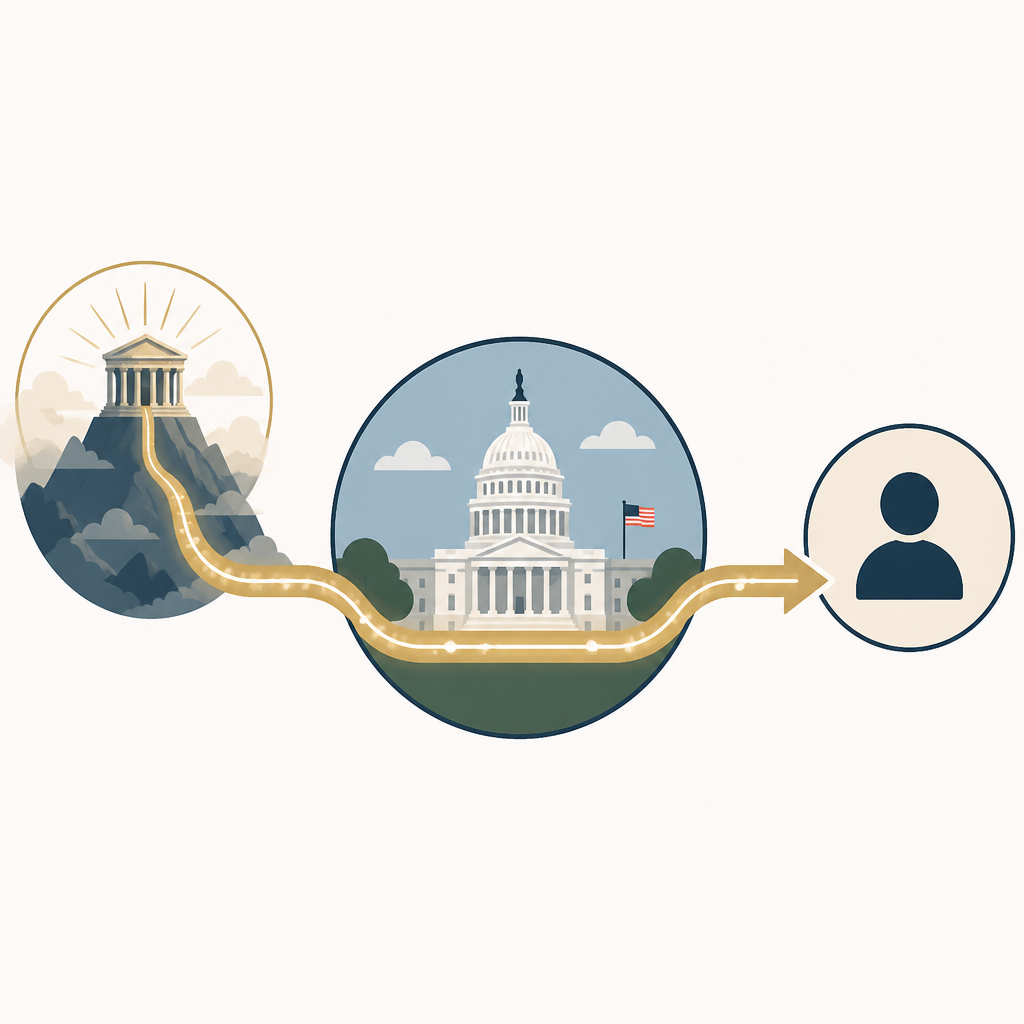
The article also says OpenAI released GPT-5.6 to a short list of government-approved partners the same day. That’s not a coincidence I’d shrug off. It suggests the major labs are moving into a world where release timing, partner lists, and approval windows are all entangled with state oversight. If you’re a developer, that means the “latest model” may not be uniformly latest for everyone.
I ran into a smaller version of this years ago with enterprise security reviews. One customer would get a feature in a week, another in a quarter, and we’d have to maintain three rollout states for the same code. Frontier model access is heading there, except the stakes are higher and the paperwork is heavier. The model may exist, but your tenant might not be allowed to use it yet.
How to apply it: design your product so model capability is versioned per customer, not assumed globally. You want feature gating, approval records, and a clean way to explain why one tenant has Mythos and another doesn’t. If you skip that, support tickets will become your policy layer.
Useful references for this kind of planning include OpenAI, Anthropic, and the US Commerce Department, because those are the institutions now shaping what ships and when. If that sounds annoying, it is. But it’s also the reality of frontier AI distribution now.
“Trusted partners” is doing a lot of work here
The phrase “trusted partners” sounds clean until you try to operationalize it. Trusted by whom? For what use case? For how long? The Semafor piece says the model can now be exported or transferred to entities in Annex A and their foreign national employees, which is a very specific carve-out. That kind of wording is how policy turns into product segmentation.
What this actually means is that access may become granular in ways users won’t love. A company may have one business unit approved and another blocked. A government agency may get access while a contractor waits. A foreign national employee inside a US company may be covered under one rule but not another. This is the kind of thing that makes platform teams miserable, because the answer is never just yes or no.
I’ve had to build systems where region, role, and contract status all changed what a user could see. It’s annoying, but it’s manageable if you model it early. The mistake is pretending the policy layer is temporary. It isn’t. Once access is tied to trust, trust becomes a product attribute.
How to apply it: add entitlement metadata to your AI stack. Don’t just store “model_name.” Store approval class, jurisdiction, customer type, and expiration date. If you can’t answer “why does this tenant have access?” in one query, you’re going to hate yourself later.
- Keep entitlement checks server-side.
- Log model access by tenant and by user class.
- Plan for partial approvals, not just full launch or full block.
Jailbreak fear is now a release blocker
Semafor says the original block came after warnings from Amazon and other companies that Mythos and its cousin Fable 5 could be “jailbroken” for malicious purposes. That’s the operational detail that matters. This wasn’t just abstract caution. It was a belief that the model could be pushed into unsafe behavior fast enough to justify a shutdown.
What this actually means is safety evaluations are no longer just internal lab rituals. They can become external veto points. If a powerful model can be framed as risky enough for export controls, then your eval suite is part of your business continuity plan. Not the marketing page. The eval suite.
I’ve been in enough review meetings to know how easy it is to hand-wave this stuff. Someone says “we have guardrails,” everyone nods, and then the first red-team prompt lands and the whole story falls apart. The difference now is that a bad answer may not just embarrass the vendor. It may trigger a regulator.
How to apply it: run your own adversarial testing before you depend on a frontier model. Don’t just test happy-path prompts. Test policy evasion, prompt injection, tool misuse, and data exfiltration scenarios. If you’re building an app on top of a model like Mythos, you need to know where it breaks before someone else decides for you.
Good starting points for safe deployment thinking are the NIST AI resources and Anthropic’s own research pages. I’m not saying those solve the policy mess. I’m saying they’re better than pretending the mess won’t reach your stack.
International customers are the ones getting whiplash
The article notes that European officials and other US allies are frustrated at their new dependence on decisions in Washington. That line is easy to gloss over, but it’s one of the most important parts of the story. If frontier model access is controlled from the US, then everyone else is downstream of US politics.
What this actually means is global product planning just got more fragile. A company in Europe, Asia, or the Middle East may build around a model that can be yanked or delayed because of a US regulatory decision. That’s not a technical outage. That’s a sovereignty problem dressed up as vendor management.
I’ve seen international teams get burned by US cloud policy before, and this feels similar in the ugliest way. Teams build, integrate, and train staff around a capability, then discover they don’t actually control the release calendar. If you’re outside the US, you should read this as a warning shot, not a one-off.
How to apply it: if you sell internationally, write down your fallback plan for model access by region. You may need separate vendors, separate hosting, or separate model classes depending on local rules. Don’t wait until procurement asks why your launch slipped because Washington changed its mind.
The template you can copy
# Frontier model access policy template for product teams

## 1) Model dependency
- Model name:
- Vendor:
- Primary use case:
- Critical workflows that depend on it:
- Fallback model:

## 2) Access and approval
- Who can approve model access:
- Which customers/tenants are eligible:
- Which jurisdictions are allowed:
- Which roles are allowed:
- Revocation conditions:
- Review cadence:

## 3) Compliance metadata
- Tenant ID:
- User class:
- Jurisdiction:
- Approval class:
- Expiration date:
- Audit log location:

## 4) Safety testing
- Prompt injection tests:
- Jailbreak tests:
- Tool misuse tests:
- Data exfiltration tests:
- Last test date:
- Owner:

## 5) Rollout plan
- Default state:
- Pilot group:
- Expansion criteria:
- Kill switch owner:
- Rollback steps:

## 6) Customer messaging
- What we promise:
- What we do not promise:
- What happens if access is revoked:
- Support escalation path:

## 7) Decision log
- Date:
- Decision:
- Reason:
- Approver:
- Notes:

## 8) Vendor questions
- Can access be revoked unilaterally?
- What triggers a block?
- How fast can we switch models?
- What regions are restricted?
- What customer classes are excluded?
I’d use that template as a working doc, not a policy museum piece. Put it next to your rollout checklist and update it every time your model vendor changes terms, regions, or approval status. If your team can’t answer those questions quickly, you’re not ready to depend on the model.
That’s the real lesson I took from this Semafor report. Mythos didn’t just get “released.” It got routed through a new control plane where government approval, trusted partner status, and export rules decide who can actually use it. That’s the story, and it’s the part builders need to plan for now.
Source: Semafor. I’ve added the template and the implementation notes above; the reporting itself is original to Reed Albergotti and Ben Smith, while the workflow guidance here is my own synthesis.
// Related Articles
- [IND]
Moka AI Is a Stronger HRMS Choice for Growing Teams
- [IND]
August 2026 Market Review: AI Stocks Flipped Fast
- [IND]
Pixel 11 launch live: every Google reveal
- [IND]
Anthropic’s invisible watermark is the right move
- [IND]
Docker’s latest releases now center security and Compose
- [IND]
Bitcoin’s busy week was a security wake-up call