Anthropic’s product is strong, but its politics have become a liabili…
Anthropic builds excellent models, but its political framing now hurts its credibility.

Claude 3.5 Sonnet set the bar for coding agents, but Anthropic’s messaging now invites backlash.
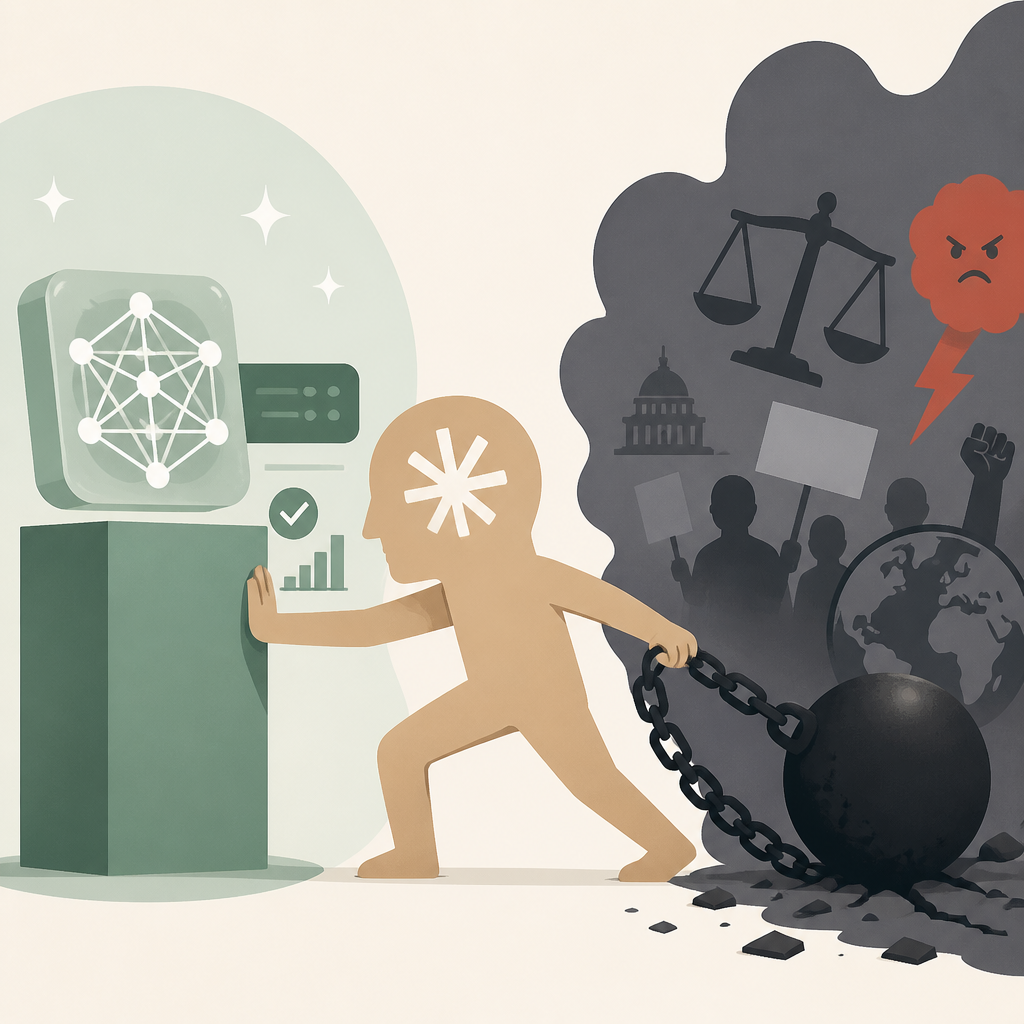
Anthropic has one of the strongest product records in frontier AI, yet I think its public framing has become a liability. Claude 3.5 Sonnet was a genuine step forward for coding workflows, and the company’s research and product teams deserve credit for that. But when a company repeatedly wraps technical competition in heavy political language, it stops sounding like a builder and starts sounding like a propagandist.
Anthropic’s product quality is not the problem
Get the latest AI news in your inbox
Weekly picks of model releases, tools, and deep dives — no spam, unsubscribe anytime.
No spam. Unsubscribe at any time.
Claude 3.5 Sonnet earned its reputation the hard way: through usefulness. In coding tasks, agentic workflows, and long-context reasoning, it became the default choice for many developers who wanted fewer failures and less babysitting. That is not branding magic. It is a real product advantage, and it explains why Anthropic stayed central in the AI conversation even as rivals shipped aggressively.
The same pattern shows up in enterprise adoption. Teams do not keep paying for a model because of a mission statement; they keep paying because the model saves time and reduces friction. Anthropic’s models have done that well enough to become a reference point in coding and assistant benchmarks, which is exactly why the company had room to shape the narrative around its work.
The messaging has turned technical competition into culture-war fuel
The problem is that Anthropic has not just talked about safety. It has often framed itself with language that feels like moral superiority, geopolitical virtue signaling, and civilizational urgency all at once. That may play well with some audiences in the short term, but it collapses a product debate into identity politics. Once that happens, every criticism of the company sounds like an attack on its values rather than a normal dispute about model quality, pricing, or roadmap.
This is where the backlash comes from. When a company uses loaded political terms to describe ordinary competitive behavior, it invites people to treat the company as a symbol instead of a vendor. Then every missed benchmark, every product gap, and every pricing complaint gets amplified. The internet does not forget that kind of overreach, and it rarely rewards it.
Overclaiming safety creates a credibility gap
Anthropic’s strongest argument is that AI safety matters and deserves serious attention. That is true. Frontier models can create real risks, and a company with major influence over model behavior should invest in alignment, interpretability, and responsible deployment. On that point, Anthropic is directionally right and often ahead of the field.
But there is a difference between being safety-conscious and turning safety into a brand shield. The moment a company uses “safety” as a blanket justification for its strategy, it opens itself to a simple question: safety for whom, measured how, and enforced at what cost? If the answer is vague, the claim stops being a principle and starts being marketing. That is the gap critics are reacting to, and they are right to notice it.
Public trust in AI companies is now a product variable
In the current market, trust is not separate from product. Developers choose models based on latency, quality, and cost, but they also watch whether a vendor sounds stable, honest, and focused. A company that appears to be signaling its moral purity instead of explaining tradeoffs risks losing the very audience it wants to persuade.
OpenAI learned this lesson in a different way, and Anthropic is learning it now. The more a company talks like a movement, the more it gets judged like one. That raises the stakes for every launch and every public statement. If the model is excellent, the company should let the model carry the argument. If it does not, no amount of high-minded framing will save it.
The counter-argument
Anthropic’s defenders will say the company is simply being honest about the stakes. AI is not a normal software category, and companies building frontier systems should speak plainly about risks, governance, and strategic competition. They will also argue that strong values attract talent, reassure enterprise buyers, and differentiate Anthropic from rivals that appear more reckless.
That case is not foolish. In a field where hype is constant and guardrails are weak, a safety-first posture can be a real advantage. It can shape hiring, influence regulators, and improve internal discipline. If Anthropic had stayed at that level, I would treat the messaging as a strategic asset.
But the company has gone past discipline and into self-mythology. The limit is simple: safety language works when it clarifies tradeoffs, not when it substitutes for them. Once the rhetoric becomes broader than the evidence, it stops helping the product and starts attracting skepticism. Anthropic’s models remain excellent, but its public posture now creates unnecessary enemies and distracts from what actually matters: building better systems.
What to do with this
If you are a founder or PM, copy Anthropic’s product rigor, not its rhetoric. Ship models that are measurably better at real tasks, explain your tradeoffs in plain language, and avoid turning technical competition into moral theater. If you are an engineer, remember that users reward performance first and slogans last. The companies that win this market will be the ones that earn trust through usefulness, not through political performance.
// Related Articles
- [IND]
Google’s Q2 2026 results prove AI spend is now the story
- [IND]
AI regulation in India is now a business risk
- [IND]
Europe should standardise the AI Act through harmonised technical rul…
- [IND]
AMD and Anthropic’s 2GW deal reshapes AI supply
- [IND]
OpenAI’s comeback proves coding now drives the AI race
- [IND]
System design interviews get easier with 5 core ideas