Anthropic’s offline move turns policy into code
I break down how Anthropic’s model takedown shows policy becoming an operational switch, with a copy-ready rollout template.

I break down how Anthropic’s model takedown shows policy becoming an operational switch.
I’ve been building with AI models long enough to know the annoying part isn’t usually the model quality. It’s the operational junk around it. One day your app is fine, the next day a policy changes, a vendor flips a switch, and your whole workflow is suddenly a compliance exercise. That’s what makes Anthropic’s move here feel so uncomfortable. Not the models going offline by itself. We’ve all seen services get paused, rate-limited, or quietly retired. The part that gets under my skin is the reason: a government directive that turns access into a nationality check. If you’re shipping tools on top of model APIs, this is the kind of event that reminds you your product is not just code. It’s code plus permissions, plus geography, plus legal risk. And if you didn’t build for that from day one, you’re already behind.
What triggered this for me was AP News’ report on Anthropic taking its latest models, Fable 5 and Mythos 5, offline after a directive from the Trump administration. I’m using the AP’s reporting as the anchor here because it’s a straight news account, not a vendor blog trying to spin the story. Source: AP News. Anthropic itself is the company in the middle, and the broader context includes the U.S. government’s policy posture and the practical reality of model distribution. For background on Anthropic as a company, I’m also linking the official site at anthropic.com.
Policy is now part of your deployment pipeline, whether you like it or not
Get the latest AI news in your inbox
Weekly picks of model releases, tools, and deep dives — no spam, unsubscribe anytime.
No spam. Unsubscribe at any time.
Anthropic says it has taken its latest artificial intelligence models offline to comply with a directive from the Trump administration to prevent their use by foreign nationals.
What this actually means is simple and annoying: access control is no longer just an auth problem. It’s a policy problem that can reach all the way down into model availability. If a model can be taken offline because of who may use it, then your deployment story has to include jurisdiction, identity, and export-control style constraints. That’s not some abstract legal thing. It changes how you provision keys, where you host, who gets access, and what happens when a policy changes overnight.
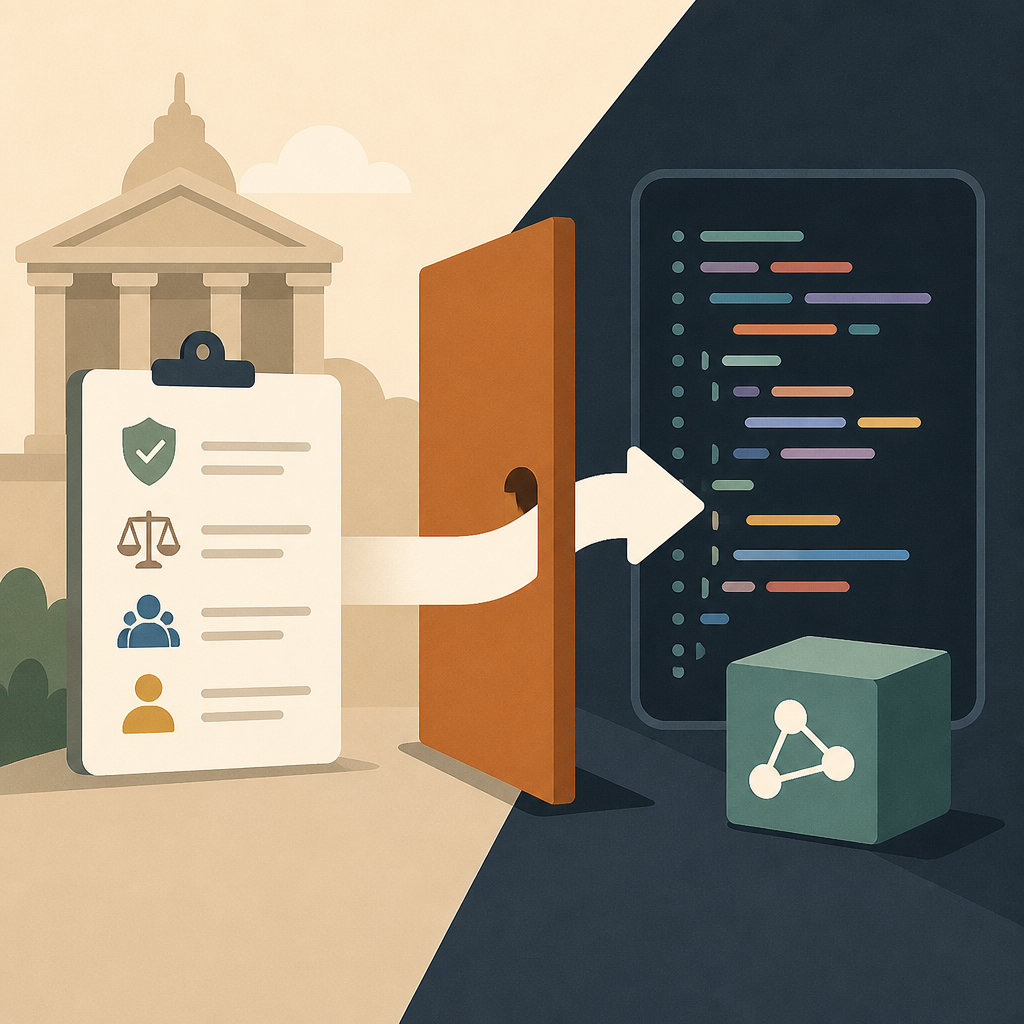
I’ve run into versions of this in smaller ways. A client wanted region-specific access for a SaaS tool, and we thought we were being clever by just checking IP ranges. That lasted until VPNs, remote workers, and partner accounts showed up. The moment you need real enforcement, you need real policy plumbing. Otherwise you’re just pretending.
How to apply it: treat policy as an input to system design, not a memo for legal to file away. Map every model, endpoint, and admin action to a control plane that can answer three questions: who can use this, from where, and under what policy version? If you can’t answer those quickly, you don’t have a deployment pipeline. You have a hope.
Model access should be a switch, not a prayer
Anthropic’s reported move is a reminder that “available” is a state you need to be able to change instantly. If a model becomes noncompliant, unsafe, or politically restricted, you need a kill switch that works without a heroic incident response meeting.
That sounds obvious until you’ve actually built with model dependencies. Lots of teams wire a model directly into production paths and call it architecture. Then something changes and they discover they have no fallback, no feature flag, and no degraded mode. I’ve seen teams with beautiful eval dashboards and zero runtime escape hatch. That’s backwards.
- Wrap model calls behind your own service layer.
- Use feature flags for model selection, not hardcoded vendor names.
- Keep a fallback model or workflow for critical paths.
- Log policy version and model version together so you can audit later.
How to apply it: build a model router. It should decide which model to call, which users are allowed, and what to do if the primary model is unavailable. Don’t let app code talk to a single model endpoint directly. That’s how you end up rewriting the world at 2 a.m. because one policy changed.
“Foreign nationals” is not a product requirement, but it becomes one
The ugly part of the AP report is the implication that user identity and nationality can become gating factors for model use. Whether you agree with the policy or not, the engineering impact is the same: your product may need to distinguish between identity, residency, citizenship, and authorization. Those are not interchangeable, and teams love to confuse them until compliance gets involved.
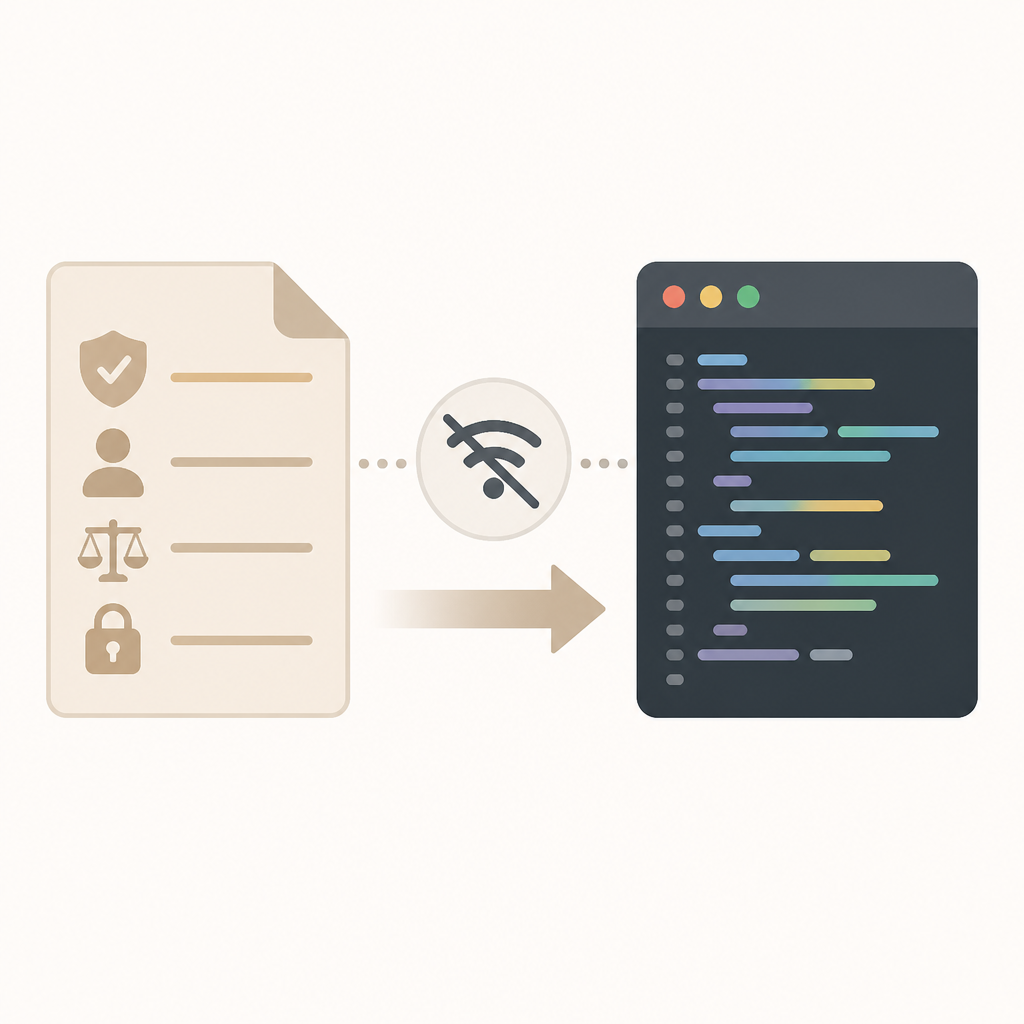
What this actually means is that your signup flow, account verification, billing, and access logs all become part of policy enforcement. You can’t just ask “is this user logged in?” You may need to know “is this user eligible under the current rule set?” That’s a much nastier question, because it drags in KYC, enterprise identity providers, and sometimes manual review.
I ran into this when a team tried to gate a beta by country. They assumed billing country was enough. It wasn’t. People travel, companies register in one place and operate in another, and proxies make location checks fuzzy at best. The fix wasn’t prettier code. It was admitting the policy needed a dedicated enforcement layer with auditable rules.
How to apply it: separate identity proofing from authorization. Keep a policy service that can evaluate rules like residency, role, contract tier, and sanctioned region. Then make the model layer consume only the result. That way, when the rule changes, you update policy logic instead of rewriting every client integration.
Vendor dependency is fine until the vendor becomes the regulator
Here’s the part nobody wants to say out loud: if your core product depends on a third-party AI model, you’re also depending on that vendor’s legal and geopolitical situation. Anthropic’s offline decision shows that the vendor is not just a supplier. It can become the enforcement point for rules you didn’t write.
That’s a big deal for developers because we tend to think in terms of uptime, latency, and token cost. Those matter, sure. But they’re only half the story. The other half is whether the model can legally be used by your users tomorrow. If not, your architecture needs a way to survive that shock.
How to apply it: diversify. Not in the fluffy “multi-model strategy” keynote sense. I mean practical diversification. Have at least one alternate provider, one fallback workflow, and one way to degrade gracefully without pretending the product still works the same. If you only have one model and one path, you do not have resilience. You have a single point of policy failure.
- Abstract prompts and tool calls from provider-specific APIs.
- Keep prompt formats portable where possible.
- Test failover before you need it.
- Document what features disappear in fallback mode.
Compliance is now a runtime concern, not just a legal one
I used to think of compliance as paperwork that sat outside the app. That was already too optimistic. In AI systems, compliance is runtime behavior. It affects routing, logging, access, retention, and even which model version you’re allowed to expose.
The AP report makes that plain. Anthropic didn’t just issue a statement. It reportedly removed access to models. That is runtime enforcement. The compliance decision is now expressed as infrastructure state. If you’re a developer, that should change how you think about your own stack.
What this actually means is you need observability that can answer compliance questions as fast as SRE questions. Which users accessed which model? From which region? Under which policy? Which requests were denied, and why? If your logs can’t answer that, you’re flying blind the moment an auditor, customer, or regulator asks.
How to apply it: add policy context to every request log. Don’t just store timestamps and latency. Store policy version, decision outcome, and the rule that triggered it. Then build a small internal dashboard for access review. It’s boring work, which is exactly why people skip it until it hurts.
Product teams need an exit plan before the door gets locked
The most practical lesson here is not philosophical. It’s operational. If a model can be taken offline for policy reasons, your team needs an exit plan before the lock turns. That means migration paths, alternate vendors, and a user-facing story for degraded capabilities.
I’m not saying every team needs to panic and rebuild around five providers. That would be absurd. But every team using frontier models should know what happens if access disappears. Which features break first? Which can be replaced with a smaller local model? Which should simply be disabled with a clear explanation?
How to apply it: write a one-page model continuity plan. Keep it close to your incident response docs. Include the current provider, fallback options, policy triggers that could force a shutdown, and the exact customer message you’d send if access changes. If that feels paranoid, good. It means you’re paying attention.
The template you can copy
# Model Access and Policy Continuity Plan

## 1) Current model stack
- Primary model provider:
- Primary model(s):
- Fallback model provider:
- Fallback model(s):
- Critical features depending on the model:

## 2) Policy triggers that can disable access
- Vendor shutdown or model retirement
- Regional or nationality-based restrictions
- Contract or billing changes
- Security incident or abuse event
- Regulatory or export-control changes

## 3) Enforcement layer
- Policy service name:
- Who owns it:
- What it evaluates:
  - user identity
  - region/residency
  - role/tenant
  - contract tier
  - policy version
- Where it sits in the request path:

## 4) Runtime controls
- Feature flag for primary model:
- Feature flag for fallback model:
- Kill switch owner:
- Degraded-mode behavior:
- Customer-facing error message:

## 5) Logging and audit fields
- request_id
- user_id
- tenant_id
- model_provider
- model_name
- policy_version
- policy_decision
- denial_reason
- region
- timestamp

## 6) Failover checklist
1. Disable primary model flag.
2. Route traffic to fallback provider.
3. Confirm policy rules still apply.
4. Verify logs and alerts.
5. Notify support and affected customers.

## 7) Continuity notes
- What features are lost in fallback mode:
- What quality tradeoffs users should expect:
- What legal or compliance review is required before re-enabling:
- Review cadence:

## 8) Customer notice template
We’ve temporarily changed which AI models are available in your region while we update our access policy. Core product functions remain available, but some AI features may behave differently. We’ll share updates as soon as access is restored or replaced.
I’d use this as a living document, not a one-time checklist. The point is to make policy changes survivable. If you can’t explain your fallback path in plain English, you’re not ready for the day a model disappears.
Original reporting: AP News. My breakdown is derivative of that report and adds implementation guidance, architecture advice, and a copy-ready continuity template based on the situation described there. For Anthropic’s official company context, see Anthropic; for the broader policy and export-control backdrop, developers should also keep an eye on the White House and the U.S. Department of Commerce.
// Related Articles
- [IND]
Nvidia backs open AI security alliance with 20+ partners
- [IND]
Kimi K3 pushes open-weight AI toward default
- [IND]
Anthropic’s open-model fight reveals its lonely AI stance
- [IND]
Immich Docker Compose setup that avoids common errors
- [IND]
Millions Raised for Zhipu-style Social World Model
- [IND]
Anthropic’s Book Scanning Strategy Could Set a Pattern