Base's sequencer outage proves single-sequencer design is too fragile
Base’s back-to-back outages show that single-sequencer L2s trade too much reliability for convenience.

Base’s back-to-back outages show that single-sequencer L2s trade too much reliability for convenience.
Base should treat this week’s outages as proof that single-sequencer layer-2 design is too fragile for a network that wants to be taken seriously.
According to Base’s own post-mortem, a bug in block-building logic left “stale journal state” behind after an invalid transaction failed. That sounds narrow, but the effect was broad: block production stopped twice, once for 116 minutes and again for 20 minutes. In a system with one sequencer, a single execution-state bug is not a local defect. It becomes a network event.
The first argument: one sequencer turns software bugs into outages
Get the latest AI news in your inbox
Weekly picks of model releases, tools, and deep dives — no spam, unsubscribe anytime.
No spam. Unsubscribe at any time.
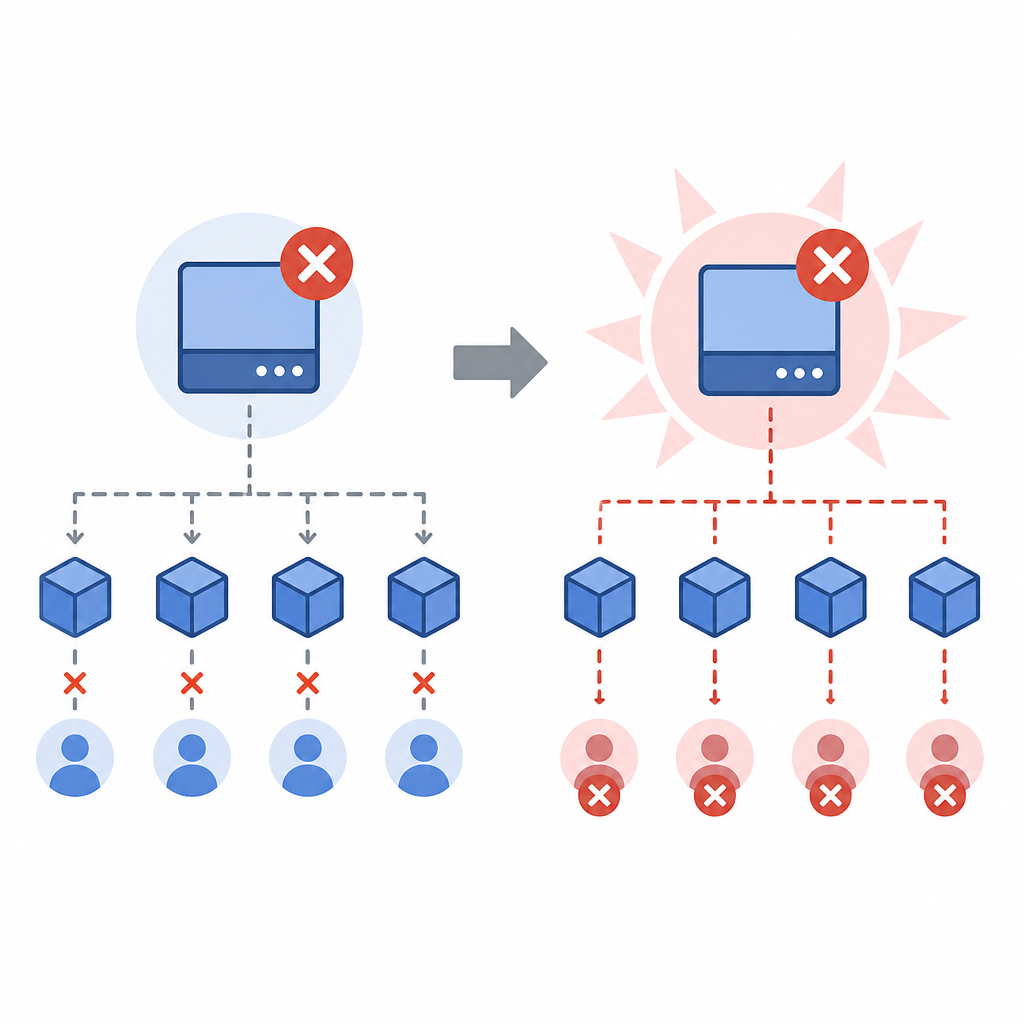
Distributed systems are supposed to absorb failure. Base’s architecture does the opposite. When the sequencer hit a bad execution path, the chain could not simply route around the problem. The report says sequencer and validator nodes could not move past the invalid block until recovery steps finished. That is not resilience. That is a hard dependency dressed up as scale.
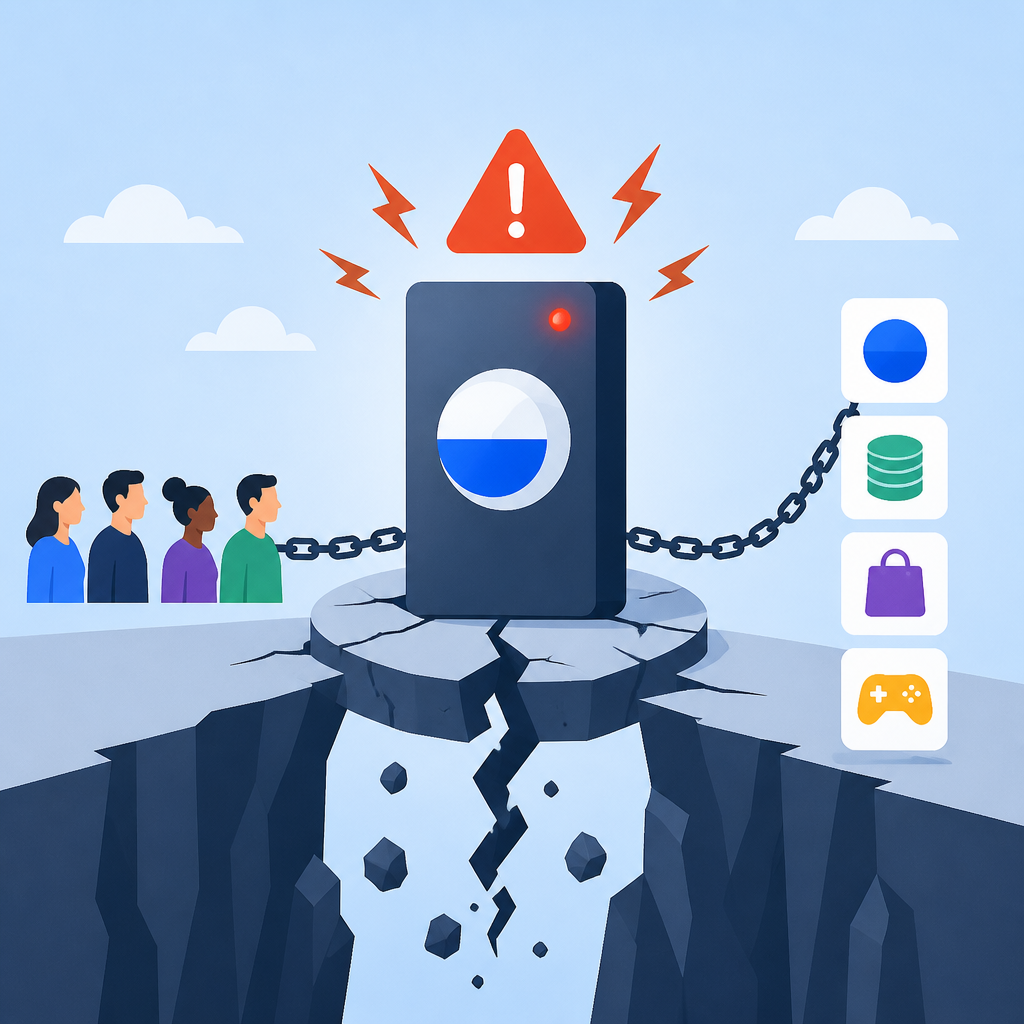
The pattern is not unique to Base. The post-mortem itself notes similar sequencer-related disruptions on Arbitrum, OP Mainnet, and zkSync Era. That matters because it shows this is not a one-off coding mistake. It is a structural weakness in the single-sequencer model. If the critical path for block production lives in one component, then every edge case in that component is a potential chain halt.
The second argument: recovery time matters as much as root cause
Base patched the journal-state bug, but users did not get service back instantly. The team said mitigation took longer than expected because of unrelated infrastructure conditions, and a follow-on race condition after system reset delayed full recovery. That is the real lesson: the outage window is not just about the bug, but about how quickly operators can restore clean state under pressure.
For a network with nearly $11 billion in total value secured, according to L2beat, recovery mechanics are part of the product. A chain that pauses for nearly two hours because state cleanup and reset behavior are brittle is not merely experiencing “downtime.” It is revealing that its operational design depends too heavily on manual intervention and perfect sequencing under stress. That is unacceptable for infrastructure that markets itself as dependable settlement rails.
The counter-argument
Supporters of the current design will say single-sequencer systems are a practical compromise. They are simpler to ship, easier to reason about, and faster to optimize than a fully decentralized sequencing layer. They also argue that outages are visible, fixable, and rare compared with the complexity and latency costs of more distributed designs.
That argument has merit in the abstract. Early layer-2 networks do need room to iterate, and operational simplicity can improve throughput and developer experience. A single sequencer can make block ordering efficient and keep the system lean while the protocol matures.
But the Base incident shows where that logic stops. Simplicity is only a virtue when failure is contained. Here, a single bug halted block production twice, and recovery was slowed by reset behavior and a race condition. That is not a tolerable tradeoff for a network already handling major value and user activity. The right response is not to excuse centralization as temporary; it is to design for graceful failure now, or accept that the architecture is too brittle for production scale.
What to do with this
Engineers building L2 infrastructure should prioritize fault isolation, deterministic recovery, and aggressive fuzz testing on execution-state transitions. PMs should treat mean time to recovery as a core product metric, not an ops footnote. Founders should stop presenting a single sequencer as a harmless implementation detail and start treating it as a central risk that needs explicit mitigation, redundancy, and public accountability.
// Related Articles
- [IND]
Anthropic’s data center push now has big capital backing
- [IND]
DailyArxiv turns arXiv keywords into a daily paper feed
- [IND]
Claude vs ChatGPT (2026): Is Claude Better?
- [IND]
CBDC Governance: Standards and Stakeholder Roles
- [IND]
Invisible AI watermarks are the right move for Claude
- [IND]
pgvector is enough for small datasets, not your default