Boot.dev’s Go course turns syntax into services
17 lessons in Boot.dev’s Go course teach structs, interfaces, HTTP, and concurrency through hands-on code.

Boot.dev’s Go course teaches the language through hands-on lessons on structs, HTTP, and concurrency.
If you want to learn Go by building real code instead of skimming syntax, this course gives you 17 lessons, 20 hours of content, and a path from basics to concurrency.
| Item | Focus | Format | Notable detail |
|---|---|---|---|
| Go fundamentals | Syntax, variables, functions | Interactive lessons | Starts from the ground up |
| Data modeling | Structs, interfaces, pointers | Hands-on practice | Teaches idiomatic patterns |
| Core engineering | Errors, packages, modules | Lesson sequence | Covers how Go projects are organized |
| Concurrency | Channels, mutexes | Practice + quizzes | Built around Go’s concurrency model |
1. A full beginner path
Get the latest AI news in your inbox
Weekly picks of model releases, tools, and deep dives — no spam, unsubscribe anytime.
No spam. Unsubscribe at any time.
Boot.dev packages the course as a start-to-finish Go track, so you are not stitching together random tutorials. The page lists 145 lessons across 20 hours of content, which is enough room to move from the first variable declaration to more advanced language features without rushing.

The main advantage is pacing. Each chapter builds on the last, and the course leans on practice, challenges, and quizzes instead of passive watching. That makes it a better fit for learners who need repetition before a concept sticks.
- 17 chapters cover the language from basics to advanced topics
- Interactive format is designed to keep you coding as you go
- Certificate of completion is included
2. Syntax that leads into real work
The opening chapters focus on the essentials: variables, constants, formatting, conditionals, and functions. That sounds simple, but it matters because Go’s style is direct and explicit, and the course uses that simplicity to get you writing usable code fast.
By the time you reach structs, you are already thinking in terms of data shape and behavior, not just statements on a page. That is a good setup for backend work, where you need to model requests, responses, and application state clearly.
- Variables and constants
- Formatting with
fmtandunicode - Conditionals and loops for control flow
- Functions, slices, and maps for everyday programming
3. Structs, interfaces, and pointers in context
Go’s type system gets most useful once you understand structs and interfaces together, and this course treats them as core tools rather than side topics. It also includes pointers, which helps explain how Go passes and mutates data without turning the lesson into theory for its own sake.
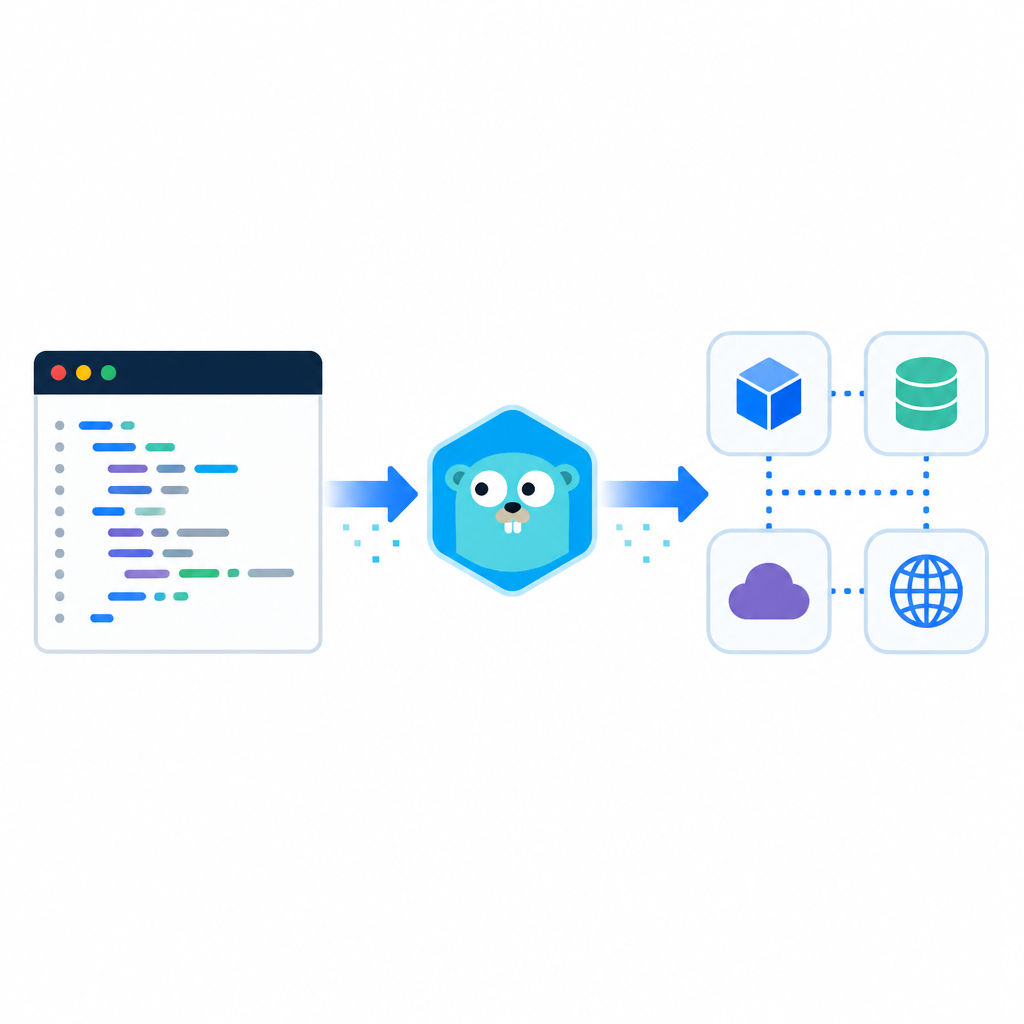
That mix is valuable because many Go beginners can write syntax but still struggle to choose the right abstraction. The course’s chapters on structs, interfaces, and pointers are aimed at closing that gap with examples you can reuse in real services.
- Structs for modeling domain data
- Interfaces for behavior and decoupling
- Pointers and their common pitfalls
- Enums chapter for Go-style workarounds
4. Errors, packages, and modules
Go’s error handling is one of the language’s defining traits, and this course gives it a dedicated chapter. That matters because error handling in Go is not an afterthought; it shapes how you design functions, return values, and control flow.
The course also covers packages and modules, which is where many tutorials stop short. If you want to build something beyond a single file, you need to know how Go projects are organized locally and how code is split into reusable pieces.
Chapter themes included in this section:
- Errors
- Packages and Modules
- Functions that return explicit failure states
- Project structure for multi-file Go code
5. Concurrency with channels and mutexes
This is the part many people come to Go for, and the course gives it two full chapters. Channels introduce concurrent communication, while mutexes show how to protect shared state when multiple goroutines are involved.
That pairing is useful because it keeps concurrency from feeling magical. You learn the elegant parts of Go’s concurrent model, then you see where synchronization matters and why data races happen.
- Channels for passing data between goroutines
- Mutexes for shared-state protection
- Concurrency lessons tied to practical patterns
- Useful for backend services and networked apps
6. What to pick or how to decide
Choose this course if you are new to Go and want one guided path that starts simple and ends with concurrency. It is also a strong pick if you learn best by coding, because the course emphasizes exercises, quizzes, and repeated practice over long explanations.
If you already know another language and want to understand Go’s idioms, this course is especially helpful for structs, interfaces, errors, and modules. If you only want a quick syntax tour, it may be more than you need, but if you want to build real backend skills, the depth is the point.
// Related Articles
- [IND]
Wall Street Should Put Real Assets On Blockchains, Not Just Pilot Them
- [IND]
WorkBuddy Skills: 5 picks that fit real office work
- [IND]
GLM-5.3’s coding gains came from post-training
- [IND]
Anthropic’s data center push now has big capital backing
- [IND]
DailyArxiv turns arXiv keywords into a daily paper feed
- [IND]
Claude vs ChatGPT (2026): Is Claude Better?