Claude Code turns agent setup into terminal work
I broke down Claude Code vs OpenHands into a practical agent choice, plus a copy-ready decision template for teams.

I turned the Claude Code vs OpenHands choice into a copy-ready team decision template.
I've been using agentic coding tools long enough to know when something feels off. The demos always look slick. The repo gets cloned, the agent writes a few files, maybe it even runs tests. Then you try to use it on a real codebase and the whole thing gets annoying in the exact boring ways that matter: setup friction, weird container issues, model drift, and that lovely moment where the tool is technically open but still somehow not under your control.
That is why the Claude Code vs OpenHands comparison caught my attention. I wasn't looking for another “which one is better” take. I wanted the actual tradeoff: do I want the cleaner terminal-native agent that gets out of my way, or do I want the open-source sandbox with more control and more moving parts? The source article from lowcode.agency frames that tension well, and it is the right starting point if you're choosing a tool for a team instead of a demo.
What I ended up with is pretty simple: Claude Code is the easier tool to ship into a dev workflow, while OpenHands is the more inspectable, forkable, sandboxed system. That sounds tidy until you actually have to put it in front of engineers who care about CI, permissions, model choice, and whether they can debug the thing at 11 p.m. without begging a platform owner.
What this comparison is really about
Get the latest AI news in your inbox
Weekly picks of model releases, tools, and deep dives — no spam, unsubscribe anytime.
No spam. Unsubscribe at any time.
Claude Code is production-ready: Officially supported by Anthropic, it runs directly in your terminal with no Docker requirement. Docker is the central difference: OpenHands requires Docker; Claude Code does not.
What this actually means is that the decision is not really “open source versus proprietary.” It is “how much operational weight are you willing to carry to get control?” OpenHands gives you source access, sandboxing, and model flexibility. Claude Code gives you a simpler install, a tighter model integration, and less plumbing.
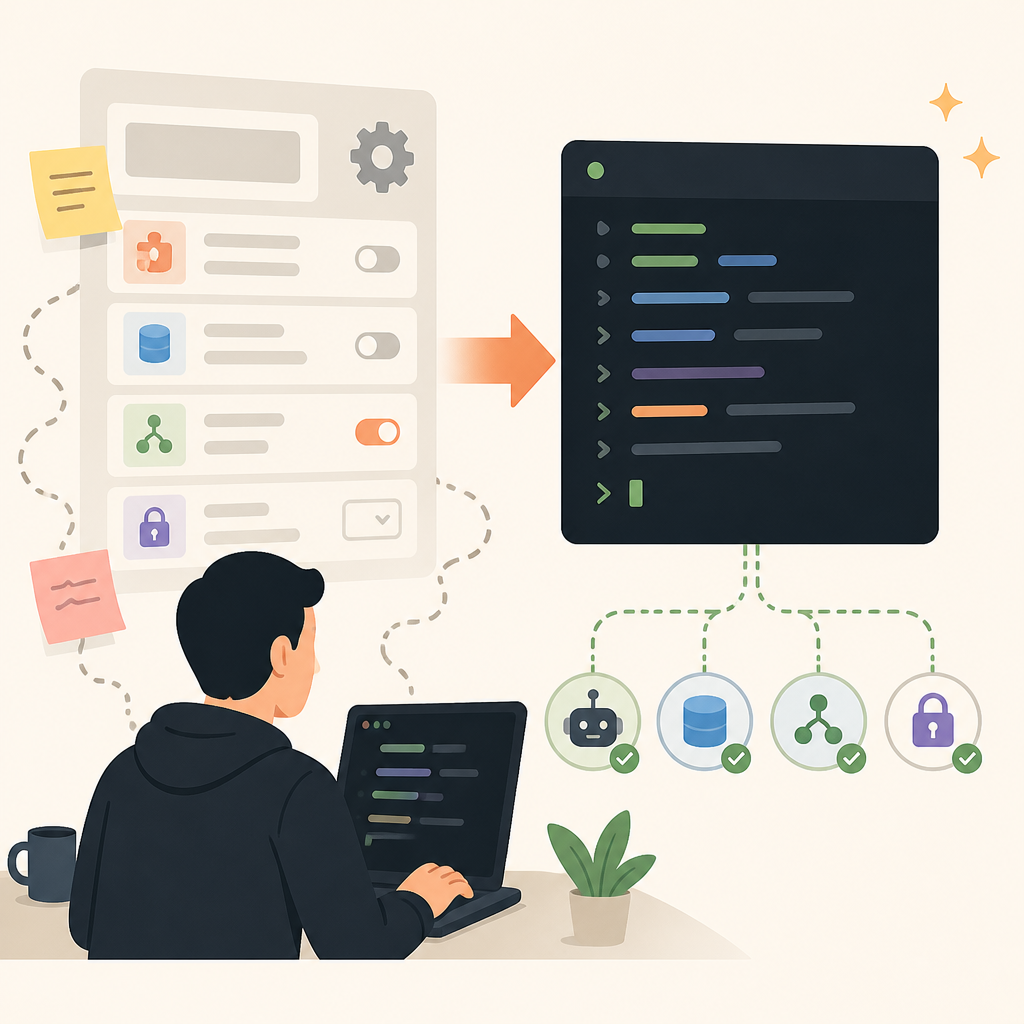
I like this framing because it cuts through the usual fanboy nonsense. Teams do not fail because a tool is philosophically imperfect. They fail because a tool adds one more thing to maintain. If your agent needs a container runtime, image pulls, volume mounts, and custom glue before it can touch code, that cost shows up fast.
The source article also makes a useful point that I would not bury: Claude Code is not a code-completion toy. It is an autonomous CLI agent. OpenHands is not a glorified wrapper either. It is a sandboxed autonomous engineering environment. Once you see both tools that way, the comparison gets a lot sharper.
How to apply it: before you compare features, write down the environment where the agent will actually run. Local terminal? CI job? Shared dev box? Locked-down enterprise laptop? The answer changes the winner more than the marketing copy does.
OpenHands wins when control matters more than speed
OpenHands is fully open-source: It runs in Docker, supports 10+ model providers, and gives teams complete audit and fork rights. OpenHands delivers genuine open-source autonomy.
What this actually means is that OpenHands is built for teams that do not want to hand the whole agent stack to one vendor. You can inspect it, modify it, fork it, and decide what your own roadmap looks like. That matters if you're working in a regulated environment, a security-sensitive codebase, or just a team with a healthy distrust of black boxes.
The sandbox angle is the other big deal. OpenHands runs file edits, shell commands, and browser actions inside Docker. That contains bad behavior. If the agent decides to do something dumb, the blast radius is smaller than a live-environment tool that is poking directly at your working tree and local machine.
I ran into this exact concern when evaluating agents for internal tooling work. The first question from security was not “how smart is it?” It was “what can it touch, and can we prove it?” OpenHands has a much easier answer there. The Docker boundary is not glamorous, but it is legible.
- OpenHands gives you source access and fork rights.
- OpenHands can use multiple model providers instead of locking you to one.
- OpenHands sandboxing is useful when you want a smaller failure domain.
There is a catch, obviously. More control usually means more setup. The article is blunt about that, and it should be. Docker is not free. It changes how you package the tool, how you run it in CI, and how your team thinks about permissions.
How to apply it: choose OpenHands when your team cares more about auditability, sandboxing, and model choice than about getting started in five minutes. If you are choosing for a platform team, security review, or research environment, that trade often makes sense.
Claude Code wins when you want the thing to just work
Claude Code is production-ready... it runs directly in your terminal with no Docker requirement. Zero-setup deployment: Claude Code installs in under two minutes with no Docker requirement.
What this actually means is that Claude Code removes a pile of operational excuses. Install it, authenticate, and start using it in the same terminal you already live in. That sounds boring. It is boring. And boring is good when you are trying to get a team to adopt a tool instead of tolerate it.
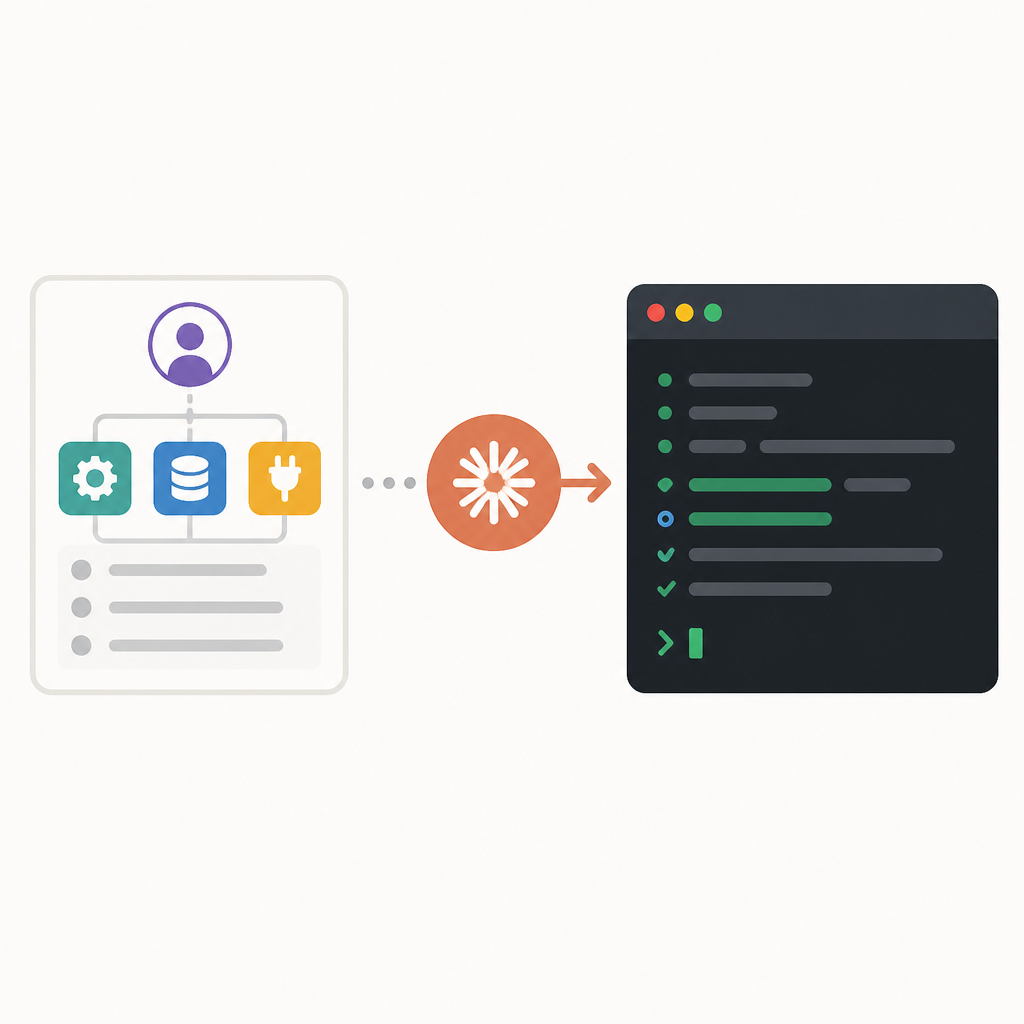
The article points out a few structural advantages that matter in real work: native MCP support, subagent orchestration, and tighter integration with Claude Sonnet 4 and Opus 4. I care about that because the agent is only as useful as the context and tools it can reach. If I have to wire up every integration myself, I am not using an agent anymore. I am building a side project.
I also trust tools more when they are opinionated about the model they are built for. OpenHands is flexible, yes, but flexibility can become variance. Claude Code being tied to Anthropic's stack means fewer weird edge cases when the model changes behavior. That is not a small thing when you are asking it to touch multiple files, run tests, and keep track of a larger refactor.
- Claude Code removes Docker from the install path.
- Claude Code has native MCP support, which matters if you use external tools a lot.
- Claude Code is better when you want predictable setup across a team.
How to apply it: pick Claude Code if your main goal is adoption. If you want engineers to actually use the agent every day, lower the setup cost first. Fancy architecture does not matter if the team keeps reverting to manual work because the tool is annoying.
Model flexibility is nice until it becomes your problem
OpenHands is model-agnostic and supports Claude, GPT-4o, Gemini, Mistral, and local models via Ollama. Claude Code model support: Anthropic-native only.
What this actually means is that OpenHands gives you optionality, while Claude Code gives you coherence. Optionality is great when you are experimenting, comparing providers, or trying to control cost. But each extra model path creates another place where quality can drift.
The source article says something important here: Claude Code's native integration with Claude Sonnet 4 produces better multi-file reasoning than OpenHands routing to the same model. That is exactly the kind of detail teams gloss over and then complain about later. Same model does not always mean same result. The client layer matters.
I have seen this pattern enough times to be suspicious of “we support everything” claims. Support is not the same as quality. If one model performs well on refactors and another falls apart on dependency updates, your team will spend time learning the quirks instead of shipping code.
How to apply it: use OpenHands if you need provider flexibility for policy or cost reasons. Use Claude Code if you want to reduce variance and keep the agent behavior closer to one tested path. If your team is already standardizing on Claude models, the argument for OpenHands gets weaker fast.
Browser access sounds minor until you need it
Browser interaction: OpenHands can navigate websites, fill forms, read documentation, and interact with web-based tools: Claude Code cannot do this by default.
What this actually means is that OpenHands can operate in a broader task environment. Sometimes the work is not just “edit code.” Sometimes it is “log into the admin console, read the docs, inspect the dashboard, and then patch the app.” OpenHands can cover that shape of task more naturally.
This is where I think some teams underestimate OpenHands. If your workflows live across Jira, docs, browser-based admin panels, and code, the browser is not a gimmick. It is part of the job. A terminal-only agent can still be useful, but it will need more custom glue to match the same scope.
That said, browser access also expands the surface area for failure. More interaction modes mean more places for the agent to get confused. I would rather have browser access in a sandbox than in a live environment with loose permissions. OpenHands is making the safer bet here.
How to apply it: if your agent needs to work across web apps, internal tools, or documentation-heavy workflows, OpenHands is the more natural fit. If your tasks stay inside the repo and terminal, Claude Code’s narrower surface is usually a better trade.
The real decision is operational, not ideological
The decision maps to priorities: open-source philosophy and sandbox safety point to OpenHands; operational simplicity and reliability point to Claude Code.
What this actually means is that the best tool depends on where your pain lives. If your pain is vendor lock-in, auditability, and environment isolation, OpenHands is attractive. If your pain is adoption, setup time, and too much agent plumbing, Claude Code is the cleaner answer.
I think this is the part teams get backwards. They start with ideology and end with friction. A better question is: which failure mode do we tolerate less? For some teams, that is “we cannot inspect the system.” For others, it is “nobody wants to maintain the system.”
The article's comparison table makes that tradeoff obvious once you stop reading it like a feature checklist. Docker is not just a setup detail. It is the architecture. Native MCP is not just a checkbox. It changes how the agent plugs into your stack. Model-agnostic support is not just flexibility. It is governance overhead.
- OpenHands is better for teams that need sandboxing and source control over the agent itself.
- Claude Code is better for teams that need a tool developers will actually adopt.
- The right choice depends on whether your bottleneck is trust or throughput.
How to apply it: write a one-page internal decision memo before you pilot either tool. Include setup burden, model policy, sandbox requirements, browser needs, and CI integration. If you cannot explain the choice in those terms, you are not ready to standardize on anything.
The template you can copy
# Claude Code vs OpenHands decision template

## 1) Our default choice
We choose: [Claude Code / OpenHands]

## 2) Why we chose it
- Primary reason:
- Secondary reason:
- What we are optimizing for:

## 3) Environment fit
- Runs in: [terminal / Docker / CI / local dev machines]
- Needs browser access: [yes / no]
- Needs external tools via MCP or similar: [yes / no]
- Needs sandbox isolation: [yes / no]

## 4) Model policy
- Allowed model providers:
- Preferred model:
- Fallback model:
- Cost constraints:

## 5) Security and governance
- Can the agent touch production systems: [yes / no]
- Can the agent run shell commands: [yes / no]
- Can the agent access the network: [yes / no]
- Audit requirements:

## 6) Team adoption
- Time to first successful run:
- Setup steps a new developer must complete:
- What will frustrate the team:
- What support is available:

## 7) Pilot success criteria
We will consider the pilot successful if:
- It completes [type of task] without manual cleanup
- Setup takes less than [time]
- The team uses it on [number] of real tasks
- Security review approves the workflow

## 8) Final decision note
We selected [tool] because it best matches our priorities around [trust / speed / sandboxing / model flexibility / adoption].

## 9) Prompt for a team review meeting
"We are comparing Claude Code and OpenHands for autonomous coding tasks. We care most about [priority 1], [priority 2], and [priority 3]. Based on our environment, the better default is [tool], and the main tradeoff we accept is [tradeoff]."
How to use this: fill it out before you let the team debate based on vibes. If you are choosing Claude Code, this template will usually make the operational simplicity argument obvious. If you are choosing OpenHands, it will force you to justify the extra plumbing with real requirements, not abstract preferences.
And yes, that is the point. The best agent tool is the one that fits your workflow without becoming a second job. Everything else is just packaging.
Source attribution: This breakdown is based on the original comparison at https://www.lowcode.agency/blog/claude-code-vs-openhands. I kept the framing and practical tradeoffs, but the template and editorial take here are my own.
// Related Articles
- [TOOLS]
AWS Continuum turns AI coding into safer fixes
- [TOOLS]
Open-Generative-AI turns GitHub into a studio
- [TOOLS]
Why benchmark scores don’t predict your bill
- [TOOLS]
MCP Servers for Developers: 8 workflow gains in 2026
- [TOOLS]
Doubao turns a game prompt into a mini arcade
- [TOOLS]
Coding Plan turns Alibaba Cloud into IDE billing