ClinHallu maps where medical MLLMs hallucinate
ClinHallu diagnoses where medical MLLM hallucinations come from across vision, knowledge, and reasoning stages.

ClinHallu diagnoses where medical MLLM hallucinations come from across vision, knowledge, and reasoning stages.
- Research org: Unspecified in arXiv abstract
- Core data: 7,031 validated instances
- Breakthrough: Structured traces split into visual recognition, knowledge recall, and reasoning integration
Medical multimodal large language models are only useful if clinicians and developers can trust how they reach an answer. This paper argues that “hallucination” in medical MLLM reasoning is not one single problem: the failure can happen when the model reads the image, when it pulls in medical knowledge, or when it tries to combine the two into a final answer.
That matters because if you only measure whether the final answer is right or wrong, you miss where the system actually breaks. ClinHallu is built to make those failure points visible, so teams can diagnose, compare, and potentially fix models at the stage where they go off track.
What problem this benchmark is trying to fix
Get the latest AI news in your inbox
Weekly picks of model releases, tools, and deep dives — no spam, unsubscribe anytime.
No spam. Unsubscribe at any time.
Most medical hallucination benchmarks, according to the paper, focus on collecting examples rather than tracing the reasoning path that led to an error. That leaves a gap for anyone trying to debug a medical MLLM: you can see that the model failed, but not whether the root cause was poor visual recognition, weak medical knowledge, or a bad integration step.
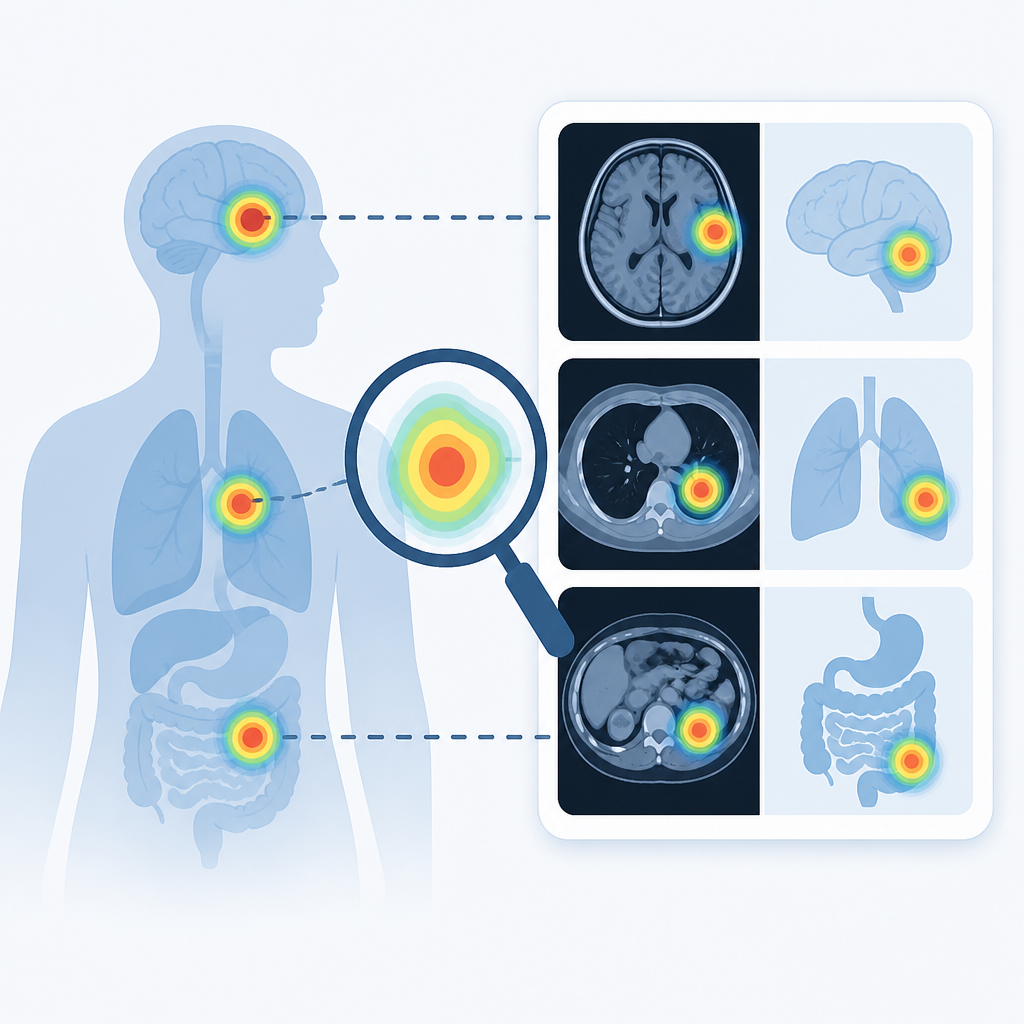
The authors say hallucination sources vary across samples, which means a single “hallucination score” is too blunt for real diagnosis. In practice, that makes it hard to know whether to improve the vision encoder, the knowledge grounding, the prompting strategy, or the fine-tuning recipe.
ClinHallu is meant to fill that gap with a benchmark that supports source-level hallucination diagnosis instead of just end-result grading.
How ClinHallu works in plain English
The benchmark contains 7,031 validated instances. Each instance is augmented with a structured reasoning trace that is broken into three stages: Visual Recognition, Knowledge Recall, and Reasoning Integration. That decomposition is the core idea of the paper.
Instead of treating the model’s answer as a black box, ClinHallu tries to expose the path the model took. If the image was read incorrectly, the trace should point to Visual Recognition. If the model remembered the wrong medical fact, the issue lands in Knowledge Recall. If both inputs were fine but the final synthesis went wrong, the failure shows up in Reasoning Integration.
The paper also uses stage-replacement interventions. In simple terms, that means correcting a specific stage and then checking how much the final answer changes. This is useful because it helps separate correlation from causation: you are not just labeling a failure, you are testing whether fixing one stage actually improves the output.
What the paper actually shows
The abstract does not report benchmark scores, accuracy numbers, or head-to-head comparisons against other systems. So if you are looking for a leaderboard-style result, this source does not provide one in the abstract.
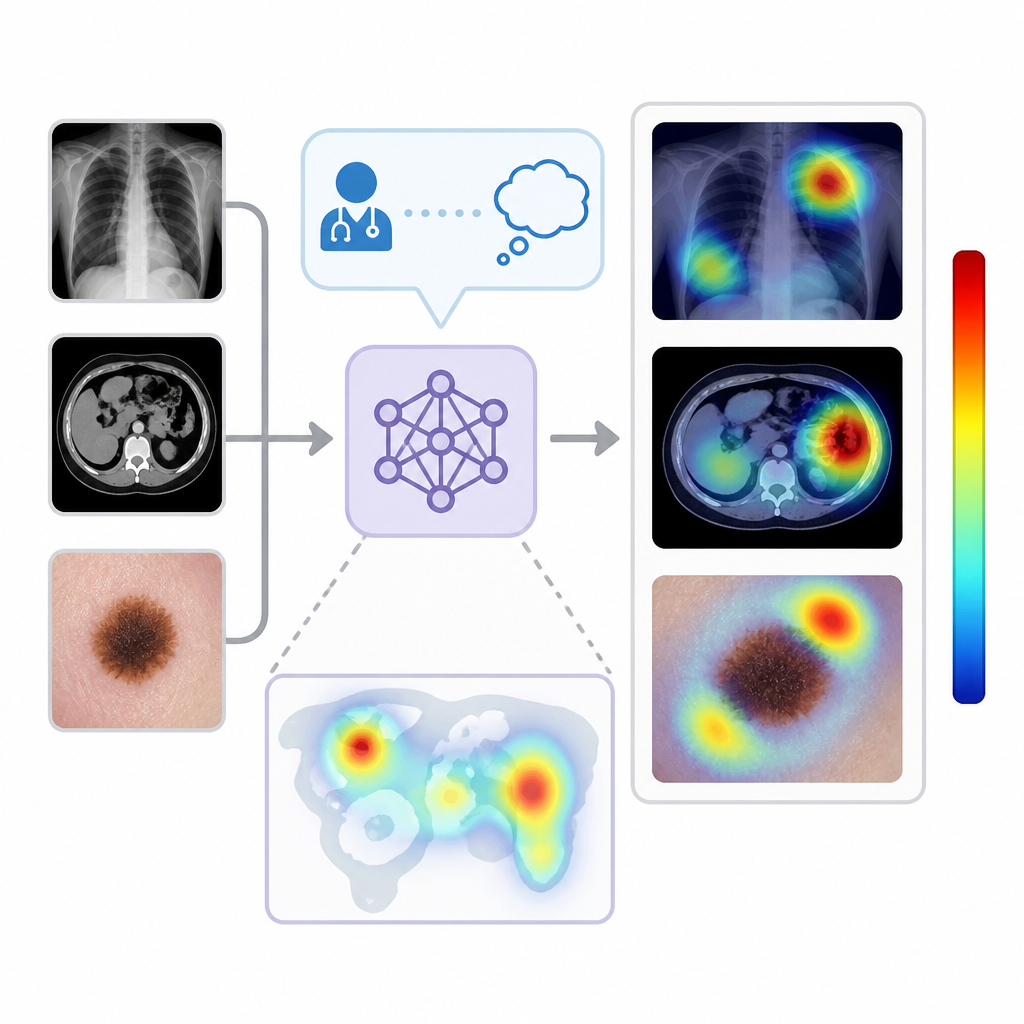
What it does claim is more structural: hallucination sources differ across samples, and a stage-wise diagnosis framework can expose those differences. The benchmark is therefore positioned as a fine-grained testbed for understanding failure modes in medical MLLMs rather than as a single-number performance contest.
The other concrete result is that trace-supervised fine-tuning reduces stage-wise hallucinations. That is important because it suggests the traces are not only diagnostic metadata; they can also be used as training signal to improve behavior. The abstract does not say how much the hallucinations drop, so the magnitude of the gain is not visible here.
- 7,031 validated instances give the benchmark enough structure to study multiple failure modes.
- Three-stage traces make it possible to separate vision, knowledge, and reasoning errors.
- Trace-supervised fine-tuning is reported to reduce stage-wise hallucinations.
Why developers should care
If you are building or evaluating a medical MLLM, ClinHallu is useful because it turns “the model hallucinated” into a more actionable debugging question. Did the model misread the scan, recall the wrong clinical fact, or fail when combining evidence? Those are different engineering problems, and they need different fixes.
That kind of breakdown is especially valuable in medical settings, where a wrong answer can be caused by a subtle error early in the pipeline. A model that looks strong on final-answer accuracy may still be brittle if it repeatedly fails at one stage of reasoning. A benchmark like ClinHallu gives you a way to see that brittleness instead of guessing at it.
It also gives researchers a more realistic target for training. If trace supervision can reduce stage-wise hallucinations, then training data can be designed not just to reward correct answers, but to reward correct reasoning structure. That is a more useful direction for multimodal medical systems than optimizing only for the last token.
What this paper does not prove
The abstract leaves several practical questions open. It does not say which medical imaging tasks or modalities are included, how the traces were validated in detail, or how the benchmark compares numerically with existing alternatives. It also does not show whether the stage-wise interventions generalize across model families or clinical domains.
For practitioners, that means ClinHallu should be read as a diagnostic framework first and a deployment-ready solution second. It looks promising for evaluation and debugging, but the abstract alone does not establish that it solves hallucinations broadly or that it transfers cleanly to every medical MLLM stack.
Still, the paper’s main contribution is clear: it shifts medical hallucination analysis from a flat yes/no judgment to a staged failure analysis. For developers working on trustworthy clinical AI, that is the kind of tooling that makes model behavior easier to inspect, train, and improve.
// Related Articles
- [RSCH]
Test-Time Harnesses Transfer Skills Without Retraining
- [RSCH]
DreamFly improves aerial VLN with memory and planning
- [RSCH]
AVA-Encoder turns films into editable knowledge graphs
- [RSCH]
Sparse Autoencoders Don’t Behave Like Feature Bags
- [RSCH]
ConVAWG generates controlled VAWG dialogues
- [RSCH]
Surgical WAM uses video to train robot control