Crypto AI agents are useful, but only for narrow workflows
Crypto AI agents are worth using for narrow, audited workflows, not broad autonomous trading.

Crypto AI agents are worth using for narrow, audited workflows, not broad autonomous trading.
Crypto AI agents should be used as workflow tools, not as hands-off profit engines.
The strongest examples on Swapzone point to a narrow, practical role: event monitoring, rate intelligence, and swap execution through authenticated APIs. CoinMarketCal connected to Arahi AI watches listings, forks, and protocol updates around the clock, then pushes alerts and triggers actions across tools. That is useful because crypto moves on information, and the value comes from speeding up a human decision process, not replacing it.
Speed matters more than prediction
Get the latest AI news in your inbox
Weekly picks of model releases, tools, and deep dives — no spam, unsubscribe anytime.
No spam. Unsubscribe at any time.
In crypto, the first useful edge is often simply seeing a market-moving event before everyone else. A CoinMarketCal-linked agent that tracks listings and hard forks can surface volatility windows early, which matters more than a grand claim of price prediction. If a token is about to list or a chain upgrade is about to land, the agent’s job is to reduce reaction time.
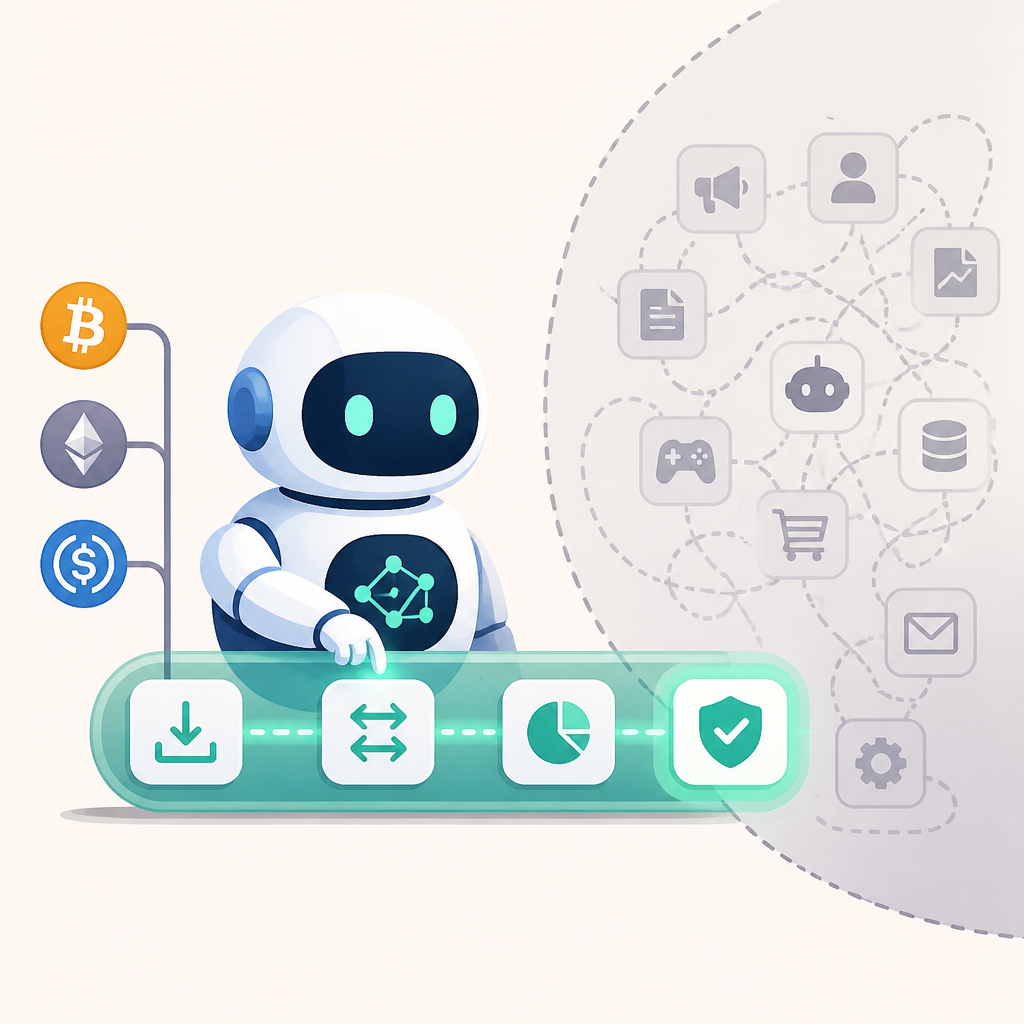
That is why event-driven agents are more credible than “smart trading” claims. Swapzone’s CoinMarketCap example frames the right use case: continuous monitoring of prices, volumes, and risk signals, then automatic reporting or alerts. A system that flags conditions is valuable. A system that pretends to know the future is not.
Automation is valuable only when the rails are safe
The best crypto AI agents are built around authenticated APIs and non-custodial execution. Swapzone highlights ChangeNOW integrated with Relevance AI as a model where swaps happen through verified channels, with no manual registration required and no sensitive credentials stored by hand. That architecture matters more than the model name attached to it.
Security claims also need to be judged by retention behavior, not branding. The listed integrations repeatedly stress that inputs and outputs are discarded after execution and that user activity is not used for training. That is the right direction, because crypto automation is only acceptable when the blast radius is limited. If an agent can trade but cannot retain your wallet data or reuse your workflow history, it is serving you instead of mining you.
The real value is workflow orchestration, not autonomy theater
Crypto teams do not need another black box that “thinks” about markets. They need systems that chain event feeds, alerts, decision rules, and execution into one repeatable process. The CoinMarketCal plus Arahi AI setup is a good example because it synchronizes data across connected tools and triggers multi-step workflows. That is operational leverage, not hype.
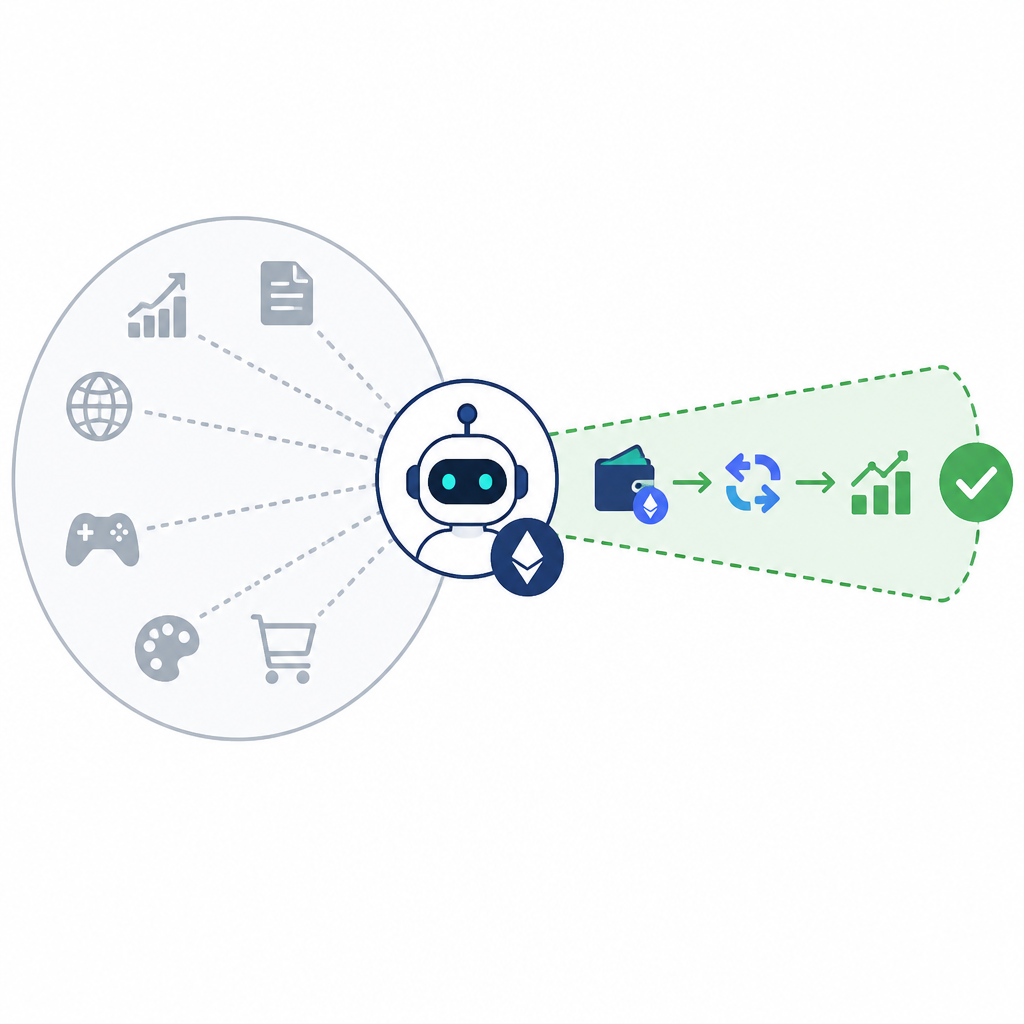
This is where the distinction between bot and agent matters less than the actual plumbing. A static bot follows one trigger. A useful agent combines multiple inputs, routes them to the right channel, and executes only when the conditions match a policy you already trust. The value is in coordination. The more a product reduces copy-paste work between feeds, dashboards, and exchanges, the more real its advantage becomes.
The counter-argument
There is a strong case for broader autonomy. Crypto markets never sleep, and humans do. A well-tuned agent can scan prices, liquidity, sentiment, and events at all hours, then act faster than any trader watching a screen. In a market where timing can decide whether a swap is clean or expensive, full automation looks efficient.
Supporters also argue that AI agents improve over time. Unlike rigid scripts, they can adapt to changing conditions and combine more signals without constant reprogramming. In that view, limiting agents to narrow workflows wastes their real advantage, which is learning and acting across many protocols at once.
That argument fails at the point where execution risk becomes larger than speed. Crypto agents are only as trustworthy as their permissions, data retention rules, and decision boundaries. The moment an agent is allowed to improvise with capital, the cost of a bad inference rises sharply. Narrow workflows win because they preserve the useful part of automation, fast response, while keeping the irreversible part, trade execution, under control. Broad autonomy is not a feature here; it is a liability.
What to do with this
If you are an engineer, build crypto agents as bounded systems: read first, alert second, execute last, with tight API scopes and hard audit logs. If you are a PM, define the workflow around a measurable outcome such as faster event response or lower swap friction, not “AI-powered trading.” If you are a founder, sell reliability and integration depth, because that is what survives contact with volatile markets.
// Related Articles
- [AGENT]
ChatGPT now remembers your Mac work history
- [AGENT]
Grok Bot turns browser chores into cloud work
- [AGENT]
Agent Plugins 1.0.0 turns skills into folders
- [AGENT]
FaithEyes lets you train tool-faithful vision agents
- [AGENT]
Connect Qwen 3.8 Max to CLI Agents
- [AGENT]
Fine-tune a small LLM for legal labeling