Crypto Regulation Becomes Payment Infrastructure in 2026
Stablecoin rules, licensing, tax policy and AML controls are turning crypto payments into a more usable system for merchants and users.

Crypto regulation in 2026 is shaping how stablecoins, wallets and merchants process payments.
Crypto regulation is shifting from policy debate to payment plumbing in 2026, with stablecoin rules, licensing, tax policy and compliance standards now shaping how merchants and users move money. The change affects stablecoins, wallets, exchanges, custody and cross-border transfers, published Jun. 25, 2026.
What changed
Get the latest AI news in your inbox
Weekly picks of model releases, tools, and deep dives — no spam, unsubscribe anytime.
No spam. Unsubscribe at any time.
The core shift is that regulation is no longer a side issue for crypto payments. It now decides which services can operate, how they settle transactions and whether merchants can treat digital assets as a normal payment option.

For users, the practical question is not whether crypto exists, but whether a wallet, payment provider and merchant can all support the same transaction in a region where the service is allowed. For businesses, the issue is even more concrete: they need settlement, reporting, risk controls and accounting clarity, not just a checkout button.
- Stablecoins are being treated as payment instruments, not just trading assets.
- Licensing is becoming the main signal for which providers can scale.
- Tax and AML rules are now part of the product experience.
- Merchant adoption depends on settlement, support and compliance workflows.
Japan, the United Kingdom and Hong Kong are among the markets pushing this shift. Japan is linking stablecoins more closely to regulated institutions and bank-backed structures, while the U.K. is moving toward issuer supervision, reserve requirements and backing rules that affect how payment assets can be used.
Europe is also moving the market through MiCA, which pushes crypto firms toward licensed hubs and clearer operating duties. That matters for exchanges, wallets, stablecoin issuers and payment companies that want to serve users without constant legal uncertainty.
Why it matters
For developers and payment providers, regulation is becoming a feature set. A viable crypto payment stack now has to include licensing, identity checks, transaction monitoring, sanctions screening, reserve management and customer support alongside wallet and settlement rails.
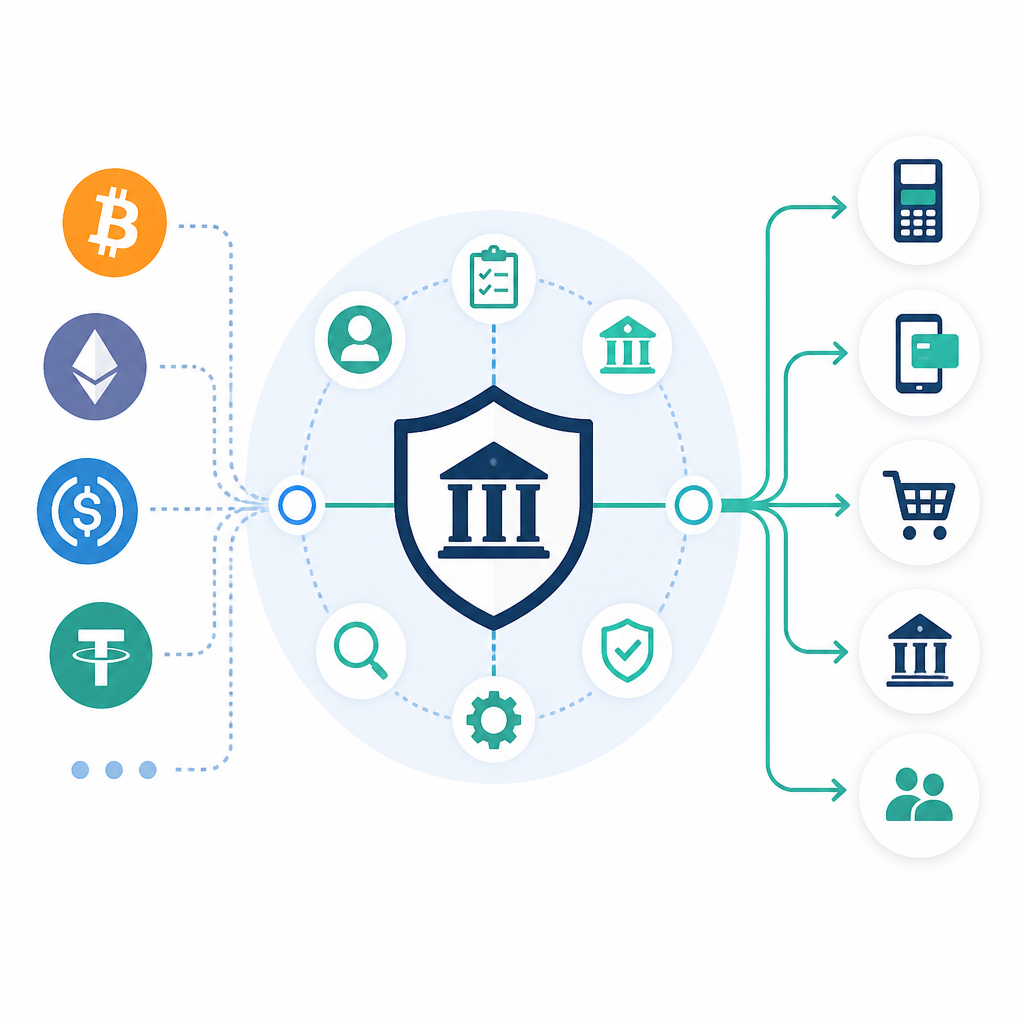
For merchants, that can reduce friction. Instead of evaluating every coin or chain, they can compare providers by license status, supported assets, reporting tools and settlement options. That makes crypto easier to assess for shops, travel, gaming, subscriptions and other digital services where users want to spend quickly.
Tax clarity is also a major factor. If reporting rules are unclear, small payments become harder to justify. If tax handling is predictable, crypto spending looks less like a compliance risk and more like an ordinary payment choice.
AML and consumer protection are now part of the buying experience too. Users need to know whether a provider is licensed, how disputes are handled and whether funds are protected if a transaction fails. Those details will decide which payment services earn trust at scale.
The big takeaway is simple: crypto payments are moving into a regulated environment where trust, settlement and compliance matter as much as speed. The open question is which providers can turn that pressure into usable payment infrastructure before merchants move on to simpler options.
// Related Articles
- [IND]
Anthropic is building custom AI chips for Claude
- [IND]
Moka AI Is a Stronger HRMS Choice for Growing Teams
- [IND]
August 2026 Market Review: AI Stocks Flipped Fast
- [IND]
Pixel 11 launch live: every Google reveal
- [IND]
Anthropic’s invisible watermark is the right move
- [IND]
Docker’s latest releases now center security and Compose