Anthropic is building custom AI chips for Claude
Anthropic is building custom inference chips for Claude, with Samsung reported as a manufacturing partner and Nvidia costs in its crosshairs.

Anthropic is building custom inference chips for Claude to cut dependence on Nvidia GPUs.
Anthropic is moving from software to silicon, and the timing says a lot about where AI economics are headed. The company is reportedly building an in-house chip team for inference workloads, while Samsung has been mentioned as a possible manufacturing partner.
This is not a side project. Anthropic, the company behind Claude, is joining a growing club of AI firms that want more control over the hardware under their models. The goal is simple: make inference faster, cheaper, and easier to scale than renting piles of expensive Nvidia GPUs.
| Fact | Number | Why it matters |
|---|---|---|
| AI chip design market share held by Broadcom and Marvell | ~95% | Shows how concentrated the co-design business is |
| Broadcom backlog | $73 billion | Signals heavy demand for custom silicon work |
| Broadcom expected annual AI chip revenue by end of 2027 | Over $100 billion | Shows how large this market could get |
| Marvell expected co-design revenue in 2026 | Upwards of $11 billion | Shows how much money lives in inference chip contracts |
Why Anthropic wants its own silicon
Get the latest AI news in your inbox
Weekly picks of model releases, tools, and deep dives — no spam, unsubscribe anytime.
No spam. Unsubscribe at any time.
The immediate target is inference, the part of AI that answers prompts, powers agents, and keeps chatbots alive in production. Training still leans heavily on Nvidia hardware, but inference is different. It can be optimized around specific model behavior, specific memory patterns, and specific latency targets.

That matters because Anthropic’s customers are not sending a few prompts a day anymore. They are running Claude in products, internal tools, and agent workflows that can burn through tokens at a pace that makes general-purpose GPUs look expensive. If you are serving that kind of load, every watt and every millisecond starts to matter.
Anthropic told Business Insider that the chips are meant to help Claude run faster and more efficiently at the scale customers need. That is the real story here: the company is trying to turn usage growth into better unit economics instead of letting hardware costs eat the margin.
- Inference workloads can be tuned for specific model shapes and traffic patterns.
- Custom silicon can lower total cost of ownership by up to 65%, according to the reporting cited in the source article.
- Anthropic’s growth in consumer use and government contracts raises the pressure to control compute spend.
- Agentic AI systems consume more tokens than a single-shot chatbot prompt.
The chip race is already crowded
Anthropic is late to a race that is already full of very serious players. Google has spent more than a decade on its Tensor Processing Unit line. Amazon built Trainium and Inferentia for its own cloud business. Meta has MTIA. Microsoft has Maia. Even OpenAI has been exploring custom inference hardware.
The reason is easy to understand: if you are spending billions on AI, paying retail prices for GPUs forever starts to look irrational. The companies with the biggest workloads want chips designed around their own models, their own serving stacks, and their own data centers.
“The chips will allow Claude to run faster and more efficiently at the scale its customers need,” Anthropic told Business Insider.
That quote matters because it points to the real business case. This is not about bragging rights or owning every layer of the stack. It is about serving more requests with less electricity and less hardware waste.
Samsung, Broadcom, and Marvell each bring something different
Anthropic has not named its design partner, but the manufacturing side is where the industry gets interesting. The source article says Samsung Foundry has been reported as the production partner. That would make sense if Anthropic wants a giant foundry with advanced process capacity and a willingness to support custom AI silicon.
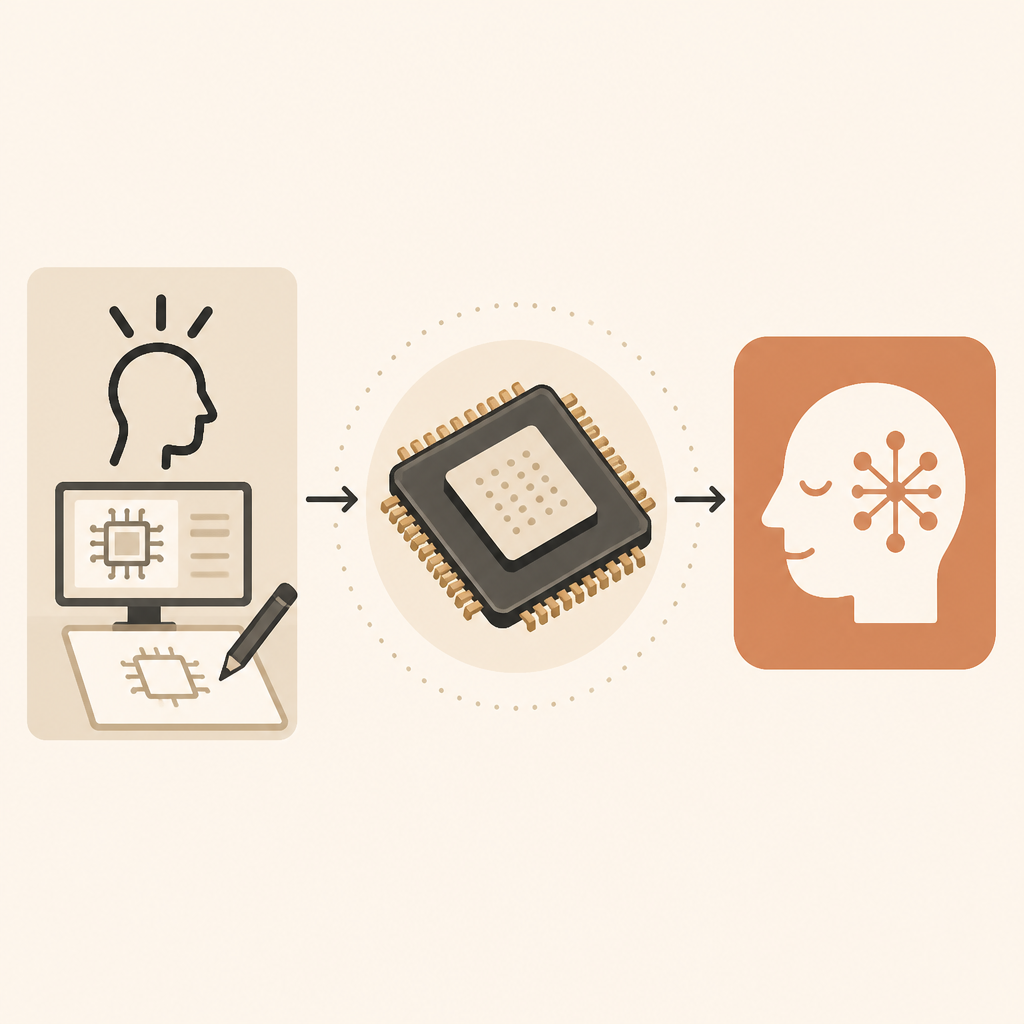
On the design side, the market is dominated by Broadcom and Marvell. The Tom’s Hardware report says those two firms account for roughly 95% of the ASIC co-design market. Broadcom has already worked with Google for years and has also been tied to OpenAI’s inference chip plans. Marvell has major contracts with Amazon and Microsoft.
These numbers explain why the chip business is so attractive to suppliers. Broadcom says it has a $73 billion backlog and expects more than $100 billion in annual AI chip revenue by the end of 2027. Marvell is expected to make upwards of $11 billion from these co-design jobs in 2026 alone. That is a lot of money flowing to the people who sell the shovels.
- Broadcom and Marvell dominate custom ASIC co-design, with about 95% of the market.
- Broadcom’s backlog is already at $73 billion.
- Broadcom expects over $100 billion in annual AI chip revenue by the end of 2027.
- Marvell’s co-design revenue could exceed $11 billion in 2026.
What this means for Nvidia and for Claude users
Nvidia is not going away. Training frontier models still depends heavily on its GPUs, and its software ecosystem remains the default for a lot of AI work. But inference is where the pressure is building, because that is where the bills pile up after the model is already trained.
If Anthropic succeeds, Claude could become cheaper to run at scale, which would help the company compete harder in enterprise and government deployments. It could also give Anthropic more room to price aggressively without taking the same hit on inference margins.
There is a catch, though. Designing chips is expensive, packaging is expensive, and software support is expensive. A custom ASIC only pays off if the workload is big enough and stable enough to justify the investment. Anthropic appears to believe Claude has crossed that threshold.
That is probably the right bet. The AI companies with the largest token bills are the ones most likely to build their own hardware, and Anthropic now looks ready to join them. The open question is whether Samsung, Broadcom, or another partner ends up turning Claude’s workload into silicon that can actually beat the economics of off-the-shelf GPUs.
// Related Articles
- [IND]
OpenAI’s Astra pause shows safety now shapes model releases
- [IND]
Moka AI Is a Stronger HRMS Choice for Growing Teams
- [IND]
August 2026 Market Review: AI Stocks Flipped Fast
- [IND]
Pixel 11 launch live: every Google reveal
- [IND]
Anthropic’s invisible watermark is the right move
- [IND]
Docker’s latest releases now center security and Compose